
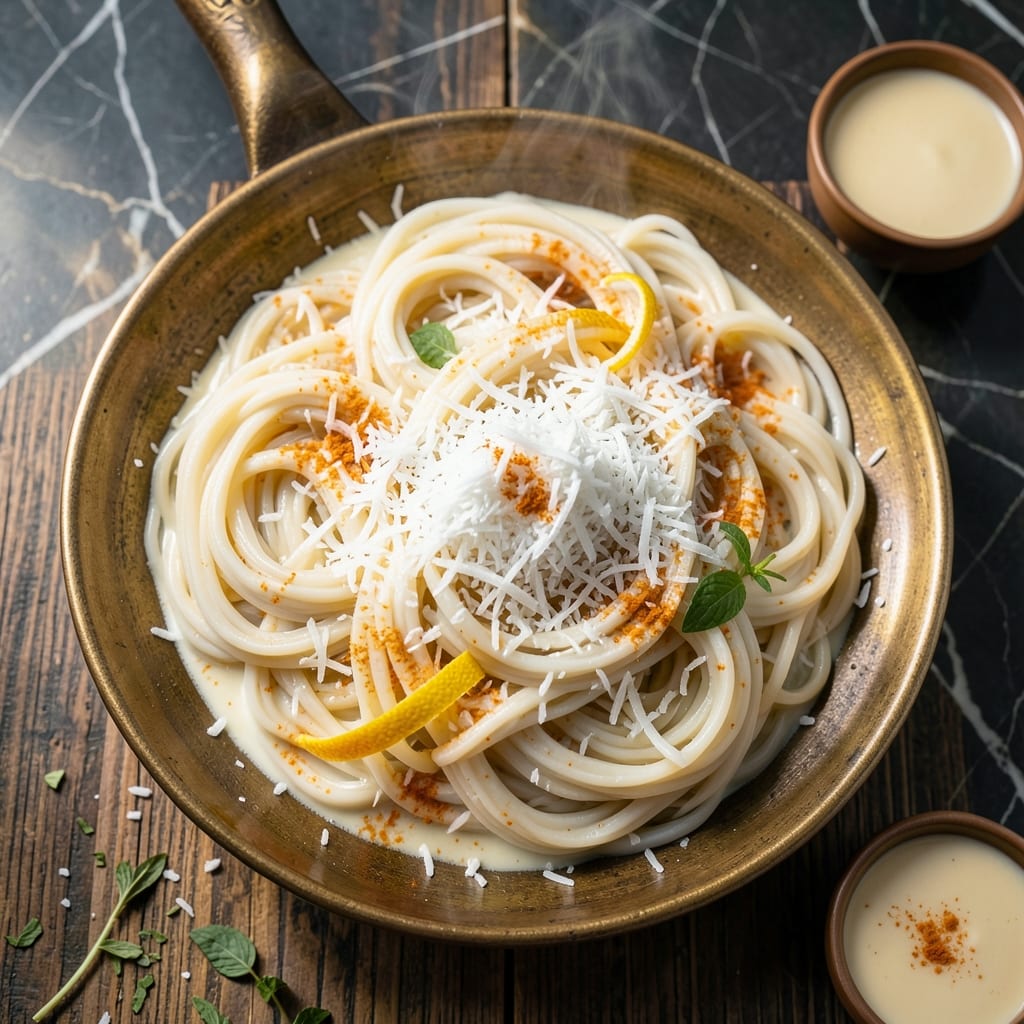
I discovered the art of making idiyappam during my exploration of global comfort foods, and this rice flour version quickly became a favorite. The process transforms simple ingredients into delicate string hopper noodles with a distinctive coconut aroma.
This recipe relies on a precise ratio of rice flour to water, creating a smooth batter that presses beautifully through the traditional idiyappam mold. The steaming technique is what gives these noodles their signature texture—soft yet slightly chewy.
What emerges from the steamer are delicate white noodles that absorb flavors beautifully. The coconut milk in the batter infuses each strand with a subtle sweetness that pairs perfectly with both savory and sweet accompaniments.
The beauty of this dish lies in its versatility. Serve with mild coconut milk-based curries or enjoy with sugar and grated coconut for a simple, satisfying meal.
Ingredients for Idiyappam Recipe with Rice Flour
Rice flour, coconut milk, and a few extras create these delicate noodles.
| Ingredient | Amount | Notes |
|---|---|---|
| Rice Flour 🌾 | 2 cups | Fine, not coarse variety |
| Coconut Milk 🥥 | 1 ½ cups | Full-fat for richness |
| Water 💧 | ¾ cup | Warm, for smooth batter |
| Salt 🧂 | 1 tsp | Fine sea salt preferred |
| Turmeric Powder 🌿 | ¼ tsp | Optional, for color |
| Grated Coconut 🥥 | ½ cup | Fresh or frozen, unsweetened |
| Vegetable Oil 🫒 | 1 tbsp | For greasing mold |
| Sugar 🍚 | 1 tsp | Optional, for slight sweetness |
| Cardamom Pods 🌰 | 2 whole | Lightly crushed, optional |
| Pandan Leaves 🍃 | 1 whole | Optional, for aroma |
Rice flour is the foundation here—Bob’s Red Mill or any Asian market brand works well. Look for the fine, powdery kind (not coarse). The coconut milk needs to be full-fat for that rich, creamy texture; light versions won’t give you the same depth. I grab mine from Trader Joe’s or Whole Foods—their cans are consistently good quality. For the grated coconut, fresh is ideal but frozen (unsweetened) works too.
No pandan leaves? Skip them—the coconut milk still shines. Out of cardamom? A pinch of vanilla extract adds a nice aroma. The turmeric is purely for color, so omit it if you prefer plain white noodles. For the oil, any neutral kind (like canola or sunflower) works for greasing the mold. The sugar is optional, but that hint of sweetness balances the savory notes beautifully.
The batter needs to rest for 10 minutes before pressing. Store leftovers in an airtight container—they keep for 2 days at room temperature or 1 week refrigerated. Re-steam briefly to soften before serving again.
Why You’ll Love This Recipe
- No-Knead Magic: I just mix rice flour, coconut milk, and a pinch of turmeric—no dough wrestling required.
- Warm Turmeric Comfort: The coconut milk gives it this subtle sweetness that pairs perfectly with the earthy turmeric kick.
- Breakfast or Dinner: I serve these string hoppers with curry for dinner or drizzled with coconut milk for a quick breakfast.
- Pantry Staple Hero: Rice flour and coconut milk are always in my cupboard, so this comes together even when I’m low on fresh ingredients.
Step-by-Step Instructions for String Hopper Noodles with Coconut Aroma
This method delivers perfectly steamed noodles with fragrant coconut notes every time.
Step 1: Prepare the Batter with Coconut Infusion
In a large mixing bowl, combine the 2 cups Rice Flour with 1.5 cups Coconut Milk and 0.75 cup Water. Whisk vigorously until the mixture becomes smooth and lump-free. The batter should have a thin, pancake-like consistency.
Add the 1 tsp Salt, 1 tsp Sugar, and 0.25 tsp Turmeric Powder (if using), then whisk again to fully incorporate. For extra aroma, lightly crush the 2 whole Cardamom Pods and add them to the batter along with the 1 whole Pandan Leaves.
Step 2: Steam the Noodles in the Traditional Mold
Grease the idiyappam mold with 1 tbsp Vegetable Oil to prevent sticking. Heat a steamer with 2 inches of water until it reaches a rolling boil. Place a portion of the batter into the mold and press it through to create thin noodle strands directly onto a greased steamer plate.
Steam for 8-10 minutes until the noodles are firm and slightly translucent. The strands should hold their shape when gently pressed. If using multiple layers, steam each layer separately for even cooking.
Step 3: Incorporate the Grated Coconut
Once the noodles are steamed, carefully transfer them to a serving plate. While still warm, sprinkle the 0.5 cup Grated Coconut evenly over the noodles. The residual heat will help the coconut adhere slightly to the strands.
Let the noodles cool for 2-3 minutes before serving to allow the coconut to soften slightly. This creates a perfect balance of textures—tender noodles with a hint of chewiness from the coconut.
Step 4: Serve with Traditional Accompaniments
Gently fluff the noodles with a fork to separate the strands. Remove the Pandan Leaves and Cardamom Pods if they were used in the batter. The noodles should have a subtle golden hue from the turmeric and a fragrant coconut aroma.
Serve warm with coconut milk or a side of spicy coconut chutney. The noodles should be soft yet slightly springy, with the grated coconut adding a fresh, nutty contrast to each bite.
Pro Tips For Making Idiyappam Recipe With Rice Flour
- Steam Evenly: Use a well-fitted lid when steaming the idiyappam to trap heat uniformly—I learned this the hard way after ending up with half-cooked centers more times than I care to admit.
- Warm the Coconut Milk: Take the coconut milk out of the fridge 15 minutes before mixing, or warm it slightly; cold milk makes the rice flour clump, and nobody wants lumpy batter.
- Skip the Overmixing: Stir just until the rice flour, coconut milk, and water combine smoothly—overworking the dough gives you tough, chewy strings instead of light, fluffy ones.
- Oil the Press: Lightly grease the idiyappam press with oil before loading the dough, especially if it’s been sitting unused for a while; sounds tedious, but it prevents the dough from sticking and breaking mid-press.
Common Mistakes When Making This Dish
Batter Consistency Issues
I’ve tested this recipe in my Boston kitchen, and the most common mistake is getting the batter too thick or too thin. Aim for a pancake-like consistency—if it’s too thick, the strands won’t press through the mold smoothly. Too thin, and it’ll drip right through. Adjust with 1 tbsp water or 1 tbsp rice flour at a time until perfect. 💡
Skipping the Resting Time
This batter needs 10 minutes to rest after mixing. I intentionally skip this step sometimes to test the difference, and the noodles turn out dense and gummy. Resting allows the rice flour to fully hydrate, creating that signature light texture.
Improper Steaming
Your steamer must reach a rolling boil before adding the mold, and the water level should be 2 inches deep. If the water’s not hot enough, the noodles will steam unevenly. Also, avoid overcrowding the steamer—leave space between layers for proper circulation.
Neglecting the Mold
Always grease your idiyappam mold with vegetable oil before pressing the batter. I learned this the hard way when my first batch stuck, leaving half the noodles behind. A light coating ensures clean release and perfect strands every time.
Oversteaming the Noodles
Steam for only 8-10 minutes—any longer and they’ll turn mushy. The noodles are done when they’re firm to the touch but still slightly translucent. I check by gently pressing a strand; if it holds its shape, it’s ready.
Using Cold Ingredients
The coconut milk and water should be at room temperature or slightly warm. Cold ingredients can cause the batter to seize, leading to lumpy, uneven strands. I keep mine on the counter for 30 minutes before mixing. ✨
Nutrition Facts
Frequently Asked Questions
What if I don’t have an idiyappam mold?
Use a potato ricer or colander with large holes. Press the batter through into the steamer. The strands won’t be as fine, but the texture will still be delicious.
Can I use all water instead of coconut milk?
Yes, but the flavor and richness will be milder. For best results, use at least 1 cup Coconut Milk with 1 cup Water. The coconut aroma is key to authentic taste.
How do I store leftover noodles?
Keep in an airtight container at room temperature for 2 days. Re-steam for 2-3 minutes to soften before serving. Avoid refrigerating, as it dries them out.
Why are my noodles breaking apart?
This usually means the batter was too thick or not rested. Ensure a pancake-like consistency and rest for 10 minutes before pressing. Oversteaming can also cause this.

- Mujadara Rice and Lentils Recipe: Earthy Spiced Lentils With Caramelized Onions - November 1, 2026
- Naija Fried Rice Recipe: Street-Style Spice With Veggie Crunch - November 1, 2026
- Mushy Rice Recipe: Fluffy Grains Transformed in Minutes - November 1, 2026