
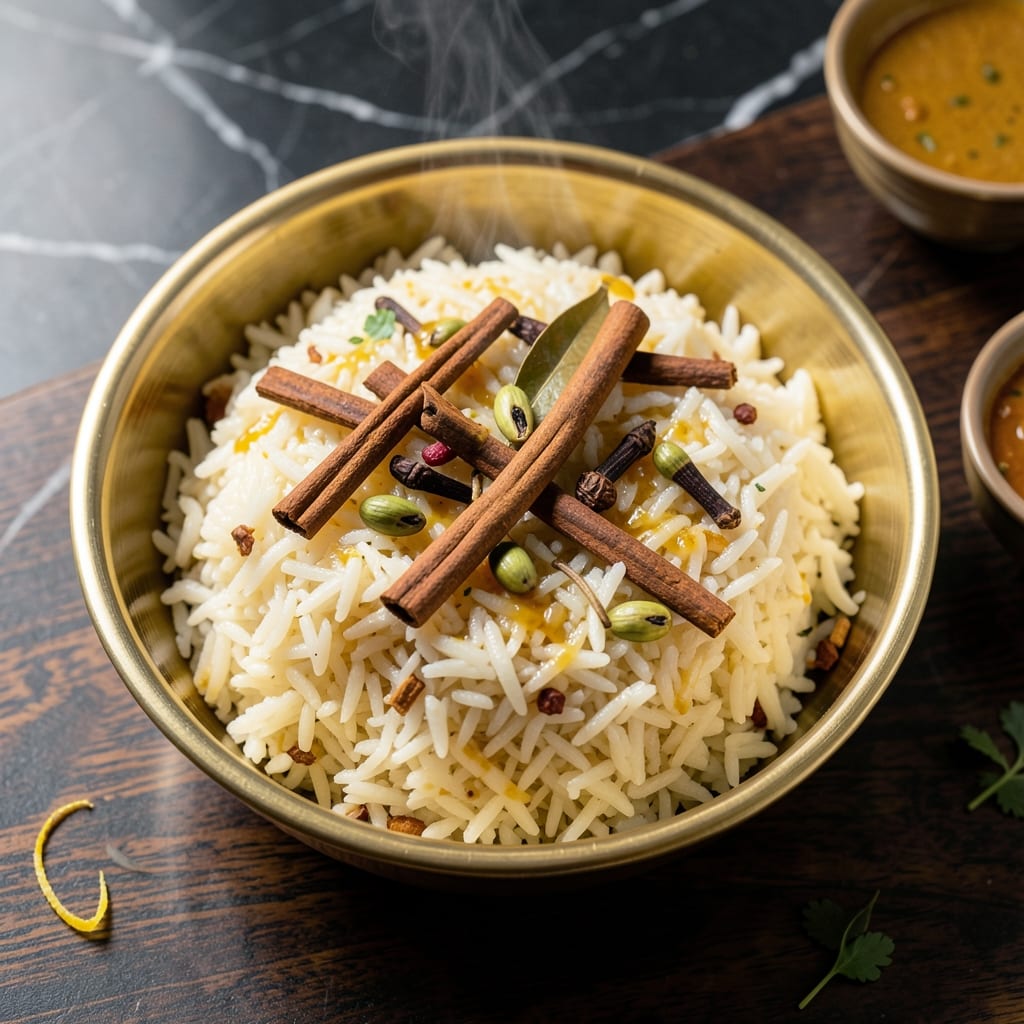
This method delivers the same authentic basmati rice you’d find in top Indian restaurants, with each grain perfectly separate and infused with warm spices. The secret lies in the precise soaking, rinsing, and layering technique.
By following traditional steps—including whole spice tempering and gentle steaming—you’ll achieve fragrant, fluffy rice that pairs beautifully with any curry or dal. No shortcuts, just proven restaurant-quality results.
Ingredients for Indian Restaurant Rice
Eleven carefully selected ingredients transform into authentic restaurant-style basmati rice with perfect separation and warm spice infusion.
| Ingredient | Amount | Notes |
|---|---|---|
| Basmati Rice 🌾 | 2 cups | Rinsed until water runs clear |
| Water 💧 | 4 cups | For soaking and cooking |
| Bay Leaf 🍃 | 1 whole | Dried, Indian variety preferred |
| Green Cardamom Pods 🌿 | 4 pieces | Lightly crushed to release aroma |
| Cloves 🌼 | 4 pieces | Whole, for tempering |
| Cinnamon Stick 🌰 | 1 piece | 2-inch length, broken in half |
| Cumin Seeds 🌿 | 1 tsp | Whole, not ground |
| Ghee 🧈 | 2 tbsp | Or substitute with neutral oil |
| Salt 🧂 | 1 ½ tsp | Adjust to taste after cooking |
| Fresh Cilantro 🌿 | ¼ cup | Finely chopped for garnish |
| Onion 🧅 | 1 whole | Medium, thinly sliced (optional) |
| Garlic Cloves 🧄 | 3 cloves | Lightly crushed, skin on |
The basmati rice quality is non-negotiable for authentic results. Indian grocery stores carry premium aged basmati with superior grain length and aroma—look for Daawat or India Gate brands. Whole spices are essential; pre-ground versions lack the depth and complexity achieved through tempering. Ghee adds unmistakable richness, but neutral oils work if avoiding dairy. Soak the rice for 30 minutes minimum to ensure proper expansion.
For dietary flexibility, ghee can be replaced with coconut oil or vegan butter. No cardamom pods? Ground cardamom at one-quarter the amount works in a pinch, though whole spices are preferred. Missing a whole spice? Garam masala at half a teaspoon can substitute the entire spice blend. The onion is optional but adds subtle sweetness—omit for a simpler preparation.
Cooked rice stays fresh for 2-3 days in an airtight container at room temperature. Reheat with a splash of water and cover to steam. For longer storage, freeze in portions for up to 1 month. Always store whole spices in airtight containers away from light to preserve their potency.
Why You’ll Love This Recipe
- One Pot Wonder: I just dump basmati rice, water, and a few whole spices into a pot—no chopping, no fuss.
- Aromatic Magic: The bay leaf, cardamom, and cloves perfume the kitchen and turn plain rice into something restaurant-worthy.
- Meal Prep Hero: Honestly, this rice tastes even better the next day, so I make a big batch for lunches all week.
- Budget Friendly: A pound of basmati and a handful of spices feed my family for pennies per serving.
Step-by-Step Instructions for Fragrant Basmati Rice With Authentic Spice Infusion
Master the restaurant technique for perfectly fluffy, aromatic rice with these precise steps.
Step 1: Soak and Rinse the Basmati Rice
Place the 2 cups Basmati Rice in a large bowl and cover with cold water. Gently swirl the rice with your hand, then drain. Repeat this process 3-4 times until the water runs completely clear—this removes excess starch that would make the rice gummy.
After rinsing, cover the rice with the 4 cups Water and let it soak for 30 minutes. This soaking step is crucial; it allows the grains to absorb moisture evenly, preventing them from breaking during cooking and ensuring they expand to their full length. Drain the rice thoroughly in a fine-mesh strainer before proceeding.
Step 2: Temper the Whole Spices in Ghee
In a heavy-bottomed pot, heat the 2 tbsp Ghee over medium heat until it shimmers. Add the 1 whole Bay Leaf, 4 pieces Green Cardamom Pods (lightly crushed), 4 pieces Cloves, 1 piece Cinnamon Stick (broken in half), and 1 tsp Cumin Seeds.
Stir constantly for 30-45 seconds until the spices become fragrant and the cumin seeds start to sizzle. Be careful not to burn them—this would make the rice bitter. The ghee should take on a golden hue and the aroma should be intense and inviting.
Step 3: Sauté Aromatics and Toast the Rice
Add the 1 whole Onion (thinly sliced) to the pot and sauté for 4-5 minutes until it turns translucent and begins to caramelize at the edges. Then add the 3 cloves Garlic Cloves (lightly crushed, skin on) and cook for another 30 seconds until fragrant.
Stir in the drained rice and cook for 2 minutes, toasting it gently in the spiced ghee. This step enhances the nutty flavor of the basmati and allows the grains to absorb the aromatic compounds from the spices. The rice should glisten slightly but not brown.
Step 4: Cook the Rice to Perfection
Pour in 4 cups Water and add the 1.5 tsp Salt. Stir once to distribute the rice and spices evenly, then bring to a rolling boil. As soon as it boils, reduce the heat to low, cover the pot with a tight-fitting lid, and let it cook undisturbed for 15 minutes.
After 15 minutes, turn off the heat and let the rice steam, covered, for an additional 10 minutes. This resting period allows the grains to finish cooking in their own steam, ensuring they’re tender but still separate. Resist the urge to peek—releasing steam can cause uneven cooking.
Step 5: Fluff and Garnish for Serving
Gently fluff the rice with a fork, lifting from the bottom to separate the grains without breaking them. You’ll know it’s perfect when each grain is distinct, glossy, and fragrant. The spices should be evenly distributed throughout, with no clumps or mushy spots.
Transfer to a serving dish and sprinkle with the 0.25 cup Fresh Cilantro (finely chopped). The cilantro adds a bright, fresh contrast to the warm, earthy spices. Serve immediately while the rice is hot and at its most aromatic.
Pro Tips For Making Indian Restaurant Rice
- Soak the Basmati: Give the rice a 30-minute soak in cold water before cooking—I learned this the hard way after ending up with dry, separate grains instead of those fluffy restaurant-style clumps.
- Toast the Spices: Lightly dry-toast the bay leaf, cardamom, and cloves in the pot for 20 seconds before adding water; it wakes up their oils and actually changes the outcome.
- Use the Right Ratio: Stick to 1 part rice to 1.5 parts water, and resist the urge to stir once it’s boiling—this prevents the grains from breaking and turning mushy.
- Rest Before Serving: After cooking, let the rice sit covered for 10 minutes off the heat—my grandmother swore by this, and she was right: it lets the steam redistribute for even texture.
Flavor Customization for This indian restaurant rice
Spice Level Adjustments
For milder flavor, reduce cumin seeds to ½ tsp and omit cloves entirely. The cardamom and cinnamon provide enough warmth without overwhelming heat. I often make this version for friends new to Indian flavors.
Richness Variations
Increase ghee to 3 tbsp for extra luxury, or use 1 tbsp ghee + 1 tbsp oil for a lighter touch. For vegan preparation, swap ghee for coconut oil. The fat content significantly impacts the final texture and aroma.
Aromatic Enhancements
Add 2-3 star anise pods during tempering for a deeper, more complex spice profile. Alternatively, include ½ tsp black peppercorns for subtle heat. I discovered star anise works beautifully in this dish during my travels.
Texture Customization
For firmer grains, reduce water to 3½ cups. For softer rice, increase to 4½ cups. The soaking time also affects texture—20 minutes yields firmer rice, while 40 minutes creates softer, plumper grains.
Colorful Additions
Stir in ½ cup frozen peas or diced carrots with the water for a vibrant, restaurant-style pilaf. Add ¼ tsp turmeric for golden hue. These small additions make the dish visually stunning without compromising flavor. 💛
Herb Variations
Replace cilantro with ¼ cup chopped mint for a refreshing twist. Or use 2 tbsp chopped dill for a Persian-inspired variation. Fresh herbs are best added just before serving to preserve their bright, clean flavors.
Nutrition Facts
Frequently Asked Questions
Why soak the rice before cooking?
Soaking for 30 minutes allows grains to absorb moisture evenly, preventing breakage and ensuring full expansion. This step is crucial for achieving the signature long, separate grains of restaurant-style basmati.
Can I use regular rice instead of basmati?
Basmati’s long grains and aroma are key to authentic flavor. Regular white rice will cook differently and lack the distinctive fragrance. For best results, use aged basmati like Daawat or India Gate.
How do I prevent mushy rice?
Avoid stirring after adding water. Cook on low heat with lid closed for 15 minutes, then steam undisturbed for 10 minutes. Rinse thoroughly before cooking to remove excess starch.
What if I don’t have whole spices?
Substitute with ½ tsp garam masala during tempering. While not identical, it provides similar warm notes. Whole spices are preferred for authentic depth, but this works in a pinch.

- Mujadara Rice and Lentils Recipe: Earthy Spiced Lentils With Caramelized Onions - November 1, 2026
- Naija Fried Rice Recipe: Street-Style Spice With Veggie Crunch - November 1, 2026
- Mushy Rice Recipe: Fluffy Grains Transformed in Minutes - November 1, 2026