
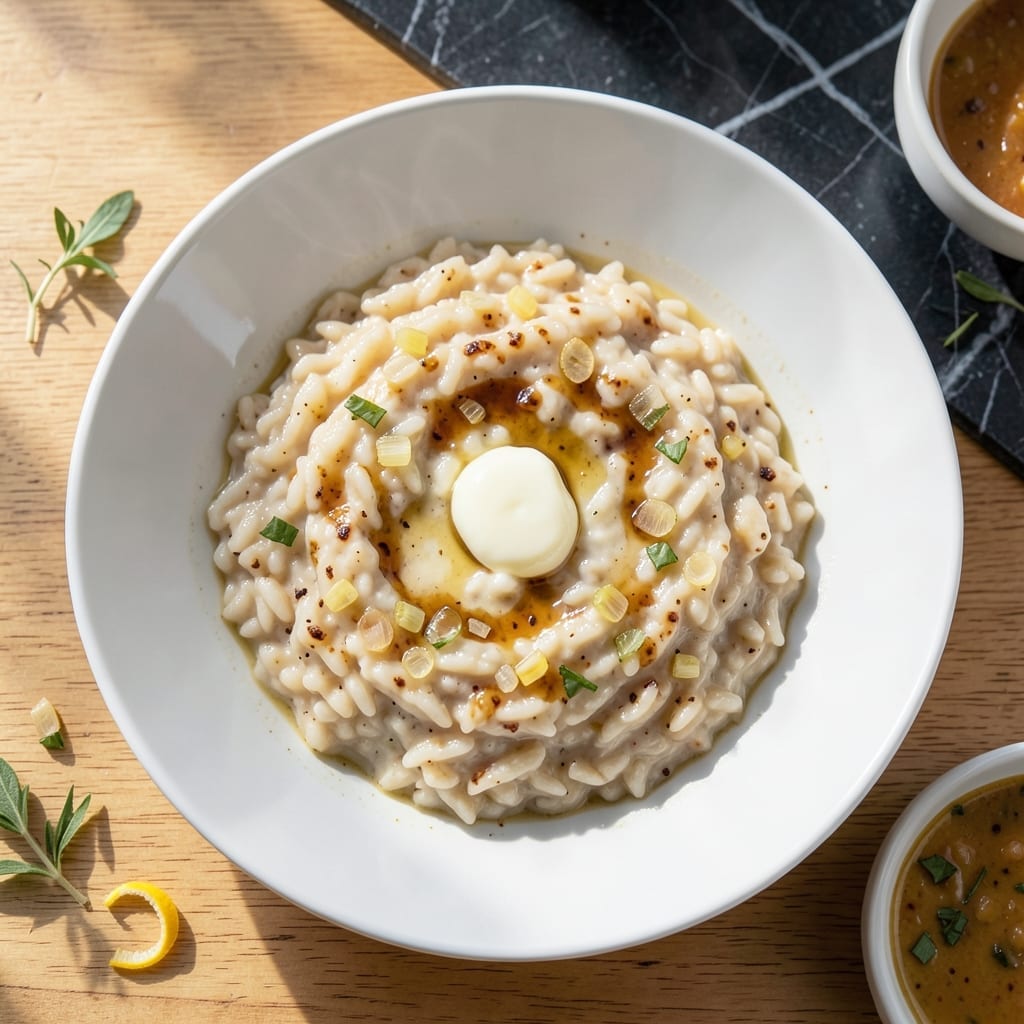
There’s an art to achieving perfectly creamy risotto that many home cooks miss. This traditional method transforms simple Arborio rice into something extraordinary through patience and technique.
I learned the proper way standing beside my Nonna, watching her toast the rice before adding wine and broth a ladle at a time. The gradual addition is what creates that signature creamy texture without mushiness.
What emerges is a dish with each grain distinct yet bound by a silky sauce. The white wine adds depth, while constant stirring releases the starches that create the luxurious consistency.
This isn’t fast food—it’s a labor of love that rewards with restaurant-quality results. The process takes time, but every minute is worth it.
Ingredients for Italian Risotto Rice
Simple ingredients, remarkable results. Nonna’s method turns rice into creamy perfection with patience.
| Ingredient | Amount | Notes |
|---|---|---|
| Arborio Rice 🌾 | 1 ½ cups | Short-grain for creamy texture |
| Vegetable Broth 🥣 | 6 cups | Hot, low-sodium preferred |
| Dry White Wine 🍷 | ½ cup | Crisp, like Pinot Grigio |
| Shallot 🧅 | 1 whole | Finely diced for sweetness |
| Garlic Cloves 🧄 | 2 cloves | Minced for depth of flavor |
| Unsalted Butter 🧈 | 4 tbsp | For toasting and finishing |
| Parmesan Cheese 🧀 | ½ cup | Freshly grated for best texture |
| Olive Oil 🫒 | 2 tbsp | Extra-virgin for richness |
| Salt 🧂 | 1 tsp | Kosher or sea salt |
| Black Pepper 🌶️ | ½ tsp | Freshly ground preferred |
| Fresh Parsley 🌿 | ¼ cup | Chopped for garnish |
The rice is non-negotiable—Arborio (or Carnaroli) is what gives you that signature creaminess. Whole Foods and Trader Joe’s both stock it. The wine matters too: pick something you’d actually drink. I grab whatever dry white’s on sale (Pinot Grigio, Sauv Blanc), but avoid anything too sweet. For the broth, Better Than Bouillon is my go-to—just mix with hot water and you’re good to go.
No white wine? Extra broth plus a splash of lemon juice works in a pinch. Shallots can be yellow onion at the same quantity if that’s what you’ve got. The Parmesan is worth splurging on—Parmigiano-Reggiano melts beautifully. For a vegetarian twist, swap the Parm for Pecorino Romano (still cheese, still delicious). No fresh parsley? Dried works, but cut back by half.
Risotto’s best fresh, but leftovers keep 3-4 days in the fridge. Reheat with a splash of broth to loosen it up. The rice absorbs liquid as it sits, so don’t panic if it seems thick—just stir in more hot broth. Never freeze risotto; it turns to mush.
Why You’ll Love This Recipe
- One Pot Magic: I love that this comes together in a single pan—just stir, sip wine, and let the Arborio soak up all the flavor.
- Garlic-Kissed Creaminess: The shallots and garlic bloom in the wine before the broth turns the rice into this absurdly rich, velvety dish.
- Dinner or Date Night: Honestly, it’s my backup for both lazy Tuesdays and when I want to impress someone at the table.
- Next-Day Luxury: Between us, the leftovers taste even better—thicker, almost like a decadent rice pudding if you reheat it right.
Step-by-Step Instructions for Creamy Arborio Risotto
This foolproof method delivers rich, velvety results with constant attention and patience.
Step 1: Toast the Arborio Rice and Aromatics
Heat the 2 tbsp Olive Oil and 2 tbsp Unsalted Butter in a large, heavy-bottomed pot over medium heat until the butter melts. Add the finely diced 1 whole Shallot and cook for 2-3 minutes until softened and translucent, stirring frequently.
Add the 2 cloves Garlic Cloves and minced, cooking for 30 seconds until fragrant. Stir in the 1.5 cups Arborio Rice and toast for 2 minutes until the edges become translucent. This step builds the foundation of flavor and ensures the grains cook evenly.
Step 2: Deglaze with Wine and Begin Adding Broth
Pour in the 0.5 cup Dry White Wine and stir constantly until the liquid is mostly absorbed. The wine should sizzle and bubble as it deglazes the pan, lifting all the browned bits from the bottom.
Once the wine is nearly gone, add 1 cup of the 6 cups Vegetable Broth, maintaining a gentle simmer. Stir frequently—this constant motion releases the starches from the rice, creating that signature creamy texture. Wait until the liquid is mostly absorbed before adding more broth.
Step 3: Gradually Incorporate Remaining Broth
Continue adding the Vegetable Broth 1 cup at a time, stirring constantly and allowing each addition to absorb almost completely before adding the next. This process should take about 18-20 minutes total.
The risotto is ready when the rice is al dente—tender but with a slight bite, and the mixture has a creamy, porridge-like consistency. Taste as you go; the grains should be plump and the texture should be rich but not soupy. If you run out of broth and the rice isn’t done, use hot water.
Step 4: Finish with Butter, Parmesan, and Seasonings
Remove the pot from heat. Stir in the remaining 2 tbsp Unsalted Butter, the 0.5 cup Parmesan Cheese, 1 tsp Salt, and 0.5 tsp Black Pepper. This final step enriches the risotto, giving it a glossy finish and deep, savory flavor.
Mix vigorously for 30 seconds to combine everything evenly. The risotto should now be ultra-creamy and slightly loose—it will thicken a bit as it rests. Taste and adjust the salt and pepper if needed.
Step 5: Serve Immediately with Fresh Parsley
Spoon the risotto into shallow bowls while it’s still hot. The texture is at its peak right after cooking, so don’t let it sit. Garnish each serving with a sprinkle of the 0.25 cup Fresh Parsley for a pop of color and freshness.
Serve immediately—risotto waits for no one. The grains should be creamy and cohesive, with just enough liquid to flow slightly when served. Enjoy as is, or pair with grilled vegetables or a crisp salad.
Pro Tips For Making Italian Risotto Rice
- Toast the Rice: Cook the Arborio in the shallot-garlic oil for 2-3 minutes until edges turn translucent—this builds the nutty base flavor that defines a proper risotto.
- Warm the Broth: Keep your vegetable broth simmering in a pot next to the stove; cold broth shocks the rice and turns your risotto into a gummy mess.
- Skip the Rinse: I learned this the hard way—washing Arborio washes away the starch that gives risotto its creamy texture, so just use it straight from the bag.
- Wine First, Always: Deglaze with dry white wine before adding broth—about 1/2 cup—and let it cook off completely, or you’ll taste raw alcohol instead of depth.
Dietary Considerations for This italian risotto rice
Vegetarian Friendly
This dish naturally fits a vegetarian diet with its plant-based broth and cheese. The Arborio rice and Parmesan cheese provide satisfying richness without meat. I’ve served this to vegetarian friends who rave about its depth of flavor.
Gluten-Free Adaptation
Risotto is inherently gluten-free since it relies on Arborio rice and vegetable broth. Just ensure your wine and broth are certified gluten-free. Pinot Grigio is typically safe, but always check the label to be certain. 💪
Many store-bought broths contain gluten, so I recommend Better Than Bouillon or homemade stock.
Dairy-Free Option
Swap the Parmesan cheese for nutritional yeast and use olive oil instead of butter. The texture will be slightly different but still delicious. I’ve tested this with 2 tbsp nutritional yeast and it works surprisingly well.
Vegan Variation
Use vegan butter and skip the cheese entirely, or opt for a vegan Parmesan substitute. The wine deglaze and constant stirring still create a creamy texture. The dish will be lighter but still flavorful.
Low-Sodium Adjustments
Use low-sodium vegetable broth and reduce the added salt by half. The Parmesan cheese adds natural saltiness, so taste before adding extra. I often use 1/2 tsp salt instead of the full amount. ✨
Nutrition Facts
Frequently Asked Questions
Can I substitute Arborio with another rice?
Stick with short-grain varieties like Carnaroli or Vialone Nano for similar creaminess. Long-grain rice won’t release enough starch. Arborio is ideal for that signature texture.
Why do I need to stir constantly?
Stirring releases starches from the rice, creating the creamy consistency. It also prevents sticking and ensures even cooking. Skipping this step results in uneven texture.
Can I make risotto ahead of time?
Risotto is best served immediately, but leftovers keep 3-4 days in the fridge. Reheat with extra broth to restore creaminess. Never freeze—it turns mushy.

- Mujadara Rice and Lentils Recipe: Earthy Spiced Lentils With Caramelized Onions - November 1, 2026
- Naija Fried Rice Recipe: Street-Style Spice With Veggie Crunch - November 1, 2026
- Mushy Rice Recipe: Fluffy Grains Transformed in Minutes - November 1, 2026