
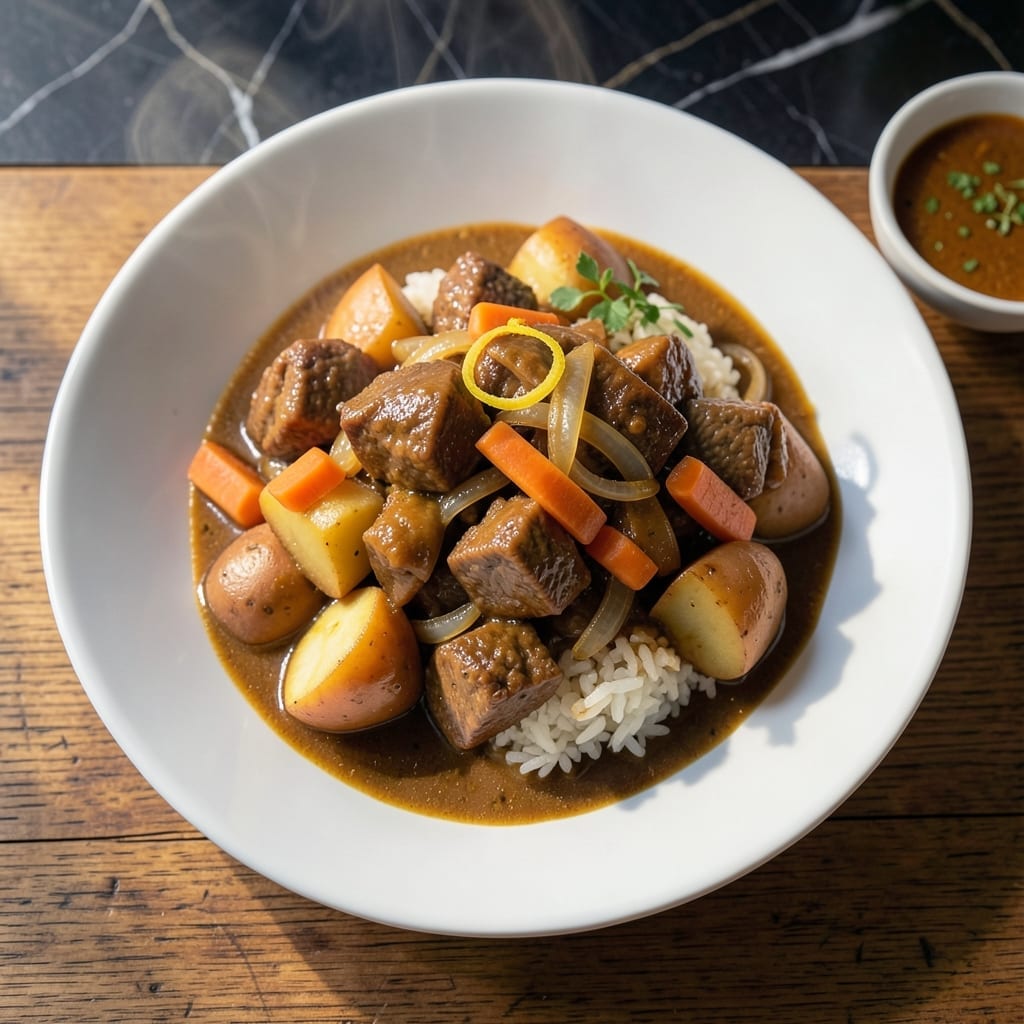
Japanese beef curry rice transforms simple ingredients into a deeply comforting meal that warms from the inside out. The rich, velvety sauce clings to tender beef and vegetables, creating a harmonious blend of sweet and savory flavors.
This dish relies on a slow simmer to develop its signature depth, allowing the beef to become fork-tender while the curry roux melts into a thick, glossy sauce. Every bite delivers layers of umami, with carrots and potatoes soaking up the aromatic broth.
The rice serves as the perfect canvas, absorbing the sauce’s bold flavors while maintaining its fluffy texture. Traditional Japanese curry roux blocks make this recipe accessible without sacrificing authenticity.
Serve this bowl for a satisfying dinner that feels like a hug on a plate. The result is a meal that’s hearty, balanced, and deeply rewarding.
Ingredients for Japanese Beef Curry Rice
Pantry staples and fresh produce create this deeply comforting one-pot wonder.
| Ingredient | Amount | Notes |
|---|---|---|
| Beef Chuck 🥩 | 1 ½ lb | Cut into 1-inch cubes |
| Onion 🧅 | 1 whole | Yellow or white, diced |
| Carrots 🥕 | 2 whole | Peeled and sliced into chunks |
| Russet Potatoes 🥔 | 2 whole | Peeled and cubed |
| Japanese Curry Roux Blocks 🟤 | 4 pieces | S&B Golden or Vermont brand |
| Water 💧 | 3 cups | Or substitute beef broth |
| Soy Sauce 🫒 | 2 tbsp | Low-sodium preferred |
| Honey 🍯 | 1 tbsp | Balances the savory flavors |
| Garlic Cloves 🧄 | 3 cloves | Minced for depth |
| Fresh Ginger 🌿 | 1 tbsp | Grated for freshness |
| Japanese Short-Grain Rice 🍚 | 2 cups | Rinsed before cooking |
| Vegetable Oil 🫒 | 1 tbsp | For searing beef |
| Bay Leaf 🍃 | 1 whole | Optional for aroma |
| Salt 🧂 | 1 tsp | Adjust to taste |
| Black Pepper 🌶️ | ½ tsp | Freshly ground |
The beef is the foundation here. Chuck roast offers the perfect marbling for fork-tender results after a long simmer. Costco or Whole Foods carry good pre-cut options, but any supermarket chuck works. Look for bright red meat with visible fat streaks—this renders down during cooking. The Japanese curry roux blocks are non-negotiable for authenticity; find them at Asian markets or the international aisle.
No curry roux blocks? Make a roux from scratch with butter, flour, and curry powder (though flavor won’t be identical). Sweet potatoes can replace regular potatoes for a modern twist. Yukon Golds hold shape better if that’s your preference. For extra umami, add 1 tbsp miso paste with the roux. The honey can be swapped for brown sugar if needed, but the floral notes are worth seeking out.
This curry tastes even better the next day once flavors meld. Store in an airtight container for up to 5 days in the fridge or freeze for 3 months. Reheat gently on the stove with a splash of water to restore the velvety texture.
Why You’ll Love This Recipe
- I’ll be real: it tastes even better the next day, and the flavors meld overnight so I always make extra for lunches.
- One Pot Wonder: I just toss the beef chuck, onions, carrots, and potatoes in a single pot—no fancy techniques, just simmer and let the curry roux do its magic.
- Rich, Deep Comfort: Honestly, the beef turns fall-apart tender, and the roux creates that thick, velvety sauce that coats every bite of rice.
- Feeds a Hungry Crowd: Between us, this is my go-to for family dinners—it stretches easily and everyone, even picky kids, asks for seconds.
Step-by-Step Instructions for Japanese Beef Curry Rice
Here’s the method. Straightforward, tested, works every time.
Step 1: Sear the Beef Chuck and Aromatics
Heat the 1 tbsp vegetable oil in a large pot over medium-high heat. Add the 1.5 lb beef chuck cubes and sear for 4-5 minutes until browned on all sides. This builds a flavorful foundation for the curry.
Add the diced 1 whole onion, 3 cloves garlic cloves, and 1 tbsp fresh ginger. Cook for 3-4 minutes until the onion softens and the mixture becomes fragrant. The beef should release its juices, which will mix with the onions to create a rich base.
Step 2: Simmer the Vegetables and Beef
Add the peeled and sliced 2 whole carrots, peeled and cubed 2 whole russet potatoes, 1 whole bay leaf, 1 tsp salt, and 0.5 tsp black pepper. Stir to combine and cook for 2 minutes to allow the spices to toast lightly.
Pour in the 3 cups water, 2 tbsp soy sauce, and 1 tbsp honey. Stir well, bring to a boil, then reduce the heat to medium-low. Cover and simmer for 30-40 minutes until the beef is tender and the potatoes are easily pierced with a fork.
Step 3: Add the Japanese Curry Roux Blocks
Reduce the heat to low and add the 4 pieces Japanese curry roux blocks. Stir continuously for 2-3 minutes until the roux dissolves completely and the sauce thickens. The mixture should coat the back of a spoon and have a rich, velvety texture.
Simmer uncovered for an additional 10-15 minutes on low heat, stirring occasionally to prevent sticking. This step allows the flavors to meld and the sauce to reach the perfect consistency.
Step 4: Cook the Japanese Short-Grain Rice
While the curry simmers, rinse the 2 cups Japanese short-grain rice under cold water until the water runs clear. This removes excess starch and ensures fluffy, separate grains. Drain well.
Cook the rice according to your preferred method (rice cooker, stovetop, or Instant Pot) using a 1:1.25 rice-to-water ratio. Typically, this means 2.5 cups water for the 2 cups rice. Let it rest covered for 10 minutes after cooking to steam and fluff.
Step 5: Serve the Curry Over Rice
Remove the 1 whole bay leaf from the curry. Taste and adjust the seasoning with additional salt or honey if needed. The curry should have a balanced sweetness and savory depth.
Ladle the hot curry over individual bowls of steamed Japanese short-grain rice. Serve immediately while hot. The curry should be thick enough to cling to the rice, and each bite should deliver tender beef, soft vegetables, and a rich, comforting sauce.
Pro Tips For Making Japanese Beef Curry Rice
- Brown the Beef Well: I learned this the hard way—don’t rush browning the beef chuck. Take your time over medium-high heat until it’s deeply caramelized, about 5-7 minutes, to build that rich, meaty foundation.
- Cut Potatoes Evenly: Slice russet potatoes into uniform 1-inch chunks so they cook at the same rate as the carrots. Sounds fussy, but uneven pieces turn some to mush while others stay hard.
- Simmer Covered: After adding the curry roux, keep the pot covered at a gentle simmer for 20-25 minutes. This prevents the sauce from reducing too much and keeps the beef tender.
- Add Apples: Sounds weird, but it works: throw in half a grated apple with the onions. It balances the curry’s sweetness and adds a subtle depth you’ll notice but can’t quite place.
Dietary Considerations for This Dish
Gluten-Free Option
For a gluten-free version, swap the Japanese curry roux blocks for S&B Golden Curry Sauce Mix Gluten-Free. It delivers the same rich flavor without wheat. Also, use tamari instead of regular soy sauce to keep everything safe. 💪
Dairy-Free Naturally
This dish is inherently dairy-free, as traditional Japanese curry relies on roux blocks without milk or butter. Just confirm your curry roux brand is free from hidden dairy derivatives—S&B and Vermont are safe choices.
Lower-Carb Alternative
Replace Japanese short-grain rice with cauliflower rice for a low-carb option. Sauté 4 cups riced cauliflower in a pan with 1 tbsp oil for 5-7 minutes until tender. The curry pairs wonderfully with this lighter base.
Vegetarian Adaptation
Swap the 1.5 lb beef chuck for 1.5 lb mushrooms (shiitake or cremini) and add 1 can chickpeas. Sear the mushrooms first to develop deep umami. The texture remains hearty and satisfying. 🌱
Sodium Reduction
Cut sodium by using low-sodium soy sauce and reducing the curry roux blocks to 3 pieces. Add 1 tsp apple cider vinegar to brighten flavors without extra salt. Taste and adjust carefully.
Allergy Notes
Check curry roux labels for wheat, soy, or nut allergens. For nut allergies, ensure your cooking oil is processed in a nut-free facility. Vegetable oil is typically safe, but always verify the brand.
Nutrition Facts
Frequently Asked Questions
Can I use a different cut of beef?
Yes, but choose a well-marbled cut for best results. Brisket or short ribs work well, though they may need 5-10 minutes extra simmering. Avoid lean cuts like sirloin, which can become tough.
How do I make the curry thicker?
Simmer uncovered for 5-10 extra minutes to reduce the sauce. Alternatively, mix 1 tbsp cornstarch with 2 tbsp water and stir in during the last 5 minutes of cooking.
Can I prepare this ahead of time?
The flavors deepen after a day in the fridge. Store curry and rice separately for up to 5 days. Reheat the curry with a splash of water to restore its creamy texture.
What if my curry tastes too sweet?
Balance it with 1 tsp soy sauce or a splash of rice vinegar. For a savory boost, add 1 tsp miso paste or a pinch of salt. Taste and adjust gradually.

- Indian Jasmine Rice Recipe: Fragrant Basmati-Free Elegance - October 19, 2026
- KFC Rizo Rice Recipe: Copycat Side Dish With Savory Spice Blend - October 19, 2026
- Jeerakasala Rice Recipe: Fragrant Cumin-Infused Kerala Delight - October 19, 2026