
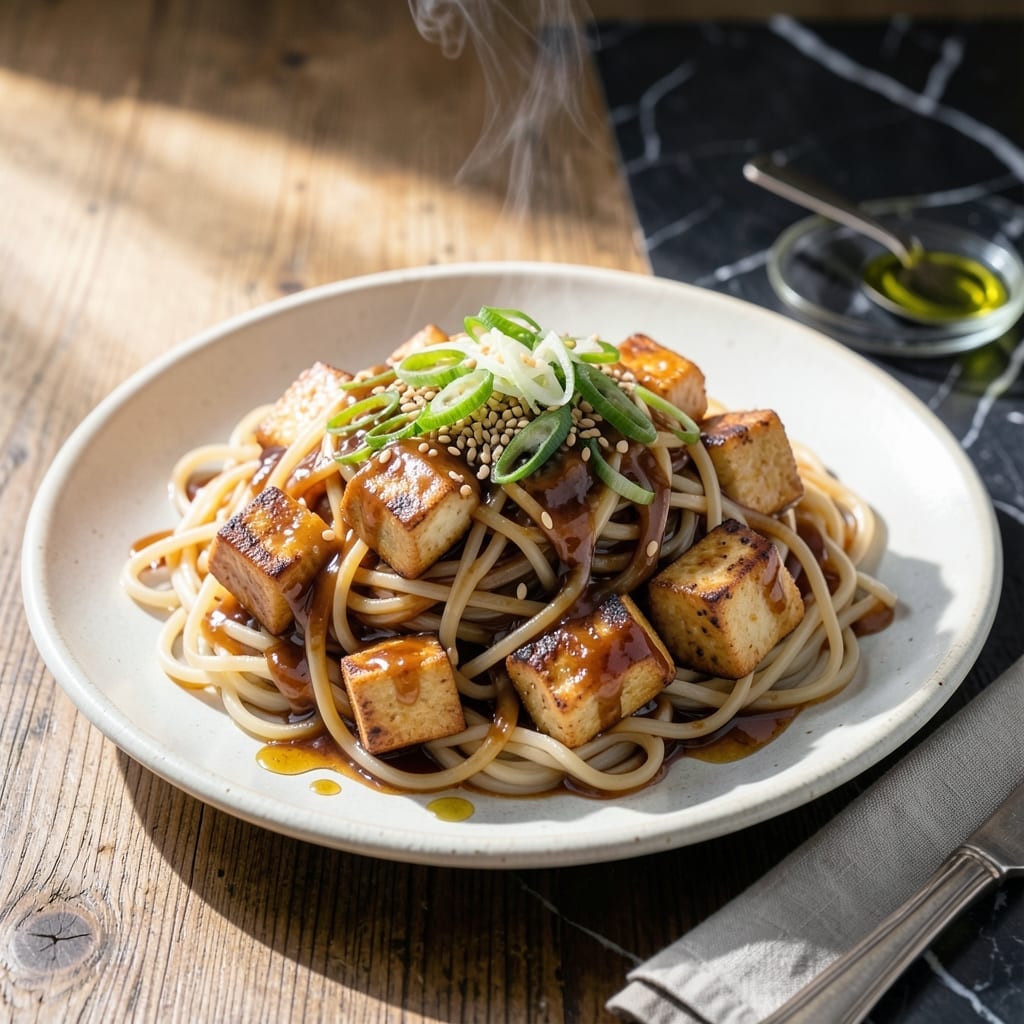
This recipe transforms simple rice noodles into a restaurant-quality dish with springy texture and rich flavor.
Using high heat and precise timing, the noodles achieve that signature slurpy consistency while absorbing the savory sauce perfectly. The result is a dish that’s both authentic and approachable for home cooks.
Ingredients for Japanese Rice Noodles
Flat rice noodles and bold flavors create this authentic wok-seared dish with perfect slurp.
| Ingredient | Amount | Notes |
|---|---|---|
| Rice Noodles 🍜 | 14 oz | Flat, medium-width for springy texture |
| Soy Sauce 🫒 | ½ cup | Low-sodium preferred for balance |
| Tamari 🫒 | 2 tbsp | Gluten-free alternative to soy |
| Rice Vinegar 🍚 | 2 tbsp | Unseasoned for clean acidity |
| Sesame Oil 🫒 | 1 tbsp | Toasted for nutty depth |
| Maple Syrup 🍁 | 2 tbsp | Balances savory and salty notes |
| Garlic Cloves 🧄 | 4 cloves | Minced for aromatic base |
| Fresh Ginger 🌿 | 1 tbsp | Peeled and finely grated |
| Red Bell Pepper 🌶️ | 1 whole | Thinly sliced for crunch |
| Carrots 🥕 | 2 whole | Julienned for texture contrast |
| Scallions 🧅 | 4 whole | Thinly sliced for fresh finish |
| Vegetable Oil 🫒 | 3 tbsp | High smoke point for wok-searing |
| Tofu 🧈 | 14 oz | Extra-firm, pressed and cubed |
| Cornstarch 🌾 | 1 tbsp | For velvety sauce consistency |
| Red Pepper Flakes 🌶️ | ½ tsp | Adjust to spice preference |
The rice noodles must be flat and medium-width to achieve that signature springy texture—avoid thin vermicelli or thick udon. Asian markets or the international aisle at Whole Foods carry quality brands like Three Ladies. For the tofu, extra-firm holds up best to wok-searing. Press it for 20 minutes to remove excess moisture, ensuring crisp edges without falling apart.
Need a gluten-free option? Swap soy sauce for additional tamari (use 3 tbsp total). No rice vinegar? Apple cider vinegar works in a pinch. Missing ginger? 1 tsp ground ginger can substitute, though fresh delivers superior flavor. For heat adjustment, omit red pepper flakes or add sambal oelek for complexity. The maple syrup can be replaced with agave or coconut sugar.
Store uncooked noodles in a cool, dry place for up to 6 months. Once opened, transfer to an airtight container. Prepared dish keeps in the fridge for 3-4 days but loses its ideal texture upon reheating. Freeze cooked noodles separately from sauce for up to 2 months.
Why You’ll Love This Recipe
- 20-Minute Meal: So easy. I mean, boil noodles, toss with soy, tamari, and sesame oil—dinner’s done before the kids finish arguing over who sits where.
- Umami Bomb: The combo of soy and tamari hits that deep, savory note, while rice vinegar brightens it up. Honestly, I could eat the sauce with a spoon.
- Endless Mix-Ins: I toss in whatever veggies are wilting in the fridge—works hot, works cold, works as a side or main.
- Stretches for Days: Leftovers? Even better the next day. Between us, I make a double batch just to have it for lunch.
Step-by-Step Instructions for Japanese Rice Noodles
Master the wok-searing technique that gives these noodles their signature springy texture and balanced flavor.
Step 1: Prepare and Press the Tofu
Begin by pressing the 14 oz Tofu to remove excess moisture. Wrap the block in a clean kitchen towel, place a heavy pan on top, and let it drain for 15 minutes. This step is crucial for achieving crispy edges when seared.
Once pressed, cut the tofu into 1-inch cubes and toss them with the 1 tbsp Cornstarch. The cornstarch creates a light coating that ensures a golden crust forms during cooking. Set the tofu aside while you prep the remaining ingredients.
Step 2: Sear the Tofu and Aromatics
Heat 2 tbsp Vegetable Oil in a large wok or skillet over medium-high heat. Add the cubed tofu and cook, turning occasionally, for 8-10 minutes until all sides are golden brown and crispy. Remove the tofu with a slotted spoon and set it aside on a plate.
In the same pan, add the remaining 1 tbsp Vegetable Oil and sauté the 4 cloves Garlic Cloves and 1 tbsp Fresh Ginger for 30 seconds until fragrant. Immediately add the 1 whole Red Bell Pepper (thinly sliced) and 2 whole Carrots (julienned), stirring for 3-4 minutes until they begin to soften but retain a slight crunch.
Step 3: Cook the Rice Noodles
Soak the 14 oz Rice Noodles in warm water for 8-10 minutes until they are pliable but still slightly firm. Drain thoroughly. In a separate pot, bring water to a boil and blanch the noodles for 1-2 minutes to soften them fully. Drain again and rinse under cold water to stop the cooking process.
This blanching step ensures the noodles maintain their signature springy texture without becoming mushy. Toss them with the 1 tbsp Sesame Oil to prevent sticking and add a nutty depth to the flavor profile.
Step 4: Combine and Finish with Sauce
Return the wok to medium heat and add the blanched noodles, tofu, and vegetables. Pour in the 0.5 cup Soy Sauce, 2 tbsp Tamari, 2 tbsp Rice Vinegar, 2 tbsp Maple Syrup, and 0.5 tsp Red Pepper Flakes. Toss everything together gently but thoroughly to coat the noodles evenly with the sauce.
Cook for an additional 2-3 minutes, stirring constantly, until the sauce thickens slightly and clings to the noodles. Remove from heat and stir in the 4 whole Scallions (thinly sliced) to add a fresh, crisp finish to the dish.
Serve immediately while hot, ensuring each portion contains a balance of noodles, tofu, and vegetables. The ideal texture should be springy with a slight chew, and the sauce should be glossy and flavorful.
Pro Tips For Making Japanese Rice Noodles
- Soak the Noodles: Cover rice noodles in warm water for 10-15 minutes before cooking—this prevents the gumminess I struggled with for years when they’d clump together.
- Toast the Sesame: Heat sesame oil in the pan for 30 seconds until fragrant before adding anything else; it deepens the nutty flavor that makes this dish sing.
- Skip the Overcook: Rice noodles go from perfect to mushy in seconds, so pull them off the heat just as they turn translucent and finish cooking in the sauce.
- Balance the Sauce: Mix soy sauce and tamari 1:1 with rice vinegar to cut the saltiness—after ruining a batch with too much sodium, I now taste and adjust as I go.
Common Mistakes When Making Perfect Results
Over-Soaking Noodles
Soaking rice noodles for more than 10 minutes makes them gummy and prone to breaking. I set a timer to ensure they stay slightly firm before blanching. This maintains that coveted springy texture we all love.
Skipping the Blanch
Blanching for 1-2 minutes is non-negotiable—it sets the texture so noodles don’t turn to mush during wok-searing. I use a slotted spoon to transfer them directly to the wok to save time.
Cold Wok Syndrome
Always preheat your wok until it’s nearly smoking before adding vegetable oil. Cold woks cause sticking and prevent that perfect sear on tofu. I test with a drop of water—it should sizzle and evaporate instantly. 🔥
Sauce Overload
Too much liquid makes noodles soggy. Stick to the 0.5 cup soy sauce and 2 tbsp tamari ratio, and let the sauce reduce slightly before tossing. The cornstarch in the tofu helps thicken it naturally.
Rushing the Press
Pressing tofu for less than 15 minutes means it won’t crisp properly. I place a cast-iron skillet on top for even pressure. Patience here ensures golden, crunchy edges that hold up in the dish.
Neglecting the Rinse
After blanching, rinse noodles under cold water to stop cooking and remove excess starch. This prevents clumping and keeps the strands separate. I shake them in a colander to remove all excess water. 💡
Nutrition Facts
Frequently Asked Questions
Can I use a different type of noodle?
Stick to flat, medium-width rice noodles for the best texture. Thin vermicelli or thick udon won’t give you the same springy result.
How do I prevent the noodles from sticking?
After blanching, toss them with 1 tbsp Sesame Oil immediately. This coats the strands and keeps them separate during cooking.
What if I don’t have tamari?
Use an extra 2 tbsp Soy Sauce as a substitute. For gluten-free, ensure your soy sauce is labeled as such.
Can I make this ahead of time?
Cooked noodles lose their texture when stored. Prepare the sauce and veggies in advance, but cook and serve the noodles fresh for best results.

- Mujadara Rice and Lentils Recipe: Earthy Spiced Lentils With Caramelized Onions - November 1, 2026
- Naija Fried Rice Recipe: Street-Style Spice With Veggie Crunch - November 1, 2026
- Mushy Rice Recipe: Fluffy Grains Transformed in Minutes - November 1, 2026