
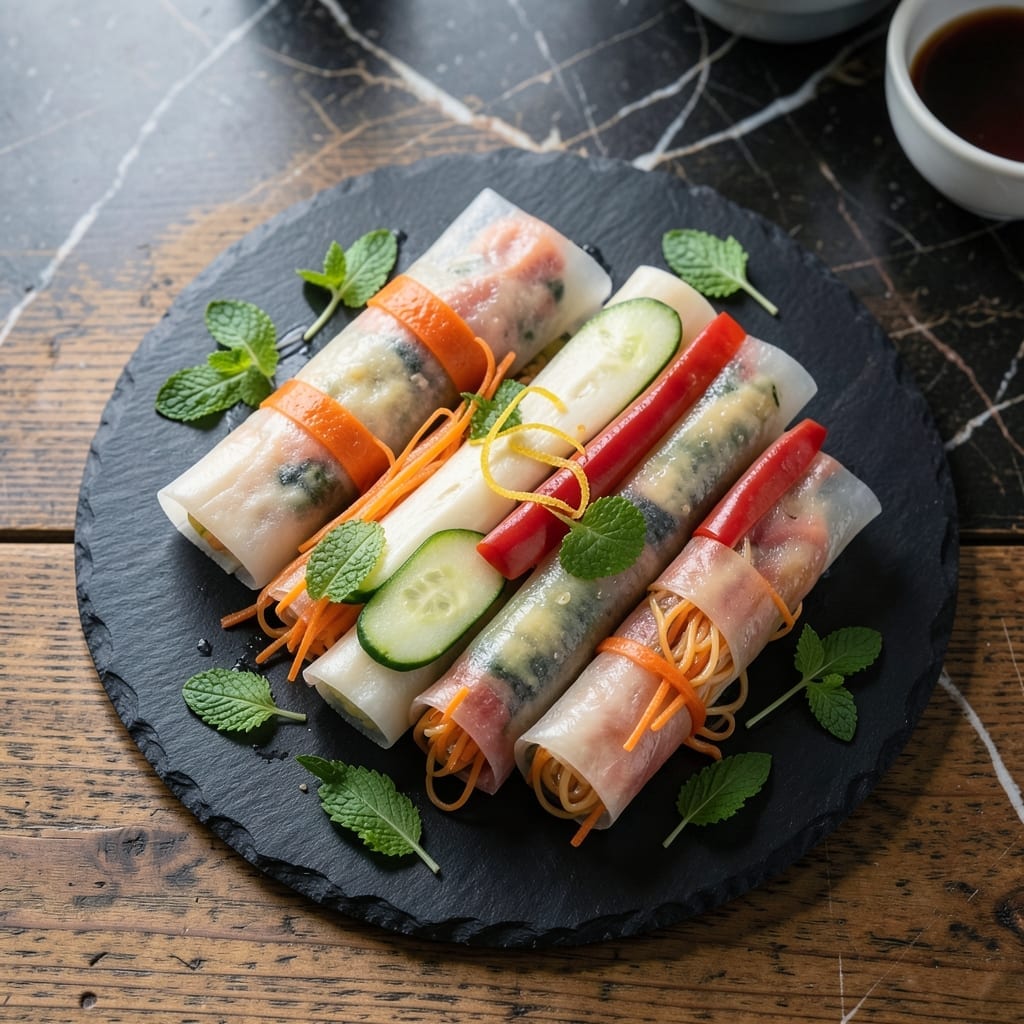
There’s something special about the delicate crunch of fresh rice paper rolls that makes them irresistible. This recipe transforms simple ingredients into elegant, flavor-packed bites that work as both an appetizer and a light meal.
The key is using fresh vegetables and properly softened rice paper for that perfect chewy texture. I’ve refined the technique to ensure each roll holds together without tearing, while maintaining that signature translucent appearance.
You’ll end up with rolls that are crisp from the herbs and veggies, with a subtle sweetness from the shrimp or tofu. The dipping sauce ties everything together with a balance of tangy, sweet, and umami flavors.
Serve these at your next gathering for a dish that’s as impressive as it is fresh. Here’s how to make them perfectly every time.
Ingredients for Japanese Rice Paper Rolls
Fresh herbs, crisp vegetables, and chewy rice paper make these rolls a vibrant, plant-based delight.
| Ingredient | Amount | Notes |
|---|---|---|
| Rice Paper Wrappers 🍚 | 8 sheets | 22 cm diameter, spring roll type |
| Firm Tofu 🧈 | 14 oz | Pressed and sliced into thin strips |
| Carrots 🥕 | 2 whole | Julienned into matchsticks |
| Cucumber 🥒 | 1 whole | Seeded and julienned |
| Red Bell Pepper 🌶️ | 1 whole | Thinly sliced into strips |
| Fresh Mint Leaves 🌿 | ½ cup | Loosely packed, stems removed |
| Fresh Cilantro 🍃 | ½ cup | Loosely packed, stems removed |
| Fresh Thai Basil 🌿 | ¼ cup | Loosely packed, stems removed |
| Rice Vermicelli Noodles 🍜 | 3 oz | Cooked according to package |
| Peanut Butter 🥜 | ¼ cup | Creamy, unsweetened for dipping sauce |
| Soy Sauce 🫒 | 3 tbsp | Low-sodium preferred for dipping sauce |
| Lime Juice 🍋 | 2 tbsp | Freshly squeezed for dipping sauce |
| Maple Syrup 🍁 | 1 tbsp | Or agave nectar for dipping sauce |
| Garlic Clove 🧄 | 1 clove | Minced for dipping sauce |
| Fresh Ginger 🌿 | 1 tsp | Grated for dipping sauce |
The rice paper wrappers are critical here. Look for 22 cm spring roll wrappers at Asian markets or the international aisle—smaller ones tear too easily. Nasoya or Annie Chun’s brands are reliable. For tofu, extra-firm or super-firm holds shape best; press it well to remove excess moisture (wrap in a towel, place a heavy pan on top for 15 minutes). Fresh herbs should be bright and aromatic—avoid wilted bunches.
No tofu? Tempeh or baked marinated mushrooms work well. For the dipping sauce, tamari substitutes soy sauce at a 1:1 ratio. If peanut butter is off-limits, almond or sunflower seed butter gives similar richness. The lime juice can be bottled (in a pinch), but fresh makes a noticeable difference. Maple syrup can be swapped for agave or coconut sugar dissolved in warm water.
Store unopened rice paper in a cool, dry place for up to 1 year. Once opened, transfer to an airtight container with a desiccant packet. Tofu keeps in the fridge submerged in water for 5 days. The dipping sauce stays fresh for 1 week refrigerated—shake before using as it may separate.
Why You’ll Love This Recipe
- No Cook Needed: I just soak the rice paper, stuff with tofu and veggies, and roll—no stove, no stress.
- Crunch in Every Bite: The raw carrot and bell pepper stay crisp against the soft tofu, and that contrast? Ridiculously good.
- Lunchbox Hero: Honestly, these keep for days in the fridge and travel like a dream to work or picnics.
- Budget Stretcher: A pack of rice paper and a block of tofu feed four of us for under ten bucks. I’ll be real: it’s my wallet’s favorite meal.
Step-by-Step Instructions for Japanese Rice Paper Rolls
Master these precise assembly techniques for perfectly textured rolls with every bite.
Step 1: Prepare the Filling Components
Begin by organizing all prepared ingredients: the 14 oz firm tofu strips, julienned carrots, seeded cucumber, sliced red bell pepper, and cooked rice vermicelli noodles. I arrange them in separate small bowls for easy access during assembly. The vegetal elements should be uniformly cut into thin, 2-3 inch lengths for optimal texture.
Ensure the rice vermicelli noodles are cooked according to package instructions, then rinsed with cold water to stop the cooking process. They should be tender yet slightly springy. This step prevents them from becoming mushy when wrapped. Keep all components covered to retain freshness until ready to use.
Step 2: Hydrate and Softening the Rice Paper
Fill a wide, shallow dish with warm water (approximately 85-90°F). Submerge one rice paper wrapper at a time, ensuring it’s fully immersed. The paper will begin to soften within seconds, becoming pliable after 10-15 seconds of soaking.
Remove the wrapper from the water and lay it flat on a clean, damp kitchen towel. The surface should be slightly tacky but not overly wet. If it feels too rigid, return it to the water for 5 more seconds. Work quickly but carefully—over-soaking makes the papers too fragile to handle.
Step 3: Assemble the Rolls with Precision
Place a portion of the prepared fillings in the lower third of the softened wrapper: a few tofu strips, several pieces of carrots, cucumber, and red bell pepper, plus a small bundle of rice vermicelli noodles. Add a sprinkle of the herbs: fresh mint leaves, fresh cilantro, and fresh Thai basil.
Fold the bottom edge over the fillings, then fold in the sides, and finally roll tightly away from you, similar to a burrito. The tension should be firm enough to hold the shape but not so tight that it tears the wrapper. Place each finished roll seam-side down on a serving platter.
Repeat with the remaining 7 sheets rice paper wrappers and filling components. If the papers begin to dry out during assembly, cover them with a damp towel to maintain flexibility.
Step 4: Create the Peanut Dipping Sauce
In a small bowl, whisk together the 0.25 cup peanut butter, 3 tbsp soy sauce, 2 tbsp lime juice, and 1 tbsp maple syrup until smooth. The mixture should have a pourable consistency, similar to heavy cream. If it’s too thick, add a teaspoon of warm water to loosen.
Stir in the minced garlic clove and 1 tsp fresh ginger, ensuring they’re evenly distributed. Taste and adjust seasoning if needed—the sauce should balance sweet, salty, and tangy notes. Transfer to a serving bowl and let it sit for 5 minutes to allow the flavors to meld.
Pro Tips For Making Japanese Rice Paper Rolls
- Soften Wrappers Right: Dip rice paper in warm water for 5-7 seconds, not longer—I learned this the hard way after ending up with gummy, torn wrappers. Lay them flat on a damp towel to stay pliable while you fill.
- Press the Tofu: Wrap firm tofu in a clean towel, place a heavy pan on top for 15 minutes. Sounds tedious, but it actually changes the outcome by keeping the rolls from getting soggy.
- Slice Thin, Evenly: Use a mandoline or sharp knife to cut carrots, cucumber, and bell pepper into matchstick-sized pieces. After burning through three batches with uneven fills, I finally figured out consistency matters most.
- Skip the Overfill: Use about 2 tablespoons of filling per wrapper, max. My grandmother swore by this, and she was right: overstuffing leads to messy breaks and hard-to-eat rolls.
Make-Ahead Tips for Leftovers
Prep Ahead Strategy
All your vegetables can be julienned and stored in airtight containers with damp paper towels for up to 2 days in the fridge. I keep carrots, cucumber, and bell pepper separate to maintain crispness. The tofu can be pressed and sliced a day ahead too.
Noodle Prep
Cook your rice vermicelli noodles the morning of serving. Rinse with cold water, drain well, and toss with a tiny bit of oil to prevent sticking. Store in the fridge until ready to use. They’ll stay fresh for 24 hours this way.
Herb Storage
Fresh herbs are delicate. Trim the stems and place mint, cilantro, and Thai basil in glasses with 1 inch of water. Cover loosely with plastic bags and refrigerate for up to 2 days. Change water daily. 💡
Sauce Advance
The peanut dipping sauce actually tastes better after sitting. Whisk it together up to 3 days ahead and store in a jar in the fridge. The flavors deepen beautifully. Just give it a good stir before serving.
Last Minute Assembly
Only soften the rice paper wrappers right before assembly. If you must prep earlier, cover the stack with a very damp towel and plastic wrap for up to 2 hours. They’ll still be workable, though slightly less pliable.
Serving Setup
Line your serving platter with damp lettuce leaves to keep the finished rolls from sticking. Cover with a barely damp towel until guests arrive. These stay fresh at room temperature for about 1 hour before serving. 🥗
Nutrition Facts
Frequently Asked Questions
How long should I soak the rice paper?
Soak each wrapper for 10-15 seconds in warm water until pliable but still slightly firm. Over-soaking makes them too fragile to work with.
Can I make these rolls ahead of time?
Yes, but keep the fillings and wrappers separate until serving. Once assembled, they stay fresh for about 1 hour at room temperature.
What’s the best way to prevent tearing?
Work on a damp towel and avoid overfilling. Use 2-3 inch veggie pieces and roll tightly but gently.
Can I use a different dipping sauce?
Hoisin, sweet chili, or sriracha-lime sauces pair well. Adjust sweetness and spice to your taste.

- Mujadara Rice and Lentils Recipe: Earthy Spiced Lentils With Caramelized Onions - November 1, 2026
- Naija Fried Rice Recipe: Street-Style Spice With Veggie Crunch - November 1, 2026
- Mushy Rice Recipe: Fluffy Grains Transformed in Minutes - November 1, 2026