
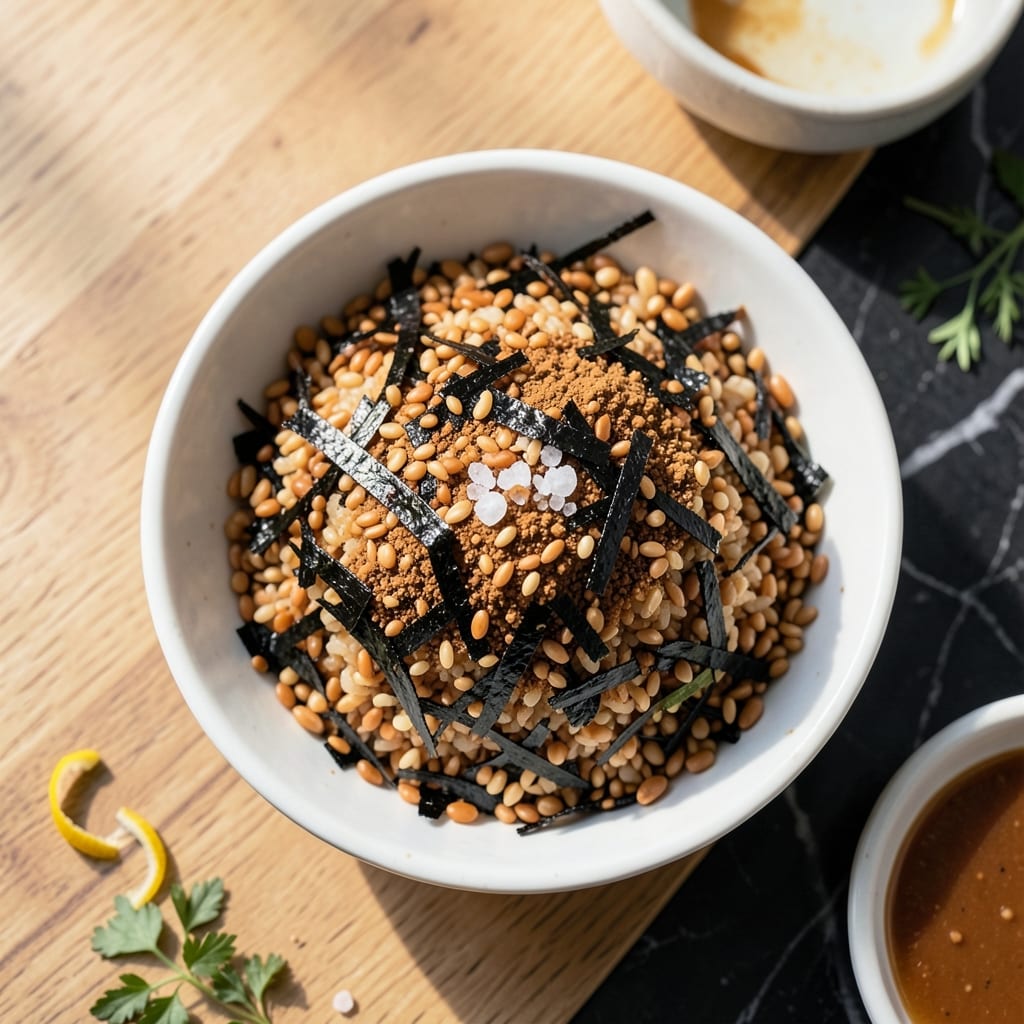
This dry seasoning blend transforms plain rice into a flavor-packed experience with minimal effort. I developed this version after years of experimenting with store-bought furikake, perfecting the balance of salty, sweet, and umami notes.
The beauty of this recipe lies in its simplicity. With just 5 ingredients and 5 minutes of prep, you create a versatile topping that enhances rice, noodles, or even avocado toast. Toasted sesame seeds and nori flakes form the flavor foundation.
What makes this special is its adaptability. Sprinkle it over steamed rice for an instant upgrade, or use it as a garnish for soups and salads. The dried ingredients ensure a long shelf life without refrigeration.
Make a big batch and keep it on hand. This blend will become your go-to for adding restaurant-quality flavor to everyday meals.
Ingredients for Japanese Rice Seasoning Furikake
Five dry ingredients create this umami-rich sprinkle for rice and beyond.
| Ingredient | Amount | Notes |
|---|---|---|
| Toasted Sesame Seeds 🌰 | ½ cup | White or black variety |
| Dried Nori Flakes 🌿 | ¼ cup | Crumbled seaweed sheets |
| Granulated Sugar 🍚 | 1 tbsp | Fine white sugar preferred |
| Sea Salt 🧂 | 1 tsp | Fine grain for even distribution |
| Soy Sauce Powder 🫒 | 1 tbsp | Or substitute msg if unavailable |
The nori flakes are the umami backbone here. Look for high-quality sheets at Asian markets or the international aisle—avoid pre-seasoned varieties. Kikkoman nori is a reliable brand. For sesame seeds, toast them yourself (350°F for 5-7 minutes) for maximum freshness, though pre-toasted from Trader Joe’s saves time without sacrificing much flavor.
No nori? Crushed roasted seaweed snacks work in a pinch. Out of sesame seeds? Crushed peanuts or almonds add a different but delicious crunch. The soy sauce powder is key for that salty depth—find it at Asian grocery stores or online. If you’re avoiding soy, coconut aminos powder is a decent substitute with a milder taste.
Store in an airtight container at room temperature—no refrigeration needed. Keeps for 6-12 months without losing potency. The flavors actually deepen over time. Double or triple the batch; it’s that good.
Why You’ll Love This Recipe
- No Fuss Mixing: Toasted sesame seeds and nori flakes blend effortlessly with just a fork and a bowl—no fancy tools, no mess.
- Umami Bomb: That first bite of soy sauce powder and sea salt hitting the rice? Ridiculously good, like a flavor party in my mouth.
- Rice’s Best Friend: I sprinkle this on everything—steamed rice, avocado toast, even scrambled eggs. Honestly, it’s my secret weapon.
- Pantry Staple: Five ingredients I always have on hand, and it keeps for weeks. I’ll be real: it’s saved me from more than one last-minute dinner panic.
Step-by-Step Instructions for Japanese Rice Seasoning Furikake
This straightforward method ensures even distribution of flavors and perfect texture every time.
Step 1: Toast the Sesame Seeds for Enhanced Aroma
Heat a dry skillet over medium-low heat and add the 0.5 cup Toasted Sesame Seeds. Stir constantly with a wooden spoon for 2-3 minutes until they become golden brown and release a nutty fragrance.
Watch closely—sesame seeds burn easily. You want them just lightly toasted, not dark brown. This step intensifies their natural oils and adds depth to the final blend. Remove from heat and let cool completely before proceeding.
Step 2: Combine Dry Ingredients for Balanced Flavor
In a medium bowl, add the cooled 0.5 cup Toasted Sesame Seeds, 0.25 cup Dried Nori Flakes, 1 tbsp Granulated Sugar, and 1 tsp Sea Salt. The nori flakes should be crumbled into small, even pieces for consistent texture.
Gently stir with a fork to distribute the ingredients evenly. The sugar balances the saltiness while the sea salt enhances the umami notes from the nori. Avoid overmixing, which could cause the nori to clump.
Step 3: Incorporate the Soy Sauce Powder for Umami Depth
Sprinkle the 1 tbsp Soy Sauce Powder over the dry mixture. This ingredient is the secret to authentic furikake flavor, providing concentrated umami without added moisture.
Fold everything together with a spatula until the powder is fully incorporated and the mixture appears uniform. The color should be a speckled light brown with visible green nori flecks. Taste and adjust seasoning if needed, though the recipe is balanced as written.
Step 4: Store Properly to Preserve Freshness
Transfer the finished furikake to an airtight container. Glass jars work best for visibility and freshness. Store in a cool, dark place for up to 2 weeks for optimal flavor.
The blend will keep longer but may lose some potency over time. Shake the container before each use to redistribute the ingredients, as the lighter nori flakes tend to rise to the top.
Pro Tips For Making Japanese Rice Seasoning Furikake
- Toast sesame low: Use medium-low heat when toasting sesame seeds—high heat burns them fast, turning them bitter instead of nutty. I learned this the hard way after ruining two batches.
- Crush nori finely: Pulse the nori flakes in a spice grinder or crush them with your hands until they’re almost powdery. Big pieces feel oddly chewy in the final mix.
- Balance the salt: Taste as you go with the sea salt, especially if your soy sauce powder is already salty. Sounds obvious, but I overdid it my first three tries.
- Cool before storing: Let the furikake cool completely before transferring to a jar—trapped heat makes it clump. I skip this when I’m lazy, but the texture suffers.
Best Sauces and Condiments for japanese rice seasoning furikake
Soy Sauce Drizzle
A light drizzle of low-sodium soy sauce enhances this creation’s umami depth. I mix 1 tbsp soy sauce with ½ tsp sesame oil for extra aroma. Drizzle just before serving to maintain the sprinkle’s crisp texture. 💡
Sriracha Mayo
Combine 2 tbsp mayonnaise with 1 tsp sriracha for a creamy, spicy contrast. The heat cuts through the richness while complementing the nori’s oceanic notes. Kewpie mayo adds authentic Japanese flavor.
Pickled Ginger
Thin slices of pickled ginger add a refreshing, tangy crunch. The vinegar’s acidity brightens the blend’s salty-sweet profile. I buy mine at Asian markets or make a quick version with rice vinegar and sugar.
Miso Glaze
Whisk 1 tbsp white miso paste with 1 tsp honey and 1 tsp warm water for a glossy glaze. Brush lightly over rice before sprinkling for layered flavor. Miso Master brand is my go-to. ✨
Scallion Oil
Heat ¼ cup neutral oil with 3 chopped scallions until fragrant, then strain. Drizzle this aromatic oil over your meal for a fresh, oniony finish. Store extras in the fridge for up to 1 week.
Wasabi Paste
A tiny dab of wasabi paste (about ¼ tsp) adds a sinus-clearing kick. Mix with a bit of water to thin if needed. The spicy heat contrasts beautifully with the blend’s savory notes.
Nutrition Facts
Frequently Asked Questions
Can I use regular seaweed sheets instead of nori flakes?
Yes! Simply toast 2-3 full nori sheets over low heat for 10-15 seconds per side, then crumble into small flakes. Avoid pre-seasoned sheets, as they may add unwanted flavors.
How can I make this gluten-free?
Replace the soy sauce powder with 1 tbsp coconut aminos powder or 1 tsp fine sea salt. Both maintain the umami taste without gluten. Always check labels for hidden ingredients.
What’s the best way to use this on dishes besides rice?
Sprinkle over scrambled eggs, avocado toast, or popcorn for a savory twist. It also elevates soups, salads, and roasted vegetables. Try it on buttered corn for a unique flavor!
Why does my blend taste too salty?
Balance it by adding more toasted sesame seeds or a pinch of sugar. If using soy sauce powder, measure carefully—it’s highly concentrated. Taste as you go.

- Mujadara Rice and Lentils Recipe: Earthy Spiced Lentils With Caramelized Onions - November 1, 2026
- Naija Fried Rice Recipe: Street-Style Spice With Veggie Crunch - November 1, 2026
- Mushy Rice Recipe: Fluffy Grains Transformed in Minutes - November 1, 2026