
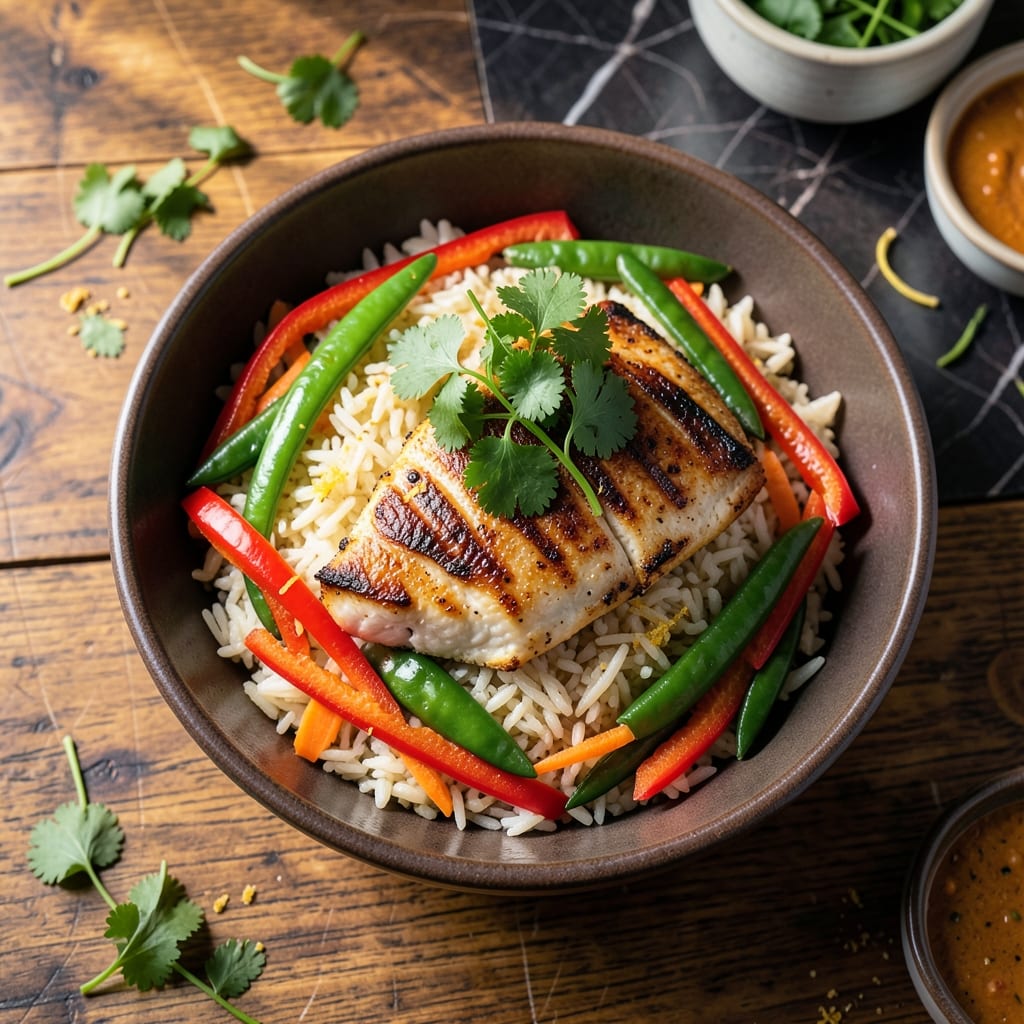
This mahi mahi rice bowl brings tropical flavors to your dinner table with a perfectly balanced combination of fresh fish and hearty grains. I developed this recipe to capture the essence of island cuisine without complicated techniques.
The mahi mahi is lightly seasoned and seared to maintain its natural sweetness, while the rice serves as a neutral base for the bold flavors. Fresh vegetables and a citrusy sauce tie everything together into a cohesive, satisfying meal.
What you get is a restaurant-quality dish that’s as nutritious as it is delicious, with tender fish, fluffy rice, and vibrant toppings in every bite. It’s a complete meal that’s ready in under 30 minutes.
Serve it for a quick weeknight dinner or a casual gathering. Here’s how to make it.
Ingredients for Mahi Mahi Rice Bowl
Fresh fish, vibrant veggies, and fluffy rice make this bowl sing with island flavors.
| Ingredient | Amount | Notes |
|---|---|---|
| Mahi Mahi Fillets 🐟 | 1 ½ lb | Skinless, about 1-inch thick |
| Jasmine Rice 🍚 | 2 cups | Uncooked, rinsed before cooking |
| Red Bell Pepper 🌶️ | 1 whole | Thinly sliced for crunch |
| Snap Peas 🥬 | 1 cup | Fresh or frozen, ends trimmed |
| Carrots 🥕 | 2 whole | Julienned or spiralized |
| Fresh Cilantro 🌿 | ½ cup | Chopped, for garnish |
| Lime 🍋 | 2 whole | Zested and juiced |
| Soy Sauce 🫒 | 3 tbsp | Low-sodium preferred |
| Honey 🍯 | 1 tbsp | For citrus sauce balance |
| Fresh Ginger 🌱 | 1 tbsp | Minced or grated |
| Garlic Cloves 🧄 | 3 cloves | Minced for depth |
| Sesame Oil 🫒 | 1 tbsp | Toasted for aroma |
| Olive Oil 🫒 | 2 tbsp | For searing fish |
| Kosher Salt 🧂 | 1 tsp | Plus more to taste |
| Black Pepper 🌶️ | ½ tsp | Freshly ground preferred |
The mahi mahi is the star here. Look for firm, translucent fillets—if it smells fishy or looks dull, pass on it. Most seafood counters at Whole Foods or Trader Joe’s will cut it to order (ask for 1-inch thickness). Jasmine rice is ideal for its fragrant, slightly sticky texture, but basmati works in a pinch. The ginger and garlic? Fresh is non-negotiable—jarred just doesn’t hit the same.
No mahi mahi? Swordfish or halibut hold up just as well to searing. Snap peas can be swapped for snow peas or green beans (trimmed to 2-inch pieces). If you’re out of lime, lemon works at a 1:1 ratio. For the soy sauce, tamari is a great gluten-free alternative. The honey can be replaced with agave or maple syrup—start with half the amount and adjust to taste.
Cook the rice first—it’ll keep warm while you sear the fish. Leftovers? Not likely, but they’ll hold in the fridge for 2 days (reheat gently to avoid drying out the fish). The sauce can be made a day ahead—store it in a sealed jar and shake before using.
Why You’ll Love This Recipe
- One Pan Wonder: I throw the mahi mahi, rice, and veggies together in a single pan—minimal cleanup, maximum flavor.
- Crave-Worthy Bite: That flaky mahi with the crisp snap peas and sweet carrots? Honestly, I could eat this every day.
- Meal Prep Champ: I make a big batch on Sunday, and it reheats like a dream for lunches all week.
- Budget-Friendly Feast: Mahi mahi fillets stretch far with rice and veggies, so it feels fancy without the price tag.
Step-by-Step Instructions for Mahi Mahi Rice Bowl
Here’s the method. Straightforward, tested, works every time.
Step 1: Cook the Jasmine Rice to Fluffy Perfection
Rinse the 2 cups Jasmine Rice under cold water until the water runs clear. This removes excess starch and prevents the grains from sticking together. I use a fine-mesh strainer for this step to make it easier.
Combine the rinsed rice with 3 cups of water in a saucepan. Add ½ tsp of the Kosher Salt and bring to a boil over high heat. Once boiling, reduce to low heat, cover, and simmer for 15 minutes until the water is absorbed and the rice is tender. Remove from heat and let it sit covered for 5 minutes—this steaming step ensures every grain is perfectly cooked.
Step 2: Sear the Mahi Mahi Fillets to Golden Brown
Pat the 1.5 lb Mahi Mahi Fillets dry with paper towels and season both sides with the remaining ½ tsp Kosher Salt and all of the Black Pepper. This step is crucial for achieving a good sear and locking in the natural juices.
Heat the 2 tbsp Olive Oil in a large skillet over medium-high heat until it shimmers. Add the fillets and cook for 4-5 minutes per side until they’re golden brown and flake easily with a fork. The fish is done when it reaches an internal temperature of 145°F. Transfer to a plate and keep warm.
Step 3: Sauté the Vegetables Until Tender-Crisp
In the same skillet, add the 1 tbsp Sesame Oil. Toss in the Red Bell Pepper, Snap Peas, and Carrots, stirring to coat in the oil. Sauté over medium-high heat for 5-6 minutes until the vegetables are tender but still maintain a slight crunch.
Add the minced Fresh Ginger and Garlic Cloves, cooking for an additional 30 seconds until fragrant. Be careful not to burn the garlic—it turns bitter quickly. The aroma should be intoxicating at this point, signaling that the flavors are melding beautifully.
Step 4: Create the Citrus Sauce and Assemble the Bowls
In a small bowl, whisk together the Soy Sauce, Honey, zest and juice of the Lime. This sauce adds a bright, tangy contrast to the rich fish and hearty rice. Taste and adjust the seasoning if needed—you want a balance of sweet, salty, and sour.
To assemble, divide the cooked rice among four bowls. Top each with a portion of the Mahi Mahi fillets and the sautéed vegetables. Drizzle generously with the citrus sauce and garnish with the Fresh Cilantro. Serve immediately while everything is hot and the flavors are at their peak.
Pro Tips For Making Mahi Mahi Rice Bowl
- Pat the Mahi Dry: I learned this the hard way—wipe the fillets with a paper towel before seasoning, or they’ll steam instead of sear, and you’ll lose that golden crust.
- Rinse the Rice: Jasmine rice can be starchy; give it a quick rinse under cold water until the water runs clear, or your bowl will end up gummy.
- Slice Veggies Thin: Red bell pepper and carrots stay crisp if cut into thin strips, about 1/8-inch—any thicker and they won’t soften enough in the short cook time.
- Rest the Mahi: Pull the fillets off the heat just before they’re fully done, tent with foil for 5 minutes, and they’ll finish cooking without turning dry.
Serving Suggestions for mahi mahi rice bowl
Plating Like a Pro
Use shallow, wide bowls to showcase the layers. Start with a generous base of jasmine rice, then arrange the mahi mahi slightly off-center for visual interest. I love the contrast of the white fish against the golden rice. 💛
Garnish for Impact
Sprinkle the fresh cilantro over the top just before serving to keep it vibrant. Add a few lime wedges on the side—2-3 per bowl—so guests can squeeze extra citrus if desired. The bright green pops against the other colors.
Sauce Presentation
Drizzle the citrus sauce in a zigzag pattern over the fish and veggies. For extra flair, use a squeeze bottle to create thin lines. I also like to serve extra sauce in a small ramekin on the side.
Side Pairings
A simple cucumber salad with rice vinegar complements the tropical flavors. Or try steamed edamame sprinkled with sea salt for a light, protein-packed addition. These keep the meal balanced without overpowering the star ingredients.
Temperature Note
Serve the bowls immediately while the fish is hot and the rice is steaming. The contrast of warm elements with the cool, crisp veggies creates the perfect bite. If preparing ahead, keep components separate and assemble just before serving.
Family-Style Option
For gatherings, arrange everything on a large platter and let guests build their own bowls. This works great with 4-6 people and makes the meal interactive. Just be sure to have extra sauce on hand! 🔥
Nutrition Facts
Frequently Asked Questions
Can I use a different type of fish?
Firm white fish like halibut or swordfish work well. Avoid delicate fish like tilapia as they may fall apart during searing.
How do I know when the fish is done?
It’s ready when it reaches 145°F internally and flakes easily with a fork. The flesh should turn opaque and pull apart cleanly.
Can I make this ahead of time?
Cook components separately and store in the fridge for up to 2 days. Assemble and reheat gently just before serving to prevent drying out.
What rice works best?
Jasmine rice is ideal for its fragrance, but basmati or brown rice can be substituted. Adjust cooking times as needed for your chosen variety.

- Mujadara Rice and Lentils Recipe: Earthy Spiced Lentils With Caramelized Onions - November 1, 2026
- Naija Fried Rice Recipe: Street-Style Spice With Veggie Crunch - November 1, 2026
- Mushy Rice Recipe: Fluffy Grains Transformed in Minutes - November 1, 2026