
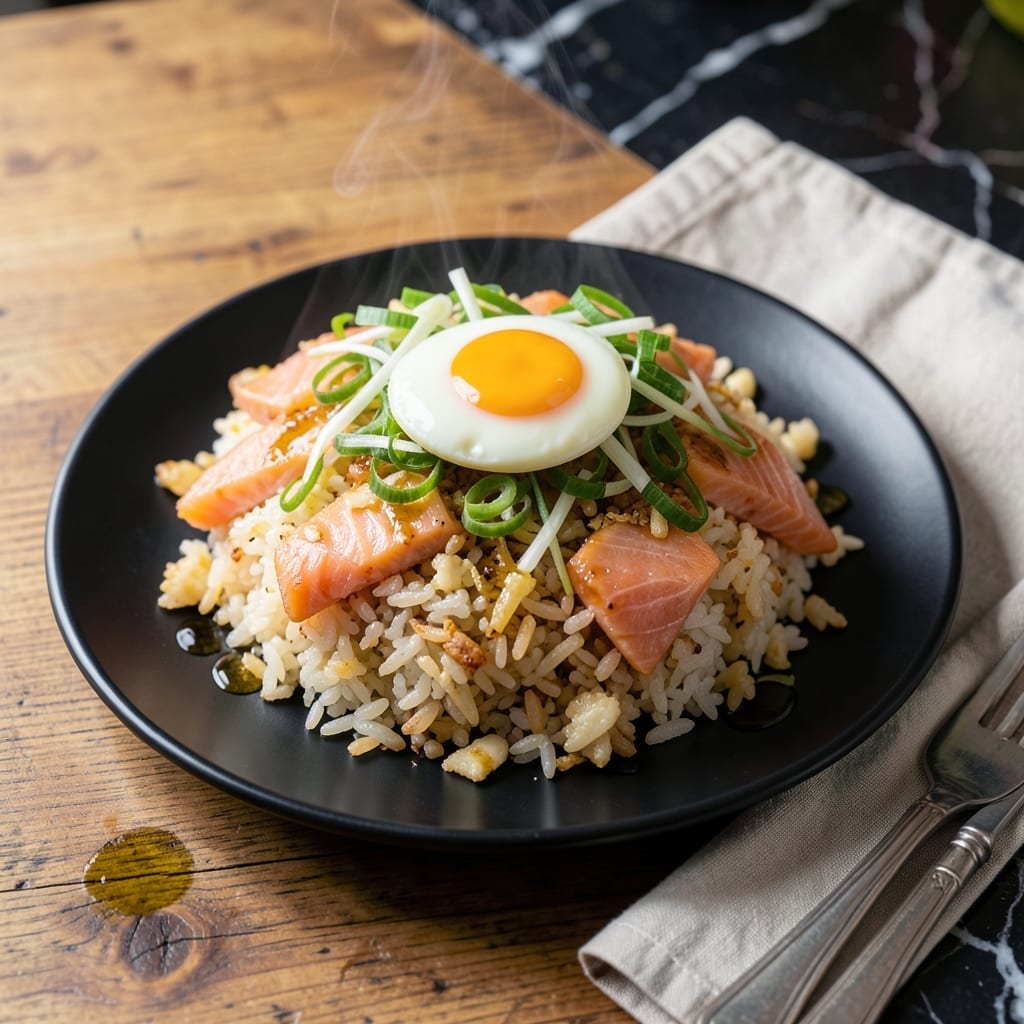
This Japanese-inspired fried rice transforms leftover salmon into a restaurant-quality meal with minimal effort. The key is using cold, day-old rice and high heat to achieve that signature wok-seared texture.
I developed this recipe after too many takeout containers piled up, realizing I could recreate those complex umami flavors at home. Fresh herbs and a splash of soy sauce elevate simple ingredients into something extraordinary.
The result is a dish with perfectly cooked salmon, fluffy rice grains, and layers of savory depth from garlic, ginger, and sesame. Each bite delivers that satisfying contrast of textures and flavors.
Ready in under 20 minutes, this proves weeknight dinners can be both quick and impressive.
Ingredients for Japanese Salmon Fried Rice
Leftover salmon and day-old rice become a restaurant-style dish with these umami-packed ingredients.
| Ingredient | Amount | Notes |
|---|---|---|
| Cooked Salmon 🐟 | 1 lb | Flaked, skin removed, leftover preferred |
| Day-Old Cooked White Rice 🍚 | 4 cups | Cold, preferably overnight |
| Large Eggs 🥚 | 2 whole | Lightly beaten |
| Green Onions 🧅 | ½ cup | Thinly sliced, white and green parts separated |
| Fresh Garlic Cloves 🧄 | 3 cloves | Minced finely |
| Fresh Ginger Root 🌿 | 1 tbsp | Peeled and grated |
| Soy Sauce 🫒 | 3 tbsp | Low-sodium preferred |
| Sesame Oil 🫒 | 1 tbsp | Toasted variety for depth |
| Neutral Cooking Oil 🫒 | 2 tbsp | High smoke point like vegetable or canola |
| Frozen Peas 🌱 | ½ cup | Thawed, optional for color |
| Fresh Cilantro 🌿 | ¼ cup | Chopped, for garnish |
| Sesame Seeds 🌾 | 1 tsp | Toasted for garnish |
| Nori Sheets 🍣 | 1 sheet | Cut into thin strips for garnish |
| Kosher Salt 🧂 | ½ tsp | Or to taste |
| Ground White Pepper 🌶️ | ¼ tsp | For subtle heat |
The salmon should be wild-caught if possible—its richer flavor stands up to the bold seasonings. Sushi-grade works too if you’re making it fresh. Day-old rice is non-negotiable: jasmine or short-grain gives the right chewy texture. For the soy sauce, Kikkoman low-sodium is a reliable supermarket pick. The ginger and garlic must be fresh—no powders here (they’ll taste bitter when seared).
No salmon on hand? Tuna or trout work just as well. For a vegetarian twist, swap in crispy tofu cubes. The peas can be swapped for diced carrots or bell peppers (just sauté them first). If you’re out of white pepper, black pepper at half the amount is fine. Fresh herbs are key—Thai basil can replace cilantro if you prefer its anise notes.
Store cooked salmon in the fridge for up to 3 days before using. Day-old rice keeps well for 2-3 days in the fridge. The finished dish is best eaten fresh but reheats nicely in a skillet with a splash of water. Leftovers keep for 2 days refrigerated.
Why You’ll Love This Recipe
- One Pan Wonder: I toss the rice, salmon, and eggs in the same pan—minimal cleanup, maximum flavor.
- Umami Bomb: The garlic and salmon create that rich, savory depth I crave in every bite.
- Weeknight Hero: Honestly, it’s my go-to for busy evenings when I need dinner fast.
- Leftovers Reinvented: I use yesterday’s rice and leftover salmon—nothing goes to waste, and it tastes even better.
Step-by-Step Instructions for Japanese Salmon Fried Rice
Master the technique for perfectly seared grains with balanced umami and fresh herbal notes.
Step 1: Prepare the Aromatics and Protein
Begin by flaking the 1 lb Cooked Salmon into bite-sized pieces, ensuring all skin is removed. Set aside. Finely mince the 3 cloves Fresh Garlic Cloves and grate the 1 tbsp Fresh Ginger Root—this forms the aromatic base that defines the dish.
Thinly slice the 0.5 cup Green Onions, keeping the white and green parts separate. The whites will cook into the rice for depth, while the greens add freshness at the end. Lightly beat the 2 whole Large Eggs in a small bowl until just combined, taking care not to overmix.
Step 2: Sear the Eggs and Aromatics
Heat a wok or large skillet over high heat until nearly smoking. Add 2 tbsp Neutral Cooking Oil and swirl to coat. Pour in the beaten eggs and let them set for 20-30 seconds until the edges begin to firm. Scramble gently with a spatula until just cooked but still slightly soft—this ensures tenderness in the final dish.
Push the eggs to one side and add the minced garlic and grated ginger to the empty space. Stir constantly for 15-20 seconds until fragrant but not browned. Immediately add the white parts of the green onions and cook for another 10 seconds to soften slightly.
Step 3: Combine Rice and Seasonings
Add the 4 cups Day-Old Cooked White Rice to the wok, breaking up any clumps with your spatula. The cold, dry rice is critical—it fries up fluffy and separate rather than mushy. Drizzle the 3 tbsp Soy Sauce and 1 tbsp Sesame Oil evenly over the rice.
Sprinkle with 0.5 tsp Kosher Salt and 0.25 tsp Ground White Pepper, then stir-fry for 2-3 minutes until the rice is heated through and the grains begin to crisp slightly. Add the flaked salmon and 0.5 cup Frozen Peas (thawed), folding gently to avoid breaking up the fish.
Step 4: Finish with Fresh Herbs and Garnishes
Remove from heat and fold in the reserved green onion tops. The residual heat will soften them just enough while preserving their bright, oniony bite. Taste and adjust seasoning if needed—the soy sauce and salt should create a balanced savory base without overpowering.
Transfer to a serving platter and garnish with the 0.25 cup Fresh Cilantro, 1 tsp Sesame Seeds, and thin strips of 1 sheet Nori Sheets. The nori adds a subtle oceanic depth that complements the salmon beautifully. Serve immediately while the rice is hot and the garnishes are vibrant.
Pro Tips For Making Japanese Salmon Fried Rice
- Chill the Rice: Use day-old rice straight from the fridge—it’s drier and fries up fluffier instead of mushy. I learned this the hard way after making sad, clumpy fried rice with fresh rice.
- Flake the Salmon: Gently break the cooked salmon into small, even flakes with a fork before adding it to the pan. This ensures every bite has salmon and prevents big, awkward chunks.
- Skip the Crowding: Cook the eggs separately first, then set aside. Tossing them in with everything else makes the pan too crowded and steams the rice instead of frying it.
- Crisp the Garlic: Mince the garlic fines and cook it in hot oil for just 20-30 seconds until fragrant but not brown. Burnt garlic turns bitter and ruins the whole dish—ask me how I know.
Best Sauces and Condiments for This japanese salmon fried rice
Classic Umami Sauces
I always drizzle extra soy sauce at the table—Kikkoman low-sodium enhances the dish without overpowering it. For a richer experience, mix 1 tbsp soy sauce with 1 tsp mirin and ½ tsp sugar for a quick teriyaki glaze. 💫
Spicy Kick Options
Sriracha adds a garlicky heat that pairs perfectly with the salmon. For a milder option, try 1 tsp chili crisp with 1 tsp sesame oil—it brings crunch and depth. I keep both on hand for different moods.
Creamy Complements
A dollop of Japanese mayonnaise (like Kewpie) adds a silky texture that balances the savory rice. Mix 2 tbsp mayo with 1 tsp rice vinegar for a tangy twist. Honestly, this combo changed my fried rice game.
Fresh and Bright
Squeeze fresh lime wedges over each serving for a citrusy lift. A drizzle of ponzu sauce (about 1 tsp per serving) adds a refreshing yuzu note. The acidity cuts through the richness beautifully.
Herb-Infused Oils
Heat 2 tbsp neutral oil with 1 tbsp toasted sesame seeds and 1 minced garlic clove until fragrant, then strain. Drizzle this garlic-sesame oil over the rice for an aromatic finish. I make this weekly.
Nutrition Facts
Frequently Asked Questions
Can I use fresh salmon instead of leftover?
Yes, but cook and chill it first. Raw salmon needs to be pan-seared for 3-4 minutes per side, then cooled completely before adding to the rice.
Why does the rice need to be day-old?
Day-old rice is drier, which prevents mushiness when stir-fried. Fresh rice contains too much moisture and will turn gummy during cooking.
Can I make this gluten-free?
Easily! Swap soy sauce for tamari or coconut aminos. Check nori labels too—some contain wheat.
What if my fish breaks apart?
Gently fold it in at the end instead of stirring. Use a spatula to lift and turn the rice, keeping salmon pieces intact.

- Mujadara Rice and Lentils Recipe: Earthy Spiced Lentils With Caramelized Onions - November 1, 2026
- Naija Fried Rice Recipe: Street-Style Spice With Veggie Crunch - November 1, 2026
- Mushy Rice Recipe: Fluffy Grains Transformed in Minutes - November 1, 2026