
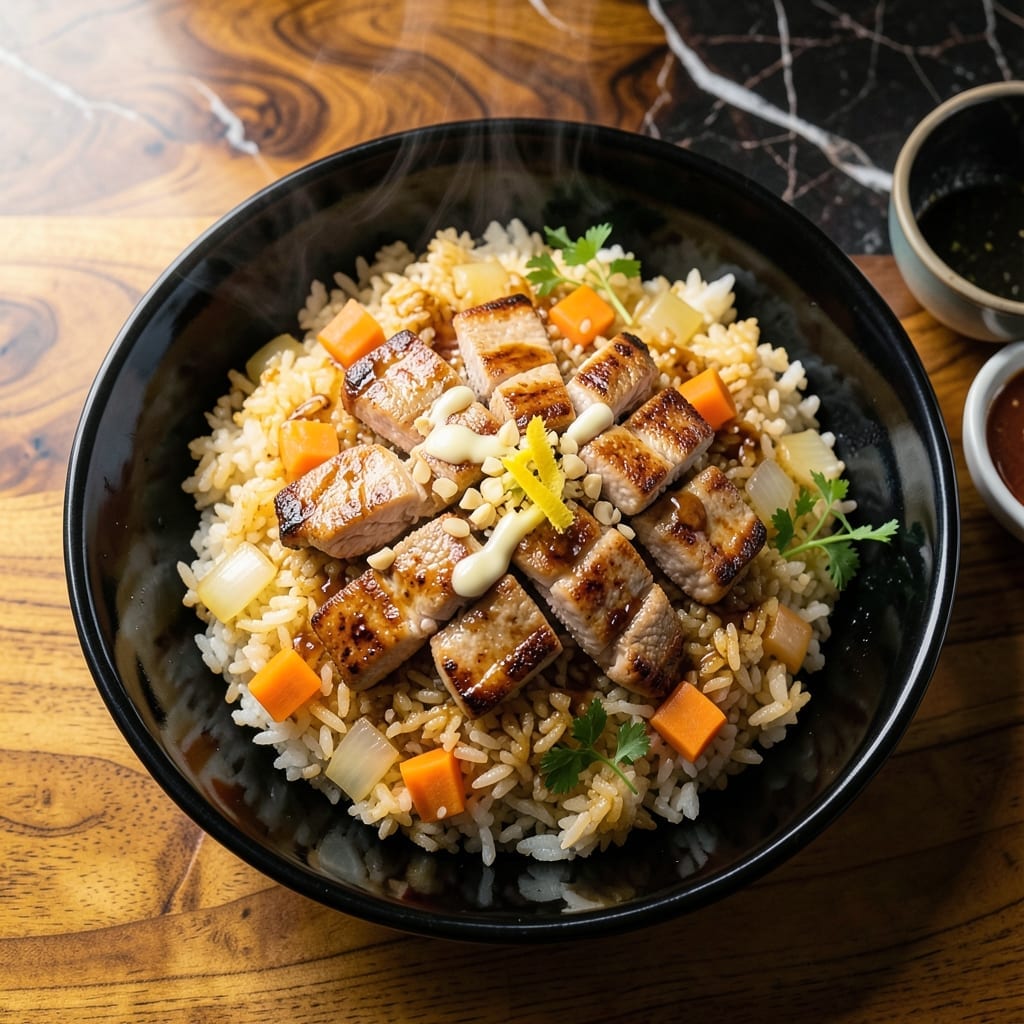
This Japanese steakhouse-style fried rice captures the umami-rich flavors and buttery richness that made hibachi famous. I developed this recipe after years of trying to recreate that signature wok-tossed texture at home.
The secret lies in using day-old rice, which fries up perfectly without turning mushy. High heat and constant stirring ensure each grain gets coated in the savory sauce while maintaining its individual texture.
You’ll love how the combination of soy sauce, garlic, and butter creates that distinctive hibachi flavor. The addition of protein and vegetables makes this a complete meal, not just a side dish.
Serve it alongside grilled meats or enjoy it on its own. This dish delivers restaurant-quality results every time with simple ingredients.
Ingredients for Japanese Steakhouse Hibachi Fried Rice
Cold rice, fresh veggies, and that buttery soy sauce magic. Simple stuff, big flavor.
| Ingredient | Amount | Notes |
|---|---|---|
| Day-Old Cooked White Rice 🍚 | 4 cups | Cold, preferably overnight |
| Unsalted Butter 🧈 | 4 tbsp | Divided for cooking stages |
| Soy Sauce 🫒 | ¼ cup | Low-sodium preferred |
| Garlic Cloves 🧄 | 3 cloves | Minced finely |
| Yellow Onion 🧅 | ½ whole | Diced small |
| Carrots 🥕 | 2 whole | Peeled, diced small |
| Zucchini 🥒 | 1 whole | Diced small |
| Frozen Green Peas 🌱 | ½ cup | Thawed or frozen |
| Large Eggs 🥚 | 2 whole | Lightly beaten |
| Boneless Chicken Breast 🍗 | ¾ lb | Cut into small cubes |
| Green Onions 🌱 | 3 whole | Thinly sliced for garnish |
| Sesame Oil 🫒 | 1 tbsp | Toasted, for finishing |
| Salt 🧂 | ½ tsp | Or to taste |
| Black Pepper 🌶️ | ¼ tsp | Freshly ground |
The rice is non-negotiable—day-old, cold, straight from the fridge. Fresh rice turns to mush. I grab mine from Whole Foods if I’m not making it myself. The butter? Land O’Lakes Unsalted is my go-to, but any good unsalted works. For the chicken, Costco’s pre-cubed saves time, but buy whole breasts and cube them yourself for better texture. Look for bright orange carrots and firm zucchini.
No chicken? Shrimp or beef work great—just adjust cooking time. Vegetarian? Swap in extra-firm tofu, pressed and cubed. Short on veggies? Bell peppers or mushrooms add nice texture. If you’re out of sesame oil, skip it—don’t use regular oil as a substitute. The soy sauce can be tamari for gluten-free, but taste as you go—it’s saltier.
Leftovers keep 3-4 days in the fridge. Reheat in a skillet with a splash of water to revive the texture. Freezes okay for 1 month, but the veggies get a little soft. Best eaten fresh, honestly.
Why You’ll Love This Recipe
- One Pan Magic: I toss everything—rice, butter, garlic, onion—into one pan and let the soy sauce work its magic. No fancy equipment, just big flavor.
- Buttery Garlic Bliss: The combo of melted butter, minced garlic, and caramelized onion hits that exact hibachi taste I crave. Honestly, it’s restaurant-level good.
- Meals for Days: Day-old rice actually works better, and this reheats like a dream. I’ll be real: leftovers taste just as good the next day.
- Budget Hero: White rice, butter, and a few pantry staples keep costs low. Feeds my family of four without breaking the bank.
Step-by-Step Instructions for Japanese Steakhouse Hibachi Fried Rice
Here’s how to nail that restaurant-quality texture and flavor at home.
Step 1: Prep All Ingredients for Fast Cooking
Start by dicing the 0.5 whole yellow onion, peeling and dicing the 2 whole carrots, and dicing the 1 whole zucchini. Mince the 3 cloves garlic cloves finely. Cut the 0.75 lb boneless chicken breast into small, even cubes for quick cooking. Lightly beat the 2 whole large eggs in a small bowl.
Thinly slice the 3 whole green onions and set aside for garnish. Measure out the 0.25 cup soy sauce, 4 tbsp unsalted butter, 1 tbsp sesame oil, 0.5 tsp salt, and 0.25 tsp black pepper. Having everything prepped ensures you can work quickly once the cooking starts.
Step 2: Cook Chicken and Vegetables in Batches
Heat a large skillet or wok over medium-high heat and add 2 tbsp unsalted butter. Once melted and foaming, add the cubed boneless chicken breast. Cook for 3-4 minutes, stirring occasionally, until the chicken is no longer pink and starts to brown lightly.
Remove the chicken from the skillet and set aside. In the same skillet, add the diced yellow onion, carrots, and zucchini. Stir-fry for 4-5 minutes until the vegetables are tender but still slightly crisp. Add the minced garlic cloves and cook for 30 seconds until fragrant.
Step 3: Scramble Eggs and Combine with Rice
Push the vegetables to one side of the skillet and add the remaining 2 tbsp unsalted butter to the empty space. Pour in the beaten 2 whole large eggs and scramble gently until just set but still slightly runny. This ensures the eggs will coat the rice evenly without overcooking.
Add the 4 cups day-old cooked white rice, breaking up any clumps with your spatula. Stir-fry for 2 minutes to combine the rice with the eggs and vegetables. The rice should start to toast slightly in the pan, adding a subtle nuttiness to the dish.
Step 4: Season and Finish with Signature Flavors
Drizzle the 0.25 cup soy sauce evenly over the rice mixture. Add the 0.5 cup frozen green peas, 0.5 tsp salt, and 0.25 tsp black pepper. Stir-fry for another 2-3 minutes, allowing the soy sauce to coat every grain of rice and the peas to heat through.
Return the cooked chicken to the skillet and mix everything together. Cook for an additional 1-2 minutes to ensure all ingredients are heated evenly. Taste and adjust seasoning if needed, though the soy sauce and salt should provide ample flavor.
Step 5: Garnish and Serve Immediately
Remove the skillet from heat and drizzle the 1 tbsp sesame oil over the fried rice. Toss gently to incorporate the oil, which adds a rich, nutty aroma. Garnish with the sliced green onions for a fresh, vibrant finish.
Serve immediately while hot, with the rice slightly crispy in spots and each bite packed with buttery richness, umami depth, and a medley of textures from the tender chicken and vegetables. This dish is best enjoyed fresh from the pan.
Pro Tips For Making Japanese Steakhouse Hibachi Fried Rice
- Use Cold Rice: Day-old rice from the fridge works best—it’s drier and fries up fluffier instead of turning mushy. I learned this the hard way after my first batch came out like sticky porridge.
- Crank the Heat: Get your pan or griddle screaming hot before adding the rice. High heat gives you that signature hibachi char and keeps the grains separate.
- Salt the Butter: Since you’re using unsalted butter, add a pinch of salt to it as it melts—this keeps the seasoning balanced, especially before the soy sauce goes in.
- Prep Onions Small: Dice the yellow onion finely so it cooks through quickly and disappears into the rice, just like at the steakhouse. Big chunks ruin the texture.
Perfect Pairings for This japanese steakhouse hibachi fried rice
Protein Pairings
For a complete hibachi experience, serve this fried rice with grilled shrimp or filet mignon. The buttery rice complements the smoky char of proteins cooked on a hot griddle. I love the combo with garlic butter shrimp for extra richness. 🍤
Vegetable Sides
A simple miso soup with tofu and wakame adds authenticity to your meal. Alternatively, try a crisp Asian cucumber salad with rice vinegar and sesame seeds. These light sides balance the richness of the fried rice beautifully.
Sauce Enhancements
Offer hibachi sauce (mayo, ketchup, soy sauce, garlic) on the side for dipping. A drizzle of sriracha adds heat that cuts through the buttery base. I keep both in small ramekins for customizable flavor.
Beverage Choices
An ice-cold Sapporo beer or Asahi pairs perfectly with the umami flavors. For non-alcoholic options, green tea (hot or iced) cleanses the palate between bites. The carbonation in beer enhances the dish’s savory notes. 🍺
Dessert Options
End with mochi ice cream in green tea or mango flavors for a traditional finish. For something lighter, fresh lychee or mandarin oranges provide a sweet contrast to the savory meal.
Garnish Bar
Set out small bowls of sesame seeds, nori strips, and pickled ginger for guests to customize their plates. This interactive touch makes the meal feel even more like a steakhouse experience.
Nutrition Facts
Frequently Asked Questions
Can I use fresh rice instead of day-old?
No, fresh rice contains too much moisture and will turn mushy. Day-old rice is drier, allowing it to fry up fluffy and separate easily in the pan.
What’s the best way to store leftovers?
Store in an airtight container in the fridge for up to 3-4 days. Reheat in a skillet with a splash of water to restore the texture.
Can I make this vegetarian?
Yes! Replace the chicken with extra-firm tofu or add more vegetables like bell peppers. The buttery soy flavor works perfectly without meat.
Why does my fried rice turn out soggy?
This usually happens with fresh rice or overcrowding the pan. Use cold rice and cook in batches over medium-high heat for best results.

- Mujadara Rice and Lentils Recipe: Earthy Spiced Lentils With Caramelized Onions - November 1, 2026
- Naija Fried Rice Recipe: Street-Style Spice With Veggie Crunch - November 1, 2026
- Mushy Rice Recipe: Fluffy Grains Transformed in Minutes - November 1, 2026