
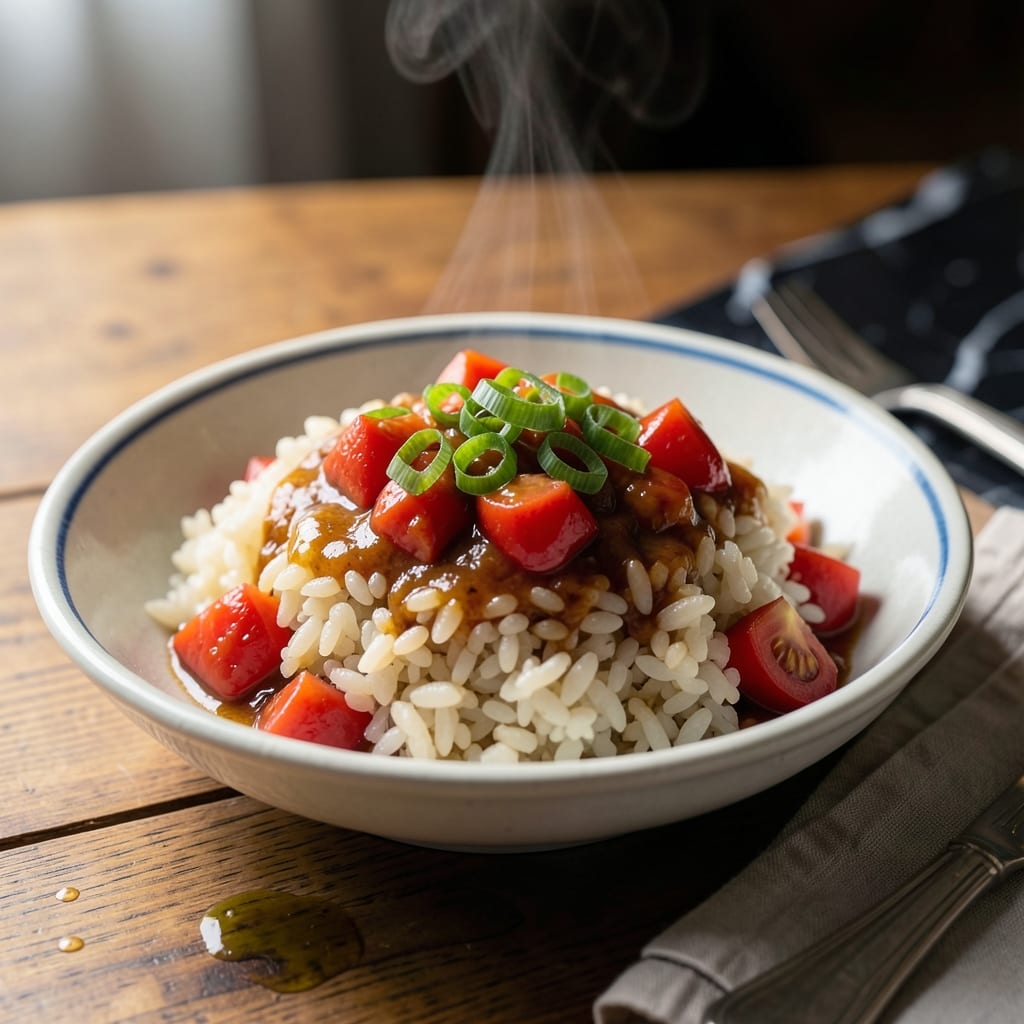
There’s a reason this tomato rice dish is a staple in Japanese home cooking—it transforms simple ingredients into something deeply satisfying. The natural sweetness of tomatoes meets savory dashi for a balance that’s both comforting and complex.
I’ve refined the technique over years, focusing on how to coax maximum flavor from each component. The rice cooks in a tomato-dashi broth, absorbing every bit of umami while staying fluffy and distinct. No fancy tools required, just patience and attention.
What you get is a bowl of rice that’s lightly tangy, subtly sweet, and packed with that signature Japanese depth. The tomatoes soften into the grains, creating a dish that feels hearty yet light at the same time.
Serve it as a side or main—it pairs perfectly with grilled fish or a simple miso soup.
Ingredients for Japanese Tomato Rice
Simple, fresh ingredients deliver that signature Japanese comfort in every bite you crave.
| Ingredient | Amount | Notes |
|---|---|---|
| Japanese Short-Grain Rice 🍚 | 2 cups | Rinsed until water runs clear |
| Ripe Tomatoes 🍅 | 3 whole | Medium-sized, diced with juices |
| Dashi Stock 🥣 | 2 ½ cups | Homemade or instant powder |
| Soy Sauce 🫒 | 1 tbsp | Low-sodium preferred |
| Mirin 🍶 | 1 tbsp | Sweet rice wine |
| Sake 🍶 | 1 tbsp | Dry cooking sake |
| Granulated Sugar 🧂 | 1 tsp | Balances tomato acidity |
| Vegetable Oil 🫒 | 1 tbsp | Neutral flavor preferred |
| Green Onions 🧅 | 2 whole | Thinly sliced for garnish |
| Bonito Flakes 🐟 | ¼ cup | Optional for extra depth |
| Salt 🧂 | ½ tsp | Adjust to taste |
| Sesame Seeds 🌾 | 1 tsp | Toasted, for garnish |
The rice is non-negotiable here. Japanese short-grain—like Koshihikari or Nishiki—gives you that perfect sticky texture. Find it at Asian markets or the international aisle at Whole Foods. Dashi is equally critical; instant powder works in a pinch, but homemade from kombu and bonito delivers superior depth. For tomatoes, vine-ripened are ideal, but any firm, red tomato will work.
No mirin? Substitute 1 tbsp sugar plus 1 tbsp water. Sake can be swapped for dry white wine, though sake’s milder flavor is preferable. For a vegetarian dashi, use kombu-only—skip the bonito flakes. The soy sauce should be Japanese-style (like Yamasa), not Chinese. If you’re out of green onions, chives offer a similar mild bite.
Store uncooked rice in an airtight container for up to 1 year. Prepared tomato rice keeps in the fridge for 3-4 days and reheats beautifully. For best results, let it sit covered for 5 minutes after cooking to steam fully.
Why You’ll Love This Recipe
- One-Pot Wonder: I toss everything in my rice cooker—no extra pans, no fuss. The dashi and mirin do all the work while I set the table.
- Sweet-Tangy Magic: Ripe tomatoes melt into the rice, and the soy-mirin glaze gives it this ridiculous umami-sweet depth. I’ll be real: I’ve eaten it straight from the pot.
- Weeknight Hero: It’s my go-to for busy Tuesdays, but fancy enough for guests. Even my picky nephew cleans his bowl.
- Budget Stretcher: A handful of rice, one tomato, and pantry staples feed us for days. Honestly, leftovers taste even better the next morning.
Step-by-Step Instructions for Japanese Tomato Rice
This method ensures perfectly cooked rice with deep, savory-sweet tomato flavor in every bite.
Step 1: Prepare the Rice and Tomatoes
Rinse the 2 cups Japanese Short-Grain Rice under cold water until the water runs completely clear, about 4-5 rinses. Drain well in a fine-mesh strainer. This removes excess starch for fluffier grains.
Dice the 3 whole Ripe Tomatoes into ½-inch pieces, reserving all juices. The natural acidity of the tomatoes balances beautifully with the umami-rich dashi. Set both the rice and tomatoes aside while you build the flavor base.
Step 2: Sauté Aromatics and Build the Cooking Liquid
In a medium saucepan with a tight-fitting lid, heat the 1 tbsp Vegetable Oil over medium heat. Add the diced tomatoes with their juices and cook for 3-4 minutes, stirring occasionally, until the tomatoes begin to break down and release their liquid.
Pour in the 2.5 cups Dashi Stock, 1 tbsp Soy Sauce, 1 tbsp Mirin, 1 tbsp Sake, 1 tsp Granulated Sugar, and 0.5 tsp Salt. Stir well and bring to a gentle simmer. The liquid should taste slightly more seasoned than you prefer—the rice will absorb and mellow the flavors.
Step 3: Cook the Rice with Precision
Add the rinsed and drained 2 cups Japanese Short-Grain Rice to the saucepan. Stir once to distribute the rice evenly, then spread it into a single layer. Do not stir again during cooking to avoid breaking the grains.
Bring the mixture to a boil over medium-high heat. Once boiling, immediately reduce to low heat, cover, and simmer undisturbed for 15 minutes. The lid should stay on throughout to trap steam, which is crucial for even cooking.
Step 4: Rest and Enhance with Finishing Touches
After 15 minutes, turn off the heat and let the rice rest, covered, for an additional 10 minutes. This resting period allows the rice to steam and absorb any remaining liquid, ensuring each grain is tender and plump.
Gently fluff the rice with a rice paddle or fork. Sprinkle the 0.25 cup Bonito Flakes over the top, if using, which will soften and infuse extra umami depth into the dish. Cover again and let sit for 2-3 minutes to allow the bonito flakes to rehydrate.
Step 5: Garnish and Serve
Transfer the tomato rice to serving bowls. Garnish each portion with thinly sliced 2 whole Green Onions and toasted 1 tsp Sesame Seeds. The green onions add a fresh, sharp contrast to the rich, savory rice.
Serve immediately while hot. The texture should be tender yet slightly chewy, with each grain distinct and coated in the tomato-infused cooking liquid. The flavor profile balances sweet, tangy, and umami notes perfectly.
Pro Tips For Making Japanese Tomato Rice
- Pre-cook the tomatoes: Lightly blanch and peel the tomatoes first—it removes the bitterness and helps them break down faster into the rice. I learned this the hard way after wondering why my tomato rice tasted harsh.
- Rinse the rice well: Wash the short-grain rice until the water runs almost clear to remove excess starch. Skipping this makes the rice gummy, and the tomato flavor won’t shine.
- Use warm dashi: Add dashi stock that’s warm, not cold, to the rice cooker. Cold liquid slows down the cooking and can leave the rice unevenly done.
- Balance the mirin: If your mirin is sweet, cut the sugar elsewhere—this recipe doesn’t need extra. Too much sweetness overpowers the fresh tomato taste.
Wine and Beer Pairings for This japanese tomato rice
Japanese Beer Pairings
Light, crisp Japanese lagers like Asahi Super Dry or Sapporo complement the dish beautifully. Their clean finish cuts through the richness while the subtle malt notes enhance the tomato’s natural sweetness. I always keep a few cans chilled for this exact purpose. 🍺
Sake Recommendations
A dry junmai sake with mild acidity, such as Dassai 39, balances the dish’s savory depth. The sake’s clean profile won’t overwhelm the delicate tomato and dashi flavors. Serve it slightly chilled for the best experience.
White Wine Options
For wine lovers, a crisp Pinot Grigio with citrus notes works wonders. The acidity mirrors the tomato’s brightness while the light body keeps the focus on the rice. I prefer Italian versions like Santa Margherita for their consistent quality.
Green Tea Harmony
Traditional sencha green tea offers a refreshing contrast with its grassy, slightly bitter notes. The tea’s astringency cleanses the palate between bites, enhancing the dish’s umami complexity. Brew it at 160°F for optimal flavor. 💚
Sparkling Water
Sometimes simplicity wins. A chilled sparkling water with lemon slice cuts through the richness while letting the tomato and dashi flavors shine. The effervescence adds a pleasant textural contrast to the soft rice.
Nutrition Facts
Frequently Asked Questions
Can I use long-grain rice instead?
For best results, stick with Japanese short-grain. It has the right starch content to become sticky and absorb the tomato-dashi liquid properly. Long-grain stays separate and won’t give you that classic texture.
What if my tomatoes aren’t very ripe?
Underripe tomatoes will be less sweet and more acidic. Balance this by adding an extra ½ tsp sugar to the cooking liquid. You can also use canned diced tomatoes in a pinch.
Can I make this without dashi?
Yes, but the flavor will be less complex. Substitute with 2.5 cups vegetable or chicken stock plus ½ tsp soy sauce. For vegetarian dashi, use kombu-only broth.
Why is my rice mushy?
Over-stirring or lifting the lid during cooking releases steam, leading to uneven texture. Stir just once at the start, then leave it covered until the full 15 minutes are up.

- Indian Jasmine Rice Recipe: Fragrant Basmati-Free Elegance - October 19, 2026
- KFC Rizo Rice Recipe: Copycat Side Dish With Savory Spice Blend - October 19, 2026
- Jeerakasala Rice Recipe: Fragrant Cumin-Infused Kerala Delight - October 19, 2026