
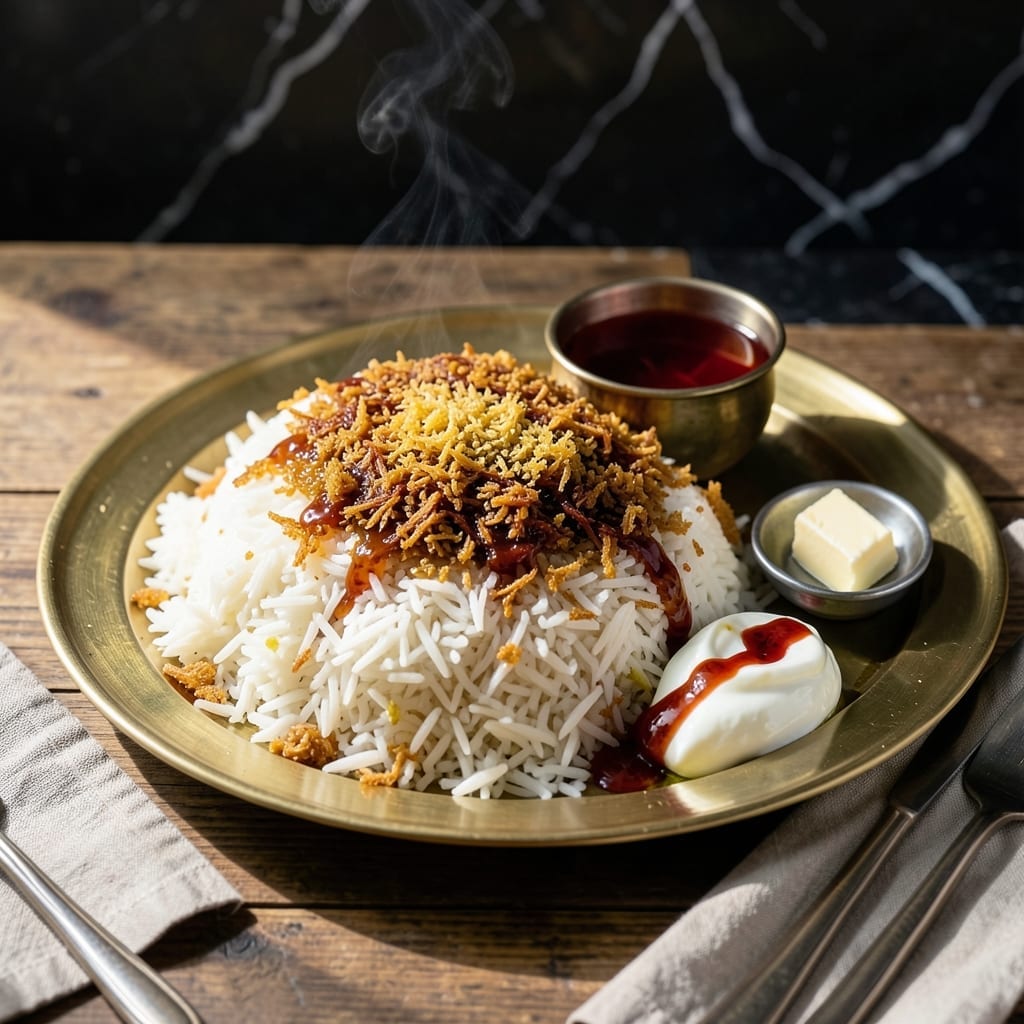
This traditional Persian rice dish transforms simple ingredients into a showstopping centerpiece with its fragrant saffron perfume and golden tahdig crust. I developed this method after studying authentic techniques from Iranian cookbooks and family recipes.
The secret lies in the careful parboiling and steaming process that creates fluffy, separate grains with a crispy, caramelized bottom layer. Saffron threads steeped in hot water infuse the rice with their distinctive aroma and vibrant color.
What emerges is a dish that’s as beautiful as it is delicious—fluffy basmati rice topped with a crunchy, buttery tahdig that’s the hallmark of Iranian cooking. The contrast between the tender grains and crispy crust makes every bite memorable.
Serve this with stews, grilled meats, or as part of a Persian feast. The technique requires attention but delivers professional results every time.
Ingredients for Iranian Rice Dishes
Simple pantry staples create this fragrant, golden rice dish with signature tahdig crust.
| Ingredient | Amount | Notes |
|---|---|---|
| Basmati Rice 🍚 | 2 cups | Rinsed until water runs clear |
| Saffron Threads 🌼 | ¼ tsp | Steeped in hot water |
| Hot Water 💧 | ¼ cup | For steeping saffron |
| Unsalted Butter 🧈 | ½ cup | Melted for tahdig layer |
| Kosher Salt 🧂 | 1 tbsp | Divided for rice and water |
| Plain Yogurt 🥛 | ¼ cup | Optional for tahdig binding |
| Cardamom Pods 🌿 | 2 whole | Lightly crushed, optional |
| Bay Leaf 🍃 | 1 whole | For parboiling water |
| Vegetable Oil 🫒 | 2 tbsp | For crisping tahdig |
| All-Purpose Flour 🌾 | 2 tbsp | For dusting pot, optional |
| Rose Water 🌹 | 1 tsp | For aromatic finish, optional |
| Barberries 🫐 | ¼ cup | For garnish, optional |
The basmati rice is non-negotiable here. Seek out authentic Indian or Pakistani brands like Daawat or Tilda—their long grains stay separate and fluff perfectly. Saffron quality varies wildly; Persian saffron from a reputable spice merchant (I use Burlap & Barrel) delivers the most vibrant color and aroma. For the tahdig, European-style butter with higher fat content (like Plugrá) creates the best crisp.
No saffron? A pinch of turmeric for color plus a drop of vanilla extract for depth gets you surprisingly close. Plain yogurt can be swapped for Greek yogurt (strain off excess liquid). Cardamom not in your spice drawer? Skip it—a cinnamon stick in the parboiling water adds a nice warmth. Rose water haters can omit it entirely; the dish will still shine.
Parboiled rice holds in the fridge for 12 hours before steaming. The finished dish keeps for 2 days (the tahdig softens but stays tasty). Saffron water can be made ahead and refrigerated for up to 1 week. Always serve immediately for maximum crust crunch.
Why You’ll Love This Recipe
- One Pot Wonder: I love that this comes together in a single pot—just basmati, saffron, and butter doing all the work.
- Golden Luxury: That saffron-infused butter makes every bite taste like a restaurant dish, but in my own kitchen.
- Feeds a Crowd: Honestly, it’s my go-to for gatherings—easy to scale up and always disappears fast.
- Leftovers Win: The rice actually tastes better the next day, and it reheats like a dream.
Step-by-Step Instructions for Saffron-Infused Basmati with Golden Tahdig
Master the technique for perfectly fluffy rice and a crisp, golden tahdig crust every time.
Step 1: Prepare the Rice and Saffron Infusion
Rinse the 2 cups Basmati Rice in a fine-mesh strainer under cold water until the water runs completely clear. This removes excess starch and prevents the grains from sticking together. Soak the rinsed rice in cold water with the 1 whole Bay Leaf for 30 minutes to allow the grains to plump.
Meanwhile, steep the 0.25 tsp Saffron Threads in the 0.25 cup Hot Water for at least 15 minutes. The water will turn a deep golden-orange, releasing the saffron’s aromatic compounds. This infusion will be used to color the rice and create the tahdig’s signature hue.
Step 2: Parboil the Rice
Drain the soaked rice and transfer it to a large pot. Add fresh water to cover the rice by 2 inches and bring to a rolling boil over high heat. Add ½ tbsp Kosher Salt and the 2 whole Cardamom Pods (lightly crushed) to the water for subtle fragrance.
Boil the rice for 6-7 minutes until the grains are slightly undercooked—they should be firm to the bite and not fully tender. Drain immediately in a colander and rinse briefly with warm water to halt the cooking process. This partial cooking ensures the grains remain intact during the final steaming.
Step 3: Build the Tahdig Layer
Heat the 2 tbsp Vegetable Oil and 0.5 cup Unsalted Butter in a heavy-bottomed nonstick pot over medium heat until the butter melts and begins to foam. If using, sprinkle the 2 tbsp All-Purpose Flour evenly across the bottom of the pot, then add the 0.25 cup Plain Yogurt, spreading it to form a thin layer. This creates the foundation for the tahdig crust.
Gently add a layer of parboiled rice to the pot, pressing lightly to adhere to the yogurt-butter mixture. Sprinkle the remaining ½ tbsp Kosher Salt over the rice. Drizzle the saffron infusion evenly over the top, then add the remaining rice in a mound shape. Use the handle of a wooden spoon to poke 4-5 holes through the rice to allow steam to escape.
Step 4: Steam to Perfection
Cover the pot with a tight-fitting lid and cook over medium-low heat for 10 minutes. Then, reduce the heat to low and cook for an additional 30-35 minutes. The rice is done when steam escapes from the holes in a steady rhythm and the bottom crust is deep golden brown.
To check the tahdig, carefully lift a small portion with a spatula—it should be crisp and easily separated from the pot. Avoid stirring or disturbing the rice during cooking, as this can break the fragile crust.
Step 5: Serve with Final Touches
Remove the pot from heat and let it sit, covered, for 5 minutes to allow the tahdig to set fully. Place a large serving platter over the pot and, in one swift motion, invert the rice onto the platter. The tahdig should release cleanly, revealing its golden, crisp surface.
Drizzle the 1 tsp Rose Water over the rice for a fragrant finish, if using. Garnish with the 0.25 cup Barberries scattered across the top for a pop of color and tart contrast. Serve immediately with the tahdig intact, allowing diners to experience the crisp layer with each bite.
Pro Tips For Making Iranian Rice Dishes
- Soak the Rice: Give basmati a good 30-minute soak in warm water before cooking—it swells evenly and prevents those dreaded uncooked centers.
- Bloom the Saffron: Crush saffron threads between your fingers and steep in 2 tablespoons of hot water for 10 minutes. I learned this the hard way—skipping it leaves pale, flavorless rice.
- Resist the Stir: After adding rice to the pot, don’t touch it. Stirring breaks the grains and turns your tahdig into a mushy mess.
- Use a Towel: Wrap the lid with a clean kitchen towel before sealing the pot—absorbs excess steam and guarantees that crispy golden crust. Sounds weird, but it works.
Perfect Pairings for This Dish
Protein Pairings
This dish shines alongside lamb shanks braised with tomatoes and warm spices—a classic Persian combination. I also love it with chicken thighs marinated in yogurt, lemon, and saffron for 12 hours. The rice soaks up the juices beautifully. 💛
Vegetarian Options
For meatless meals, serve with mirza ghasemi (smoky eggplant dip) and warm pita. A spinach and herb frittata with barberries on top makes a perfect brunch pairing. The tartness of the berries complements the saffron rice wonderfully.
Fresh Accompaniments
A simple Persian salad of cucumbers, tomatoes, and red onions with lime dressing cuts through the richness. I toss 2 cups chopped veggies with 1 tbsp olive oil and juice of 1 lime. Fresh herbs like mint or basil add brightness.
Beverage Pairings
Persian tea served in small glasses with sugar cubes is traditional. For wine, a crisp Riesling from Germany or Washington state balances the dish’s richness. I avoid heavy reds that can overpower the delicate saffron notes. 🍷
Dessert Follow-Ups
End with bastani (Persian ice cream) infused with rosewater and saffron. A light pistachio cake dusted with cardamom sugar is another great option. The floral notes echo the rice’s aroma beautifully.
Nutrition Facts
Frequently Asked Questions
What type of rice works best?
Use long-grain basmati rice for authentic results. Look for high-quality brands like Daawat or Tilda. Avoid short-grain varieties as they stick together and won’t fluff properly.
Why is my tahdig not crispy?
Ensure you use enough butter and cook on medium-low heat for at least 30 minutes. Avoid lifting the lid during cooking, as steam release prevents proper crust formation.
Can I make this without saffron?
Yes! Use 1/4 tsp turmeric for color and 1/2 tsp vanilla extract for depth. While not identical, this creates a similar golden hue and subtle aroma.

- Indian Jasmine Rice Recipe: Fragrant Basmati-Free Elegance - October 19, 2026
- KFC Rizo Rice Recipe: Copycat Side Dish With Savory Spice Blend - October 19, 2026
- Jeerakasala Rice Recipe: Fragrant Cumin-Infused Kerala Delight - October 19, 2026