
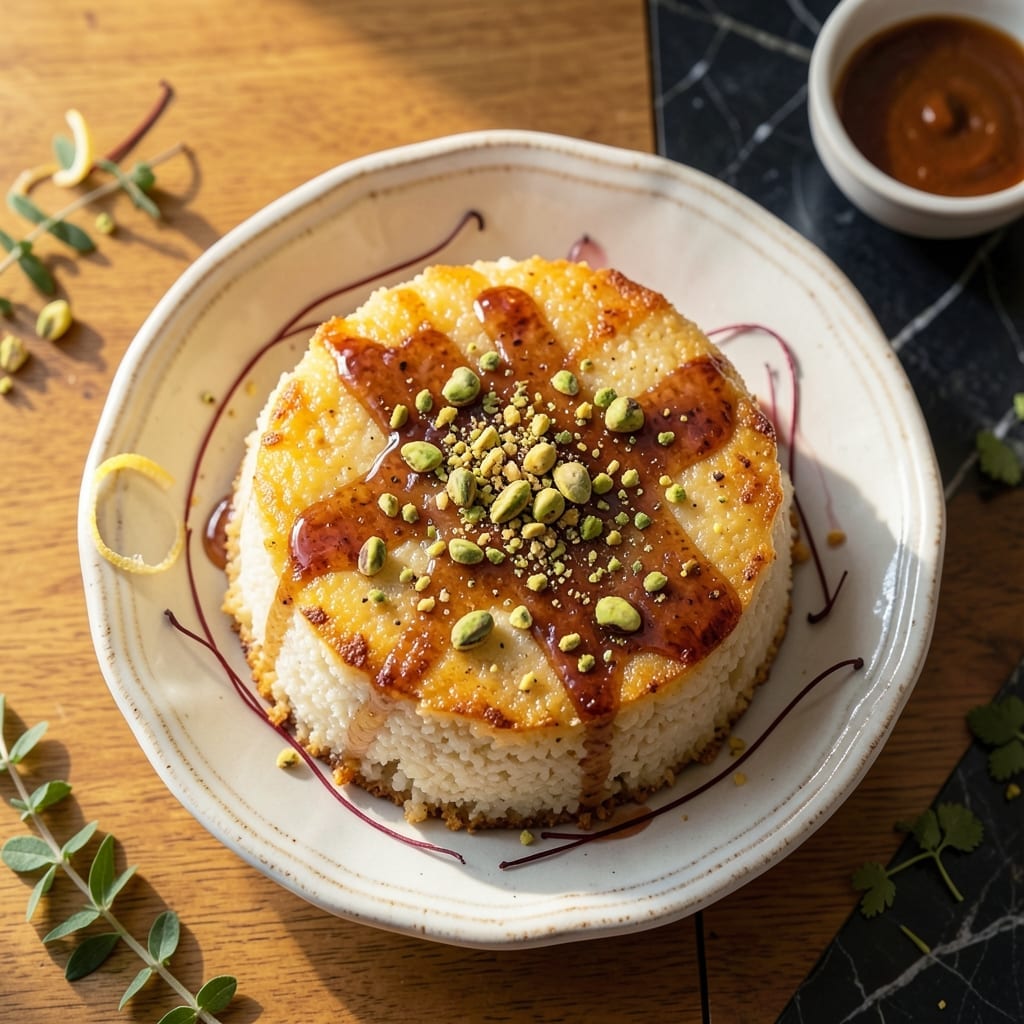
This Persian rice cake, known as shirini berenji, delivers a golden crust with the fragrant aroma of saffron in every bite. A traditional treat for celebrations, it transforms simple rice flour into something extraordinary.
The secret lies in the delicate balance of rosewater and cardamom, which infuse the cake with authentic Persian flavors. The texture is both tender and slightly crisp at the edges, achieved through precise baking and resting time.
What emerges from the oven is a beautiful, fragrant cake with a perfectly golden exterior and a moist, aromatic interior. The saffron lends its distinctive color and subtle floral notes that define this classic dessert.
Serve it with tea for an authentic experience or as a sweet ending to any meal. Here’s how to create this Persian masterpiece at home.
Ingredients for Persian Rice Cake
Transform rice flour into a fragrant, golden Persian masterpiece with these essentials.
| Ingredient | Amount | Notes |
|---|---|---|
| Rice Flour 🌾 | 2 cups | Fine, sifted for smooth texture |
| Granulated Sugar 🍚 | 1 cup | Fine white sugar preferred |
| Unsalted Butter 🧈 | 1 cup | Melted and cooled slightly |
| Large Eggs 🥚 | 2 whole | Room temperature for best results |
| Saffron Threads 🌼 | ¼ tsp | Crushed, steeped in warm water |
| Rosewater 🌹 | 2 tbsp | High-quality, food-grade essential |
| Ground Cardamom 🌿 | 1 tsp | Freshly ground for maximum aroma |
| Vanilla Extract 🌿 | 1 tsp | Pure extract for best flavor |
| Baking Powder ⚗️ | 1 tsp | Ensures light, airy texture |
| Salt 🧂 | ¼ tsp | Fine sea salt recommended |
| Pistachios 🌰 | ½ cup | Finely chopped for garnish |
| Dried Rose Petals 🌹 | 1 tbsp | Edible, for decoration |
The saffron is non-negotiable for authentic flavor and color. Seek out high-quality threads from specialty markets or Whole Foods—avoid the powdered version, which lacks potency. Rice flour must be fine-milled; Bob’s Red Mill is a reliable brand. The butter should be unsalted to control the recipe’s sodium. For the rosewater, Cortas or Al Wadi brands offer the best floral notes without artificial aftertaste.
No rosewater? A teaspoon of orange blossom water can substitute, though the flavor profile shifts slightly. Cardamom must be fresh—old spices lose their punch. If pistachios are unavailable, sliced almonds or walnuts work, though the visual contrast won’t be as striking. The saffron can be steeped in the melted butter instead of water for a richer hue. Avoid pre-ground cardamom; whole pods crushed in a mortar release far more aroma.
Store saffron in a dark, airtight container away from heat—it keeps for 2-3 years. The cake stays fresh at room temperature for 3 days in a sealed container, or freeze for up to 2 months. Rice flour absorbs moisture, so ensure all utensils are dry before measuring.
Why You’ll Love This Recipe
- One-Bowl Wonder: I just dump the rice flour, sugar, eggs, and melted butter in a bowl—no fancy tools, no fuss.
- Golden Saffron Magic: That warm, floral hit from the saffron soaked in butter makes every bite feel fancy without the effort.
- Tea Time Star: It’s my go-to for afternoon tea, a dinner party dessert, or even a sweet snack with coffee.
- Keeps Like a Dream: Honestly, it tastes even better the next day, and the ingredients are pantry staples I always have on hand.
Step-by-Step Instructions for Persian Rice Cake
Master this traditional technique for a cake with perfect texture and aromatic depth.
Step 1: Infuse and Prepare the Saffron
Begin by crushing the 0.25 tsp saffron threads between your fingers and placing them in a small bowl with 2 tbsp warm water. Allow this to steep for 10 minutes to release the saffron’s vibrant color and aroma. This infusion is critical for the cake’s signature golden hue and floral notes.
While the saffron steeps, preheat your oven to 350°F and grease a 9-inch round cake pan with a thin layer of the 1 cup unsalted butter. The butter’s milk solids will help achieve that coveted crisp crust on the cake’s exterior.
Step 2: Cream Butter and Sugar with Aromatics
In a large mixing bowl, beat the remaining 1 cup unsalted butter with the 1 cup granulated sugar until light and fluffy—about 3-4 minutes on medium-high speed. The mixture should be pale and nearly doubled in volume, which ensures a tender crumb in the finished cake.
Add the 2 whole large eggs one at a time, beating well after each addition. Then incorporate the steeped saffron with its liquid, 2 tbsp rosewater, 1 tsp vanilla extract, and 1 tsp ground cardamom. The cardamom’s citrusy warmth balances the floral saffron and rosewater beautifully.
Step 3: Combine Dry Ingredients and Fold into Batter
In a separate bowl, whisk together the 2 cups rice flour, 1 tsp baking powder, and 0.25 tsp salt. Rice flour’s fine texture gives this cake its characteristic dense yet moist crumb. Sift the dry ingredients directly into the wet mixture to prevent lumps.
Gently fold the dry ingredients into the wet mixture using a silicone spatula until just combined. Avoid overmixing—stop as soon as you no longer see streaks of flour. The batter should be thick but pourable, similar to a muffin batter. Overworking the batter can result in a tough cake.
Step 4: Bake to Golden Perfection
Pour the batter into your prepared pan and smooth the top with the spatula. Bake on the center rack for 35-40 minutes, or until a toothpick inserted into the center comes out clean and the top is deep golden brown with a slightly crisp edge.
The cake should pull away slightly from the sides of the pan when done. If the top browns too quickly, tent the pan with aluminum foil to prevent over-browning while the center finishes cooking. The saffron will give the cake a stunning golden hue that deepens as it bakes.
Step 5: Garnish and Cool Completely
Immediately after removing the cake from the oven, run a thin knife around the edges to loosen it from the pan. Allow it to cool in the pan for 10 minutes, then transfer to a wire rack to cool completely. This cooling period is essential for the cake to set properly and develop its characteristic texture.
Once completely cool, garnish the top with the 0.5 cup finely chopped pistachios and 1 tbsp dried rose petals. The pistachios add a delightful crunch and visual contrast, while the rose petals enhance the floral aroma. Serve at room temperature for the best flavor and texture.
Pro Tips For Making Persian Rice Cake
- Bloom the Saffron: Steep saffron threads in 2 tablespoons of hot water for at least 10 minutes before adding—this draws out the color and flavor way better than tossing them in dry.
- Room Temp Eggs: Take your eggs out of the fridge 30 minutes before mixing. I learned this the hard way—cold eggs make the batter seize up and turn lumpy.
- Low and Slow Bake: Resist the urge to crank the oven. 325°F for 40-45 minutes prevents a burnt crust while the center sets just right.
- Butter the Pan Well: Use about 1 tablespoon of melted butter to coat every nook of your baking dish, especially the edges. After sticking half a cake to the pan once, I never skip this.
Regional Styles of This persian rice cake
Tehran Tradition
In Tehran, this cake often appears at Nowruz celebrations, with families using fine rice flour from Isfahan. The saffron is typically steeped in hot milk rather than water for a creamier texture. I remember my grandmother adding a pinch of turmeric for extra color. 🌼
Shiraz Variation
Shiraz bakers prefer a denser version with less butter and more cardamom. They often press whole pistachios into the top before baking for decorative patterns. The rosewater is reduced to 1 tbsp to let the saffron shine.
Yazd Style
Yazd’s arid climate inspired adding 1-2 tbsp yogurt to the batter for moisture. The cake is baked in smaller molds for individual servings. They use local saffron which is particularly potent, requiring less.
Tabriz Approach
Tabriz cooks incorporate crushed dried limes for a subtle citrus note. The cake is often drizzled with sugar syrup after baking for extra sweetness. I find this version pairs beautifully with Persian tea. ✨
Qom Specialty
Qom’s religious significance makes this cake popular for religious ceremonies. They use ghee instead of butter and add saffron-infused sugar to the batter. The result is a richer, more aromatic cake with a distinct golden hue.
Nutrition Facts
Frequently Asked Questions
Can I substitute all-purpose flour for rice flour?
No, rice flour is essential for the authentic texture. All-purpose flour will yield a denser, less tender crumb. For gluten-free options, ensure your rice flour is certified.
What if my cake isn’t golden enough?
Check your saffron quality first. For deeper color, increase saffron to 0.5 tsp or steep it in warm milk instead of water. The butter’s milk solids also contribute to browning.
How can I make this cake vegan?
Replace eggs with flax eggs (1 tbsp ground flax + 3 tbsp water per egg) and use vegan butter. The texture may differ slightly, but the flavors will remain authentic.
Why does my cake taste bitter?
This usually happens with low-quality rosewater or too much cardamom. Use food-grade rosewater and measure spices precisely. 1 tsp cardamom and 2 tbsp rosewater are the perfect amounts.

- Curd Rice Recipe: South Indian Comfort With Cooling Yogurt - September 25, 2026
- Rice Mix Recipe: Fluffy Grains With Customizable Flavor Boost - September 25, 2026
- Soupy Rice Recipe: Broth-Soaked Grains With Rustic Depth - September 25, 2026