
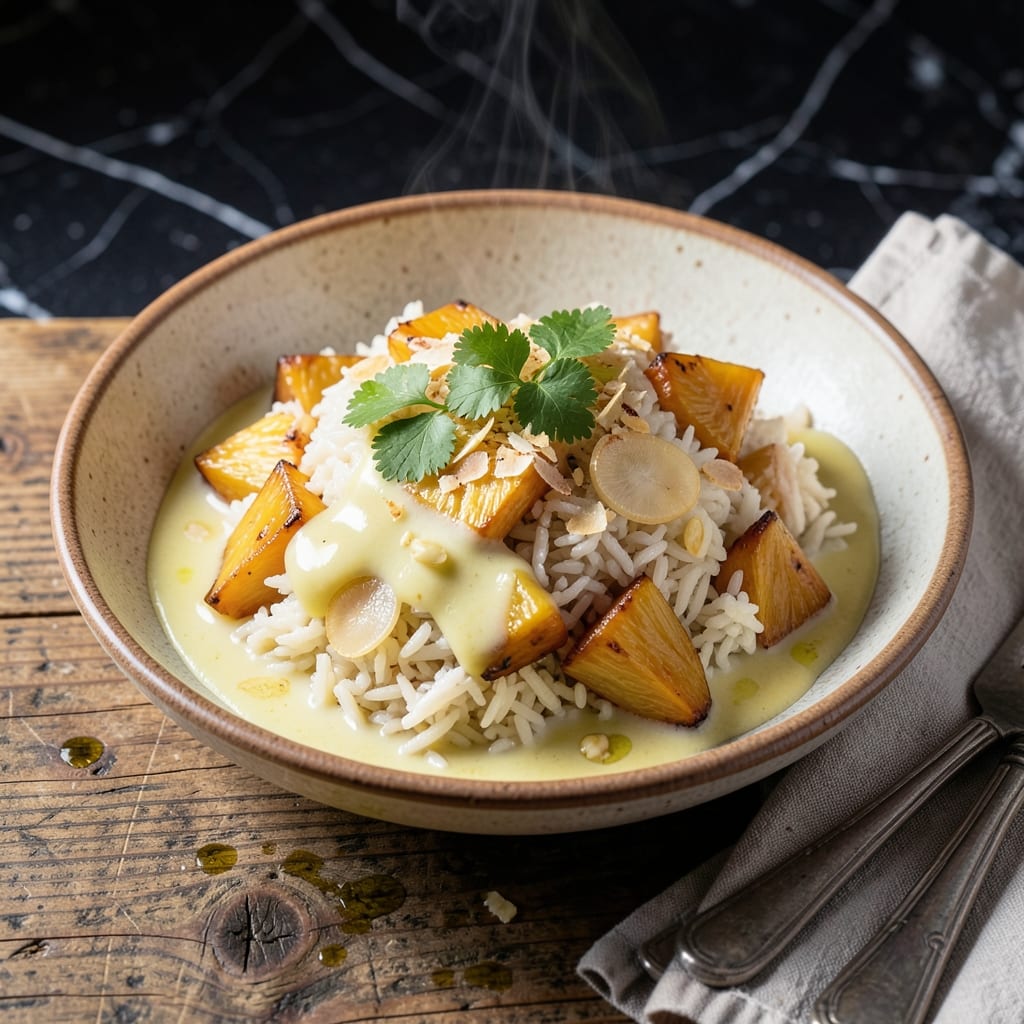
This dish brings a taste of the tropics to your table with minimal effort. The natural sweetness of fresh pineapple complements the fragrant aroma of jasmine rice perfectly.
I developed this recipe to showcase how simple ingredients can create something extraordinary. The key is using ripe pineapple and toasting the rice briefly before cooking.
The result is a side dish that’s both lightly sweet and aromatically rich, with each grain of rice absorbing the pineapple’s juices. It pairs beautifully with grilled proteins or stands alone as a vegan main.
Ready in under 30 minutes, this recipe proves that tropical flavors don’t require complicated techniques. The combination is as pleasing to the eye as it is to the palate.
Ingredients for Jasmine Rice Pineapple
Fragrant jasmine rice and juicy pineapple come together for a dish that tastes like a tropical getaway.
| Ingredient | Amount | Notes |
|---|---|---|
| Jasmine Rice 🌾 | 2 cups | Rinsed until water runs clear |
| Fresh Pineapple 🍍 | 3 cups | Ripe, small dice, juices reserved |
| Coconut Milk 🥥 | 1 ½ cups | Full-fat for creaminess |
| Shallots 🧅 | 2 whole | Finely minced for aroma |
| Garlic Cloves 🧄 | 3 cloves | Minced for depth |
| Fresh Ginger 🌿 | 1 tbsp | Peeled and grated |
| Vegetable Broth 💧 | 1 cup | Low-sodium preferred |
| Lime Leaves 🍈 | 2 whole | Fresh, torn (or 1 tsp zest) |
| Coconut Oil 🫒 | 2 tbsp | For toasting rice |
| Light Brown Sugar 🧈 | 1 tbsp | Optional for extra sweetness |
| Sea Salt 🧂 | 1 tsp | Fine grain for even distribution |
| Fresh Cilantro 🌿 | ¼ cup | Chopped, for garnish |
| Lime 🍋 | 1 whole | Zested and juiced |
| Red Pepper Flakes 🌶️ | ¼ tsp | Optional for heat |
Jasmine rice is non-negotiable here—look for Thai-grown brands like Elephant or Three Ladies at Asian markets or the international aisle. The pineapple must be ripe (smell the base—it should be sweet and fragrant) or the dish will lack depth. Fresh is ideal, but frozen works if thawed and drained well (save the juices). Coconut milk separates naturally; shake the can before measuring.
No jasmine rice? Basmati at a 1:1 ratio works in a pinch, though the aroma won’t be as intense. Skip the coconut milk? Use plain almond milk plus 1 tbsp coconut oil for similar richness. Out of fresh ginger? Ground ginger at one-third the amount (but fresh is worth the effort). Lime leaves can be omitted, but add extra zest to compensate.
This keeps well for 3-4 days refrigerated. The rice absorbs flavors as it sits, so it’s even better the next day. Freeze without garnishes for up to 3 months—reheat with a splash of water to revive the texture.
Why You’ll Love This Recipe
- One Pot Wonder: I toss everything in, let the coconut milk work its magic with the jasmine rice, and dinner practically makes itself.
- Tropical Sweet-Savory: The caramelized shallots and garlic hit the pineapple’s juiciness with this rich, creamy backdrop—honestly, I lick the spoon.
- Weeknight Rescue: Between us, this is my Tuesday night lifesaver when I need something fresh, filling, and fast.
- Leftovers Glory: It tastes even better the next day, and the rice soaks up all that coconut-pineapple goodness overnight.
Step-by-Step Instructions for Jasmine Rice and Pineapple
Master this method for perfectly fragrant rice with balanced sweet and savory tropical notes.
Step 1: Toast Aromatics and Rice
Heat the 2 tbsp coconut oil in a heavy-bottomed pot over medium heat. Add the 2 whole shallots, 3 cloves garlic cloves, and 1 tbsp fresh ginger, sautéing for 2-3 minutes until the shallots soften and become translucent.
Immediately add the 2 cups jasmine rice and stir continuously for 1-2 minutes. This toasting step enhances the rice’s natural nuttiness while allowing the aromatics to infuse deeply. You’ll notice the grains become slightly opaque and emit a fragrant aroma.
Step 2: Build the Cooking Liquid
Pour in the 3 cups fresh pineapple with its reserved juices, 1.5 cups coconut milk, and 1 cup vegetable broth. Stir to combine, ensuring you scrape up any browned bits from the bottom of the pot—this adds depth to the dish.
Add the 2 whole lime leaves, 1 tsp sea salt, 1 tbsp light brown sugar, and 0.25 tsp red pepper flakes. The lime leaves will release their citrusy essence as the liquid heats, while the sugar balances the pineapple’s acidity. Bring the mixture to a gentle boil.
Step 3: Simmer Until Tender
Once boiling, reduce the heat to low, cover the pot, and let it simmer undisturbed for 15 minutes. The rice will absorb the liquid gradually, plumping up as it cooks. Resist the urge to stir during this time—it can break the grains and release excess starch.
After 15 minutes, check the rice. It should be tender with no hard center, and the liquid should be nearly absorbed. If the rice is still firm, cover and cook for an additional 3-5 minutes on low heat.
Step 4: Rest and Garnish
Remove the pot from heat and let it sit covered for 10 minutes. This resting period allows the rice to steam in its residual heat, ensuring even tenderness. Meanwhile, zest and juice the 1 whole lime and chop the 0.25 cup fresh cilantro.
Fluff the rice gently with a fork, then discard the lime leaves. Drizzle the lime juice over the top and sprinkle with the cilantro. Serve warm, with each bite offering a harmonious blend of tropical sweetness, aromatic spices, and creamy coconut undertones.
Pro Tips For Making Jasmine Rice Pineapple
- Rinse the Rice: Soak jasmine rice for 10 minutes then rinse until water runs clear—this removes excess starch so your grains stay separate and fluffy, not gummy.
- Brown the Aromatics: Cook shallots and garlic in coconut milk until golden and fragrant before adding rice; I learned this the hard way—raw bits ruin the whole dish.
- Use Ripe Pineapple: Pick pineapple that smells sweet at the base—underripe fruit stays tart and tough, even after cooking.
- Simmer Covered: Once everything’s in the pot, resist the urge to peek—keep it covered and on low heat for 15 minutes to trap steam and finish evenly.
Pro Cooking Tips for This Recipe
Rice Rinsing Technique
Rinse your 2 cups jasmine rice in a fine-mesh strainer under cold water until the water runs completely clear. This removes excess starch that could make your dish gummy. I use a OXO Good Grips strainer for this—it’s durable and prevents rice from escaping. 💡
Perfect Pineapple Prep
For the 3 cups fresh pineapple, use a ripe fruit with a sweet aroma at the base. Trim the skin, remove the core, and cut into ¼-inch dice to ensure even distribution. Reserve all juices—they add essential moisture and sweetness to the dish.
Toasting for Depth
When toasting the rice in 2 tbsp coconut oil, keep the heat at medium and stir constantly for 1-2 minutes. Stop when the grains turn slightly opaque and smell nutty. This step builds a flavor foundation that complements the pineapple’s natural sugars. 🔥
Liquid Ratio Balance
The 1.5 cups coconut milk to 1 cup vegetable broth ratio is critical. Use full-fat coconut milk for creaminess, and shake the can well before measuring. If substituting, ensure your alternative has similar fat content to maintain the dish’s rich texture.
Steam and Rest
After simmering, let the rice rest covered for 10 minutes. This allows the grains to absorb residual liquid and steam evenly. Skipping this step can result in uneven texture—trust me, patience here makes all the difference. ⏰
Nutrition Facts
Frequently Asked Questions
Can I use canned pineapple instead of fresh?
Yes, canned works in a pinch. Use 3 cups of chunks with all the juice, but reduce the added sugar since canned pineapple is often sweeter. Drain well first to avoid excess liquid.
Why do I need to toast the rice first?
Toasting enhances the nutty flavor and prevents the grains from becoming mushy. It also helps the rice absorb the pineapple and coconut flavors more deeply during cooking.
How do I fix undercooked rice?
If the rice is still firm after 15 minutes, add ¼ cup more liquid (broth or water), cover, and cook for 3-5 minutes on low heat. Let it rest covered for 10 minutes afterward.
Can I make this ahead of time?
The flavors actually improve after a day in the fridge. Store in an airtight container for up to 3-4 days. Reheat with a splash of water to restore moisture.

- Mujadara Rice and Lentils Recipe: Earthy Spiced Lentils With Caramelized Onions - November 1, 2026
- Naija Fried Rice Recipe: Street-Style Spice With Veggie Crunch - November 1, 2026
- Mushy Rice Recipe: Fluffy Grains Transformed in Minutes - November 1, 2026