
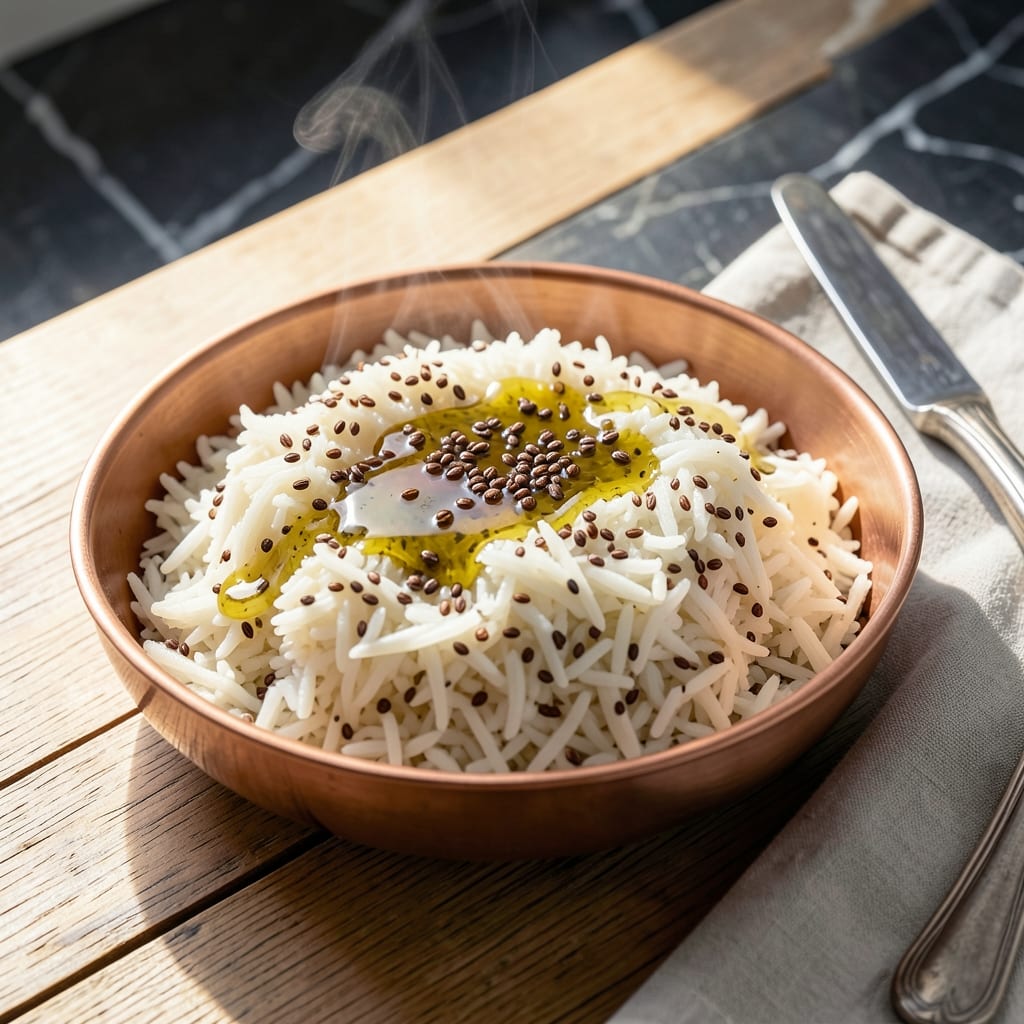
This simple Indian side dish transforms ordinary rice into something extraordinary with just one spice. The aroma of toasted cumin seeds blooming in hot ghee fills the kitchen, promising flavor in every bite.
The technique is straightforward but precise. Cumin seeds sizzle in ghee until fragrant, then basmati rice toasts briefly before simmering in water. This ensures each grain absorbs the warm, earthy essence of the spices.
What emerges is fluffy, separate grains with a subtle golden hue and a fragrance that complements any curry or dal. The beauty lies in its simplicity—just 4 ingredients and 20 minutes to perfect rice.
Serve alongside your favorite Indian dishes for a meal that feels restaurant-worthy. The process is foolproof and the results are always impressive.
Ingredients for Jeera Rice
Just four humble ingredients transform into fragrant, restaurant-worthy rice with minimal effort.
| Ingredient | Amount | Notes |
|---|---|---|
| Basmati Rice 🌾 | 1 ½ cups | Rinsed until water runs clear |
| Cumin Seeds 🌿 | 1 tbsp | Whole, not ground |
| Ghee 🧈 | 2 tbsp | Clarified butter preferred |
| Water 💧 | 3 cups | For cooking rice |
| Salt 🧂 | 1 tsp | Adjust to taste |
The cumin seeds are non-negotiable here. Whole seeds (not ground) release their aroma when toasted in ghee—substituting oil works, but the flavor won’t be as rich. Basmati rice is traditional for its long, separate grains. Look for aged basmati at Indian grocery stores or Whole Foods for the best texture. Rinse it thoroughly to remove excess starch, which ensures fluffy results.
No ghee? Clarified butter or neutral oil are acceptable, though the taste will differ. For a vegan version, use coconut oil. Short on cumin seeds? Black cumin (shahi jeera) adds a more intense, nutty flavor. The water ratio is critical—2 parts liquid to 1 part rice by volume. Skip the rice cooker; a heavy-bottomed pot gives better control for toasting the seeds.
Leftover rice keeps well in the fridge for 3-4 days in an airtight container. Reheat with a splash of water to restore moisture. For meal prep, make a double batch—the flavors deepen overnight. Freezing isn’t recommended, as it can make the grains mushy.
Why You’ll Love This Recipe
- 20-Minute Meal: I can have this ready before the takeout arrives—just rice, cumin, ghee, and a pot.
- Warm Cumin Aroma: The second those seeds hit hot ghee, my kitchen smells like my mom’s house.
- Pairs With Everything: Honestly, it’s my side for curries, dal, or even a fried egg on lazy nights.
- Budget Stretch: Basmati rice and a spoon of cumin feed my family for days without breaking the bank.
Step-by-Step Instructions for Jeera Rice
Master this method and you’ll achieve perfectly fragrant rice with distinct cumin aroma in every grain.
Step 1: Rinse and Soak the Basmati Rice
Place the 1.5 cups Basmati Rice in a fine-mesh strainer and rinse under cold running water. Continue rinsing, swirling the rice with your hand, until the water runs completely clear. This removes excess starch that would otherwise make the grains gummy.
Transfer the rinsed rice to a bowl and cover with fresh water. Let it soak for 20-30 minutes. Soaking allows the grains to absorb moisture evenly, which prevents them from breaking during cooking and ensures uniform expansion for fluffy, separate grains.
Step 2: Toast the Cumin Seeds in Ghee
In a heavy-bottomed pot with a tight-fitting lid, heat the 2 tbsp Ghee over medium heat. Once the ghee is hot and shimmering but not smoking, add the 1 tbsp Cumin Seeds. Stir immediately to coat the seeds in the ghee.
Toast the cumin seeds for 45-60 seconds until they turn a shade darker and release their aroma. You’ll know they’re ready when they start to sizzle and pop, and the air fills with their warm, earthy fragrance. Be careful not to let them burn, as this will make them bitter.
Step 3: Cook the Rice with Water and Salt
Drain the soaked rice thoroughly and add it to the pot with the toasted cumin seeds. Stir to coat the rice in the ghee and cumin, ensuring every grain gets infused with flavor. Add the 3 cups Water and 1 tsp Salt, then stir once more to distribute evenly.
Increase the heat to high and bring the water to a rolling boil. Once boiling, reduce the heat to low, cover the pot with the lid, and let it simmer undisturbed for 15 minutes. Resist the urge to lift the lid—steam is essential for even cooking.
Step 4: Rest and Fluff the Rice
After 15 minutes, turn off the heat but keep the pot covered. Let the rice rest for an additional 10 minutes. This resting period allows the grains to steam in their own moisture, finishing the cooking process gently and evenly.
Using a fork, gently fluff the rice to separate the grains. The rice should be light, fluffy, and aromatic, with each grain distinct yet infused with the warm, toasty flavor of cumin. Taste and adjust the salt if needed, though the 1 tsp Salt should be perfect for most palates.
Pro Tips For Making Jeera Rice
- Soak the Basmati: I learned this the hard way—soak the rice for 20-30 minutes before cooking to prevent it from turning mushy and guarantee those separate, fluffy grains jeera rice is known for.
- Toast the Cumin: Heat the ghee first, then add cumin seeds on medium heat until they sizzle and turn a shade darker—about 30-45 seconds. This pulls out the aroma that defines the dish.
- Skip the Overcrowding: Use a wide, heavy-bottomed pot to cook the rice, and resist the urge to stir once the water’s added. Stirring breaks the grains and turns your jeera rice into a starchy clump.
- Use Just Enough Water: For every cup of basmati, use 1.5 cups of water—no more, no less. I was skeptical until I tried it, but this ratio delivers perfectly cooked rice every time without the guesswork.
Health Benefits of jeera rice
Digestive Health Boost
Cumin seeds in this dish are a powerhouse for digestion, containing thymol and other compounds that stimulate enzyme production. Just 1 tbsp provides significant benefits, helping your body process foods more efficiently. I notice less bloating when I include cumin regularly. 💪
Iron Absorption
This creation enhances iron absorption from your meal, thanks to cumin’s natural compounds. Pair it with lentils or spinach to maximize the effect. The 1.5 cups of basmati rice also provides a steady energy release, keeping you full longer.
Rich in Antioxidants
Cumin seeds are packed with antioxidants that combat oxidative stress. The 2 tbsp ghee adds healthy fats that help your body absorb fat-soluble vitamins from other dishes. Together, they create a balanced, nutrient-dense side.
Low Glycemic Index
Basmati rice has a lower glycemic index than other rice varieties, providing more stable blood sugar levels. The 3 cups water cooking method preserves this benefit, making it a smart choice for those monitoring glucose. I love how it keeps me energized without spikes.
Bone Health Support
The combination of cumin and basmati rice contributes to bone health. Cumin provides calcium and magnesium, while the rice offers small amounts of bone-building minerals. It’s a subtle but meaningful addition to your diet. ✨
Hydration and Electrolytes
Cooking with 3 cups water and a pinch of salt helps maintain hydration and electrolyte balance. The 1 tsp salt enhances flavor while supporting bodily functions. This simple dish does more than just taste good—it nourishes.
Nutrition Facts
Frequently Asked Questions
Can I use regular rice instead of basmati?
Yes, but basmati gives the best texture. Long-grain white rice works as a substitute, though the grains may be slightly less separate. Stick to the 2:1 water-to-rice ratio regardless of type.
Why do I need to soak the rice first?
Soaking for 20-30 minutes prevents grains from breaking during cooking. It ensures even expansion so your rice turns out fluffy, not gummy. Skip this step and you risk uneven texture.
How do I know when the cumin seeds are ready?
They’re done when they turn slightly darker and release a strong aroma, usually after 45-60 seconds. You’ll hear them sizzle and pop. Remove from heat immediately to avoid bitterness.
Can I make this in a rice cooker?
It’s not recommended. Toasting cumin in ghee requires precise heat control that most rice cookers can’t provide. A heavy-bottomed pot gives better results.

- Mujadara Rice and Lentils Recipe: Earthy Spiced Lentils With Caramelized Onions - November 1, 2026
- Naija Fried Rice Recipe: Street-Style Spice With Veggie Crunch - November 1, 2026
- Mushy Rice Recipe: Fluffy Grains Transformed in Minutes - November 1, 2026