
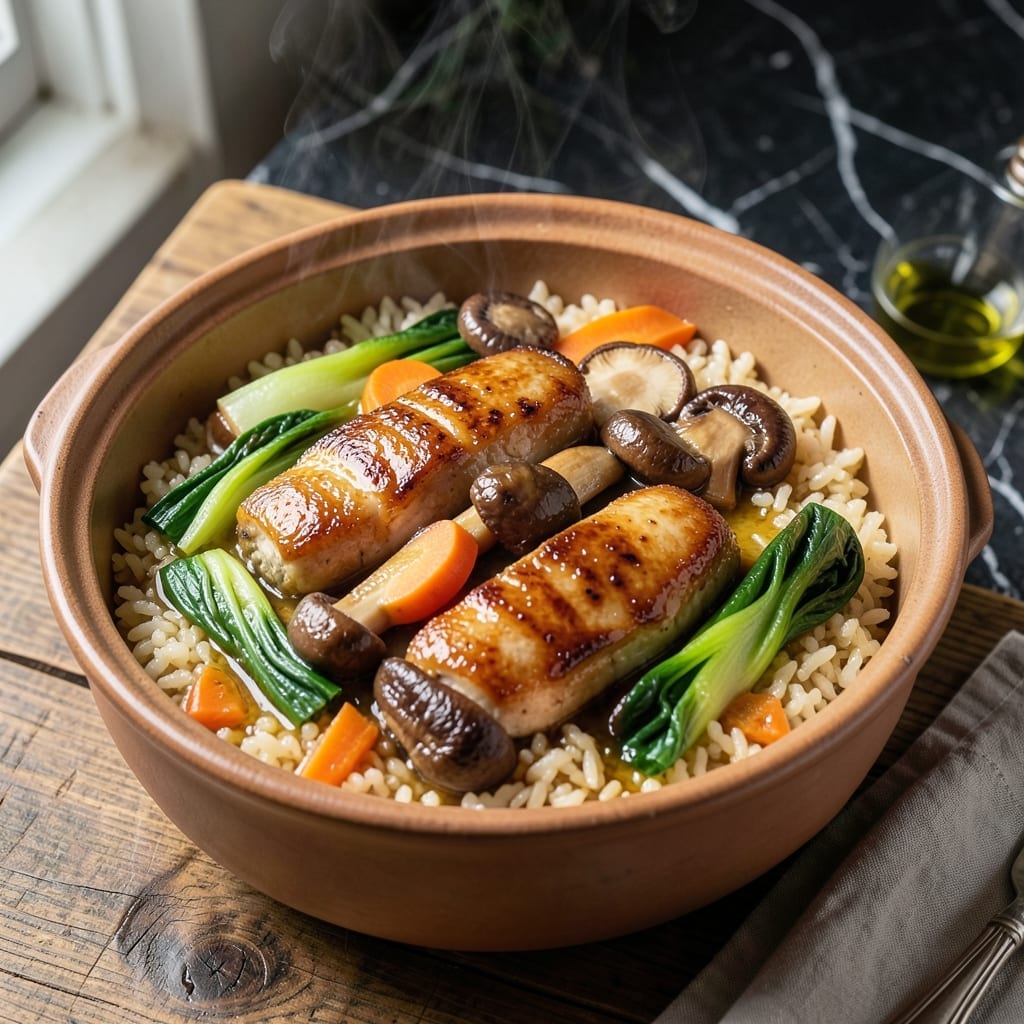
I’ve perfected a method for bringing authentic Japanese clay pot flavors into your kitchen using just a rice cooker. The result is savory, tender rice with layered toppings that blend beautifully into every bite.
This approach captures the essence of traditional kamameshi without the need for a clay pot. Simple ingredients and precise timing ensure a restaurant-quality dish with minimal effort. The rice cooker does all the work for you.
You’ll find chunks of chicken, vegetables, and mushrooms steamed to perfection, all absorbing the rich, seasoned broth. It’s a one-pot meal that’s both comforting and deeply satisfying.
Ready in under an hour, this dish transforms everyday ingredients into something special. The flavors develop as the rice cooks, creating a harmonious blend in every spoonful.
Ingredients for Kamameshi Rice Cooker
Authentic Japanese flavors come from quality rice, fresh vegetables, and a well-seasoned broth in this dish.
| Ingredient | Amount | Notes |
|---|---|---|
| Japanese Short-Grain Rice 🍚 | 2 cups | Rinsed until water runs clear |
| Chicken Thighs 🍗 | 1 lb | Boneless, skinless, cut into bite-sized pieces |
| Shiitake Mushrooms 🍄 | 4 whole | Fresh, stems removed and caps sliced |
| Carrots 🥕 | 1 whole | Peeled and diced into small cubes |
| Bok Choy 🥬 | 2 whole | Separated into leaves and sliced |
| Dashi Stock 🍜 | 2 ½ cups | Traditional Japanese stock for depth |
| Soy Sauce 🫙 | 2 tbsp | Low-sodium preferred for control |
| Sake 🍶 | 2 tbsp | Dry variety for cooking |
| Mirin 🍶 | 1 tbsp | Sweet cooking rice wine |
| Garlic Cloves 🧄 | 2 cloves | Minced finely for even distribution |
| Fresh Ginger 🌿 | 1 tbsp | Grated for aromatic depth |
| Green Onions 🧅 | 3 whole | Thinly sliced for garnish |
| Neutral Oil 🫒 | 1 tbsp | For sautéing aromatics |
| Sesame Oil 🫒 | ½ tsp | Toasted, for finishing aroma |
| Salt 🧂 | ½ tsp | Adjust to taste at the end |
The rice is non-negotiable here. Japanese short-grain like Koshihikari or Nishiki gives you that sticky, slightly sweet texture essential for kamameshi. Find it at Asian markets or the international aisle of well-stocked supermarkets. The chicken should be thigh meat—it stays juicy during cooking. For dashi, instant granules work, but homemade kombu and bonito stock takes it to restaurant level.
No sake? Dry white wine works in a pinch (reduce by half). Mirin can be replaced with 1 tbsp sugar mixed with 1 tbsp water. Vegetarian? Swap chicken for tofu or shiitake mushrooms. The shiitake stems can be saved for stock. If bok choy isn’t available, napa cabbage or spinach are solid substitutes. Always slice vegetables thinly—they steam faster.
This keeps well for 3-4 days refrigerated, but the rice texture changes—best eaten fresh. Reheat gently with a splash of water or dashi. The flavors deepen overnight, so leftovers still taste great. Freezing isn’t recommended as the rice becomes mushy when thawed.
Why You’ll Love This Recipe
- I’ll be real: it tastes even better the next day. The rice absorbs all the juices overnight, making lunch the next day ridiculously good.
- Set and Forget: I toss everything in the rice cooker and walk away—no stirring, no watching, just perfectly steamed chicken and veggies with fluffy rice every time.
- Umami Bomb: The shiitake mushrooms and chicken thighs create this deep, savory broth that soaks into every grain of rice. Honestly, it’s the kind of flavor that makes me go back for seconds.
- Weeknight Hero: Between us, this is my Tuesday night lifesaver—one pot, minimal prep, and it feeds the whole family without a fuss.
Step-by-Step Instructions for Kamameshi Rice Cooker
Achieve authentic Japanese clay pot results using your modern rice cooker with precision.
Step 1: Prepare and Rinse the Rice
Begin by placing the 2 cups Japanese Short-Grain Rice in a fine-mesh strainer. Rinse under cold running water while gently agitating with your hand until the water runs completely clear. This removes excess starch that could make your final dish gummy rather than perfectly sticky.
Drain thoroughly and transfer to your rice cooker pot. The grains should glisten but not sit in standing water. I always let it sit for 5 minutes after rinsing to ensure complete drainage before adding liquids.
Step 2: Sauté Aromatics and Protein
Heat the 1 tbsp Neutral Oil in a skillet over medium-high heat. Add the 1 lb Chicken Thighs (cut into bite-sized pieces) and cook for 4-5 minutes until lightly browned but not fully cooked through. The pieces should just begin to develop a golden edge.
Remove chicken and set aside. In the same skillet, add the 2 cloves Garlic Cloves (minced), 1 tbsp Fresh Ginger (grated), 4 whole Shiitake Mushrooms (sliced), and 1 whole Carrots (diced). Sauté for 3 minutes until fragrant and vegetables begin to soften.
Step 3: Combine Ingredients in Rice Cooker
To the rinsed rice, add the partially cooked chicken, sautéed aromatics and vegetables, 2.5 cups Dashi Stock, 2 tbsp Soy Sauce, 2 tbsp Sake, and 1 tbsp Mirin. Stir gently to distribute ingredients evenly without breaking the rice grains.
The liquid should cover the rice by about ½ inch. If it appears too shallow, add a splash more dashi stock. This ratio ensures the rice absorbs the flavors while cooking to the perfect texture.
Step 4: Cook and Steam
Select the standard rice cooking cycle on your cooker. Once the cycle completes (typically 20-25 minutes), let it sit on the warm setting for an additional 10 minutes. This steaming period is crucial for achieving the characteristic kamameshi texture where the top layer develops a slightly crisp texture.
While cooking, prepare the 2 whole Bok Choy by separating into leaves and slicing. These will be added at the end to maintain their vibrant color and crisp texture.
Step 5: Finish and Serve
After the steaming period, carefully open the lid and arrange the 2 whole Bok Choy on top of the rice. Drizzle with 0.5 tsp Sesame Oil and sprinkle with 3 whole Green Onions (thinly sliced). Close the lid and let sit for 2 minutes to lightly steam the greens.
Gently fluff the rice with a spatula, mixing in the bok choy and green onions. Taste and adjust seasoning with 0.5 tsp Salt if needed. Serve immediately in bowls, ensuring each portion contains a balance of rice, chicken, and vegetables.
Pro Tips For Making Kamameshi Rice Cooker
- Soak the rice: Rinse your Japanese short-grain rice until the water runs clear, then soak it for 20-30 minutes before cooking—this guarantees even cooking and that perfect sticky texture kamameshi needs.
- Brown the chicken: Sear the chicken thighs in a pan before adding to the rice cooker; it adds depth to the broth and prevents that boiled, pale look I used to get.
- Layer the veggies: Place carrots and shiitake mushrooms at the bottom, then chicken, then bok choy on top so everything cooks evenly without turning to mush.
- Use dashi stock: Swap water for dashi stock in your rice cooker—sounds simple, but it transforms the flavor from plain rice to that rich, umami-packed kamameshi taste.
Serving Suggestions for Leftovers
Family-Style Service
Serve this dish right from the rice cooker pot at the table for a communal experience. The presentation in the cooker itself adds to the authentic kamameshi feel. I love how everyone can see the layers of chicken, vegetables, and rice as they serve themselves. 💛
Individual Portions
For a more refined presentation, use a large spoon to distribute the rice into individual bowls. Be sure to include a mix of toppings in each serving. A shallow rice bowl or stoneware dish works perfectly for this.
Garnish with Care
Just before serving, drizzle each bowl with an extra ¼ tsp sesame oil and sprinkle with additional sliced green onions. This adds a fresh, aromatic finish that elevates the dish. The contrast of dark green against the white rice is visually stunning.
Side Pairings
A simple miso soup makes an excellent companion, cleansing the palate between bites. For a light contrast, serve with a small side of pickled vegetables like cucumber or daikon radish. These add a refreshing crunch.
Beverage Matching
Green tea is the classic pairing, as its mild bitterness balances the savory flavors. For something different, try a crisp Japanese lager like Sapporo. The carbonation cuts through the richness beautifully. 🍵
Final Touch
Add a small dish of shichimi togarashi (Japanese seven-spice blend) on the side. Guests can sprinkle this on their portions for a little heat and complexity. It’s a simple addition that lets everyone customize their experience.
Nutrition Facts
Frequently Asked Questions
Do I need a special rice cooker for this?
No, any standard rice cooker works perfectly. The key is using the right rice-to-liquid ratio and letting it steam after cooking for 10 minutes.
Can I make this vegetarian?
Swap chicken for tofu or extra mushrooms. Use vegetable dashi instead of chicken-based stock for full authenticity.
Why did my rice turn out mushy?
This usually happens from over-rinsing or adding too much liquid. Use exactly 2.5 cups dashi for 2 cups rice and rinse just until water runs clear.
How do I store leftovers?
Keep in an airtight container for 3-4 days. Reheat gently with a splash of water to restore moisture.

- Mujadara Rice and Lentils Recipe: Earthy Spiced Lentils With Caramelized Onions - November 1, 2026
- Naija Fried Rice Recipe: Street-Style Spice With Veggie Crunch - November 1, 2026
- Mushy Rice Recipe: Fluffy Grains Transformed in Minutes - November 1, 2026