
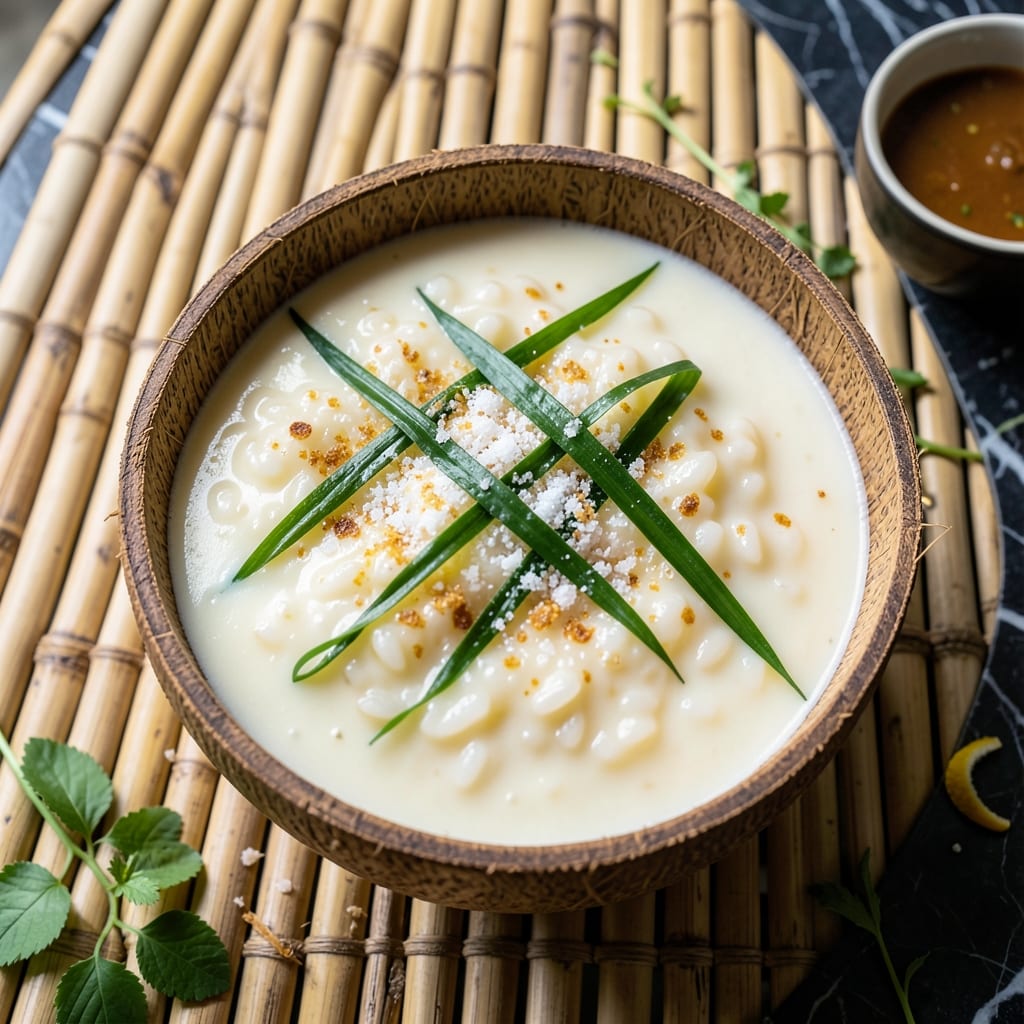
There’s something deeply comforting about a warm bowl of rice pudding that brings back memories of home. This Kapampangan version combines the richness of coconut milk with tender sticky rice for a dessert that’s both hearty and delicate.
The traditional method involves slow-cooking the rice until it absorbs every drop of coconut milk, creating a creamy texture that’s neither too thick nor too runny. A touch of sugar and a pinch of salt balance the flavors perfectly.
What you’ll get is a dish that’s simple yet sophisticated, with every spoonful offering a hint of tropical warmth. It’s a celebration of Filipino culinary tradition, served warm or chilled.
Perfect for special occasions or when you need a taste of nostalgia. Here’s how to make it.
Ingredients for Kapampangan Rice Pudding
Creamy coconut milk and sticky rice create this comforting dessert. Simple ingredients, big nostalgia.
| Ingredient | Amount | Notes |
|---|---|---|
| Glutinous Rice 🍚 | 1 cup | Also called sticky rice |
| Coconut Milk 🥥 | 2 cups | Full-fat for creaminess |
| Water 💧 | 1 cup | For initial rice soaking |
| Granulated Sugar 🍚 | ½ cup | Adjust to taste preference |
| Salt 🧂 | ¼ tsp | Balances sweetness |
| Pandan Leaves 🌿 | 2 pieces | Optional for aroma |
| Vanilla Extract 🌿 | 1 tsp | Pure extract preferred |
| Sweetened Condensed Coconut Milk 🥥 | ¼ cup | For extra richness |
| Toasted Coconut Flakes 🥥 | ¼ cup | For garnish |
| Raisins 🍈 | ¼ cup | Optional for texture |
The glutinous rice is key here—look for it in Asian markets or the international aisle. Thai Kitchen or Kaanaya brands are solid. Don’t confuse it with regular rice; sticky rice has that signature chew. Coconut milk matters too. Full-fat cans (like Thai Kitchen or Goya) give you that rich, velvety texture. Skip the light versions; they’ll leave your pudding thin and sad.
No pandan leaves? A few drops of pandan extract works, or just skip it—the coconut flavor carries the dish. Out of vanilla extract? A cinnamon stick simmered with the rice adds warmth. For extra richness, coconut cream can replace half the coconut milk. Raisins not your thing? Swap in dried mango for a Filipino twist.
This keeps 3-4 days in the fridge (it thickens as it cools). Reheat gently with a splash of coconut milk to loosen. Garnish with toasted coconut flakes just before serving—worth the extra minute (frozen works in a pinch).
Why You’ll Love This Recipe
- One Pot Wonder: I just dump glutinous rice, coconut milk, and sugar in a pot and let it simmer—no fancy steps, no stress.
- Creamy Coconut Heaven: The coconut milk soaks into the rice until it’s rich, sweet, and impossibly velvety.
- Feeds a Crowd: I make a big batch for potlucks, and it’s always the first to disappear.
- Budget Stretcher: Glutinous rice and coconut milk are cheap, and this fills up a whole family for pennies.
Step-by-Step Instructions for Kapampangan Rice Pudding
This method delivers rich, creamy coconut flavor in every comforting bite.
Step 1: Soak the Rice for Optimal Texture
Rinse the 1 cup Glutinous Rice under cold water until the water runs clear. This removes excess starch and prevents the pudding from becoming gummy. Drain well, then combine the rice with the 1 cup Water in a bowl.
Let it soak for at least 30 minutes or up to 2 hours. Soaking softens the rice so it cooks evenly and absorbs the coconut milk more efficiently. You’ll see the grains plump slightly when they’re ready.
Step 2: Simmer with Coconut Milk and Aromatics
In a medium saucepan, combine the soaked rice (with soaking water), 2 cups Coconut Milk, 0.5 cup Granulated Sugar, and 0.25 tsp Salt. Add the 2 pieces Pandan Leaves if using—they infuse a delicate floral aroma that’s classic in Kapampangan desserts.
Bring to a gentle boil over medium heat, then reduce to low heat. Simmer uncovered for 20-25 minutes, stirring occasionally to prevent sticking. The mixture should thicken as the rice absorbs the liquid, and the surface will look slightly bubbly.
Step 3: Finish with Rich Coconut Flavors
Discard the pandan leaves. Stir in the 1 tsp Vanilla Extract and 0.25 cup Sweetened Condensed Coconut Milk. The condensed milk adds a luscious sweetness and creamy texture. Cook for another 5 minutes on low heat, stirring constantly.
The pudding is done when it reaches a thick, porridge-like consistency and the rice is fully tender. If it looks too thin, cook for an additional 2-3 minutes—it will thicken slightly as it cools. Taste and adjust sweetness if needed, though the raisins will add natural sweetness too.
Step 4: Rest and Add Textural Toppings
Remove from heat and let the pudding rest for 10 minutes. This allows the flavors to meld and the texture to set slightly. The surface should look glossy and smooth, with the rice fully suspended in the creamy coconut base.
Stir in the 0.25 cup Raisins if using—they’ll plump up slightly from the residual heat. Transfer to serving bowls and let cool to room temperature or chill in the refrigerator. The pudding will thicken further as it cools.
Step 5: Garnish and Serve
Just before serving, sprinkle each portion with toasted coconut flakes. The toasted bits add a satisfying crunch that contrasts beautifully with the creamy pudding. The flakes should be golden brown and fragrant—if they’re not already toasted, spread them on a dry pan over low heat for 2-3 minutes until they turn golden.
Serve warm or chilled. Each spoonful should deliver creamy coconut rice, bursts of sweet raisins, and that signature toasted coconut crunch. The pudding keeps well in the fridge for up to 3 days, though the texture is best the day it’s made.
Pro Tips For Making Kapampangan Rice Pudding
- Soak the Rice: I learned this the hard way—soak the glutinous rice for at least 30 minutes before cooking. It cuts the cooking time in half and prevents that unpleasant chalky texture.
- Low and Slow: After burning my first batch, I now cook it on low heat once the coconut milk starts simmering. Medium heat makes it scorch, and nobody wants burnt pudding.
- Use Full-Fat Coconut Milk: Skip the light coconut milk—it separates and leaves your pudding thin. Full-fat gives that rich, creamy consistency kapampangan rice pudding is known for.
- Stir Often: Sounds tedious, but stirring every 5 minutes prevents a sticky crust from forming at the bottom. I was skeptical until I tried it and saved a whole pot of pudding.
Storing and Reheating Leftovers
Refrigerator Storage
Let the pudding cool completely before transferring to airtight containers. I use glass jars for easy portioning. Store in the fridge at 40°F or below for up to 3-4 days. The texture will thicken as it chills. ❄️
Freezer Storage
For longer storage, freeze in quart-sized freezer bags with excess air removed. Lay flat to save space. This dessert freezes well for up to 1 month. Thaw overnight in the fridge before reheating.
Stovetop Reheating
Transfer desired portions to a saucepan and add 2-3 tbsp coconut milk to loosen. Heat over low-medium heat for 5-7 minutes, stirring frequently. The pudding should return to a creamy consistency.
Microwave Method
Place individual servings in a microwave-safe bowl. Heat on 50% power for 1-2 minutes, stirring halfway. Add 1 tbsp coconut milk if needed. This method works best for single portions. 🔥
Serving After Storage
Always freshen up the texture before serving. If too thick, a splash of warm coconut milk works wonders. Garnish with fresh toasted coconut flakes just before serving to maintain that perfect crunch.
Pro Storage Tip
Store garnishes separately if possible. The toasted coconut flakes maintain their texture better when added fresh. This ensures every serving tastes as good as the first.
Nutrition Facts
Frequently Asked Questions
Can I use regular rice instead of glutinous?
No, regular rice won’t give you the same creamy texture. Glutinous rice absorbs coconut milk better and provides the signature chew. For best results, stick with sticky rice.
How do I know when it’s done?
The pudding should reach a thick, porridge-like consistency after 25-30 minutes of cooking. The rice grains should be fully tender with no hard center. It thickens more as it cools.
Can I make this dairy-free?
This recipe is naturally dairy-free since it uses coconut milk. Just ensure your condensed milk substitute is also dairy-free.
Why did my pudding turn out watery?
This usually means it needed more cooking time. Simmer uncovered for 2-3 minutes longer, stirring constantly. The rice must absorb most of the liquid.

- Mujadara Rice and Lentils Recipe: Earthy Spiced Lentils With Caramelized Onions - November 1, 2026
- Naija Fried Rice Recipe: Street-Style Spice With Veggie Crunch - November 1, 2026
- Mushy Rice Recipe: Fluffy Grains Transformed in Minutes - November 1, 2026