
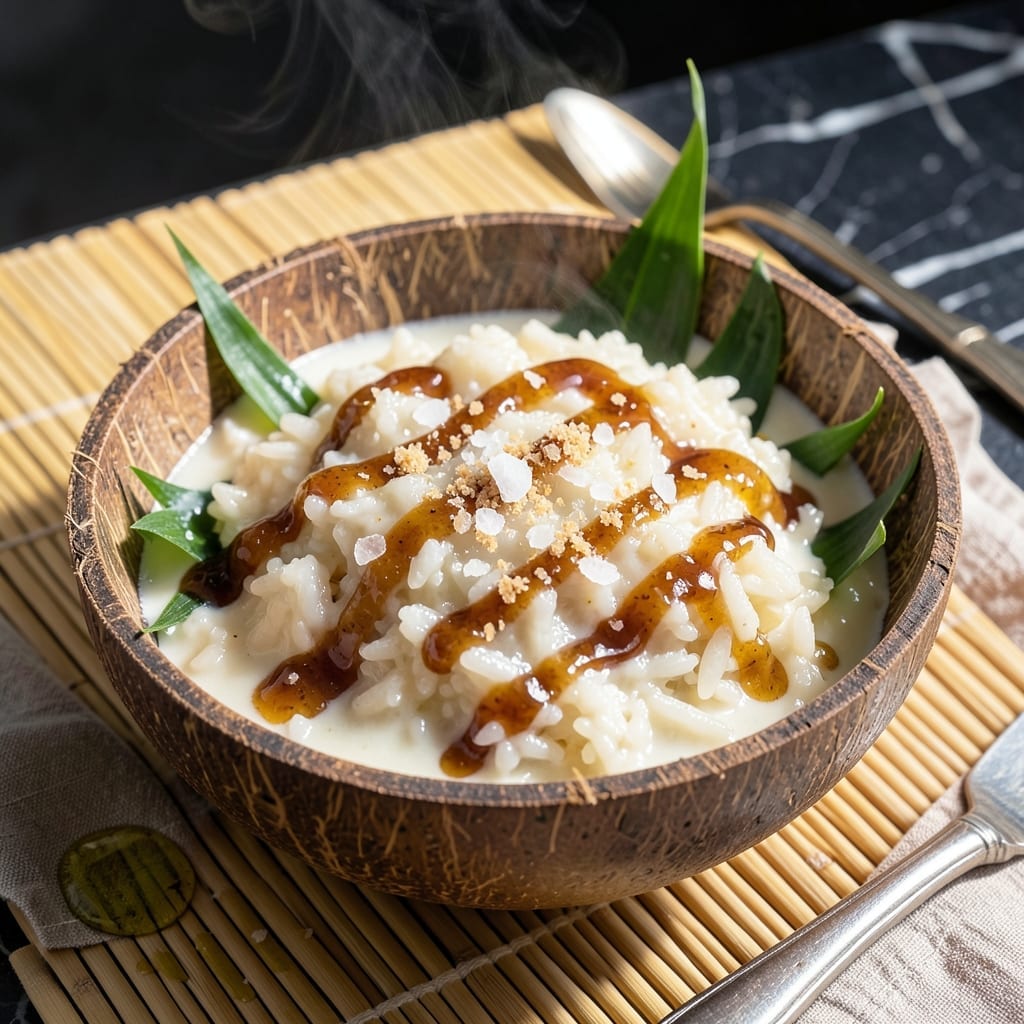
This dish transforms simple glutinous rice into a rich, creamy delight with coconut milk’s tropical depth. The rice absorbs the coconut’s natural sweetness, creating a texture that’s chewy and satisfying.
Soaking the rice overnight ensures even cooking, while gentle steaming yields the perfect consistency. The result is a versatile base for both traditional desserts and modern creations.
Ingredients for Glutinous Rice Coconut Milk
Simple glutinous rice meets coconut milk for a rich, chewy tropical treat.
| Ingredient | Amount | Notes |
|---|---|---|
| Glutinous Rice 🍚 | 2 cups | Sweet rice, rinsed thoroughly |
| Full-Fat Coconut Milk 🥥 | 2 cups | Canned, well-shaken before using |
| Water 💧 | 2 cups | For soaking and cooking |
| Coconut Sugar 🍚 | ¼ cup | Or substitute brown sugar |
| Sea Salt 🧂 | ½ tsp | Fine grain preferred |
| Pandan Leaves 🌿 | 2 pieces | Optional, for fragrance |
| Vanilla Extract 🌿 | 1 tsp | Pure, not imitation |
| Toasted Sesame Seeds 🌰 | 1 tbsp | For garnish |
| Mango Slices 🥭 | 1 cup | Fresh or frozen, for serving |
| Lime Zest 🍈 | 1 tsp | Freshly grated |
The glutinous rice must be sweet rice—regular white rice won’t work (it lacks the sticky texture). Asian markets carry it in bulk bins, but most Whole Foods locations stock it too. Look for brands like Koda Farms or Bob’s Red Mill. The coconut milk needs to be full-fat for that luxurious creaminess; Thai Kitchen or Native Forest are reliable choices. Don’t shake the can until you’re ready to use it—the cream separation is normal.
No coconut sugar? Brown sugar or maple syrup work in a pinch, but reduce the liquid slightly. Pandan leaves add an authentic floral note, but if you can’t find them (check Asian grocery freezers), a drop of pandan extract does the trick. The sesame seeds can be swapped for crushed peanuts if you prefer crunch. For a quicker version, use a rice cooker—same ratio of rice to liquid.
Leftovers keep beautifully. Store in an airtight container for up to 5 days in the fridge, or freeze for 1 month. Reheat gently with a splash of coconut milk to restore creaminess. The rice thickens as it cools, so add liquid as needed.
Why You’ll Love This Recipe
- Set and Forget: I just dump everything in the rice cooker and walk away—glutinous rice soaks up the coconut milk like a dream.
- Creamy Heaven: The full-fat coconut milk makes it luxuriously rich, with a hint of caramel from the coconut sugar that’s honestly addictive.
- Breakfast or Dessert: I serve it warm with mango for dessert, then cold with a sprinkle of salt for breakfast the next day.
- Stretches Easily: One batch feeds us for two meals, and the ingredients cost less than a fancy coffee.
Step-by-Step Instructions for Glutinous Rice in Coconut Milk
Master this technique for consistently perfect texture and balanced tropical flavor in every batch.
Step 1: Rinse and Soak the Glutinous Rice
Place the 2 cups Glutinous Rice in a fine-mesh strainer and rinse under cold water until the water runs clear. This removes excess starch that would otherwise make the final dish gummy rather than pleasantly chewy.
Transfer the rinsed rice to a bowl and cover with the 2 cups Water. Let it soak for at least 30 minutes or up to 4 hours. The longer soak ensures even hydration, which is critical for that signature sticky, tender bite. Drain thoroughly before cooking.
Step 2: Infuse the Coconut Milk Base
In a medium saucepan, combine the 2 cups Full-Fat Coconut Milk, 0.25 cup Coconut Sugar, 0.5 tsp Sea Salt, and 2 pieces Pandan Leaves (if using). Warm over medium heat until the sugar and salt dissolve completely, stirring occasionally.
Bring the mixture to a gentle simmer, then remove from heat. Let it steep for 5-10 minutes to allow the pandan leaves to infuse their aromatic, floral notes into the liquid. Remove and discard the leaves before proceeding. This step builds the fragrant foundation for your dish.
Step 3: Cook the Rice to Absorption
Return the coconut milk mixture to medium-low heat and add the drained 2 cups Glutinous Rice. Stir well to combine, ensuring all grains are submerged in the liquid. The mixture should just barely simmer—too vigorous a boil will cause the coconut milk to separate.
Cover the pan and cook undisturbed for 15-20 minutes, until the rice has absorbed most of the liquid and is tender with a slight bite. Stir once halfway through to prevent sticking. The rice is done when the grains are translucent and the liquid has reduced to a creamy consistency.
Step 4: Finish with Vanilla and Rest
Remove the pan from heat and stir in the 1 tsp Vanilla Extract. The residual heat will distribute it evenly throughout the dish. Cover and let the rice rest for 10 minutes—this allows the grains to finish absorbing any remaining liquid and plump up fully.
During this rest, the texture will transform from slightly firm to perfectly tender. The coconut milk will thicken into a rich, pudding-like consistency that coats each grain of rice beautifully.
Step 5: Serve with Tropical Garnishes
Transfer the warm rice to serving bowls. Top each portion with 1 cup Mango Slices, divided evenly, and sprinkle with the 1 tbsp Toasted Sesame Seeds. Finish with a dusting of 1 tsp Lime Zest for a bright, citrusy contrast to the rich coconut.
The mango’s juicy sweetness complements the creamy rice, while the sesame seeds add a subtle nutty crunch. Serve immediately while warm—the texture is best when fresh, though leftovers can be gently reheated with a splash of water.
Pro Tips For Making Glutinous Rice Coconut Milk
- Soak the Rice: Give the glutinous rice a good 4-hour soak in cold water—it cuts the cooking time nearly in half and guarantees even tenderness.
- Use Full-Fat Only: Skip the light coconut milk; the fat in full-fat versions is what gives the dish its rich, creamy texture that absorbs into the rice.
- Simmer, Don’t Boil: I learned this the hard way—keep the coconut milk mixture at a gentle simmer, or it’ll separate and leave your rice greasy instead of luscious.
- Salt the Coconut: Stir the sea salt directly into the coconut milk before adding it to the rice; it distributes better than sprinkling it on top and avoids bland bites.
Troubleshooting Perfect Results
Grainy Rice Texture
If your rice turns out hard or undercooked, it likely didn’t soak long enough. I always soak mine for at least 4 hours, or overnight for best results. Also ensure you’re using the correct ratio of 1:1 rice to coconut milk. 💡
Too Watery or Thin
An excess of liquid usually means the heat was too high, causing the coconut milk to separate. Keep it at a gentle simmer and cook uncovered for the last 5 minutes to allow evaporation. Stirring too often can also break the grains.
If it’s still thin after cooking, let it rest covered for 10-15 minutes—the rice will absorb the remaining liquid.
Coconut Milk Separating
This happens when the mixture boils too vigorously. Maintain medium-low heat and stir occasionally. If separation occurs, whisk vigorously off-heat to re-emulsify. Using full-fat coconut milk like Thai Kitchen helps prevent this issue.
Sticky or Gummy Rice
Over-rinsing or skipping the soak can create a gummy texture. Rinse just until the water runs clear, then soak properly. Also, avoid pressing the rice while cooking—this releases excess starch. The grains should be tender but distinct.
Lacking Flavor Depth
If the dish tastes bland, it might need more coconut sugar or a pinch of sea salt. I also recommend steeping the pandan leaves for the full 10 minutes to extract maximum aroma. A splash of vanilla extract at the end adds warmth. 🌟
Nutrition Facts
Frequently Asked Questions
Can I use regular rice instead?
No, regular rice lacks the sticky texture. Only glutinous (sweet) rice works for this dish. It absorbs the coconut milk differently and creates the signature chewy consistency.
How long can I store leftovers?
Keep in an airtight container in the fridge for up to 5 days. Reheat gently with a splash of coconut milk to restore creaminess. Freezing works for 1 month.
What can I substitute for pandan leaves?
A drop of pandan extract works, or add 1 tsp vanilla for depth. The extract is potent—start with 1/4 tsp and adjust to taste.
Why is my rice still hard after cooking?
Likely it didn’t soak long enough. Soak for at least 4 hours (overnight is best) and ensure the liquid ratio is 1:1 rice to coconut milk.

- Glutinous Rice Flour Bread Recipe: Soft Pillows with Nutty Depth - October 12, 2026
- Green Rice Casserole Recipe: Cheesy Baked Comfort with Vibrant Herbs - October 12, 2026
- Glutinous Rice Coconut Milk Recipe: Chewy Sweetness With Tropical Depth - October 12, 2026