
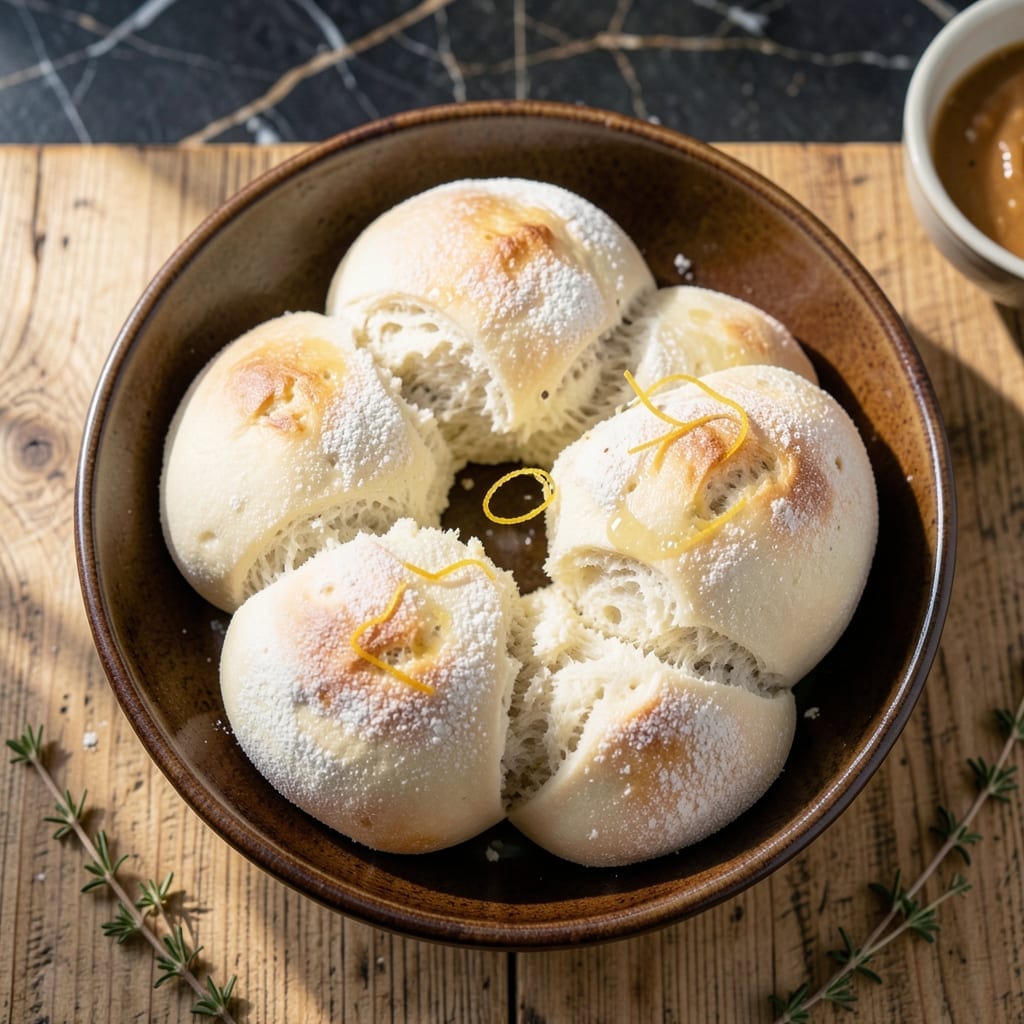
This bread delivers soft, pillowy texture with a subtle nutty flavor that’s hard to resist.
Using glutinous rice flour creates a moist crumb and delicate structure, while a simple proofing step ensures perfect rise every time.
Ingredients for Glutinous Rice Flour Bread
Soft, pillowy bread with subtle nutty flavor starts with these gluten-free staples.
| Ingredient | Amount | Notes |
|---|---|---|
| Glutinous Rice Flour 🌾 | 2 cups | Mochiko brand recommended for texture |
| Warm Water 💧 | 1 cup | 110°F for yeast activation |
| Granulated Sugar 🍚 | 2 tbsp | Feeds the yeast for rise |
| Active Dry Yeast 🍞 | 2 ¼ tsp | One standard packet equivalent |
| Salt 🧂 | 1 tsp | Fine sea salt preferred |
| Vegetable Oil 🫒 | 2 tbsp | Neutral flavor for softness |
| Tapioca Starch 🌾 | ¼ cup | Enhances chewiness and structure |
| Xanthan Gum 🧪 | ½ tsp | Binds without gluten, essential |
| Agave Nectar 🍯 | 1 tbsp | Vegan sweetener alternative |
| Apple Cider Vinegar 🍏 | 1 tsp | Balances sweetness and texture |
| Roasted Peanuts 🥜 | ¼ cup | Finely chopped for nutty depth |
| Sesame Seeds 🌰 | 2 tbsp | Toasted, for topping and flavor |
Glutinous rice flour is the foundation—Mochiko brand is the gold standard for authentic texture. Look for it in the Asian aisle at Whole Foods or any well-stocked Asian market. The xanthan gum is non-negotiable here; it mimics gluten’s elasticity. Bob’s Red Mill offers a reliable version. Tapioca starch adds chew, but don’t confuse it with tapioca flour (same thing, different name).
No xanthan gum? Psyllium husk powder at half the amount works in a pinch, though the crumb will be slightly denser. Swap agave for maple syrup or date syrup if preferred. The peanuts can be substituted with cashews or almonds—just ensure they’re finely chopped. Apple cider vinegar can be replaced with rice vinegar or lemon juice, but avoid balsamic (too strong).
Store flour in an airtight container in a cool, dark place for up to 3 months. The bread keeps fresh at room temperature for 2-3 days or frozen for 1 month. Slice before freezing for easy toasting later.
Why You’ll Love This Recipe
- No Mess Mixing: I just dump the glutinous rice flour, sugar, yeast, and salt into warm water—no fancy tools, no fuss.
- Slightly Sweet Bite: The sugar caramelizes just enough to give it that subtle sweetness without being dessert-like.
- Breakfast or Snack: I make a batch on Sunday and we grab slices all week—toasted with jam or plain with tea.
Step-by-Step Instructions for Glutinous Rice Flour Bread
Master the technique for achieving the perfect soft texture with this gluten-free bread.
Step 1: Activate the Yeast and Prepare Wet Ingredients
In a small bowl, combine the 1 cup Warm Water with the 2 tbsp Granulated Sugar and 2.25 tsp Active Dry Yeast. Stir gently and let sit for 5-7 minutes until the mixture becomes frothy and cloudy—this confirms the yeast is active and ready to work.
While the yeast activates, whisk together the 2 tbsp Vegetable Oil, 1 tbsp Agave Nectar, and 1 tsp Apple Cider Vinegar in a separate bowl. The vinegar helps balance the sweetness and improves the bread’s structure, while the agave adds a subtle depth of flavor.
Step 2: Combine Dry Ingredients for Structure
In a large mixing bowl, sift together the 2 cups Glutinous Rice Flour, 0.25 cup Tapioca Starch, 0.5 tsp Xanthan Gum, and 1 tsp Salt. The xanthan gum is critical here—it mimics the binding properties of gluten, ensuring the bread holds its shape without crumbling.
Whisk the dry ingredients thoroughly to distribute the xanthan gum evenly. This prevents clumping and ensures a uniform texture in the final loaf. The tapioca starch enhances chewiness, while the glutinous rice flour provides the signature soft, pillowy crumb.
Step 3: Mix and Proof the Dough
Pour the activated yeast mixture and the wet ingredient blend into the dry ingredients. Use a stand mixer fitted with the paddle attachment to combine everything on medium speed for 2-3 minutes. The dough will be thick and slightly sticky, but it should pull away from the sides of the bowl.
If the dough feels too dry, add a teaspoon of water, but avoid over-hydrating—this can lead to a dense, gummy texture. Cover the bowl with a damp towel and let the dough proof in a warm, draft-free area for 1 to 1.5 hours, or until it has doubled in volume. The dough should look puffy and airy, indicating the yeast has done its job.
Step 4: Shape, Top, and Bake
Preheat your oven to 350°F and grease a standard loaf pan. Transfer the proofed dough to the pan, smoothing the top with a wet spatula to prevent sticking. Sprinkle the 0.25 cup Roasted Peanuts and 2 tbsp Sesame Seeds evenly over the surface, pressing them lightly into the dough so they adhere during baking.
Bake for 45-50 minutes, or until the top is golden brown and a toothpick inserted into the center comes out clean. If the top begins to brown too quickly, tent the pan with foil to prevent over-browning while the interior finishes cooking.
Pro Tips For Making Glutinous Rice Flour Bread
- Proof the Yeast: Always dissolve yeast in warm water with a pinch of sugar first—wait until it bubbles aggressively (about 5-10 minutes). I learned this the hard way after wasting a batch with dead yeast.
- Use Exact Water Temp: Warm water should feel like bathwater, around 105-110°F. Any hotter kills the yeast, any cooler and it won’t activate properly.
- Skip Cold Ingredients: Make sure all ingredients are room temperature before mixing. Cold flour or water can shock the yeast and result in dense bread.
- Add Xanthan Gum: Sounds weird, but it works: Toss in 1/2 teaspoon of xanthan gum per cup of flour to mimic gluten’s stretchiness. The texture actually changes the outcome for the better.
Storing and Reheating This glutinous rice flour bread
Room Temperature Storage
Once completely cooled, store your bread in an airtight container or wrapped tightly in plastic wrap at room temperature. It stays fresh for 2-3 days, though I find it’s best on day one when the texture is at its peak. 💪
Refrigerator Storage
For longer storage, refrigerate in an airtight container for up to 1 week. Slice before storing to make it easier to grab a piece when needed. Refrigeration can dry it out slightly, so I recommend reheating before serving.
Freezer Storage
This bread freezes beautifully for up to 1 month. Slice the loaf, wrap individual slices in plastic wrap, then place in a freezer bag. This way, you can thaw and toast only what you need. ❄️
Reheating in Toaster
For the best texture, toast slices in a toaster at medium settings for 1-2 minutes. This revives the softness and enhances the nutty flavor. If frozen, toast directly from the freezer for 2-3 minutes.
Oven Reheating
Preheat your oven to 300°F and wrap the bread in aluminum foil. Heat for 10-15 minutes to restore moisture and softness. This method works great for reviving a whole loaf.
Microwave Option
For a quick fix, microwave a slice on 50% power for 15-20 seconds. Place a damp paper towel over it to prevent drying out. I use this when I’m in a hurry, but the toaster gives better results.
Nutrition Facts
Frequently Asked Questions
Can I replace xanthan gum with something else?
Yes, use psyllium husk powder at half the amount. The texture will be slightly denser but still works well. Avoid skipping it entirely, as it’s essential for binding.
Why is my bread dense?
Overproofing or using old yeast is the most likely cause. Ensure your yeast is fresh and active, and don’t let the dough rise for more than 1.5 hours.
Can I make this without a stand mixer?
Use a sturdy spoon or spatula to mix by hand for 3-4 minutes. The dough will be thick but manageable. Just ensure all ingredients are well combined.
How do I know when it’s done baking?
The top should be golden brown, and a toothpick inserted in the center should come out clean. If it browns too quickly, cover with foil and continue baking.

- Glutinous Rice Flour Bread Recipe: Soft Pillows with Nutty Depth - October 12, 2026
- Green Rice Casserole Recipe: Cheesy Baked Comfort with Vibrant Herbs - October 12, 2026
- Glutinous Rice Coconut Milk Recipe: Chewy Sweetness With Tropical Depth - October 12, 2026