
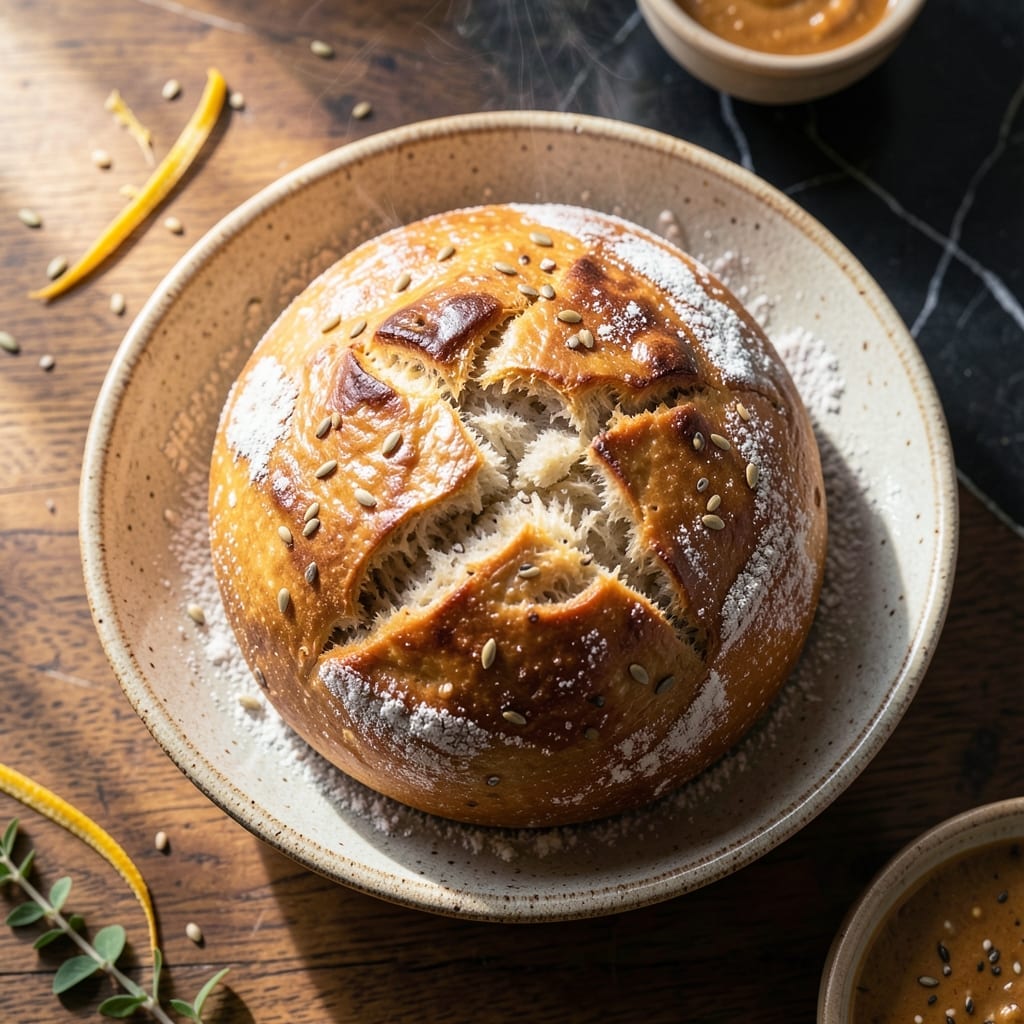
This gluten-free bread delivers a light and airy texture that rivals traditional loaves. The secret lies in properly balancing white rice flour with complementary binders.
With precise measurements and a few key techniques, you’ll achieve a soft, sliceable loaf that holds together beautifully. No dense, crumbly results—just perfect sandwich bread every time.
Ingredients for Gluten Free Bread Recipe with White Rice Flour
A carefully calibrated blend of flours and binders creates this light, airy gluten-free loaf.
| Ingredient | Amount | Notes |
|---|---|---|
| White Rice Flour 🌾 | 2 cups | Superfine grind for best texture |
| Tapioca Starch 🌾 | ¾ cup | Also called tapioca flour |
| Potato Starch 🥔 | ½ cup | Not potato flour, different product |
| Xanthan Gum 🧪 | 1 tsp | Essential for structure and elasticity |
| Psyllium Husk Powder 🌿 | 2 tbsp | Key binder for airy texture |
| Apple Cider Vinegar 🍏 | 1 tbsp | Balances flavors and activates rise |
| Maple Syrup 🍁 | 2 tbsp | Natural sweetener, vegan alternative to honey |
| Olive Oil 🫒 | ¼ cup | Light or extra-virgin, room temperature |
| Salt 🧂 | 1 tsp | Fine sea salt preferred |
| Warm Water 💧 | 1 ½ cups | Approximately 110°F for yeast activation |
| Active Dry Yeast 🍞 | 2 ¼ tsp | One standard packet, proofed in warm water |
| Flaxseed Meal 🌾 | 2 tbsp | Mixed with water as egg substitute |
White rice flour is the foundation, but sourcing superfine grind from Bob’s Red Mill or Authentic Foods ensures the finest crumb. Psyllium husk powder (not whole husks) is non-negotiable—Whole Foods or Thrive Market carry it. Xanthan gum stabilizes the structure; NOW Foods offers a reliable version. For yeast, Fleischmann’s or Red Star are consistently active. Always check expiration dates on all dry ingredients.
No psyllium husk? Ground chia seeds at equal volume can substitute, though texture differs slightly. Out of maple syrup? Agave nectar or date syrup works at a 1:1 ratio. For oil, avocado or melted coconut oil can replace olive oil. If you lack multiple flours, a pre-mixed gluten-free all-purpose blend (like King Arthur) can work, but add 1 extra tsp of psyllium husk for better rise.
Store dry ingredients in airtight containers in a cool, dark place for up to 3 months. The baked loaf stays fresh at room temperature for 2-3 days or frozen for 1 month. Slice before freezing for easy toasting. Always bring ingredients to room temperature before mixing for optimal texture.
Why You’ll Love This Recipe
- One Bowl Wonder: I just dump the dry ingredients—white rice flour, tapioca starch, potato starch—mix with the wet, and bake. No fancy steps.
- Toasts Like a Dream: The psyllium husk gives it that perfect chewy texture, and it actually holds up in the toaster without crumbling.
- Meal Prep MVP: I make a double batch on Sunday and use it for sandwiches, toast, even croutons all week long.
- Pantry Staples Only: No expensive specialty flours here—just white rice flour and a few starches I always have on hand.
Step-by-Step Instructions for Gluten Free Bread With White Rice Flour
Follow this method precisely to achieve a light, airy loaf with perfect crumb structure.
Step 1: Activate the Yeast and Prepare Flaxseed Egg
In a small bowl, combine the 2.25 tsp Active Dry Yeast with ¼ cup of the 1.5 cups Warm Water and the 2 tbsp Maple Syrup. Let it sit for 5-7 minutes until foamy—this confirms the yeast is active and ready to work.
In another bowl, mix the 2 tbsp Flaxseed Meal with 6 tbsp of the remaining Warm Water. Let it thicken for 5 minutes to form a gel-like consistency that mimics eggs, providing structure and moisture to your gluten-free loaf.
Step 2: Combine Dry Ingredients for Optimal Texture
In a large mixing bowl, whisk together the 2 cups White Rice Flour, 0.75 cup Tapioca Starch, 0.5 cup Potato Starch, 1 tsp Xanthan Gum, and 1 tsp Salt. The xanthan gum is non-negotiable—it replaces the gluten’s elasticity, ensuring your bread holds together without being dense.
Add the 2 tbsp Psyllium Husk Powder to the dry mix. This ingredient is your secret weapon for an airy crumb, as it absorbs moisture and creates a gel that mimics gluten’s binding properties. Stir until fully incorporated and lump-free.
Step 3: Mix Wet and Dry Ingredients into a Smooth Batter
In the bowl with the yeast mixture, add the prepared flaxseed gel, the remaining Warm Water, 0.25 cup Olive Oil, and 1 tbsp Apple Cider Vinegar. The vinegar balances the flavor and helps activate the baking process, ensuring a better rise.
Pour the wet ingredients into the dry mixture. Using a stand mixer fitted with a paddle attachment, beat on medium-high speed for 3-4 minutes until the batter is smooth and slightly sticky. It should resemble thick pancake batter—this consistency is ideal for gluten-free bread.
Step 4: Proof and Bake to Perfection
Grease a 9×5-inch loaf pan and pour the batter into it, smoothing the top with a wet spatula. Cover with a damp towel and let it rise in a warm place for 45-60 minutes, or until it has risen by about 50%—you’ll see the batter domed and slightly bubbly.
Preheat your oven to 375°F. Bake the loaf for 50-55 minutes until the top is golden brown and the internal temperature reaches 205°F. If the top browns too quickly, tent it with foil. Let it cool in the pan for 10 minutes, then transfer to a wire rack to cool completely before slicing for the best texture.
Pro Tips For Making Gluten Free Bread Recipe With White Rice Flour
- Pre-gel the starches: Mix the tapioca and potato starch with hot water (about 1:1 ratio) before adding to the dry ingredients—this mimics gluten’s elasticity and prevents gummy texture. I learned this the hard way after my first few loaves crumbled like sandcastles.
- Weigh your flours: Scooping white rice flour with a cup can pack it down, leading to dense bread; use a scale for accuracy (1 cup = ~120g). Sounds tedious, but it works—my loaves went from doorstops to light and sliceable after I started.
- Let it rest: After mixing, let the dough sit for 20-30 minutes before baking; the psyllium husk needs time to absorb liquid and bind properly. Skip this and you’ll get a flat, sad loaf—I’ve been there.
- Boost the oven temp: Bake at 375°F (not 350°F) for the first 15 minutes to help the bread rise, then drop to 350°F to finish. After burning three batches at high heat, I finally figured out this two-step method for even cooking without a burnt crust.
Troubleshooting gluten free bread recipe with white rice flour
Dense or Flat Loaf
If your bread turns out dense, your psyllium husk powder may have clumped. Whisk it into the dry ingredients thoroughly. Also, ensure your warm water is exactly 110°F—too hot kills yeast, too cold slows activation. I learned this the hard way with my first few loaves. 💡
Crumbly Texture
A crumbly result often means insufficient binding. Add ½ tsp more xanthan gum to your dry mix next time. Also, check that your flaxseed gel thickened properly—it should be jelly-like before mixing. Bob’s Red Mill flaxseed meal works reliably for me.
Overly Wet Batter
If your batter feels soupy, your psyllium husk may be old. It absorbs 10x its weight in liquid—fresh powder is key. Alternatively, add 1-2 tbsp more white rice flour to thicken. The batter should resemble thick pancake mix, not liquid.
Loaf Doesn’t Rise
First, verify your yeast is fresh—I use Fleischmann’s with 3-month expiration. Second, ensure your proofing environment is warm (80-85°F). I place my bowl near the oven with the light on. Lastly, confirm your apple cider vinegar is present; it activates the baking process.
Uneven Baking
If your top browns too quickly while the center stays raw, your oven may have hot spots. Rotate your pan halfway through baking. Also, tent with foil once it reaches golden brown. My 375°F bake time is spot-on with this method. 🔥
Gummy Interior
A gummy center often means it needs more time. Use a thermometer to confirm 205°F internal temperature. If the top is browning too fast, lower your oven to 350°F and extend baking by 5-10 minutes. Patience pays off with perfect texture.
Nutrition Facts
Frequently Asked Questions
Can I replace psyllium husk powder?
Yes, use ground chia seeds at equal volume, though texture may differ slightly. Psyllium husk is ideal for binding and creating that light, airy crumb.
Why is my bread gummy inside?
It likely needs more time. Ensure the internal temperature reaches 205°F. If the top browns too fast, lower oven to 350°F and bake 5-10 minutes longer.
How do I store the bread?
Keep at room temperature in an airtight container for 2-3 days. For longer storage, slice and freeze for up to 1 month. Toast slices directly from frozen.
Can I make this without a stand mixer?
Use a hand mixer or whisk vigorously by hand. The batter should be smooth and slightly sticky, like thick pancake batter.

- Fresh Turmeric Rice Recipe: Golden Grains with Earthy Warmth - October 7, 2026
- French Onion Brown Rice Recipe: Umami-Rich Grains With Caramelized Depth - October 7, 2026
- Rice Noodle Soup Recipe: Aromatic Broth with Silky Strands - October 7, 2026