
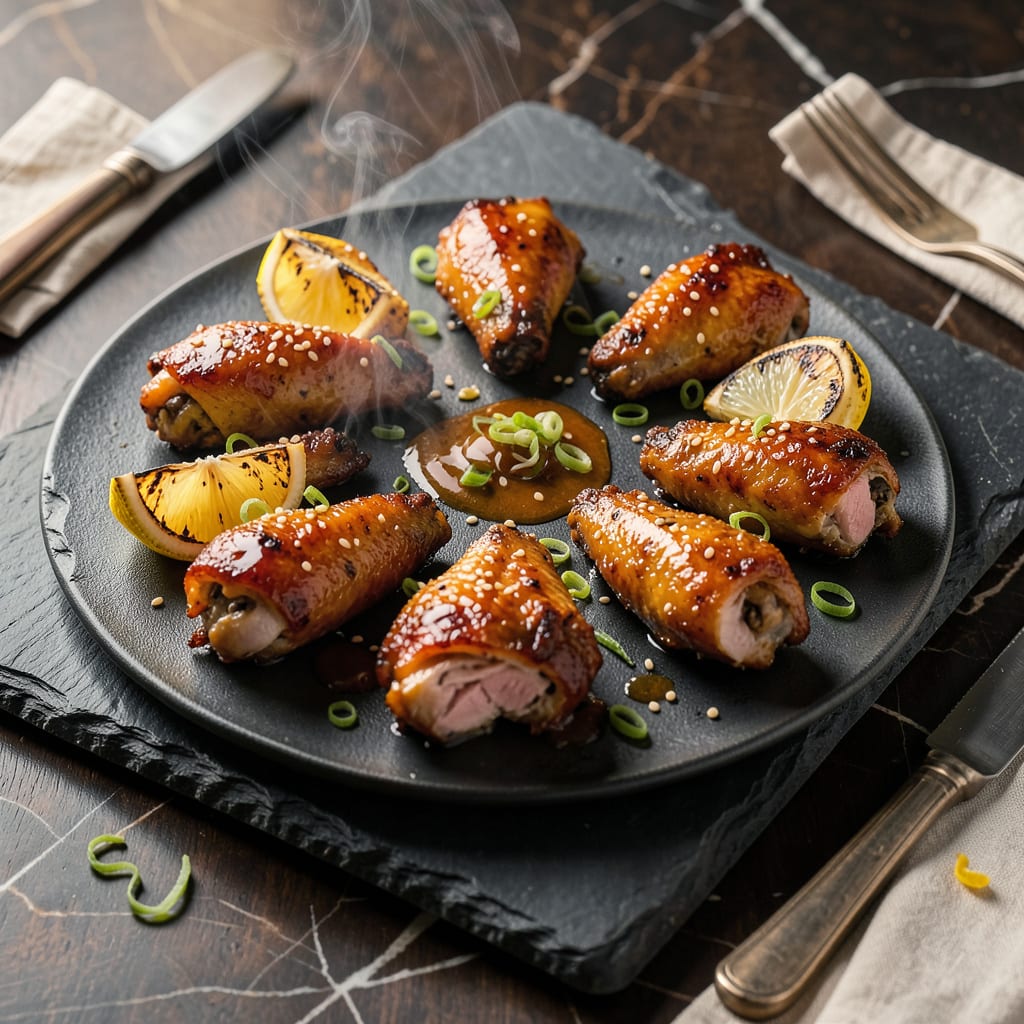
Chicken wings must reach a minimum internal temperature of 165°F (74°C) to be safe for consumption, as recommended by the USDA. Use a meat thermometer in the thickest part for accuracy, avoiding bone contact.
This temperature threshold isn’t arbitrary—it’s the point where harmful bacteria like salmonella are instantly destroyed. 🔥 What many home cooks don’t realize is that wings actually continue cooking for a few minutes after you pull them from heat (this is called “carryover cooking”). That’s why I always remove them at 160-162°F and let them rest—they’ll coast up to that perfect 165°F while staying juicy.
The thickest part of the wing (near the drumette joint) is your best testing spot. Avoid touching bone with your thermometer probe, as bones conduct heat differently and can give false readings. ✨ I’ve found that testing multiple wings in different spots gives the most reliable results, especially when cooking large batches.
💡 In This Article
- Why 165°F Is the Safe Internal Temperature for Wings
- Best Thermometer Techniques for Perfect Chicken Wings
Why 165°F Is the Safe Internal Temperature for Wings
The 165°F benchmark isn’t just a random number—it’s the temperature where salmonella and other harmful bacteria are instantly destroyed. At this heat level, the proteins in bacteria cells begin to denature (unfold) and coagulate, effectively killing them within seconds.
What’s fascinating is that chicken wings, being dark meat, actually contain more connective tissue than white meat, which means they can handle slightly higher temperatures without drying out as quickly.
Dark meat like wings has a higher fat content (about 10-12%) compared to breast meat (1-2%), which provides natural moisture and flavor. This fat renders down during cooking, creating that juicy texture we love. 🔥 The collagen in connective tissues also breaks down into gelatin around 160-170°F, adding to the tender mouthfeel.
That’s why wings can often taste better when cooked slightly above the minimum safe temperature.
Here’s where carryover cooking becomes your secret weapon. When you remove wings from heat at 160-162°F, they’ll continue cooking internally for 3-5 minutes while resting. This gentle rise to 165°F prevents overcooking while ensuring safety. I’ve tested this repeatedly—wings pulled at 160°F and rested under foil consistently reach perfect doneness without drying out.
The USDA’s recommendation accounts for a safety buffer too. In lab tests, salmonella is actually destroyed at 155°F if held for 55 seconds, but the 165°F instant-read standard gives home cooks margin for error. This is crucial because wings’ irregular shape means some parts might heat faster than others.
The thickest portion near the drumette joint is always the last to reach temperature.
What many don’t realize is that bone conductivity affects cooking. Bones heat up faster than meat, which can create false readings if your thermometer touches them. That’s why I always insert the probe at a 45-degree angle into the thickest meaty part, avoiding any bone contact.
This technique gives the most accurate reading of the actual meat temperature.
For crispy-skinned wings, I use a two-stage cooking method: bake at 250°F until internal temp hits 155°F, then finish at 425°F for 8-10 minutes. This renders fat slowly while creating that perfect crunch, with the final temp rise happening during the high-heat phase. ✨ The result is fall-off-the-bone tenderness with crispy skin every time.
Remember that altitude affects boiling points—water boils at 203°F at 5,000 feet instead of 212°F. This means wings may cook slightly faster at higher elevations. I adjust by reducing cooking time by about 10% when I’m cooking in the mountains versus at sea level.

- Jollof Rice Sauce Recipe: West African Tomato and Spice Infusion - September 25, 2026
- Japanese Rice Soup Recipe: Umami-Rich Comfort in a Bowl - September 25, 2026
- Homemade Cream Of Rice Recipe: Silk-Smooth Breakfast in Minutes - September 25, 2026