
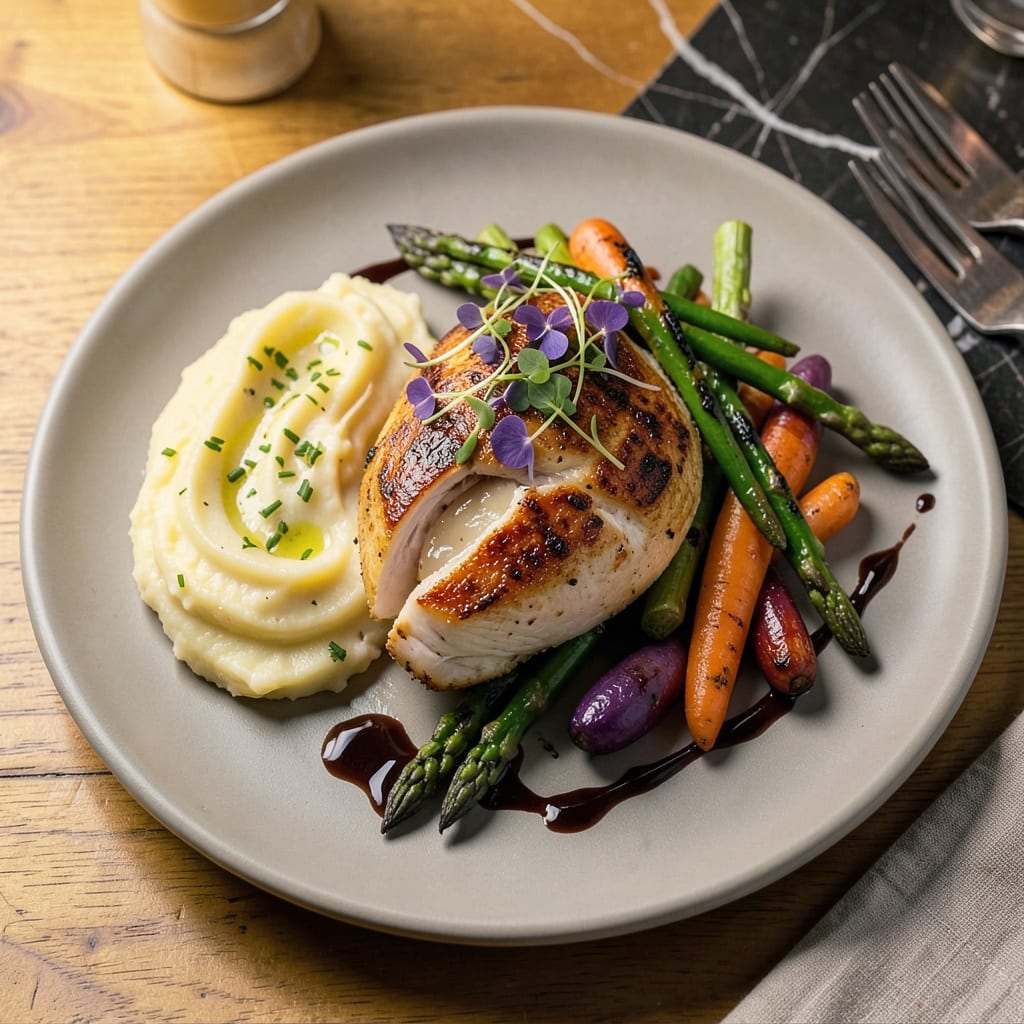
No, even slightly undercooked chicken is unsafe due to potential salmonella and campylobacter bacteria. These pathogens can cause serious food poisoning, with symptoms like vomiting, diarrhea, and fever. Always cook chicken to an internal temperature of 165°F (74°C).
I can’t stress enough how risky even small amounts of pink or underdone chicken can be. These bacteria don’t just cause mild discomfort—they can lead to hospitalization, especially for kids, older adults, or anyone with a weakened immune system. 🔥 The scary part? Symptoms can hit within 6 hours to 3 days, and some strains are becoming antibiotic-resistant. That’s why I always double-check with a meat thermometer, even if the chicken looks done.
What many don’t realize is that color isn’t a reliable indicator of doneness. Chicken can turn white before reaching 165°F, or stay pink near bones even when safe. The only foolproof method? A thermometer inserted into the thickest part, avoiding bone. ⚡ Trust me, it’s worth the extra 30 seconds to avoid a week of misery—or worse.
💡 In This Article
- Why Undercooked Chicken Poses Serious Health Risks
- What to Do If You Accidentally Eat Undercooked Chicken
Why Undercooked Chicken Poses Serious Health Risks
Chicken is a prime breeding ground for salmonella and campylobacter, two bacteria that thrive in poultry’s moist, protein-rich environment. These pathogens don’t just sit on the surface—they penetrate deep into muscle tissue during processing. Unlike beef, where bacteria are mostly surface-level, chicken’s structure allows contaminants to spread internally.
🔥 Even a tiny undercooked portion can contain thousands of bacteria cells.
The danger lies in how these bacteria behave in your body. Both salmonella and campylobacter have evolved to survive stomach acid, with some strains requiring as few as 15-20 cells to cause infection. They attach to your intestinal lining using whip-like flagella, triggering violent immune responses.
The CDC reports these bacteria cause 1.35 million infections annually in the U.S. alone, with 26,500 hospitalizations—many from undercooked poultry.
Vulnerable groups face exponentially higher risks. Children under 5 have 5 times the infection rate of other age groups because their immune systems can’t mount effective defenses. Adults over 65 and those with HIV, diabetes, or cancer treatments experience 30% longer recovery times and higher complication rates.
The bacteria can even cross into the bloodstream, causing life-threatening sepsis in extreme cases. ✨
What makes chicken particularly risky is how quickly these bacteria multiply. At room temperature, salmonella doubles every 20-30 minutes. A piece of chicken left at 70°F for just 2 hours can go from safe levels to dangerous contamination. Even refrigeration only slows growth—it doesn’t kill existing bacteria.
That’s why proper cooking to 165°F is the only reliable way to destroy these pathogens completely.
The heat requirement isn’t arbitrary—it’s based on thermal death time studies. At 165°F, salmonella dies in less than 1 second, while campylobacter requires about 15 seconds at that temperature. Lower temps give bacteria survival windows: at 140°F, some salmonella strains can survive for up to 10 minutes.
This explains why “slightly undercooked” is never safe—those few degrees make the difference between a safe meal and a hospital visit. ⚡
Consider this real-world example: A 2018 outbreak linked to undercooked chicken at a national restaurant chain sickened 634 people across 32 states. Investigators found that while most locations followed protocols, just 3°F below the target temp in a few kitchens allowed bacteria to survive.
The economic cost exceeded $15 million in medical bills and lost productivity—a stark reminder that cutting corners with chicken isn’t worth the risk.

- Jollof Rice Sauce Recipe: West African Tomato and Spice Infusion - September 25, 2026
- Japanese Rice Soup Recipe: Umami-Rich Comfort in a Bowl - September 25, 2026
- Homemade Cream Of Rice Recipe: Silk-Smooth Breakfast in Minutes - September 25, 2026