
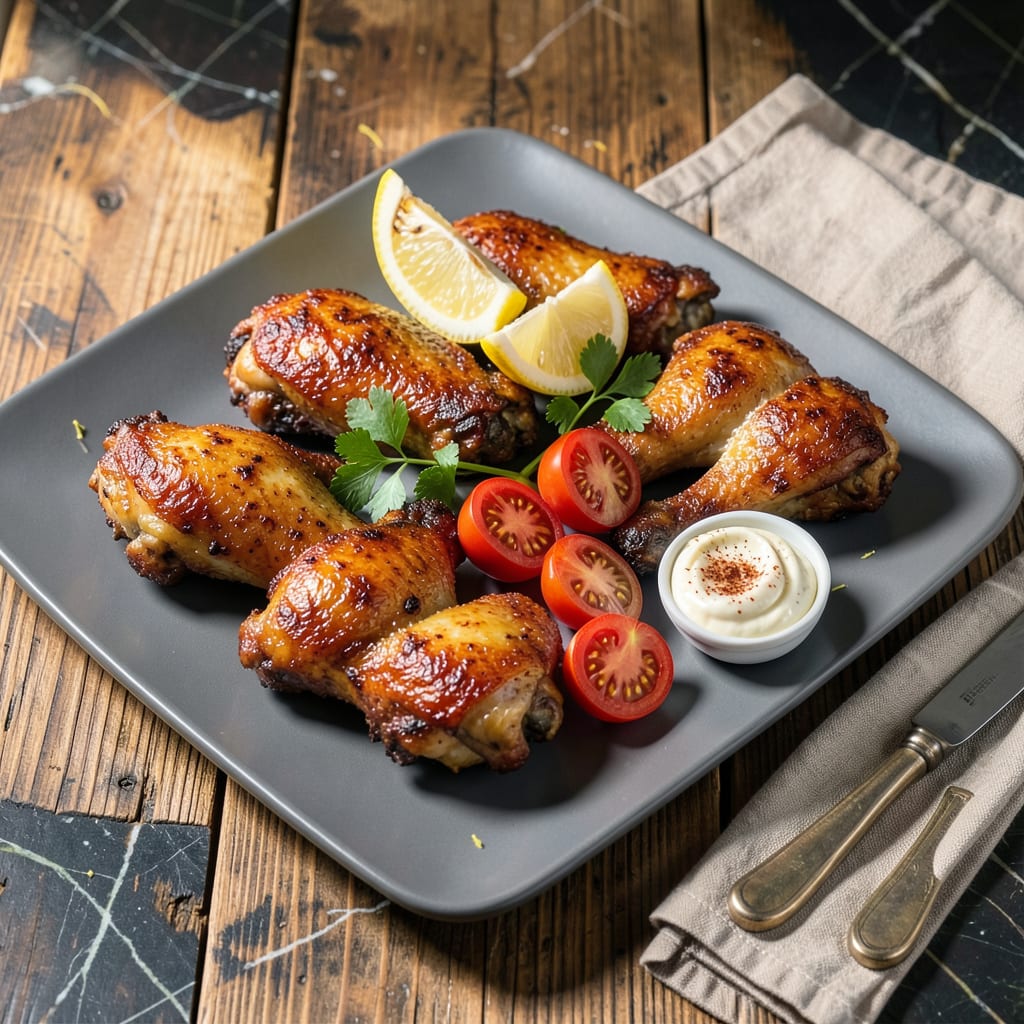
Chicken wings are classified as white meat, though they contain slightly more fat and connective tissue than breast meat. The drumette (upper wing) is darker than the flat (lower wing) due to muscle composition differences.
This classification often surprises people because wings behave differently than other white meat cuts in the kitchen. 🔥 The drumette’s darker appearance comes from its higher concentration of myoglobin—a protein that stores oxygen in muscles—similar to what you’d find in thigh meat. Meanwhile, the flat section stays lighter because those muscles are used less frequently during the chicken’s life, resulting in fewer oxygen-storing proteins.
What really matters for home cooks is how this anatomy affects texture and flavor. The extra fat and connective tissue make wings more forgiving during cooking than breast meat, while still offering that familiar mild taste we associate with white meat. I’ve found this balance is why wings can handle everything from quick frying to slow smoking without drying out. ✨
💡 In This Article
- Why Chicken Wings Are Technically White Meat (With Exceptions)
- How Wing Meat Type Affects Cooking Techniques and Recipes
Why Chicken Wings Are Technically White Meat (With Exceptions)
The USDA classifies chicken wings as white meat because they primarily contain fast-twitch muscle fibers, similar to breast meat. These fibers contract quickly for short bursts of activity (like flapping), which means they rely on glycogen for energy rather than oxygen.
This metabolic process results in lighter-colored meat with less myoglobin—the protein that gives dark meat its characteristic hue. 🔥
Here’s where it gets interesting: the drumette (upper wing) contains about 20% more myoglobin than the flat (lower wing) because it connects to the breast muscles that support the chicken’s weight. This section gets used more frequently during movement, developing slightly darker pigmentation.
The flat, meanwhile, has 15-18% fat content compared to the drumette’s 20-22%, which affects both color and cooking behavior. ✨
The connective tissue distribution tells another important story. Wings contain about 3-5% collagen by weight—significantly more than breast meat (1-2%) but less than thighs (6-8%). This collagen breaks down into gelatin when cooked properly, giving wings their signature tender-yet-chewy texture.
The higher fat content also means wings can withstand longer cooking times without drying out, unlike leaner white meat cuts.
What most people don’t realize is that a chicken’s age dramatically affects wing classification. Younger birds (under 12 weeks) have wings that cook more like traditional white meat, while older birds develop wings that behave more like dark meat during cooking.
This age-related shift happens because muscle fibers gradually transition from fast-twitch to slow-twitch as the chicken matures. 💫
Temperature plays a crucial role in how these muscle differences manifest. The drumette’s higher myoglobin content causes it to reach the ideal internal temperature of 175°F about 2-3 minutes faster than the flat when cooked together. This is why professional pitmasters often separate wing sections during smoking to ensure even doneness.
The flat’s lower myoglobin means it benefits from an extra 5-10 minutes of cooking time to fully render its fat and collagen.
For home cooks, this means wings offer the best of both worlds: the mild flavor profile of white meat with the forgiving cooking properties of dark meat.
The key is understanding that while wings are classified as white meat, their higher fat and connective tissue content means they respond beautifully to cooking methods typically reserved for dark meat—like braising or slow-roasting at 275-300°F for extended periods. ⚡

- Jollof Rice Sauce Recipe: West African Tomato and Spice Infusion - September 25, 2026
- Japanese Rice Soup Recipe: Umami-Rich Comfort in a Bowl - September 25, 2026
- Homemade Cream Of Rice Recipe: Silk-Smooth Breakfast in Minutes - September 25, 2026