
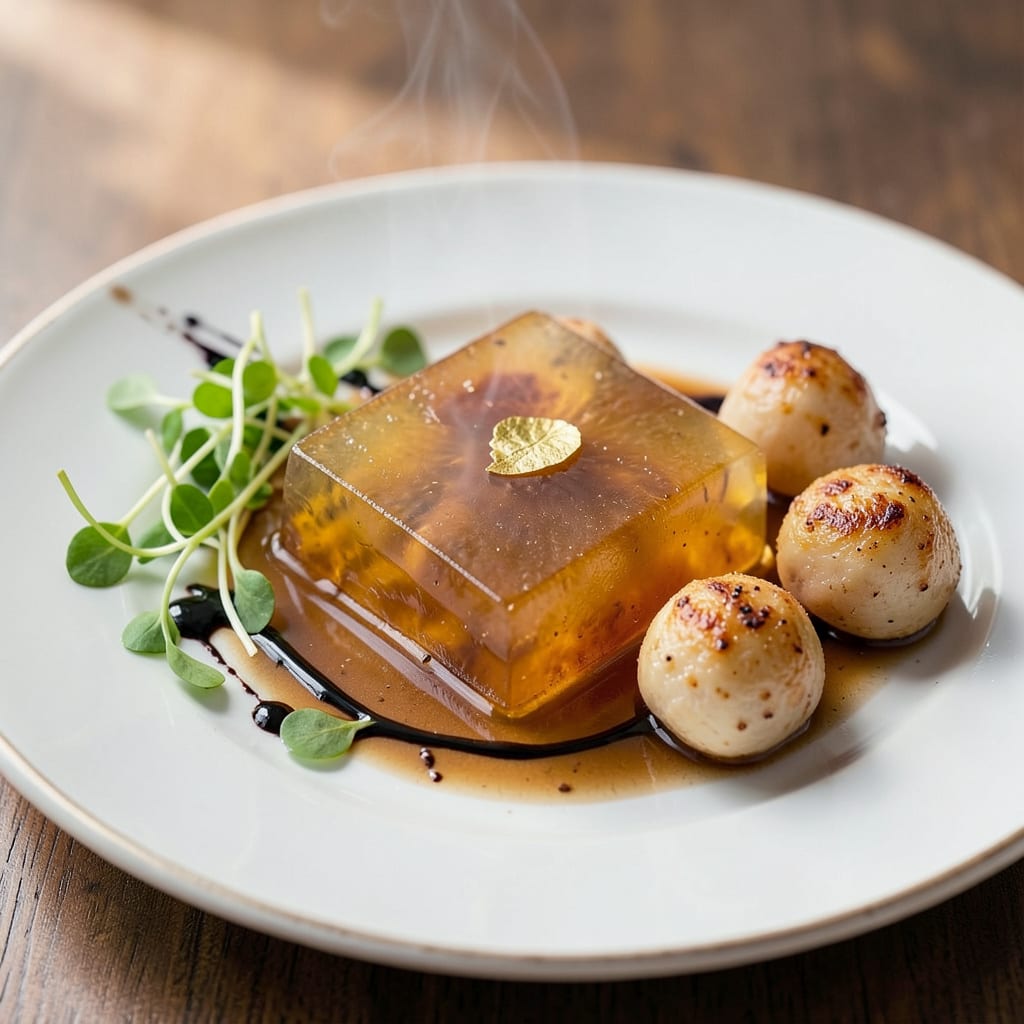
Chicken broth gelatin forms when collagen from bones and connective tissue breaks down during slow simmering, creating a rich, jelly-like texture when cooled. It’s packed with protein, amino acids, and gut-healing properties.
This transformation happens because prolonged heat converts tough collagen into gelatin—a process that’s been valued in traditional cooking for centuries. 🔥 I love how this natural thickening agent can elevate everything from consommé to pan sauces, adding both body and nutritional value. The key lies in using joint-rich bones (like chicken feet or necks) and maintaining a gentle simmer for 8-12 hours to extract maximum collagen.
What’s fascinating is how the gelatin’s texture changes with temperature—firm when chilled but silky when warmed. ✨ This makes it incredibly versatile for both cold dishes like terrines and hot preparations where you want a velvety mouthfeel. Plus, the gut-healing amino acids like glycine make it a functional food that supports digestion and joint health.
💡 In This Article
- How Chicken Broth Turns Into Gelatin Naturally
- Creative Ways to Use Chicken Broth Gelatin in Cooking
How Chicken Broth Turns Into Gelatin Naturally
The magic starts with collagen—the structural protein found in chicken bones, cartilage, and connective tissues. When you simmer these parts for 8-12 hours, the heat gradually breaks down collagen’s triple-helix structure into individual gelatin molecules. This process, called hydrolysis, requires temperatures between 180-210°F to work effectively without destroying the delicate proteins. 🔥
Bone quality dramatically impacts your results. Chicken feet, necks, and backs contain the highest collagen concentrations—about 30-40% of their dry weight. Compare that to breast bones (only 5-10% collagen), and you’ll understand why professional chefs insist on using joint-rich cuts.
The pH of your cooking environment matters too: slightly acidic conditions (adding 1-2 tablespoons vinegar per gallon) helps extract minerals while keeping the gelatin structure intact.
Here’s what’s actually happening during simmering: collagen fibers unravel into gelatin chains that dissolve in the liquid. When cooled below 95°F, these chains reform into a three-dimensional mesh that traps water molecules—creating that signature wobbly texture.
The longer you simmer (up to 24 hours), the more complete this conversion becomes, yielding a broth that sets firmly when chilled. ✨
What most people don’t realize is that gelatin formation depends on proper protein concentration. A well-made broth should contain about 1.5-2% gelatin by weight to achieve the perfect jelly consistency. This is why reducing your broth by 20-30% after straining can dramatically improve its gelling properties.
The science shows that gelatin strength increases with concentration—up to a point where it becomes rubbery if over-reduced.
The cooling process is equally important. Rapid chilling (using an ice bath) creates smaller, more uniform gelatin networks compared to slow refrigerator cooling. This affects both texture and clarity—professional kitchens often use this technique for consommé preparation. The ideal setting temperature is between 35-40°F, where gelatin reaches maximum firmness without freezing the liquid components. 💫
You can test your broth’s gelatin content using the “spoon test”: dip a chilled spoon into warm broth and refrigerate for 5 minutes. If it coats the spoon with a jelly-like film when cold, you’ve successfully extracted enough collagen. This simple trick helps home cooks gauge their broth quality without special equipment.

- Jollof Rice Sauce Recipe: West African Tomato and Spice Infusion - September 25, 2026
- Japanese Rice Soup Recipe: Umami-Rich Comfort in a Bowl - September 25, 2026
- Homemade Cream Of Rice Recipe: Silk-Smooth Breakfast in Minutes - September 25, 2026