
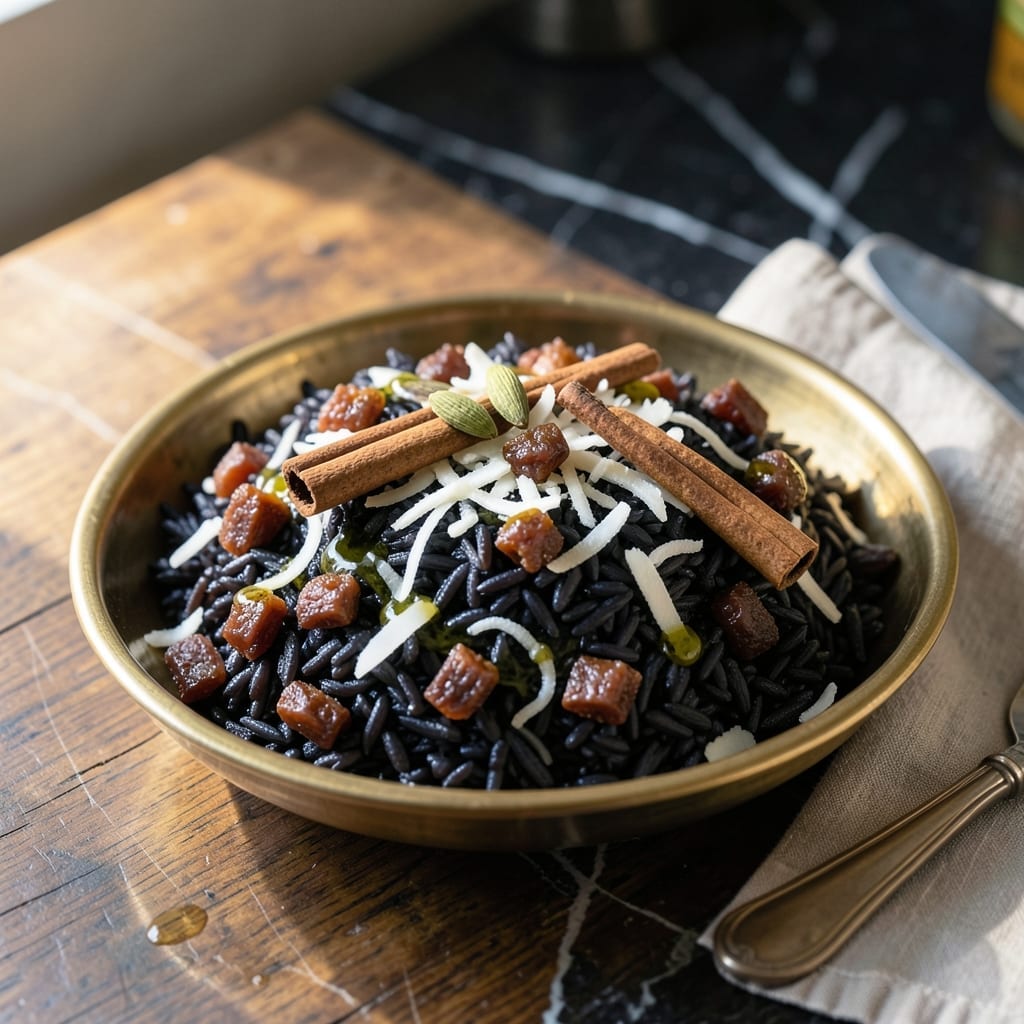
This traditional South Indian rice dish transforms humble black rice into a fragrant, visually stunning centerpiece. The deep purple grains get their color from anthocyanins, the same compounds found in blueberries.
The recipe combines black rice with fresh coconut, aromatic whole spices, and a touch of jaggery for balance. Each bite delivers nutty rice, sweet coconut, and warm spice notes that complement any main course.
What makes this dish special is its versatility—serve it with curries, yogurt, or as a standalone vegetarian meal. The natural color and rich flavor make it perfect for special occasions.
With simple ingredients and traditional preparation, this recipe brings authentic South Indian flavors to your kitchen.
Ingredients for Kavuni Rice
Black rice, coconut, and warm spices create this fragrant South Indian masterpiece.
| Ingredient | Amount | Notes |
|---|---|---|
| Black Rice 🍚 | 1 ½ cups | Rinsed until water runs clear |
| Fresh Coconut 🥥 | 1 cup | Grated or finely chopped |
| Jaggery 🍚 | ¼ cup | Grated or powdered |
| Ghee 🧈 | 2 tbsp | Clarified butter preferred |
| Whole Cinnamon Stick 🌿 | 1 piece | Lightly crushed |
| Green Cardamom Pods 🌿 | 4 pieces | Lightly crushed |
| Cloves 🌿 | 4 pieces | Whole, not ground |
| Bay Leaf 🍃 | 1 piece | Dried or fresh |
| Cashew Nuts 🥜 | ¼ cup | Broken or whole |
| Raisins 🍇 | ¼ cup | Soaked in warm water |
| Water 💧 | 3 cups | For cooking rice |
| Salt 🧂 | 1 tsp | Adjust to taste |
The black rice is non-negotiable for authentic flavor and color. Indian grocery stores typically carry it, or Amazon has reliable brands like Lundberg. Look for grains that are deep purple-black, not faded. Fresh coconut is ideal (the kind still in its shell), but frozen grated coconut works if you’re in a pinch—just thaw it first.
No jaggery? Dark brown sugar or palm sugar at equal amounts will work. Ghee can be swapped for coconut oil to keep it dairy-free. Out of whole spices? Ground spices at half the quantity can substitute, though the flavor will be less layered. The cashews add richness—almonds or peanuts are fine alternatives if that’s what you have.
This keeps well for 3-4 days in the fridge. The flavors actually deepen overnight. For longer storage, freeze in portions for up to 3 months. Reheat with a splash of water to refresh the rice.
Why You’ll Love This Recipe
- One Pot Magic: Mostly hands-off—just simmer the black rice with coconut and jaggery while the cinnamon infuses its warmth.
- Sweet & Earthy: The jaggery caramelizes slightly, and the ghee ties it all together with a rich, nutty depth.
- Festive Favorite: I make this for every celebration—weddings, birthdays, even quiet Sundays when I crave something special.
- Keeps Beautifully: Honestly, it tastes even better the next day as the flavors meld, and it reheats like a dream.
Step-by-Step Instructions for Kavuni Rice
This traditional method ensures perfectly cooked rice with balanced sweetness and aromatic depth.
Step 1: Rinse and Soak the Black Rice
Place the 1.5 cups Black Rice in a fine-mesh strainer and rinse under cold running water, swirling with your hand until the water runs completely clear. This removes excess starch and prevents the rice from becoming gummy during cooking.
Transfer the rinsed rice to a bowl and cover with fresh water by 1 inch. Let it soak for 30 minutes. Soaking softens the rice slightly, reducing the cooking time and ensuring even doneness. Drain thoroughly before proceeding to the next step.
Step 2: Infuse the Spices and Toast the Nuts
In a heavy-bottomed pot, heat the 2 tbsp Ghee over medium heat. Add the 1 piece Whole Cinnamon Stick, 4 pieces Green Cardamom Pods, 4 pieces Cloves, and 1 piece Bay Leaf. Toast for 1-2 minutes until the spices release their fragrance and the ghee turns slightly golden.
Add the 0.25 cup Cashew Nuts and stir for 1-2 minutes until they turn light golden brown. Be careful not to over-toast them, as they will continue to cook slightly in the next steps. Remove the pot from heat temporarily to prevent burning.
Step 3: Cook the Rice with Coconut and Jaggery
Return the pot to medium-low heat and add the drained black rice. Stir for 1-2 minutes to coat the grains lightly with the spiced ghee. This step enhances the rice’s ability to absorb flavors evenly.
Pour in the 3 cups Water, 1 cup Fresh Coconut, 0.25 cup Jaggery, and 1 tsp Salt. Stir well to dissolve the jaggery completely. Increase the heat to high and bring the mixture to a rolling boil.
Step 4: Simmer to Perfection
Once boiling, reduce the heat to low, cover the pot with a tight-fitting lid, and let it simmer for 30-35 minutes. Avoid lifting the lid during this time to maintain steady steam, which ensures the rice cooks evenly.
After 30 minutes, check the rice. It should be tender with no hard center, and the liquid should be fully absorbed. If it’s still firm, add ¼ cup of hot water, cover, and cook for an additional 5 minutes.
Step 5: Incorporate Raisins and Rest
Remove the pot from heat and gently fold in the 0.25 cup Raisins, ensuring they are evenly distributed. The residual heat will plump them slightly without overcooking.
Cover the pot again and let it rest for 10 minutes. This allows the flavors to meld and the rice to steam gently, achieving the ideal texture. Fluff the rice lightly with a fork before serving to separate the grains without breaking them.
Pro Tips For Making Kavuni Rice
- Soak the Rice: I learned this the hard way—black rice needs at least 4 hours of soaking to soften properly, or you’ll end up with a chewy, undercooked mess.
- Grate Fresh Coconut: Skip the pre-packaged stuff; freshly grated coconut makes a real difference in flavor and texture for kavuni rice.
- Watch the Jaggery: After burning a batch, I now melt jaggery on low heat and strain it to remove impurities—this prevents bitterness.
- Toast the Cinnamon: Lightly toasting the whole cinnamon stick in ghee before adding rice releases its aroma and deepens the flavor of the dish.
Troubleshooting Perfect Results
Rice Still Crunchy
If your rice remains undercooked, add ¼ cup hot water and simmer for an additional 5-7 minutes. Ensure the lid stays on tight to trap steam. Older black rice may need extra time and liquid.
Mushy Texture
Overcooked rice usually means too much water or lifting the lid too often. Stick to 3 cups water for 1.5 cups rice and resist peeking during simmering. The residual steam is crucial for even cooking. 🔥
Bland Flavor
Boost flavor by increasing the jaggery to ⅓ cup or adding a pinch of salt. Toasting the spices longer in ghee (2-3 minutes) also deepens their aroma before adding rice.
Uneven Color
If your rice lacks its signature deep purple, soak it for the full 30 minutes before cooking. Rinsing until water runs clear prevents dullness from excess starch.
Coconut Too Dry
Use freshly grated coconut for best texture. If using frozen, thaw and drain excess moisture first. For extra richness, stir in 2 tbsp coconut milk at the end. ✨
Spices Overpowering
If spices taste harsh, balance with 1 tbsp extra jaggery or 2 tbsp more coconut. Lightly crushing whole spices (not powdering) ensures even flavor distribution without bitterness.
Nutrition Facts
Frequently Asked Questions
Can I use brown rice instead of black rice?
No, black rice is essential for authentic flavor and color. Its nutty taste and deep purple hue come from unique anthocyanins. Brown rice won’t provide the same texture or visual appeal.
How do I store leftovers?
Keep in an airtight container in the fridge for 3-4 days. For longer storage, freeze for up to 3 months. Reheat with a splash of water to refresh.
Can I skip the soaking step?
Skipping soaking may result in uneven cooking and longer prep time. Soaking for 30 minutes ensures tender grains and even absorption of flavors.
What if my rice turns out mushy?
Mushy rice usually means too much water or lifting the lid too often. Stick to 3 cups water for 1.5 cups rice and avoid peeking during simmering.

- Mujadara Rice and Lentils Recipe: Earthy Spiced Lentils With Caramelized Onions - November 1, 2026
- Naija Fried Rice Recipe: Street-Style Spice With Veggie Crunch - November 1, 2026
- Mushy Rice Recipe: Fluffy Grains Transformed in Minutes - November 1, 2026