
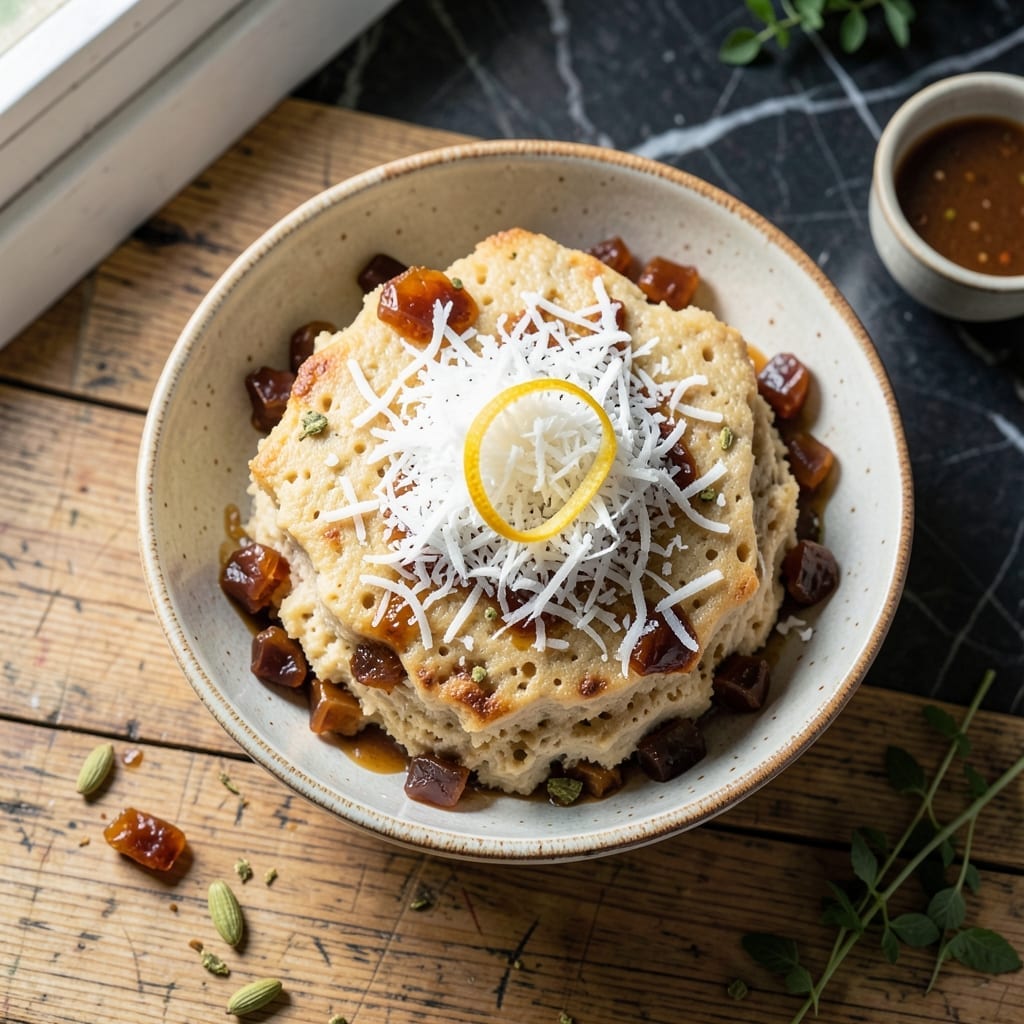
This traditional South Indian dish combines rice flour with fresh coconut to create a soft, steamed cake with subtle sweetness. The process transforms simple ingredients into a comforting treat perfect for breakfast or dessert.
The batter comes together quickly, then steams into a moist, slightly dense texture with a delicate coconut aroma. Serve warm for the best experience.
Ingredients for Ghavan Recipe with Rice Flour
Simple ingredients create this traditional South Indian steamed cake with coconut and rice flour.
| Ingredient | Amount | Notes |
|---|---|---|
| Rice Flour 🌾 | 2 cups | Fine or medium grind |
| Fresh Coconut 🥥 | 1 cup | Shredded or grated |
| Jaggery 🍚 | ¾ cup | Crushed or grated |
| Water 💧 | 1 ½ cups | Warm, for batter |
| Cardamom Pods 🌿 | 4 whole | Seeds removed, crushed |
| Salt 🧂 | ¼ tsp | Fine sea salt |
| Coconut Oil 🫒 | 2 tbsp | For greasing pan |
| Banana 🍌 | 1 whole | Ripe, mashed |
| Cashew Nuts 🌰 | ¼ cup | Chopped, for topping |
| Raisins 🍇 | ¼ cup | Optional, for sweetness |
The rice flour is the foundation here. Indian grocery stores carry fine-ground varieties perfect for ghavan, but Bob’s Red Mill works too. Fresh coconut is non-negotiable—look for mature, brown coconuts (the white ones are for drinking). If grating yourself, a box grater works, but a food processor saves time. Jaggery adds that authentic caramel-like sweetness—find it at Patel Brothers or other South Asian markets.
No fresh coconut? Unsweetened desiccated coconut at half the amount works in a pinch (rehydrate in warm water first). Jaggery can be swapped for brown sugar or maple syrup, though the flavor will differ slightly. For a nut-free version, skip the cashews or use sunflower seeds. The banana adds moisture—use an overripe one for natural sweetness and easier mashing.
The batter rests best at room temperature for 15-20 minutes before steaming. Leftover ghavan keeps 1-2 days in an airtight container, but it’s best fresh. Reheat gently in a steamer to restore moisture.
Why You’ll Love This Recipe
- One-Bowl Wonder: I mix everything right in the pan—rice flour, jaggery, and coconut—no extra bowls to wash.
- Sweet Cardamom Bliss: The jaggery and fresh coconut create this warm, caramelized depth, and the cardamom? Pure comfort in every bite.
- Breakfast or Snack: Honestly, I make a big batch on Sunday and we grab a piece all week—morning, afternoon, doesn’t matter.
- Pantry Friendly: Rice flour and jaggery last forever, and fresh coconut is the only splurge. I’ll be real: it’s cheaper than most desserts I’ve tried.
Step-by-Step Instructions for Ghavan With Rice Flour
Master this traditional method for a soft, sweet rice cake with perfect texture every time.
Step 1: Prepare the Jaggery Syrup
Combine the 0.75 cup Jaggery with 1 cup of the 1.5 cups Water in a saucepan. Heat over medium heat until the jaggery fully dissolves, stirring occasionally to prevent burning. This should take about 5-7 minutes.
Once dissolved, strain the syrup through a fine-mesh sieve to remove any impurities. Return the syrup to the pan and add the crushed seeds from the 4 whole Cardamom Pods. Simmer for another 2 minutes until slightly thickened. Set aside to cool.
Step 2: Make the Batter
In a large bowl, combine the 2 cups Rice Flour and 0.25 tsp Salt. Gradually pour in the remaining 0.5 cup Water and the cooled jaggery syrup while whisking continuously to avoid lumps. The batter should be smooth and slightly thicker than pancake batter.
Add the 1 whole Banana (mashed) and 1 cup Fresh Coconut to the batter. Mix well until fully incorporated. The banana adds natural sweetness and binding, while the coconut provides texture and richness. Let the batter rest for 10 minutes to hydrate the rice flour.
Step 3: Prepare the Pan
Heat a non-stick or cast-iron pan over low-medium heat. Brush the bottom and sides lightly with 1 tbsp Coconut Oil from the 2 tbsp Coconut Oil. This prevents sticking and adds a subtle coconut aroma to the ghavan.
Pour a thin layer of batter into the pan, spreading it evenly with the back of a spoon. The layer should be about ¼-inch thick. Immediately sprinkle a portion of the 0.25 cup Cashew Nuts and 0.25 cup Raisins evenly over the surface for added texture and sweetness.
Step 4: Steam and Cook
Cover the pan with a tight-fitting lid to trap the steam. Cook on low heat for 8-10 minutes until the top looks set and the edges start to pull away from the pan. Check for doneness by inserting a toothpick—it should come out clean.
Remove the lid and drizzle the remaining 1 tbsp Coconut Oil over the top. This adds moisture and a glossy finish. Cover again and cook for another 2-3 minutes to ensure the top is fully set. Turn off the heat and let it sit covered for 5 minutes to finish steaming.
Step 5: Cool and Serve
Allow the ghavan to cool in the pan for 10 minutes before slicing. This resting period helps it firm up and makes it easier to cut into clean squares. Use a sharp knife to slice into diamond or square shapes, traditional for serving.
Serve warm or at room temperature. The ghavan should be soft and slightly chewy with a sweet, coconutty flavor. Store any leftovers in an airtight container—they keep well for up to 3 days at room temperature.
Pro Tips For Making Ghavan Recipe With Rice Flour
- Toast the Flour: Heat the rice flour in a dry pan for 3-4 minutes until lightly golden—I learned this the hard way after my first batch tasted raw.
- Grate Coconut Fresh: Skip the pre-packaged stuff; freshly grated coconut releases more natural oils and makes a real difference in texture.
- Dissolve Jaggery First: Melt the jaggery in warm water before mixing to avoid clumps, or you’ll end up with uneven sweetness like I did my first two tries.
- Rest the Batter: Let the batter sit for 15-20 minutes after mixing; it thickens slightly and the flavors meld—sounds weird, but it works.
Pro Cooking Tips for This Dish
Perfect Batter Consistency
Whisk the jaggery syrup into the rice flour gradually to avoid lumps. The batter should be smooth and slightly thicker than pancake batter. I find using a hand whisk works best for breaking up any stubborn clumps. 💡
Heat Control Matters
Cook on low-medium heat only—too high and the bottom will burn before the top sets. A heavy-bottomed pan like Lodge cast iron distributes heat evenly. Test your pan’s heat by sprinkling water: it should sizzle gently, not evaporate instantly.
Steam Trapping Technique
Use a tight-fitting lid to create a steam chamber. If your lid doesn’t fit snugly, place a damp kitchen towel over the pan before covering. This ensures even cooking throughout the ¼-inch thick layer. Check doneness with a toothpick at 8-10 minutes.
Coconut Oil Timing
Drizzle the second 1 tbsp coconut oil after the top appears set. This adds moisture and a beautiful sheen. I use Nutiva organic coconut oil for its mild flavor. Let it sit covered for 5 minutes off heat to finish.
Resting for Clean Slices
Resist cutting immediately—let it cool in the pan for 10 minutes. This resting period firms up the texture. Use a sharp knife dipped in warm water for clean diamond or square shapes. Serve warm for the best texture.
Pan Preparation
Always grease the pan with coconut oil before adding batter, even if using non-stick. This prevents sticking and adds subtle coconut aroma. Spread batter evenly with the back of a spoon for uniform thickness. 🥥
Nutrition Facts
Frequently Asked Questions
Can I use all-purpose flour instead of rice flour?
No, the texture won’t be authentic. Rice flour creates the traditional soft, chewy consistency that makes ghavan special. All-purpose flour would result in a denser, bread-like texture instead.
Why does my ghavan turn out dry?
Overcooking or insufficient steam is usually the culprit. Cook on low heat only and ensure your lid traps steam properly. The 10-minute resting period after cooking also helps maintain moisture.
How can I tell when it’s fully cooked?
Insert a toothpick in the center—it should come out clean. Also look for the edges pulling away from the pan and the top appearing set. This typically happens after 8-10 minutes of covered cooking.
Can I make this without jaggery?
Yes, substitute with brown sugar or maple syrup, though the flavor will differ slightly. Jaggery provides a unique caramel-like sweetness that’s traditional, but these alternatives work in a pinch.

- Furikake Rice Seasoning Recipe: Umami-Packed Japanese Blend for Any Meal - October 7, 2026
- Knorr Vegetable Soup Mix Rice Recipe: Savory One-Pot Side Dish - October 7, 2026
- Lebanese Lentil and Rice Soup Recipe: Mujadara-Inspired Warmth in a Bowl - October 7, 2026