
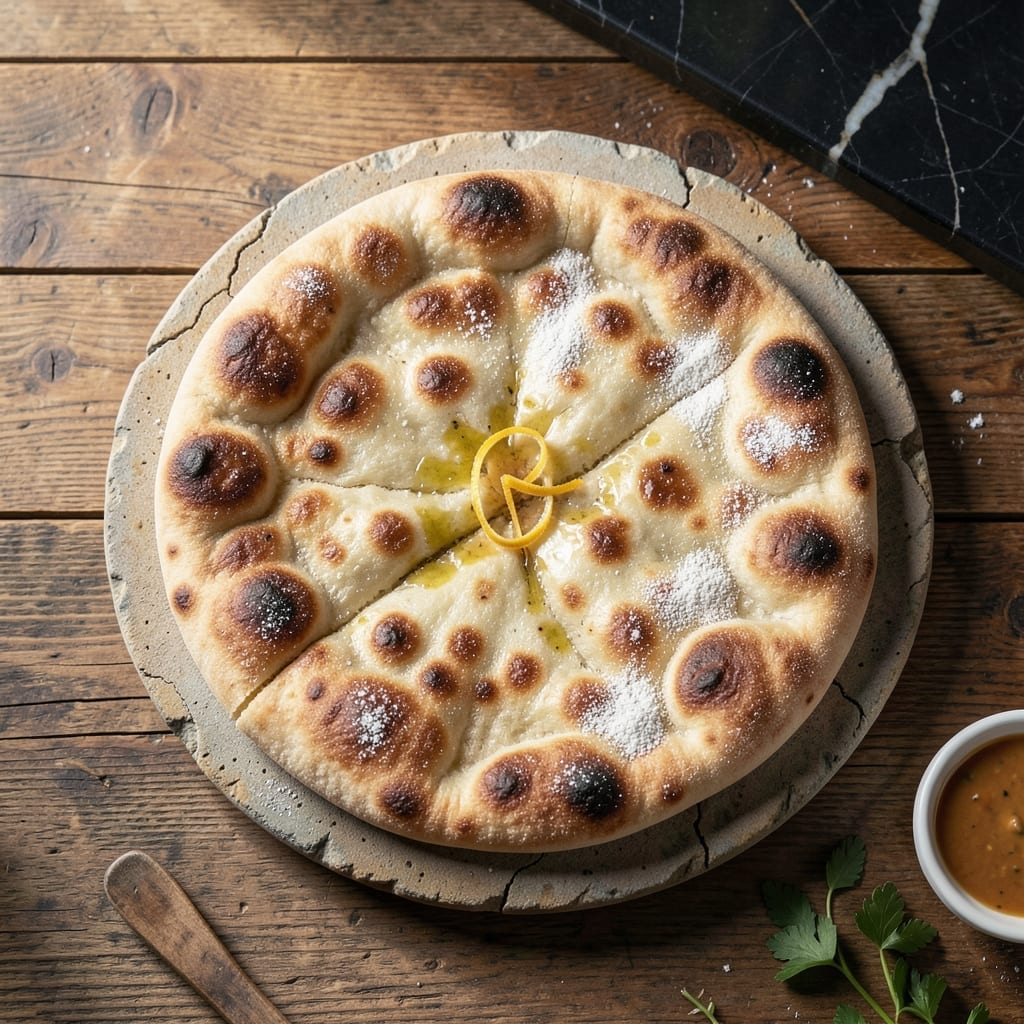
I’ve spent years perfecting gluten-free flatbreads that don’t taste like a compromise. This rice flour version delivers soft, pliable results every time, with no gummy texture or dry edges.
The key is a simple dough that rests for 30 minutes to hydrate fully, then cooks quickly in a hot skillet. No fancy equipment, just a few pantry staples and a reliable method.
What you get is a flatbread with a tender bite and just enough structure to hold up to wraps, dips, or sandwiches. It’s versatile, foolproof, and tastes better than most store-bought versions.
Best of all, it freezes beautifully—so you can always have fresh-tasting flatbread on hand.
Ingredients for Gluten Free Flatbread Recipe Rice Flour
Nine pantry staples for soft, pliable flatbread that beats store-bought every time.
| Ingredient | Amount | Notes |
|---|---|---|
| White Rice Flour 🌾 | 2 cups | Fine, not coarse grind |
| Tapioca Flour 🌾 | ½ cup | Also called tapioca starch |
| Xanthan Gum 🧪 | 1 tsp | Omit if blend contains it |
| Salt 🧂 | 1 tsp | Fine sea salt preferred |
| Sugar 🍚 | 1 tsp | Coconut sugar or cane sugar |
| Active Dry Yeast 🍞 | 2 ¼ tsp | One packet, instant works too |
| Warm Water 💧 | 1 ¼ cups | 110°F, not hotter |
| Extra-Virgin Olive Oil 🫒 | 2 tbsp | Plus extra for skillet |
| Apple Cider Vinegar 🍏 | 1 tbsp | White vinegar works too |
| Psyllium Husk Powder 🌿 | 2 tsp | Optional for structure |
The rice flour is key—Bob’s Red Mill white rice flour is widely available and gives the best texture. Tapioca flour (sometimes labeled starch) adds stretch; check the baking aisle or Whole Foods bulk bins. Xanthan gum is often in gluten-free flour blends, so check your bag before buying extra. Yeast needs to be fresh; if it doesn’t bubble in warm water, it’s dead and your flatbread won’t rise.
No psyllium husk? Skip it—the flatbread will still work, just slightly less chewy. Swap tapioca flour for cornstarch at a 1:1 ratio, but expect a drier texture. For the vinegar, any mild acid (lemon juice, white vinegar) works. If your flour blend already contains xanthan gum, reduce or omit the added amount. Warm water is critical—too hot kills the yeast, too cold slows activation.
The dough rests well on the counter for 30 minutes (no fridge needed). Cooked flatbreads stack and freeze for up to 3 months—reheat in a dry skillet to restore that fresh-off-the-griddle feel. Leftover dough keeps in the fridge for 24 hours.
Why You’ll Love This Recipe
- One Bowl Wonder: I mix the rice flour, tapioca, xanthan gum, and a pinch of sugar in a single bowl—no fancy equipment, just a spoon and five minutes.
- Warm Comfort: The rice flour gives it that soft, slightly chewy texture I crave, with just a hint of sweetness from the sugar.
- Meal Prep Hero: I make a batch on Sunday and they keep beautifully for wraps, dips, or even as a quick pizza base.
- Budget Friendly: Rice flour and tapioca are pantry staples that won’t break the bank, and a little xanthan gum goes a long way.
Step-by-Step Instructions for Gluten Free Flatbread with Rice Flour
Here’s the method I’ve perfected for soft, pliable flatbread that never disappoints.
Step 1: Activate the Yeast and Combine Wet Ingredients
In a small bowl, sprinkle the 2.25 tsp Active Dry Yeast over the 1.25 cups Warm Water and add the 1 tsp Sugar. Let it sit for 5-7 minutes until the mixture becomes frothy—this confirms your yeast is active and ready to work.
In a large mixing bowl, whisk together the 2 tbsp Extra-Virgin Olive Oil and 1 tbsp Apple Cider Vinegar until well combined. The vinegar helps tenderize the dough, while the olive oil adds richness and flexibility to the final flatbread.
Step 2: Mix Dry Ingredients and Form the Dough
In a separate bowl, whisk together the 2 cups White Rice Flour, 0.5 cup Tapioca Flour, 1 tsp Xanthan Gum, 1 tsp Salt, and 2 tsp Psyllium Husk Powder until fully blended. The psyllium husk is the secret to that perfect stretchy texture you miss in gluten-free baking.
Pour the yeast mixture into the bowl with the olive oil and vinegar, then gradually add the dry ingredients while stirring with a wooden spoon. The dough will be thick and slightly sticky—this is exactly what you want. Let it rest for 10 minutes to allow the flours to fully hydrate.
Step 3: Shape and Rest the Dough
Divide the dough into 4 equal portions (since this recipe serves four). Lightly oil your hands to prevent sticking, then shape each portion into a smooth ball. Place them on a parchment-lined surface.
Cover the dough balls with a damp towel and let them rest in a warm place for 30-45 minutes. You’ll notice they’ll rise slightly and become more pliable. This resting period relaxes the dough, making it much easier to roll out without cracking.
Step 4: Roll and Cook the Flatbread
Heat a non-stick skillet over medium-high heat. While it warms, place a dough ball between two sheets of parchment paper and roll it out to about ⅛-inch thickness. The parchment prevents sticking and makes transfer to the pan effortless.
Once the skillet is hot, carefully transfer the rolled dough (parchment and all) to the pan, then peel away the top parchment. Cook for 2-3 minutes until the bottom is golden brown with some darker spots. Flip and cook for another 1-2 minutes until the second side is equally browned. The flatbread should puff slightly in spots—this is normal and adds to the texture.
Step 5: Finish and Serve Warm
Transfer the cooked flatbread to a clean towel and cover to keep warm while you cook the remaining portions. I like to brush the tops lightly with a bit of extra Extra-Virgin Olive Oil for added flavor and shine.
Serve immediately while still warm. These are best fresh from the pan, when they’re soft, pliable, and just slightly chewy. If you need to reheat, wrap in a damp paper towel and microwave for 10-15 seconds to restore that fresh-baked texture.
Pro Tips For Making Gluten Free Flatbread Recipe Rice Flour
- Preheat the Pan: I learned this the hard way—heat your pan for at least 3 minutes on medium-high before adding the dough, or your flatbread will stick and tear. A hot surface guarantees that golden crust without extra oil.
- Measure Xanthan Gum Precisely: Too much xanthan gum turns the dough gummy, and too little makes it crumbly. Use a level ½ teaspoon for every cup of rice flour—no eyeballing.
- Don’t Overmix: After burning three batches, I finally figured out that stirring the dough more than 20 seconds activates too much xanthan gum, making the flatbread dense. Mix just until combined.
- Use a Damp Towel: Cover the resting dough with a damp towel for 10 minutes—this keeps it from drying out while the flours hydrate, so it rolls out smooth and doesn’t crack at the edges.
Health Benefits of This Recipe
Easy Digestion
Rice flour is naturally gluten-free, making this flatbread gentle on sensitive stomachs. Unlike wheat-based breads, it won’t trigger reactions in those with celiac disease or gluten intolerance. I’ve served this to gluten-sensitive friends without any issues. 💪
Nutrient Boost
This recipe packs B vitamins and minerals like magnesium from the rice flour. The olive oil adds heart-healthy monounsaturated fats, while psyllium husk provides a fiber boost that aids digestion and keeps you feeling full longer.
Low Allergen Risk
With no dairy, nuts, or common allergens, this flatbread is safe for most dietary restrictions. The ingredients are simple and easy to source from any regular grocery store. Even the yeast is typically allergen-free, making this a worry-free option.
Blood Sugar Friendly
Rice flour has a lower glycemic index than wheat flour, helping to stabilize blood sugar levels. The tapioca flour adds a touch of natural sweetness without spiking glucose. I appreciate how this keeps energy levels steady.
Gut Health Support
The psyllium husk powder in this recipe acts as a prebiotic, feeding the good bacteria in your gut. This supports a healthy microbiome, which is linked to better digestion and even improved immunity. Just 2 tsp makes a noticeable difference. 🌱
Clean Ingredient List
No artificial additives or preservatives here—just nine pantry staples with names you recognize. The apple cider vinegar even adds a probiotic boost, supporting gut health while tenderizing the dough.
Nutrition Facts
Frequently Asked Questions
Can I skip the psyllium husk?
Yes, but it helps with texture. Without it, your flatbread may be slightly less chewy. The recipe still works well.
Why does the dough need to rest?
The 30-45 minute rest lets the rice flour fully hydrate. This makes the dough easier to roll and improves the final texture.
How do I store leftovers?
Stack cooled flatbreads with parchment between each. Store in an airtight container for 3 days or freeze for up to 3 months.
What if my flatbread cracks when rolling?
This usually means the dough needs more rest time. Cover it and wait another 10-15 minutes before trying again.

- Furikake Rice Seasoning Recipe: Umami-Packed Japanese Blend for Any Meal - October 7, 2026
- Knorr Vegetable Soup Mix Rice Recipe: Savory One-Pot Side Dish - October 7, 2026
- Lebanese Lentil and Rice Soup Recipe: Mujadara-Inspired Warmth in a Bowl - October 7, 2026