
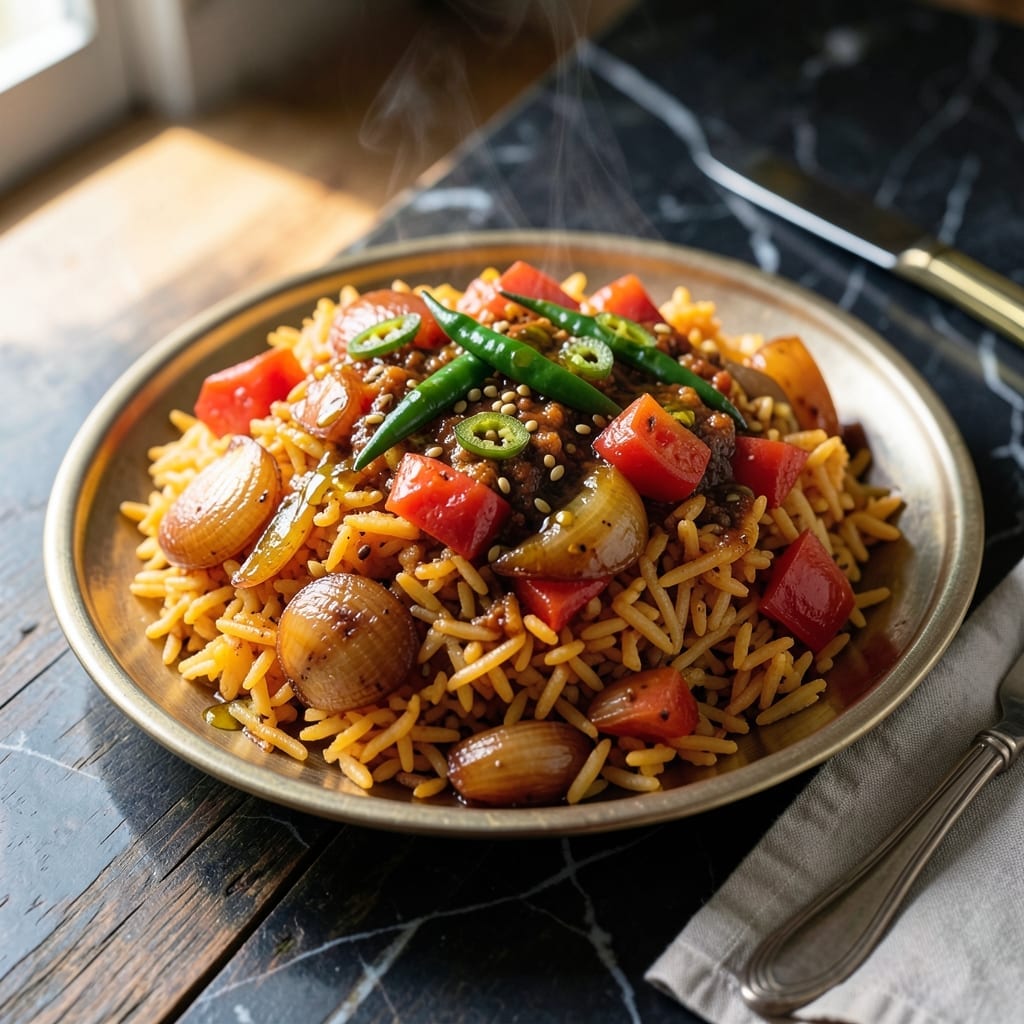
This South Indian specialty transforms simple ingredients into a vibrant, tangy one-pot meal that’s as comforting as it is flavorful.
I’ve perfected the balance of ripe tomatoes, aromatic spices, and fresh curry leaves to create a dish that’s authentic yet approachable. The rice absorbs all the bold flavors, making every bite burst with Kerala’s signature taste.
The beauty lies in its simplicity—just one pot, 30 minutes, and a handful of pantry staples. The tempering of mustard seeds and curry leaves adds a final touch that elevates the dish to restaurant quality.
Serve it hot with a side of yogurt or papad for a complete, satisfying meal.
Ingredients for Kerala Tomato Rice
Pantry staples meet vibrant South Indian flavors in this one-pot tangy delight.
| Ingredient | Amount | Notes |
|---|---|---|
| Basmati Rice 🌾 | 1 ½ cups | Rinsed until water runs clear |
| Ripe Tomatoes 🍅 | 4 whole | Medium-sized, finely chopped |
| Red Onion 🧅 | 1 whole | Thinly sliced for tempering |
| Green Chili Peppers 🌶️ | 2 whole | Slit lengthwise, adjust to taste |
| Fresh Ginger 🌿 | 1 tbsp | Minced or grated finely |
| Garlic Cloves 🧄 | 4 cloves | Minced for aroma |
| Fresh Curry Leaves 🍃 | 12 pieces | Essential for authentic flavor |
| Mustard Seeds 🌱 | 1 tsp | Black or yellow variety |
| Cumin Seeds 🌿 | 1 tsp | Lightly crushed for tempering |
| Turmeric Powder 🌶️ | ½ tsp | For color and earthiness |
| Red Chili Powder 🔥 | 1 tsp | Adjust heat to preference |
| Salt 🧂 | 1 ½ tsp | Adjust to taste |
| Vegetable Oil 🫒 | 3 tbsp | For tempering and cooking |
| Water 💧 | 3 cups | For cooking rice |
| Fresh Cilantro 🌿 | ¼ cup | Chopped, for garnish |
The curry leaves are non-negotiable for authentic flavor. Indian grocery stores carry fresh bunches, but dried work in a pinch—just soak them in warm water first. Look for bright green, fragrant leaves without browning. Basmati rice is ideal (I prefer Daawat or India Gate brands), but any long-grain rice will do. The tomatoes should be ripe and firm—underripe ones won’t give that tangy depth.
No fresh ginger? Ground ginger at half the amount works, but fresh is better. Out of curry leaves? A pinch of asafoetida (hing) in the tempering mimics the aroma. Coconut oil instead of vegetable oil adds a nice South Indian touch. Green chilies can be swapped for serranos, but reduce quantity—they’re hotter. The tempering step is key—don’t rush it or the mustard seeds won’t pop properly.
This keeps well for 2-3 days in the fridge, but the curry leaves lose some aroma. Reheat with a splash of water to revive. Freezes beautifully for up to 3 months—portion before freezing for easy meals. Always garnish with fresh cilantro right before serving for maximum vibrancy.
Why You’ll Love This Recipe
- One Pot Wonder: I toss everything in a single pot and let the basmati soak up the tangy tomato-ginger magic.
- Tangy Heat: The ripe tomatoes and green chilies create that signature Kerala zing that lingers just right.
- Lunchbox Hero: Honestly, it tastes even better the next day—my kids actually finish their school meals.
- Pantry Friendly: Between us, I always have these ingredients on hand, so dinner’s never a panic moment.
Step-by-Step Instructions for Kerala Tomato Rice
This one-pot method ensures authentic flavor with minimal cleanup and maximum efficiency.
Step 1: Temper the Spices and Aromatics
Heat the 3 tbsp vegetable oil in a heavy-bottomed pot over medium heat. Add the 1 tsp mustard seeds and wait for them to pop—this takes about 30-45 seconds and signals they’re ready. Immediately add the 1 tsp cumin seeds, 12 pieces fresh curry leaves, and 2 whole green chili peppers.
Next, add the 1 whole red onion (thinly sliced) and sauté until it turns translucent and lightly golden, about 4-5 minutes. Stir in the 1 tbsp fresh ginger and 4 cloves garlic cloves, cooking for 1 minute until fragrant. This builds the aromatic foundation essential for authentic flavor.
Step 2: Incorporate Tomatoes and Dry Spices
Add the 4 whole ripe tomatoes (finely chopped) to the pot. Cook on medium-high heat for 6-8 minutes, stirring occasionally, until the tomatoes soften and break down into a thick, pulpy consistency. This step develops the tangy base characteristic of Kerala-style rice.
Stir in the 0.5 tsp turmeric powder, 1 tsp red chili powder, and 1.5 tsp salt. Cook for an additional 2 minutes to toast the spices and deepen their flavors. The mixture should look vibrant and smell intensely aromatic at this stage.
Step 3: Toast the Rice and Add Water
Add the 1.5 cups basmati rice (rinsed until water runs clear) to the pot. Stir well to coat every grain with the tomato-spice mixture. Toast the rice for 2-3 minutes—this enhances its nutty flavor and prevents mushiness.
Pour in the 3 cups water and stir once to distribute the rice evenly. Bring to a rolling boil, then immediately reduce heat to low. Cover with a tight-fitting lid and let it simmer undisturbed for 15 minutes.
Step 4: Finish and Rest for Perfect Texture
After 15 minutes, turn off the heat but keep the pot covered. Let it rest for 10 minutes—this allows the rice to steam and absorb any remaining liquid without overcooking. The grains should be separate, fluffy, and infused with the tangy tomato flavor.
Gently fluff the rice with a fork, then garnish with the 0.25 cup fresh cilantro (chopped). Serve warm, ensuring every serving captures the layered spices and vibrant color that define this one-pot wonder. The final dish should have a balanced tanginess with a subtle heat from the green chilies.
Pro Tips For Making Kerala Tomato Rice
- Toast the Spices: Heat the mustard seeds, cumin, and curry leaves in hot oil until they sizzle and pop—about 30 seconds. I learned this the hard way: under-toasting leaves them raw and bitter.
- Use Overripe Tomatoes: Sounds weird, but it works: the softer and juicier the tomatoes, the better they break down into that thick, tangy sauce Kerala tomato rice is known for.
- Skip Uncooked Ginger: Grate the fresh ginger finely and sauté it with the onions until the raw smell disappears, or you’ll get harsh, uneven bites in the final dish.
- Rest the Rice: After cooking, let the rice sit covered for 5-10 minutes off the heat—this lets the flavors meld and prevents a mushy, broken texture.
Regional Styles of kerala tomato rice
Traditional Kerala Style
In central Kerala, this dish often includes 1 tsp coconut oil in the tempering. I love how it adds a subtle sweetness that balances the tang. The rice is typically cooked with 1 cup coconut milk instead of water for extra richness. 🌴
Malabar Coast Variation
The northern Malabar region adds ½ tsp fennel seeds to the tempering for anise notes. Some households include 8-10 cashews for crunch. The tomatoes are often replaced with tamarind pulp for a sharper tang during mango season.
Travancore Approach
In southern Travancore, they use 1 tsp black peppercorns crushed into the tempering. The rice is cooked with 1 cup vegetable broth instead of water. I’ve seen versions where ½ tsp asafoetida is added for depth when curry leaves are scarce. 💛
Kochi Special
Kochi’s version often includes 1 potato diced and cooked with the rice. The tempering might feature 1 tsp urad dal for extra crunch. Some families add ½ tsp garam masala at the end for warmth.
Christian Community
Kerala’s Christian community sometimes adds 100g chicken pieces cooked with the tomatoes. They often use 1 tsp vinegar for extra tang. The dish becomes heartier while keeping the core flavors.
Nutrition Facts
Frequently Asked Questions
Can I use regular rice instead of basmati?
Yes, any long-grain rice works. Basmati gives the best texture, but jasmine or sona masoori are good substitutes. Avoid short-grain as it can get mushy.
Why do my tomatoes turn bitter?
Overcooking tomatoes can make them bitter. Cook until just soft (6-8 minutes). Also, use ripe, red tomatoes for natural sweetness.
How do I make it less spicy?
Reduce green chilies to 1 or remove seeds before adding. Skip red chili powder entirely if preferred. Balance heat with extra tomatoes.
Can I add vegetables to this?
Add 1 cup diced carrots, peas, or beans when cooking the rice. They’ll absorb the flavors beautifully.

- Mujadara Rice and Lentils Recipe: Earthy Spiced Lentils With Caramelized Onions - November 1, 2026
- Naija Fried Rice Recipe: Street-Style Spice With Veggie Crunch - November 1, 2026
- Mushy Rice Recipe: Fluffy Grains Transformed in Minutes - November 1, 2026