
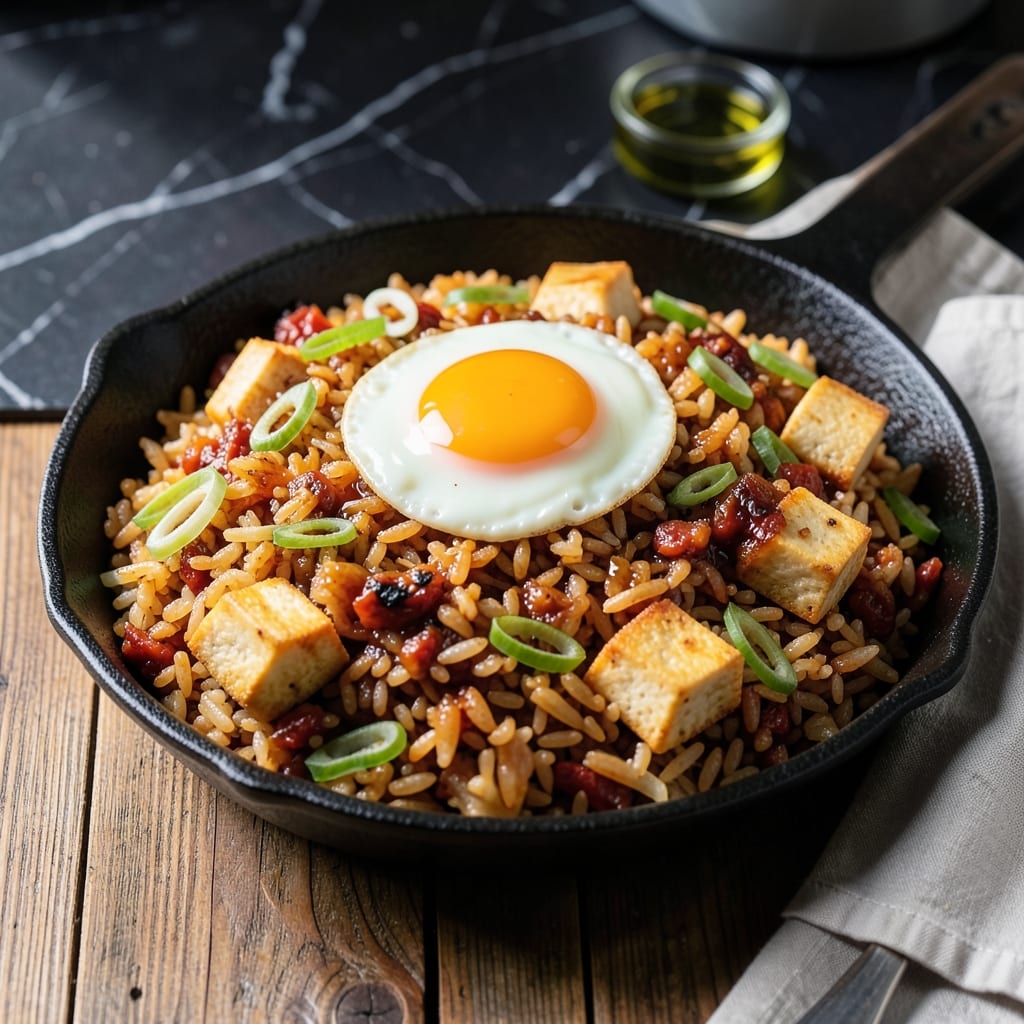
This kimchee fried rice delivers bold Korean flavors with minimal effort. The dish transforms leftover rice into a spicy, savory meal that’s ready in under 20 minutes. Fermented kimchi provides the signature tangy heat.
The secret lies in using well-seasoned kimchi and day-old rice. Cooking at high heat creates those coveted crispy bits while keeping the grains separate. A simple egg on top adds richness and completes the dish.
Customize it with your choice of protein—tofu, shrimp, or Korean-style bulgogi beef all work beautifully. The beauty of this recipe is its versatility while maintaining authentic taste.
You’ll have a restaurant-quality meal that’s as satisfying as it is quick. The balance of spice, umami, and texture makes every bite irresistible.
Ingredients for Kimchee Fried Rice
Leftover rice and bold flavors make this dish sing. Quick, spicy, and totally customizable.
| Ingredient | Amount | Notes |
|---|---|---|
| Day-Old Cooked White Rice 🍚 | 4 cups | Cold, preferably overnight |
| Kimchi 🥬 | 1 ½ cups | Well-fermented, chopped |
| Kimchi Juice 💧 | ¼ cup | Reserved from kimchi jar |
| Large Eggs 🥚 | 4 whole | For topping fried rice |
| Firm Tofu 🧈 | ½ lb | Pressed and cubed |
| Green Onions 🧅 | 4 whole | Thinly sliced, white and green parts separated |
| Garlic Cloves 🧄 | 3 cloves | Minced for maximum flavor |
| Gochujang 🌶️ | 1 tbsp | Korean chili paste |
| Soy Sauce 🫒 | 2 tbsp | Low-sodium preferred |
| Sesame Oil 🫒 | 1 tbsp | Toasted for aroma |
| Vegetable Oil 🫒 | 2 tbsp | Neutral flavor, for frying |
| Sesame Seeds 🌰 | 1 tsp | Toasted, for garnish |
| Sugar 🧂 | 1 tsp | Balances kimchi sourness |
| Salt 🧂 | ½ tsp | Adjust to taste |
The kimchi is the soul of this dish. Find well-fermented, tangy kimchi at an Asian market—looks for brands like Mother-in-Law’s or Sinto in the refrigerated section (the shelf-stable stuff lacks punch). Day-old rice is non-negotiable—fresh rice turns mushy. For tofu, extra-firm holds its shape best. Trader Joe’s has a great organic version that’s already pressed and ready to cube.
No kimchi juice? Add 1 extra tbsp of gochujang and a splash of rice vinegar. Swap tofu for shrimp or bulgogi beef if you’re flexible on the vegetarian front. Missing gochujang? Sriracha plus a pinch of sugar works in a pinch. The soy sauce can be tamari for gluten-free, or coconut aminos for a milder taste. Green onions can be subbed with chives if that’s what’s growing in your garden.
Leftovers keep 3-4 days in the fridge—reheat in a skillet to revive the crispiness. Freezes for 2 months (without the egg). Make a double batch of the rice base and freeze in portions for even quicker weeknight meals (just add fresh egg and garnishes when reheating).
Why You’ll Love This Recipe
- One-Pan Wonder: I can get this on the table with just a skillet and a spatula—no fancy tools, no extra dishes.
- Umami Bomb: The fermented kimchi and its tangy juice make every bite ridiculously flavorful, no extra seasoning needed.
- Leftover Magic: Day-old rice and last week’s kimchi turn into something way better than takeout.
- Budget Stretch: A block of tofu and a few eggs feed my family for less than the cost of delivery.
Step-by-Step Instructions for Kimchee Fried Rice
This method delivers that perfect balance of spicy, tangy, and umami in every bite.
Step 1: Prep the Base Ingredients
Start by pressing the 0.5 lb firm tofu between paper towels for 10 minutes to remove excess water. Cube it into ½-inch pieces and set aside. Thinly slice the 4 whole green onions, keeping white and green parts separate for layered flavor.
Mince the 3 cloves garlic cloves until fine—this releases maximum flavor. Chop the 1.5 cups kimchi into bite-sized pieces if it isn’t already. I like to keep some texture, so don’t over-chop. Measure out the 0.25 cup kimchi juice from the jar for extra tang.
Step 2: Cook the Tofu and Aromatics
Heat 1 tablespoon vegetable oil in a large skillet or wok over medium-high heat. Add the cubed tofu and cook for 5-6 minutes, stirring occasionally, until the pieces are golden brown on all sides. The tofu should be crispy on the outside but still tender inside.
Push the tofu to one side and add the remaining 1 tablespoon vegetable oil to the pan. Toss in the minced garlic and the white parts of the green onions. Sauté for 30-45 seconds until fragrant but not browned—garlic burns easily, so keep it moving.
Step 3: Combine Rice and Kimchi for Maximum Flavor
Add the 4 cups day-old cooked white rice to the skillet, breaking up any clumps with your spatula. The cold rice is key—it fries up fluffy instead of mushy. Stir in the chopped kimchi and pour in the 0.25 cup kimchi juice.
Drizzle the 2 tbsp soy sauce, 1 tbsp gochujang, and 1 tsp sugar over the rice. Mix everything together thoroughly, pressing the rice against the hot pan to develop a slight crust. Cook for 3-4 minutes until the rice is heated through and the flavors meld.
Step 4: Finish with Eggs and Garnishes
Push the rice mixture to the sides of the pan, creating a well in the center. Add the 1 tbsp sesame oil and crack the 4 whole large eggs into the well. Scramble the eggs gently, then fold them into the rice once they’re just set but still slightly runny.
Sprinkle with the 0.5 tsp salt and adjust to taste. Remove from heat and stir in the green onion tops. Garnish with 1 tsp sesame seeds and serve immediately while hot. The eggs should be silky, the rice slightly crispy, and every bite packed with bold kimchi flavor.
Pro Tips For Making Kimchee Fried Rice
- Use Cold Rice: Day-old, cold rice from the fridge is non-negotiable—it fries up dry and separate instead of turning to mush. I learned this the hard way after ruining two batches with fresh, sticky rice.
- Squeeze the Kimchi: Press the kimchi in a strainer for 30 seconds to remove excess liquid, or your fried rice will be soggy. Sounds weird, but it works: save that juice for the pan later.
- High Heat First: Crank the heat to medium-high when frying the rice and tofu to get those crispy edges. After burning three batches, I finally figured out low heat just steams everything.
- Press the Tofu: Wrap firm tofu in a clean towel, place a heavy pan on top for 10 minutes to drain water—it soaks up flavor better and browns like a dream. I skip this when I’m lazy, but the dish is noticeably better when I don’t.
Storing and Reheating This Dish
Fridge Storage
Let your fried rice cool completely before storing—I spread mine on a baking sheet for 20 minutes to speed this up. Transfer to airtight containers and refrigerate at 40°F or below for up to 3 days. The flavors deepen overnight as the kimchi continues to ferment slightly. ❄️
Freezer Method
For longer storage, freeze in single-serving portions using quart-size freezer bags. Squeeze out excess air to prevent freezer burn. It’ll keep for 2 months without texture loss. I label mine with dates to track freshness.
Stovetop Reheating
This is my go-to method for reviving crispiness. Heat 1 tbsp vegetable oil in a skillet over medium heat, then add the cold rice. Sprinkle 1-2 tsp water and cover for 2-3 minutes to steam. Uncover and stir-fry until hot.
Microwave Shortcut
Place a portion in a microwave-safe bowl with 1 tsp water. Cover with a damp paper towel and heat on 70% power for 1-2 minutes. Stir and repeat until reaching 165°F. The egg will soften but the rice stays tender.
Egg Freshness Tip
Always add fresh eggs when reheating—cooked eggs don’t freeze well. I crack 1 egg per serving directly into the hot rice and scramble. This keeps the texture restaurant-quality. 🔥
Nutrition Facts
Frequently Asked Questions
Can I use fresh rice instead of day-old?
No, fresh rice is too moist and will turn mushy. Day-old rice has dried slightly, which helps it fry up fluffy with those coveted crispy bits. Spread freshly cooked rice on a tray and refrigerate for 1 hour as a shortcut.
How do I make it less spicy?
Use younger kimchi (less fermented) and reduce the gochujang to ½ tbsp. Rinse the kimchi briefly to remove some heat. Add a drizzle of honey or extra sugar to balance the flavors.
What protein can I add besides tofu?
Try shrimp, chicken, or Korean bulgogi beef. For shrimp, cook ½ lb in the pan first until pink (2-3 minutes per side). Chicken should be pre-cooked and diced. Add proteins at the same step as tofu.
Why does my rice taste bland?
Underseasoned kimchi or insufficient sauce is usually the culprit. Use well-fermented kimchi with plenty of juice, and don’t skip the 2 tbsp soy sauce and 1 tbsp gochujang. Finish with a drizzle of sesame oil for depth.

- Mujadara Rice and Lentils Recipe: Earthy Spiced Lentils With Caramelized Onions - November 1, 2026
- Naija Fried Rice Recipe: Street-Style Spice With Veggie Crunch - November 1, 2026
- Mushy Rice Recipe: Fluffy Grains Transformed in Minutes - November 1, 2026