
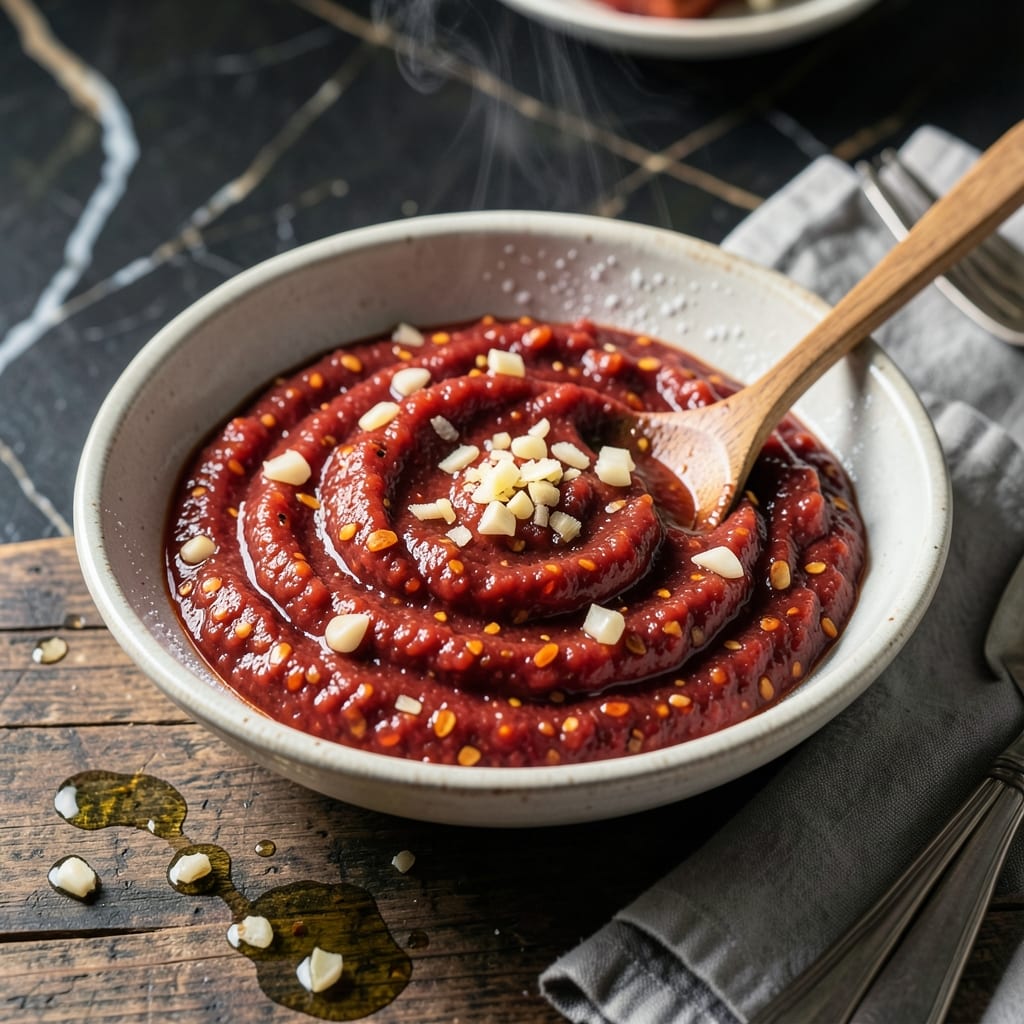
This kimchi paste delivers authentic fermented flavor without traditional rice flour, using a simple cornstarch swap for the same thick, tangy base. The method preserves the essential fermentation process while making it accessible for any kitchen.
I developed this version to solve the common problem of finding rice flour, proving that cornstarch creates an equally effective paste. The fermentation still produces that signature sour, umami-rich profile that defines great kimchi.
The paste comes together with basic ingredients but requires 24-48 hours of fermentation to develop its complex flavors. The result is a versatile base perfect for vegetables, tofu, or any kimchi variation.
This vegan paste maintains all the traditional depth while being completely plant-based. The cornstarch thickens beautifully and holds up during fermentation.
Ingredients for Kimchi Paste Recipe Without Rice Flour
Nine plant-based ingredients create this fermented paste with bold, authentic kimchi flavor.
| Ingredient | Amount | Notes |
|---|---|---|
| Cornstarch 🌾 | ½ cup | Thickening agent replacement |
| Korean Red Pepper Flakes 🌶️ | 1 cup | Gochugaru for authentic heat |
| Minced Garlic 🧄 | ½ cup | Freshly minced preferred |
| Fresh Ginger 🌿 | ¼ cup | Peeled and grated |
| Fish-Free Soy Sauce 🫒 | ⅓ cup | Or tamari for gluten-free |
| Sugar 🍚 | ¼ cup | White or brown for sweetness |
| Salt 🧂 | ¼ cup | Kosher or sea salt preferred |
| Green Onions 🧅 | ½ cup | Thinly sliced white parts |
| Water 💧 | 1 ½ cups | For adjusting consistency |
The gochugaru is non-negotiable for authentic flavor—look for Korean red pepper flakes at H Mart or Asian markets. The cornstarch swap works perfectly, but ensure it’s pure cornstarch without additives. Fresh ginger and garlic make a noticeable difference here (the jarred stuff lacks punch). For the soy sauce, Kikkoman or San-J tamari are reliable choices for consistent saltiness.
No gochugaru? Substitute with half cayenne and half sweet paprika, but expect a different heat profile. Out of fresh ginger? Ground ginger at one-quarter the amount works in a pinch. For a gluten-free version, tamari replaces soy sauce seamlessly. The sugar can be swapped with agave or maple syrup, but white sugar ferments most predictably.
The paste ferments best at room temperature for 24-48 hours before refrigerating. Store in an airtight container in the fridge for up to 1 month. The flavors deepen over time, so making it a day ahead is ideal (worth the extra minute).
Why You’ll Love This Recipe
- No Rice Hassle: I skip the rice flour entirely—cornstarch thickens it just as well, and it’s already in my pantry.
- Fiery and Aromatic: The Korean red pepper flakes, garlic, and ginger pack a punch that’s bold yet balanced.
- Weeknight Friendly: I stir this together while the rice cooks, and dinner’s ready before the kids start asking.
- Budget Keeper: Fish-free soy sauce keeps costs down, and a little paste goes a long way in soups, stews, and marinades.
Step-by-Step Instructions for Kimchi Paste Without Rice Flour
This method ensures a perfectly balanced, thick paste using cornstarch as the binding agent.
Step 1: Create the Slurry Base
In a medium saucepan, whisk together the 0.5 cup Cornstarch with 1.5 cups Water until completely smooth. This prevents lumps from forming when heated. The mixture should resemble heavy cream in consistency before cooking.
Place the saucepan over medium heat and begin warming the mixture. Stir constantly with a silicone spatula, making sure to reach the corners of the pan. The slurry will start to thicken noticeably within 2-3 minutes.
Step 2: Incorporate Aromatics and Seasonings
Once the slurry reaches a pudding-like consistency, add the 0.5 cup Minced Garlic, 0.25 cup Fresh Ginger, 0.33 cup Fish-Free Soy Sauce, 0.25 cup Sugar, and 0.25 cup Salt. Stir vigorously to distribute these ingredients evenly throughout the thickening base.
Continue cooking for an additional 3-4 minutes, maintaining medium heat. The mixture should become glossy and pull away slightly from the sides of the pan. This indicates the starch has fully gelatinized and the aromatics have begun to meld.
Step 3: Add the Signature Heat Element
Remove the saucepan from heat and let the mixture cool for 2 minutes. This prevents the next step from creating steam that could dissipate the delicate flavors. The mixture should still be warm but not boiling.
Gradually fold in the 1 cup Korean Red Pepper Flakes using a wooden spoon. Work in batches if needed to prevent clumping. The paste will transform into a vibrant red color and thicken further as the flakes absorb moisture.
Step 4: Finish with Fresh Elements and Adjust Consistency
Stir in the 0.5 cup Green Onions, reserving a small handful for garnish if desired. The green onions add a bright, fresh contrast to the deep umami base. The paste should now have a spreadable, jam-like consistency.
If the mixture appears too thick, add 1-2 tablespoons of additional water and stir well. Conversely, if it’s too thin, return it to low heat for 2-3 minutes while stirring. The ideal texture should coat the back of a spoon and hold its shape briefly before slowly dripping.
Transfer to a clean jar and let cool completely before using. The paste will thicken slightly as it cools, reaching its perfect consistency for fermentation.
Pro Tips For Making Kimchi Paste Recipe Without Rice Flour
- Bloom the Spices: Cook the minced garlic and ginger in a little oil for 1-2 minutes until fragrant—I learned this the hard way after my first batch tasted raw and harsh.
- Dissolve Cornstarch First: Mix the cornstarch with 2 tablespoons of cold water before adding to the paste, or you’ll end up with clumpy, uneven thickness.
- Adjust Pepper Heat: Korean red pepper flakes vary in spiciness; taste a pinch first and adjust the amount—my grandmother swore by this, and she was right.
- Rest the Paste: Let the paste sit for 10-15 minutes before using; the flavors meld better and the cornstarch fully hydrates.
Flavor Customization for This Recipe
Spice Level Adjustments
For milder kimchi paste, reduce the Korean Red Pepper Flakes to ½ cup and add ¼ cup sweet paprika for color without heat. I find this creates a family-friendly version that still packs authentic flavor. The cornstarch base maintains the same thickness regardless of spice level. 🌶️
Sweetness Variations
Swap the ¼ cup Sugar for ⅓ cup maple syrup or agave nectar for a deeper, more complex sweetness. Alternatively, use coconut sugar for a caramel-like depth that pairs beautifully with the fermented tang.
Umami Boosters
Add 2 tbsp nutritional yeast or 1 tbsp white miso paste to intensify the savory notes. I often stir in 1 tbsp toasted sesame oil at the end for an extra layer of richness. These additions complement the fish-free soy base perfectly.
Herb Infusions
Fresh herbs can brighten the paste significantly. Try adding ¼ cup finely chopped cilantro or 2 tbsp mint leaves after fermentation. The herbs should be mixed in just before use to preserve their freshness and vibrant color.
Smoky Depth
For a barbecue-inspired twist, incorporate 1 tsp smoked paprika or ½ tsp liquid smoke. This creates a paste that works wonderfully with grilled vegetables or tofu. The smokiness pairs especially well with the existing garlic and ginger. 💡
Citrus Zing
Stir in 2 tbsp rice vinegar or zest of 1 lime after fermentation for a bright, tangy kick. The acidity enhances the fermented flavors and adds a refreshing note that cuts through the richness of the paste.
Nutrition Facts
Frequently Asked Questions
Why use cornstarch instead of rice flour?
Cornstarch creates the same thick, smooth texture as rice flour but is more accessible. It binds the ingredients perfectly and holds up during fermentation for 24-48 hours.
Can I adjust the spice level?
Yes! Reduce or increase the Korean red pepper flakes to taste. For milder paste, swap half with sweet paprika for color without heat.
How long does the paste keep?
Store in an airtight container in the fridge for up to 1 month. The flavors deepen over time, so making it ahead enhances the taste.
What if my paste is too thin?
Return it to low heat and stir for 2-3 minutes to thicken. If too thick, add water 1-2 tablespoons at a time until desired consistency.

- Mujadara Rice and Lentils Recipe: Earthy Spiced Lentils With Caramelized Onions - November 1, 2026
- Naija Fried Rice Recipe: Street-Style Spice With Veggie Crunch - November 1, 2026
- Mushy Rice Recipe: Fluffy Grains Transformed in Minutes - November 1, 2026