
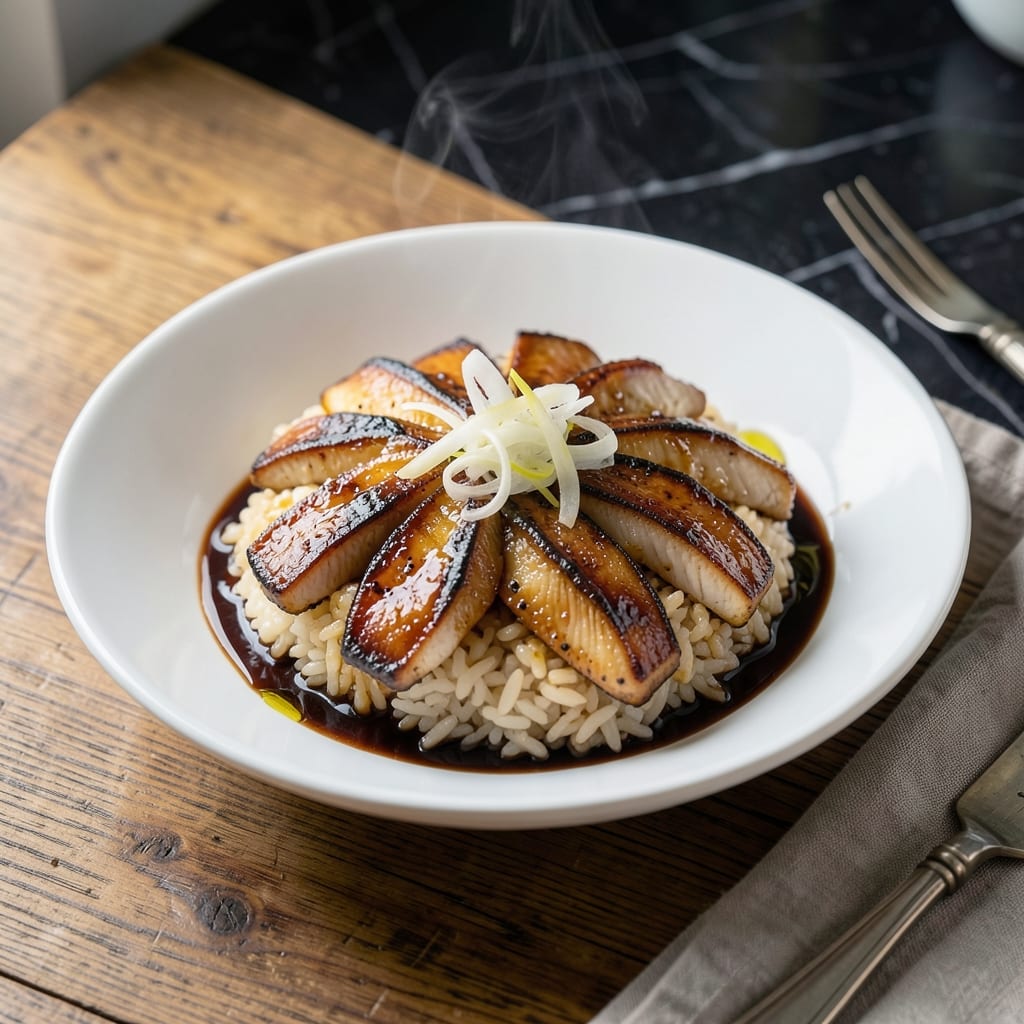
This dish showcases the delicate flavor of abalone paired with pearl-like Korean rice, creating a luxurious yet approachable meal. The key lies in properly tenderizing the abalone before combining it with perfectly cooked short-grain rice.
Traditional Korean techniques transform simple ingredients into something extraordinary. The abalone is quickly seared then simmered to maintain its natural sweetness, while the rice absorbs the oceanic essence of the seafood and its cooking liquid.
What emerges is a harmonious balance of textures and flavors – tender abalone pieces nestled among glossy, slightly sticky rice grains. The dish carries the comforting warmth of home cooking with the refinement of restaurant fare.
Serve this as a special occasion side or light main course. The preparation requires patience but rewards with exceptional results.
Ingredients for Korean Abalone Rice
Luxurious abalone meets pearl-like Korean rice in this refined yet approachable dish.
| Ingredient | Amount | Notes |
|---|---|---|
| Abalone 🐚 | 1 ½ lb | Fresh or frozen, tenderized |
| Short-Grain Korean Rice 🍚 | 2 cups | Rinsed until water runs clear |
| Soy Sauce 🫒 | ¼ cup | Low-sodium preferred for balance |
| Sesame Oil 🫒 | 1 tbsp | Toasted for depth of flavor |
| Garlic Cloves 🧄 | 4 cloves | Minced finely for even distribution |
| Fresh Ginger 🌿 | 1 tbsp | Grated for maximum infusion |
| Green Onions 🧅 | 4 whole | Thinly sliced for garnish |
| Dashi Stock 🍲 | 1 ½ cups | Kombu-based for umami depth |
| Sake 🍶 | ¼ cup | Dry variety for cooking |
| Mirin 🍯 | 2 tbsp | Sweet rice wine for balance |
| Toasted Sesame Seeds 🌰 | 1 tbsp | For garnish and crunch |
| Korean Red Pepper Flakes 🌶️ | ½ tsp | Optional for subtle heat |
| Neutral Cooking Oil 🫒 | 2 tbsp | For searing abalone |
The abalone is the star here. Fresh abalone (available at Asian seafood markets like H Mart or 99 Ranch) offers the best texture, but high-quality frozen works well if thawed properly. Look for vibrant color and firm flesh—avoid any with a strong ammonia smell. For the rice, short-grain Korean varieties like Sushi Rice are essential for achieving that characteristic sticky, glossy finish.
No fresh abalone? Canned abalone (available at specialty grocers) can substitute in a pinch—just drain and rinse well. Scallops or firm white fish work as alternatives, though the flavor profile will differ. For the dashi, instant granules dissolve quickly, but homemade kombu stock offers superior depth. The sake and mirin balance the umami—if unavailable, dry white wine plus a pinch of sugar can approximate the effect.
Store fresh abalone in the coldest part of your fridge and use within 24 hours. Frozen abalone keeps for 3 months. Cooked rice is best enjoyed immediately but can be refrigerated for 2-3 days. Reheat gently with a splash of water to restore moisture.
Why You’ll Love This Recipe
- One Pot Wonder: I toss everything—abalone, rice, and the sauce—into one pot and let it work its magic.
- Umami Explosion: The soy sauce and sesame oil create this deep, savory richness that makes every bite irresistible.
- Weeknight Hero: Honestly, it’s my go-to for busy evenings when I need something hearty without the fuss.
- Stretches Further: Leftovers taste even better the next day, and the abalone makes it feel like a special treat all over again.
Step-by-Step Instructions for Korean Abalone Rice
Master the technique for perfectly tender abalone paired with fragrant, pearl-like grains.
Step 1: Prepare and Sear the Abalone
If using frozen abalone, thaw it completely in the refrigerator overnight. Pat the 1.5 lb Abalone dry with paper towels to ensure a good sear. Heat the 2 tbsp Neutral Cooking Oil in a large skillet over medium-high heat until shimmering.
Add the abalone in a single layer, without crowding. Sear for 2-3 minutes per side until the edges turn opaque white and the surface develops a light golden crust. The abalone should feel firm to the touch when properly seared. Remove from heat and set aside.
Step 2: Cook the Short-Grain Korean Rice
Rinse the 2 cups Short-Grain Korean Rice under cold water until the water runs clear, which removes excess starch and prevents gummy texture. Combine the drained rice, 1.5 cups Dashi Stock, 0.25 cup Sake, and 2 tbsp Mirin in a rice cooker or heavy pot.
Cook according to your rice cooker’s standard cycle or, for stovetop, bring to a boil, then reduce to low heat, cover, and simmer for 15-18 minutes. The rice is done when all liquid is absorbed and the grains are tender with a slight chew.
Step 3: Create the Aromatic Sauce
In a small saucepan, heat the 1 tbsp Sesame Oil over medium heat. Add the 4 cloves Garlic Cloves and 1 tbsp Fresh Ginger, sautéing for 1 minute until fragrant but not browned. Pour in the 0.25 cup Soy Sauce and 0.5 tsp Korean Red Pepper Flakes, stirring to combine.
Simmer for 2-3 minutes until the sauce slightly thickens and the flavors meld. The mixture should coat the back of a spoon with a glossy sheen. Remove from heat immediately to prevent over-reduction.
Step 4: Assemble the Dish
Once the rice is cooked, gently fold in half of the prepared sauce using a rice paddle or spatula. This ensures the grains remain intact while absorbing the rich, umami-packed liquid. Arrange the seared abalone on top of the rice, then drizzle the remaining sauce over the abalone.
The abalone should glisten with the sauce, and the rice should appear moist but not soupy. Cover and let rest for 5 minutes to allow the flavors to penetrate fully.
Step 5: Garnish and Serve
Thinly slice the 4 whole Green Onions and sprinkle them over the dish along with the 1 tbsp Toasted Sesame Seeds. The green onions add a fresh, crisp contrast, while the sesame seeds provide a nutty crunch.
Serve immediately in individual bowls, ensuring each portion includes both the abalone and a generous amount of the fragrant rice. The abalone should be tender with a slight resistance, and the rice should have a subtle sheen from the sauce.
Pro Tips For Making Korean Abalone Rice
- Soak the Abalone: Rehydrate dried abalone in cold water for at least 8 hours—overnight if possible. I learned this the hard way after serving rubbery abalone once too often.
- Rinse the Rice: Wash the short-grain Korean rice until the water runs clear, at least 4-5 times. Skipping this step makes the dish gummy, and nobody wants that.
- Sear Abalone Hot: Use high heat to sear the abalone slices for 1-2 minutes per side. After undercooking mine to a chewy mess, I now make sure the pan is screaming hot first.
- Toast the Garlic: Cook minced garlic in sesame oil just until fragrant—about 30 seconds—before adding other ingredients. Sounds simple, but burnt garlic ruins the whole dish.
Serving Suggestions for This korean abalone rice
Traditional Presentation
Serve this dish in a heated stone bowl (dolsot) to keep the rice warm and crispy at the edges. The sizzling presentation adds drama while enhancing the texture contrast with the tender abalone. I love the way the rice develops a golden crust against the hot stone. 🔥
Family-Style Service
For a communal meal, present the abalone and rice on a large platter with the sauce drizzled artistically. Let everyone serve themselves with metal rice spoons and chopsticks. This style encourages sharing and conversation.
Garnish the center with extra green onions and sesame seeds for visual appeal.
Elegant Plating
For individual servings, use shallow white bowls to showcase the colors. Arrange 3-4 abalone slices in a fan shape atop the rice, then spoon sauce around the edges. The contrast of white abalone against glossy rice is stunning. ✨
Accompaniment Ideas
Pair with kimchi for a tangy contrast that cuts through the richness. A side of quick-pickled cucumbers adds refreshing crunch. I recommend serving with cold barley tea to cleanse the palate.
Nutrition Facts
Frequently Asked Questions
Can I use canned abalone instead of fresh?
Yes! Drain and rinse canned abalone thoroughly before using. It’s pre-cooked, so just warm it in the sauce for 2-3 minutes to absorb flavors. Fresh is ideal, but canned works in a pinch.
Why rinse the rice until water runs clear?
Rinsing removes excess starch, preventing gummy rice. For short-grain varieties, this ensures pearl-like, separate grains that absorb the sauce better. Skip this step, and your rice may turn mushy.
What if my abalone turns rubbery?
Overcooking is the culprit. Sear it just until opaque (2-3 minutes per side), then simmer briefly in the sauce. Abalone cooks fast—keep an eye on it to maintain tenderness.
Can I make this ahead of time?
Cook the rice and sauce separately, then combine just before serving. Reheat the rice with a splash of water to restore moisture. Abalone is best seared fresh for optimal texture.

- Mujadara Rice and Lentils Recipe: Earthy Spiced Lentils With Caramelized Onions - November 1, 2026
- Naija Fried Rice Recipe: Street-Style Spice With Veggie Crunch - November 1, 2026
- Mushy Rice Recipe: Fluffy Grains Transformed in Minutes - November 1, 2026