
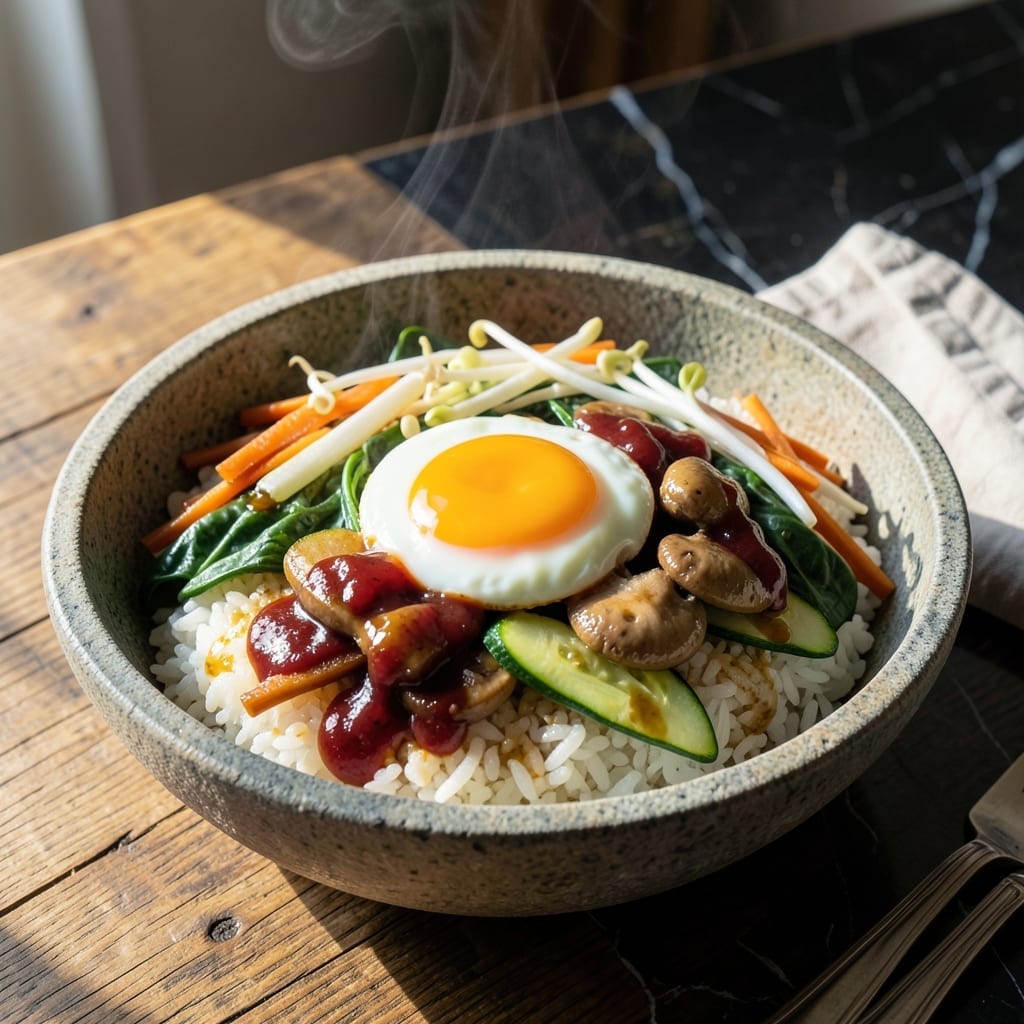
This vibrant Korean dish brings together colorful vegetables, tender rice, and a signature gochujang sauce in perfect harmony. The beauty lies in its customizable nature—each ingredient maintains its distinct flavor while contributing to the whole.
Traditional techniques elevate this recipe, from properly seasoning each vegetable to achieving the ideal rice texture. The gochujang sauce ties everything together with its sweet, spicy, and umami-rich profile, creating a balance that’s both satisfying and authentic.
Every element is prepared separately, allowing for precise control over texture and taste. The final assembly is where the magic happens, as the warm rice meets the crisp vegetables and bold sauce.
This dish is as visually stunning as it is delicious, making it a centerpiece for any meal. The layers of flavor and texture ensure each bite is a new discovery.
Ingredients for Korean Bibimbap Rice
Fresh vegetables, tender rice, and bold gochujang come together in this vibrant dish.
| Ingredient | Amount | Notes |
|---|---|---|
| Short-Grain White Rice 🍚 | 2 cups | Rinsed until water runs clear |
| Carrots 🥕 | 2 whole | Julienned or matchstick cut |
| Zucchini 🥒 | 1 whole | Julienned, medium-sized |
| Spinach 🍃 | 5 oz | Fresh baby spinach preferred |
| Bean Sprouts 🌱 | 8 oz | Blanched and drained |
| Shiitake Mushrooms 🍄 | 4 whole | Fresh, thinly sliced |
| Ground Beef 🥩 | ½ lb | Optional, can omit for vegetarian |
| Eggs 🥚 | 4 whole | Sunny-side up or fried |
| Gochujang 🌶️ | ¼ cup | Korean red pepper paste |
| Soy Sauce 🫒 | 2 tbsp | Low-sodium preferred |
| Sesame Oil 🫒 | 1 tbsp | Toasted, for finishing |
| Garlic Cloves 🧄 | 3 cloves | Minced finely |
| Sugar 🍚 | 1 tbsp | White granulated |
| Sesame Seeds 🌾 | 1 tbsp | Toasted, for garnish |
| Vegetable Oil 🫒 | 2 tbsp | For sautéing vegetables |
The gochujang is non-negotiable—look for brands like Sempio or CJ at H Mart or Korean markets (or the international aisle). The rice must be short-grain (sushi rice works) for that signature sticky texture. For the vegetables, organic produce isn’t mandatory, but do pick the freshest available. Shiitake mushrooms should be plump, not shriveled. The beef, if using, should be lean for even cooking.
No gochujang? Sriracha mixed with miso paste gets you close (but won’t be authentic). Swap beef for ground turkey or tofu—just season it well. Zucchini can be replaced with yellow squash. Spinach not your thing? Baby kale or Swiss chard work too. For the sauce, brown sugar instead of white adds depth, and rice vinegar can sub for the acidity if needed.
Prep veggies ahead—they’ll keep in the fridge for 2 days (store separately to avoid sogginess). Cooked rice stays fresh for 24 hours at room temp or 3 days refrigerated. The sauce can be made a week ahead. For best results, serve immediately after assembly while everything’s hot and crisp.
Why You’ll Love This Recipe
- One Bowl Meal: I love that everything—rice, sautéed spinach, carrots, zucchini, and bean sprouts—goes into a single bowl with barely any cleanup.
- Umami Burst: The combo of sesame oil, soy, and fresh veggies over warm rice hits that savory-sweet spot every time.
- Endless Customizations: Swap in whatever veggies I have on hand or add leftover meat—this dish never gets old.
- Lunchbox Hero: Honestly, it reheats beautifully, so I pack the leftovers for work the next day without a second thought.
Step-by-Step Instructions for Korean Bibimbap
Master the art of layering flavors and textures with this authentic approach to the dish.
Step 1: Cook and Prepare the Rice Foundation
Rinse the 2 cups Short-Grain White Rice under cold water until the water runs completely clear. This removes excess starch and ensures fluffy, separate grains. Cook the rice according to package instructions or in a rice cooker with a 1:1.25 rice-to-water ratio.
Once cooked, let it sit covered for 10 minutes off heat. Then fluff with a fork and transfer to a large bowl. Drizzle with 1 tbsp Sesame Oil and toss gently to coat every grain. This prevents clumping and adds a nutty aroma that complements the other components.
Step 2: Sauté Vegetables Individually for Optimal Texture
Heat 1 tbsp Vegetable Oil in a wok or large skillet over medium-high heat. Add the 2 whole Carrots and 1 whole Zucchini (both julienned) and stir-fry for 3-4 minutes until just tender but still vibrant in color. Remove and set aside.
In the same pan, add the remaining 1 tbsp Vegetable Oil and sauté the 4 whole Shiitake Mushrooms for 2-3 minutes until softened. Add the 3 cloves Garlic Cloves (minced) and cook for 30 seconds until fragrant. Then add the 5 oz Spinach, stirring until wilted but still bright green. Season each vegetable batch with a pinch of sugar to balance flavors.
Step 3: Blanch and Marinate the Bean Sprouts
Bring a pot of salted water to a boil and blanch the 8 oz Bean Sprouts for 2-3 minutes until slightly tender but still crisp. Drain immediately and shock in ice water to preserve color and texture. Drain again thoroughly and pat dry with a clean towel.
In a bowl, combine the blanched bean sprouts with 1 tbsp Soy Sauce and 1 tsp Sesame Oil. Toss gently to coat evenly. This marinade enhances their natural sweetness and prepares them to absorb the other flavors in the final dish.
Step 4: Cook the Ground Beef with Bold Seasonings
In a clean skillet over medium-high heat, cook the 0.5 lb Ground Beef until browned, breaking it into small pieces with a wooden spoon. Drain excess fat if necessary, then add 1 tbsp Soy Sauce, 1 tbsp Sugar, and the remaining minced garlic (if any). Cook for another 2 minutes until the meat is fully cooked and the sauce has reduced slightly.
The beef should be deeply savory with a hint of sweetness to complement the spicy gochujang. Set aside to cool slightly before assembling.
Step 5: Fry Eggs and Assemble the Bibimbap
In a nonstick pan over medium heat, fry the 4 whole Eggs sunny-side up or to your preferred doneness, keeping the yolks runny for the best texture contrast. Season lightly with salt.
To assemble, divide the prepared rice among four bowls. Arrange the sautéed vegetables, bean sprouts, and seasoned beef in neat sections on top of the rice. Place a fried egg in the center of each bowl. Drizzle with 0.25 cup Gochujang (mixed with a little water if too thick) and sprinkle with 1 tbsp Sesame Seeds. Serve immediately while hot, instructing diners to mix everything together before eating.
Pro Tips For Making Korean Bibimbap Rice
- Salt the Spinach: Blanch the spinach in boiling water for just 30 seconds, then shock it in ice water—this keeps the color bright and texture crisp. I learned this the hard way after ending up with sad, mushy greens more than once.
- Slice Thin, Cook Fast: Cut the carrots and zucchini into matchstick pieces, no thicker than a pencil, so they soften quickly over high heat without turning to mush. About 2-3 minutes in a hot pan does the trick.
- Skip the Overcooking: Bean sprouts only need a 2-minute blanch in boiling water, tops. Any longer and they lose that satisfying crunch that makes bibimbap so good.
- Use Day-Old Rice: Fresh rice is too sticky—spread your cooked short-grain rice on a tray and refrigerate it for 30 minutes before assembling. It holds its shape better and soaks up the sauce like a dream.
Health Benefits of These Flavors
Rich in Antioxidants
This dish packs a powerful antioxidant punch from its colorful vegetables. The carrots and spinach are loaded with beta-carotene and lutein, which support eye health and immune function. 💪
High-Quality Protein
The eggs and ground beef provide complete protein, delivering all nine essential amino acids. Each serving offers about 20 grams of protein, helping build and repair tissues while keeping you full longer.
Fiber Boost
With bean sprouts, zucchini, and shiitake mushrooms, this meal is an excellent source of dietary fiber. A single serving can provide up to 8 grams of fiber, promoting digestive health and regularity.
Vitamin and Mineral Powerhouse
This creation is rich in vitamin A from carrots, iron from spinach, and B vitamins from the beef and eggs. The sesame seeds add a boost of calcium and zinc, supporting bone health and immunity.
Healthy Fats
The sesame oil used in the recipe contains heart-healthy unsaturated fats, which can help lower bad cholesterol levels. Combined with the vegetable oil, these fats provide energy and support cell function. ✨
Low in Calories, High in Nutrients
Despite its vibrant flavors, this dish remains relatively low in calories, with most coming from nutrient-dense ingredients. The balance of vegetables, protein, and healthy fats makes it a satisfying yet health-conscious choice.
Nutrition Facts
Frequently Asked Questions
Can I use a different type of rice?
Short-grain is ideal for its sticky texture, but jasmine or medium-grain can work. Avoid long-grain as it stays too separate. Rinse thoroughly for best results.
How do I adjust the spice level?
Reduce gochujang by half and replace with 1 tbsp miso for mild heat. For extra spice, add 1 tsp gochugaru (Korean chili flakes).
Can I make this vegetarian?
Skip the beef and add marinated tofu or tempeh. Use 2 tbsp soy sauce and 1 tbsp sugar for seasoning.
How long will leftovers keep?
Store components separately in the fridge for up to 3 days. Reheat rice and veggies separately, then assemble fresh. Avoid freezing cooked vegetables.

- Mujadara Rice and Lentils Recipe: Earthy Spiced Lentils With Caramelized Onions - November 1, 2026
- Naija Fried Rice Recipe: Street-Style Spice With Veggie Crunch - November 1, 2026
- Mushy Rice Recipe: Fluffy Grains Transformed in Minutes - November 1, 2026