
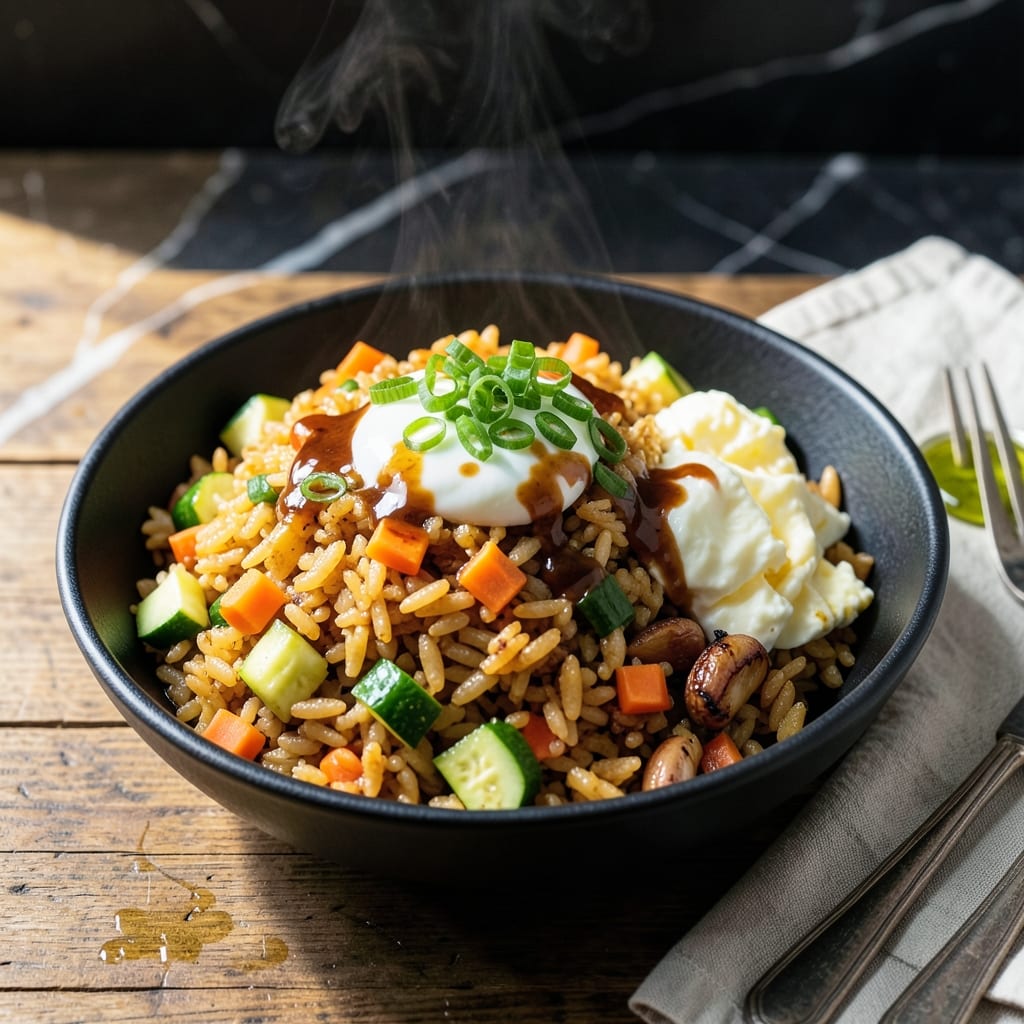
This Korean fried rice delivers an irresistible combination of crispy garlic bits and wok-seared aroma that fills your kitchen. I’ve refined this method over years to ensure every grain stays separate and flavorful.
The secret is cooking the garlic twice—first slowly in oil until golden and crispy, then adding it back at the end for maximum flavor. Day-old rice works best, as it absorbs the sauce without turning mushy.
What you’ll get is a dish with perfectly charred edges, tender grains, and a deep umami richness. The crispy garlic adds a satisfying crunch that takes this fried rice to the next level.
Serve it hot with a fried egg on top for the full experience. Here’s how to make it.
Ingredients for Korean Garlic Fried Rice
Day-old rice, fresh garlic, and bold Korean flavors come together for this dish.
| Ingredient | Amount | Notes |
|---|---|---|
| Day-Old Cooked White Rice 🍚 | 4 cups | Cold, preferably overnight |
| Garlic Cloves 🧄 | 12 cloves | Thinly sliced for crispiness |
| Neutral Oil 🫒 | ½ cup | Vegetable or canola oil preferred |
| Large Eggs 🥚 | 4 whole | For topping, optional |
| Soy Sauce 🥫 | 3 tbsp | Low-sodium if preferred |
| Gochujang 🌶️ | 1 tbsp | Korean chili paste |
| Sesame Oil 🫒 | 1 tbsp | Toasted for depth |
| Green Onions 🧅 | 4 whole | Thinly sliced, green parts only |
| Carrot 🥕 | 1 whole | Small dice for texture |
| Zucchini 🥒 | 1 whole | Small dice, optional |
| White Pepper 🌶️ | ½ tsp | Freshly ground |
| Sesame Seeds 🌰 | 1 tbsp | Toasted for garnish |
| Salt 🧂 | ½ tsp | Adjust to taste |
| Sugar 🍚 | ½ tsp | Balances the flavors |
The garlic is the star here. Slice it thin—this ensures it crisps up evenly in the oil. Most grocery stores carry it year-round, but look for firm, plump heads without green sprouts. Asian markets often have better prices on bulk garlic. For the rice, leftover takeout rice works perfectly (that slightly dry texture is ideal). If starting fresh, cook it a day ahead and refrigerate.
No gochujang? Sriracha plus a pinch of sugar can sub in a pinch, but the flavor won’t be as deep. Vegetable oil works instead of neutral oil—just avoid olive oil, which has a lower smoke point. The carrots and zucchini can be swapped for peas, bell peppers, or mushrooms. For extra umami, add a splash of fish sauce (if not strictly vegetarian).
This keeps well in the fridge for 3-4 days. Reheat in a skillet with a little oil to restore the crispiness. The crispy garlic bits lose their crunch if stored mixed in, so keep them separate until serving. Leftovers taste even better the next day once flavors meld.
Why You’ll Love This Recipe
- One Pan Magic: I love that I can go from fridge to plate with just a skillet, day-old rice, and a handful of garlic cloves—no fancy tools required.
- Garlic Bomb Flavor: The sizzle of minced garlic in hot oil hits first, then the soy sauce ties it all together with that deep, savory punch.
- Breakfast or Dinner: Honestly, this works any time—I’ve served it with a fried egg on top for breakfast or as a quick dinner side.
- Leftovers Rescue: I’ll admit, I cook extra rice just to make this the next day—transforms boring leftovers into something crave-worthy.
Step-by-Step Instructions for Korean Garlic Fried Rice
Here’s how I get that perfect wok-seared aroma with crispy garlic bits every single time.
Step 1: Prep Vegetables and Crisp the Garlic
Small-dice the carrot and zucchini into uniform pieces so they cook evenly. Thinly slice all 4 green onions, using only the green parts. The key here is consistency—you want every bite to have the same texture.
Heat ¼ cup of the neutral oil in a wok or large skillet over medium-high heat. Add the 12 cloves of thinly sliced garlic cloves and fry for 2-3 minutes until golden and crispy. Watch closely—they burn fast. Remove with a slotted spoon and drain on paper towels, leaving the flavored oil in the pan.
Step 2: Scramble the Eggs and Toast the Veggies
In the same pan with the remaining garlic oil, crack in the 4 large eggs. Scramble quickly over high heat until just set but still slightly runny. Remove and set aside with the crispy garlic.
Add the remaining ¼ cup neutral oil to the pan. Toss in the diced carrot and zucchini, stir-frying for 3-4 minutes until the carrots start to soften but still have a slight bite. The zucchini should be just tender. This maintains that perfect crisp texture in your finished dish.
Step 3: Combine Rice and Build the Flavor Base
Break up the 4 cups of day-old cooked white rice with your hands—cold rice fries better and won’t turn mushy. Add it to the pan with the veggies, pressing down with your spatula to make contact with the hot surface. Let it sit undisturbed for 30 seconds to develop that coveted wok-seared aroma.
Drizzle in the 3 tbsp soy sauce, 1 tbsp gochujang, and 1 tbsp sesame oil. Add the ½ tsp salt, ½ tsp sugar, and ½ tsp white pepper. Stir-fry for 3-4 minutes until the rice is heated through and starts to crisp at the edges. The gochujang should coat every grain with its spicy-sweet depth.
Step 4: Finish with Eggs, Garlic, and Green Onions
Return the scrambled eggs and crispy garlic to the pan. Add the sliced green onions and toss everything together for 1-2 minutes to combine. The residual heat will wilt the green onions slightly while keeping their fresh bite.
Garnish with the 1 tbsp sesame seeds and give it one final toss. The dish should have that signature golden color from the soy sauce, with visible bits of crispy garlic and vibrant green onions throughout. Serve immediately while the garlic is still at its crispiest.
Pro Tips For Making Korean Garlic Fried Rice
- Use Cold Rice: Always start with day-old, chilled rice—fresh rice turns mushy. I learned this the hard way after making sad, soggy fried rice more times than I’d like to admit.
- Mince Garlic Fine: Chop the garlic as small as possible, almost paste-like, so it distributes evenly and cooks through without burning. Sounds tedious, but it actually changes the outcome.
- High Heat Only: Crank the heat to medium-high and keep it there. After burning three batches, I finally figured out low heat just steams the rice instead of frying it.
- Eggs Last: Push the rice to one side, scramble the eggs in the empty space, then mix. This keeps the eggs soft and distinct instead of rubbery bits throughout.
Serving Suggestions for korean garlic fried rice
Topping with Eggs
For the classic Korean touch, fry a sunny-side-up egg per serving and place it on top of the rice. The runny yolk mixes beautifully with the crispy garlic and soy sauce. I use a nonstick pan with 1 tbsp neutral oil over medium heat for perfect eggs every time. 💛
Fresh Garnishes
Sprinkle with extra green onions and sesame seeds right before serving. The fresh green onions add a bright contrast to the rich, savory flavors. I also like to add a drizzle of toasted sesame oil for an extra aromatic finish.
Side of Kimchi
Kimchi is the perfect tangy, spicy sidekick to balance the dish. The fermentation adds probiotics, and its acidity cuts through the richness. I serve about ¼ cup per person alongside the rice for authentic Korean flair.
Protein Additions
For heartier meals, top with bulgogi beef or spicy pork. These proteins complement the garlic and gochujang flavors beautifully. I often use leftover grilled chicken for a quick protein boost.
Pickled Vegetables
Quick-pickled cucumbers or radishes add crunch and acidity. Thinly slice and soak in rice vinegar with a pinch of salt and sugar for 15 minutes. These refresh your palate between bites. ✨
Serving Temperature
This dish is best served immediately while the garlic is still crispy. If you must hold it, keep the crispy garlic separate until serving. I avoid microwaving leftovers—reheat in a skillet with a little oil to restore texture.
Nutrition Facts
Frequently Asked Questions
Can I use fresh rice instead of day-old?
Day-old rice works best because it’s drier and fries up fluffier. Fresh rice can turn mushy. If in a hurry, spread hot rice on a tray and refrigerate for 30 minutes to dry it out.
How do I prevent the garlic from burning?
Fry garlic over medium heat and watch closely. Remove it as soon as it turns golden—this takes 2-3 minutes. The oil should shimmer but not smoke.
What can I substitute for gochujang?
Mix 1 tbsp sriracha with ½ tsp sugar for a similar spicy-sweet flavor. For less heat, use 1 tsp miso paste plus ½ tsp chili flakes.
Why did my rice turn out soggy?
Overcrowding the pan or using too much sauce causes steam instead of frying. Cook in batches if needed and use high heat to get that crispy texture.

- Mujadara Rice and Lentils Recipe: Earthy Spiced Lentils With Caramelized Onions - November 1, 2026
- Naija Fried Rice Recipe: Street-Style Spice With Veggie Crunch - November 1, 2026
- Mushy Rice Recipe: Fluffy Grains Transformed in Minutes - November 1, 2026