
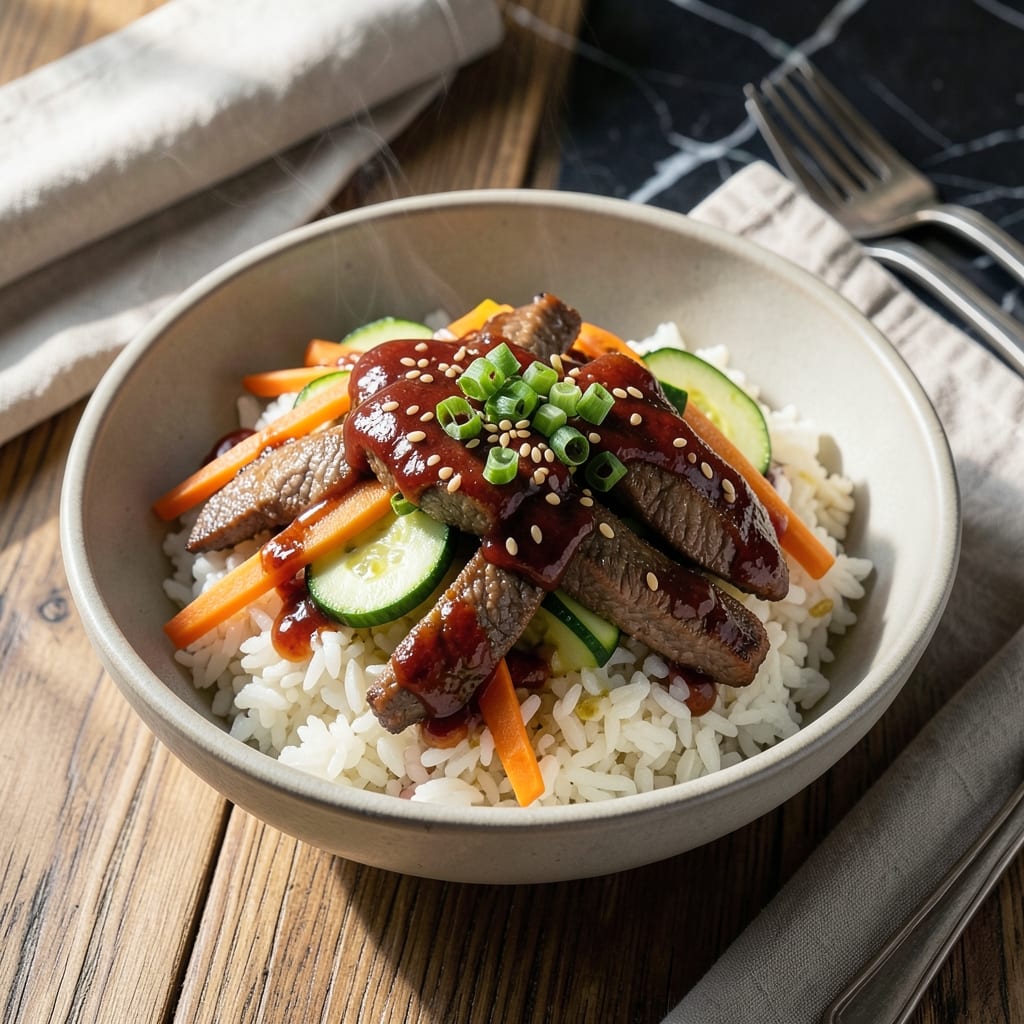
This vibrant dish transforms simple rice into a colorful masterpiece, blending textures and flavors in every bite. The gochujang brings a bold, spicy depth that perfectly balances the natural sweetness of the grains.
With traditional Korean ingredients and a straightforward technique, this creation delivers a satisfying meal that’s as beautiful as it is delicious. The harmony of colors and tastes makes it a standout on any table.
Ingredients for Korean Mixed Rice
Traditional Korean ingredients and fresh vegetables create this vibrant, balanced dish with bold flavors.
| Ingredient | Amount | Notes |
|---|---|---|
| Short-Grain White Rice 🍚 | 2 cups | Rinsed until water runs clear |
| Gochujang 🌶️ | 2 tbsp | Korean red pepper paste |
| Sesame Oil 🫒 | 1 tbsp | Toasted variety preferred |
| Soy Sauce 💧 | 2 tbsp | Low-sodium if preferred |
| Carrots 🥕 | 1 whole | Julienned for texture |
| Zucchini 🥒 | 1 whole | Diced into small cubes |
| Red Bell Pepper 🌶️ | 1 whole | Finely diced for color |
| Green Onions 🧅 | 4 whole | Thinly sliced, green parts only |
| Eggs 🥚 | 2 whole | Beaten for garnish |
| Sesame Seeds 🌾 | 1 tbsp | Toasted for garnish |
| Garlic Cloves 🧄 | 3 cloves | Minced finely |
| Vegetable Oil 🫒 | 1 tbsp | For cooking vegetables |
| Sugar 🧂 | 1 tsp | Balances gochujang heat |
| Salt 🧂 | ½ tsp | Adjust to taste |
| Black Pepper 🌶️ | ¼ tsp | Freshly ground |
The gochujang is non-negotiable here. Look for Sempio or CJ brand at your local H Mart or Korean grocery—avoid anything with added sugars or preservatives. The sesame oil should be 100% pure toasted; Kadoya and Ottogi are reliable. For rice, short-grain white like Calrose gives the right sticky texture. Don’t substitute long-grain or jasmine—they won’t hold up to the mixing.
No gochujang? Gochugaru mixed with a little miso paste can work in a pinch (use 1 tbsp gochugaru + 1 tsp miso per tbsp gochujang). Swap carrots for sweet potatoes if you prefer a softer texture. Zucchini can be replaced with mushrooms or spinach—just sauté until tender. For a vegan version, skip the egg or use tofu scramble.
Store cooked rice in an airtight container in the fridge for up to 4 days. Gochujang keeps for 1 year unopened, 6 months once opened. Toast sesame seeds just before serving—they lose crunch quickly. Reheat rice in a skillet with a splash of water to restore moisture.
Why You’ll Love This Recipe
- One-Pot Wonder: I toss everything in while the rice cooks—gochujang, sesame oil, and those sweet shredded carrots do all the work for me.
- Umami Bomb: The soy sauce and gochujang hit just right, that sticky-savory-slightly-spicy combo I crave every single time.
- Lunchbox Hero: I pack leftovers for days—cold or microwaved, it holds up. Honestly, my kids request it more than sandwiches.
- Pantry MVP: Five ingredients I always have on hand. Between us, it’s saved me from more than one last-minute dinner panic.
Step-by-Step Instructions for Korean Mixed Rice
Master the technique for vibrant, flavor-packed grains with perfect texture and balance.
Step 1: Prepare and Cook the Short-Grain White Rice
Rinse the 2 cups Short-Grain White Rice under cold water in a fine-mesh strainer until the water runs completely clear. This removes excess starch and prevents a gummy texture. I like to swirl the rice with my hand to ensure every grain is cleaned.
Transfer the rinsed rice to a rice cooker or heavy-bottomed pot. Add water using a 1:1.25 rice-to-water ratio (about 2½ cups water). Cook according to your rice cooker’s instructions or bring to a boil, then reduce to a simmer, cover, and cook for 15-18 minutes until all water is absorbed and the rice is tender. Let it sit covered for 10 minutes off heat to steam and fluff.
Step 2: Sauté the Vegetables with Aromatics
Heat the 1 tbsp Vegetable Oil in a large skillet or wok over medium-high heat until it shimmers. Add the minced 3 cloves Garlic Cloves and stir for 30 seconds until fragrant but not browned. Immediately add the julienned Carrots, diced Zucchini, and finely diced Red Bell Pepper.
Cook for 4-5 minutes, stirring frequently, until the vegetables are tender-crisp and the Carrots begin to soften slightly. Season with 0.5 tsp Salt, 0.25 tsp Black Pepper, and 1 tsp Sugar to balance the flavors. The sugar will caramelize slightly, enhancing the natural sweetness of the vegetables.
Step 3: Combine Rice and Vegetables with the Gochujang Sauce
In a small bowl, whisk together the 2 tbsp Gochujang, 2 tbsp Soy Sauce, and 1 tbsp Sesame Oil until smooth. This creates a deeply flavorful sauce that coats every grain. Pour this mixture over the cooked rice and fold gently with a spatula to distribute evenly without breaking the rice grains.
Add the sautéed vegetables to the rice and fold again until everything is well combined. The rice should take on a vibrant, slightly sticky texture with flecks of color from the vegetables. Taste and adjust seasoning if needed, though the Gochujang and Soy Sauce provide plenty of depth.
Step 4: Garnish and Serve
Heat a nonstick skillet over medium heat and add a light coating of oil. Pour in the 2 whole beaten Eggs and scramble until just set, with soft, creamy curds. Remove from heat immediately to prevent overcooking. The eggs should remain tender and slightly glossy.
Transfer the mixed rice to a serving platter or individual bowls. Top with the scrambled Eggs, then sprinkle with the thinly sliced 4 whole Green Onions and 1 tbsp Sesame Seeds. The contrast of the warm rice with the fresh, crisp garnishes elevates the dish. Serve immediately while the rice is still steaming and aromatic.
Pro Tips For Making Korean Mixed Rice
- Toast the rice first: Lightly toast the short-grain rice in the pot for 2-3 minutes before adding water—it deepens the nutty flavor and prevents mushiness, which I learned the hard way after too many sticky batches.
- Julienne those carrots: Cut the carrots into thin, even matchsticks so they soften quickly without turning to mush; about 1/8-inch thick is the sweet spot.
- Temper the gochujang: Mix the gochujang with a little warm water or sesame oil before stirring it into the rice to avoid clumpy, uneven bites; sounds fussy but it actually changes the outcome.
- Finish with sesame oil: Drizzle the sesame oil at the very end, not during cooking, to preserve its aromatic punch—I skip this when I’m lazy, but the dish is noticeably better when I don’t.
Perfect Pairings for This Dish
Side Dish Pairings
For a complete Korean meal, I love serving kimchi on the side—its tangy spice complements the gochujang perfectly. A simple cucumber salad with rice vinegar and sesame seeds adds refreshing crunch. Both balance the bold flavors beautifully. 🥗
Protein Additions
Add bulgogi beef or spicy pork for extra protein. Thinly sliced marinated beef cooked in a skillet adds richness. For seafood lovers, sautéed shrimp with garlic and soy sauce pairs wonderfully with the rice.
Beverage Choices
A crisp Korean lager like Hite or OB Beer cleanses your palate between bites. For non-alcoholic options, barley tea or sikhye (sweet rice drink) enhance the meal’s authenticity. 🍺
Fresh Garnishes
Extra toppings can elevate this dish. Offer pickled radish for crunch or avocado slices for creaminess. A sprinkle of nori strips adds umami depth and visual appeal.
Soup Companions
A warm bowl of doenjang jjigae (soybean paste soup) alongside creates a comforting meal. For lighter options, miso soup or egg drop soup work well without overpowering the rice. 💫
Nutrition Facts
Frequently Asked Questions
Should I rinse the rice before cooking?
Rinse until water runs clear to remove excess starch. This prevents gummy texture and ensures fluffy grains.
Can I make this dish spicier?
Add extra gochujang or a pinch of gochugaru (Korean chili flakes). Taste as you go to avoid overpowering heat.
What if I don’t have short-grain rice?
Short-grain is ideal for sticky texture, but jasmine works in a pinch. Avoid long-grain—it won’t hold up to mixing.
How long can I store leftovers?
Keep in an airtight container in the fridge for up to 4 days. Reheat in a skillet with a splash of water.

- Mujadara Rice and Lentils Recipe: Earthy Spiced Lentils With Caramelized Onions - November 1, 2026
- Naija Fried Rice Recipe: Street-Style Spice With Veggie Crunch - November 1, 2026
- Mushy Rice Recipe: Fluffy Grains Transformed in Minutes - November 1, 2026