
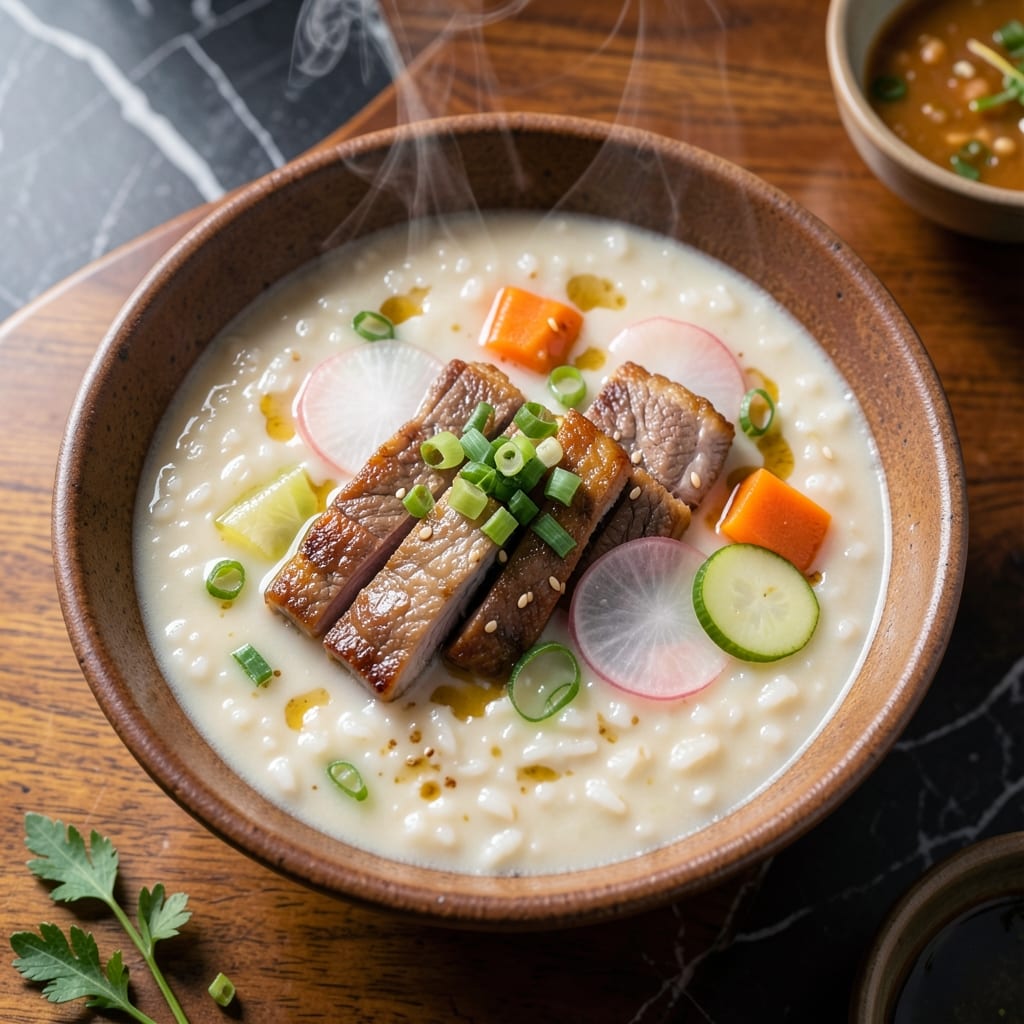
There’s something deeply comforting about a warm bowl of rice soup that’s been simmered to perfection. This Korean classic transforms simple ingredients into a rich, soothing broth with tender grains.
I’ve refined this recipe to capture the traditional flavors while keeping it accessible. The slow simmering process allows the rice to break down naturally, creating a creamy texture that feels like a hug in a bowl.
Ingredients for Korean Rice Soup
Transform humble grains and vegetables into a deeply comforting, authentic Korean broth with these carefully selected ingredients.
| Ingredient | Amount | Notes |
|---|---|---|
| Short-Grain White Rice 🍚 | 1 cup | Rinsed thoroughly before cooking |
| Beef Brisket 🥩 | ½ lb | Thinly sliced for quick cooking |
| Korean Radish 🥬 | 1 whole | Peeled and cut into chunks |
| Carrots 🥕 | 2 whole | Peeled and sliced into rounds |
| Zucchini 🥒 | 1 whole | Cut into bite-sized pieces |
| Green Onions 🧅 | 4 whole | Thinly sliced, whites and greens separated |
| Garlic Cloves 🧄 | 4 cloves | Minced for depth of flavor |
| Ginger Root 🌿 | 1 whole | Peeled and thinly sliced |
| Soy Sauce 🫒 | 3 tbsp | Low-sodium preferred for balance |
| Sesame Oil 🫒 | 1 tbsp | Toasted for nutty aroma |
| Korean Red Pepper Flakes 🌶️ | 1 tsp | Adjust to taste for heat |
| Ground Black Pepper 🌶️ | ½ tsp | Freshly ground for best flavor |
| Beef Stock 🍲 | 8 cups | Homemade or high-quality store-bought |
| Sea Salt 🧂 | 1 tsp | Adjust to taste at the end |
The beef stock forms the foundation of this dish. Optimal quality requires using homemade stock or a premium brand like Kettle & Fire. For the brisket, select well-marbled cuts from Whole Foods or a trusted Korean market—this ensures the meat remains tender during the long simmer. Short-grain rice is non-negotiable for authentic texture; sushi rice works perfectly.
No brisket? Thinly sliced beef chuck is an acceptable substitute, though the flavor profile will differ slightly. Korean radish can be replaced with daikon radish at a 1:1 ratio. For a vegetarian version, swap beef stock for mushroom or kelp stock. The soy sauce should be Korean—Jin Ganjang is widely available and reliable.
This soup tastes even better the next day as flavors meld. Store refrigerated in an airtight container for up to 4 days. Freeze without rice for up to 3 months—add fresh rice when reheating. Always bring to a rolling boil before serving to revive the broth’s richness.
Why You’ll Love This Recipe
- I’ll be real: it tastes even better the next day, and the rice keeps soaking up that savory broth.
- One Pot Meal: I just toss the rice, brisket, and veggies in and let it simmer—no fancy steps, no extra pans.
- Deep Umami: The brisket and radish soak into the broth, making every spoonful rich and comforting. Honestly, it’s the kind of taste that lingers.
- Feeds a Hungry Crowd: Between us, this is my go-to when I need to stretch a meal for family gatherings or lazy Sundays.
Step-by-Step Instructions for Korean Rice Soup
This method ensures a rich, comforting broth with perfectly tender rice and vegetables.
Step 1: Prepare the Protein and Aromatics
Begin by thinly slicing the 0.5 lb Beef Brisket against the grain into bite-sized pieces. This ensures quick cooking and tender results. In a large pot, heat the 1 tbsp Sesame Oil over medium-high heat until shimmering.
Add the sliced beef brisket and sear for 3-4 minutes until the edges are lightly browned. Stir in the minced 4 cloves Garlic Cloves, thinly sliced 1 whole Ginger Root, and 1 tsp Korean Red Pepper Flakes, cooking for 1 minute until fragrant. This builds the flavor foundation for the soup.
Step 2: Build the Broth Base
Pour in the 8 cups Beef Stock and bring to a gentle boil. Add the 1 cup Short-Grain White Rice, which should be rinsed thoroughly beforehand to remove excess starch. Stir well to combine, ensuring the rice is fully submerged in the liquid.
Incorporate the prepared vegetables: 1 whole Korean Radish (peeled and cut into chunks), 2 whole Carrots (peeled and sliced into rounds), and 1 whole Zucchini (cut into bite-sized pieces). These will soften beautifully as the soup simmers.
Step 3: Simmer to Perfection
Reduce heat to medium-low and maintain a gentle simmer for 25-30 minutes, stirring occasionally to prevent sticking. The rice should become soft and slightly broken down, thickening the broth naturally. The beef brisket will be fork-tender, absorbing the rich flavors of the stock and aromatics.
Season with 3 tbsp Soy Sauce, 0.5 tsp Ground Black Pepper, and 1 tsp Sea Salt. Taste and adjust the seasoning as needed, keeping in mind that the flavors will deepen as the soup rests.
Step 4: Finish and Serve
Once the rice and vegetables are fully tender, stir in the thinly sliced whites of the 4 whole Green Onions. Simmer for an additional 2-3 minutes to meld the flavors. The soup should have a creamy, hearty consistency with visible chunks of beef and vegetables.
Ladle the soup into bowls and garnish with the reserved green onion greens. The final dish should be steaming hot, with a rich, savory aroma and layers of texture from the tender beef, soft rice, and vegetables. Serve immediately for the ultimate comfort experience.
Pro Tips For Making Korean Rice Soup
- Parboil the Brisket: Simmer the beef brisket for 30-40 minutes before adding rice to remove impurities and guarantee a clean, rich broth—I learned this the hard way after skimming scum from my first few batches.
- Rinse the Rice: Wash the short-grain white rice until the water runs clear to avoid a gummy, starchy soup that overpowers the delicate flavors.
- Skip Raw Radish: Lightly sauté the Korean radish for 3-4 minutes first; raw pieces can stay too crunchy and give the soup a bitter edge.
- Add Zucchini Late: Toss in the zucchini only in the last 5-7 minutes of cooking so it stays bright and tender instead of turning mushy.
Creative Variations of These Flavors
Vegetarian Delight
Swap beef stock for mushroom or kelp stock and replace brisket with 1 cup sliced shiitake mushrooms. The mushrooms absorb the broth beautifully, adding an umami depth. This version keeps all the comforting qualities without any meat.
Spicy Kick
Add 1 extra tbsp Korean red pepper flakes when cooking the aromatics. Stir in 1 tbsp gochujang at the end for extra heat and complexity. I love this version when I’m craving something bold.
Seafood Twist
Use seafood stock instead of beef and add 1 lb peeled shrimp or scallops during the last 5 minutes of cooking. The delicate seafood pairs perfectly with the creamy rice broth. 🌊
Quick Weeknight Version
Use leftover cooked rice (about 2 cups) to cut simmering time in half. Just add it with the vegetables and let it absorb the flavors. This is my go-to when I’m short on time but still want that comforting taste.
Kimchi Infusion
Stir in 1 cup chopped kimchi and 2 tbsp kimchi juice at the end for a tangy, fermented depth. The sourness balances the richness beautifully. I always keep some kimchi on hand for this exact reason.
Garnish Upgrade
Top your bowl with a soft-boiled egg, toasted sesame seeds, and a drizzle of extra sesame oil. These little touches elevate the dish to restaurant-quality comfort. 💛
Nutrition Facts
Frequently Asked Questions
Can I use a different type of rice?
Short-grain is traditional, but jasmine or medium-grain work too. Avoid long-grain as it stays separate and won’t create that signature creamy texture.
How do I make it gluten-free?
Swap regular soy sauce for tamari or a certified gluten-free soy sauce. All other ingredients are naturally gluten-free.
Why did my broth turn out thin?
Simmer longer to let the rice break down more. For a quicker fix, mash some cooked rice into the broth. Next time, use slightly more rice or less stock.
Can I add tofu instead of beef?
Use 14 oz firm tofu, drained and cubed. Add it during the last 10 minutes of cooking so it doesn’t fall apart.

- Korean Rice Soup Recipe: Comforting Broth with Soft Grains - October 11, 2026
- El Pollo Loco Spanish Rice Recipe: Smoky Tomato-Infused Side Dish - October 11, 2026
- Fresh Black Beans and Rice Recipe: Latin-Inspired One-Bowl Heartiness - October 11, 2026