
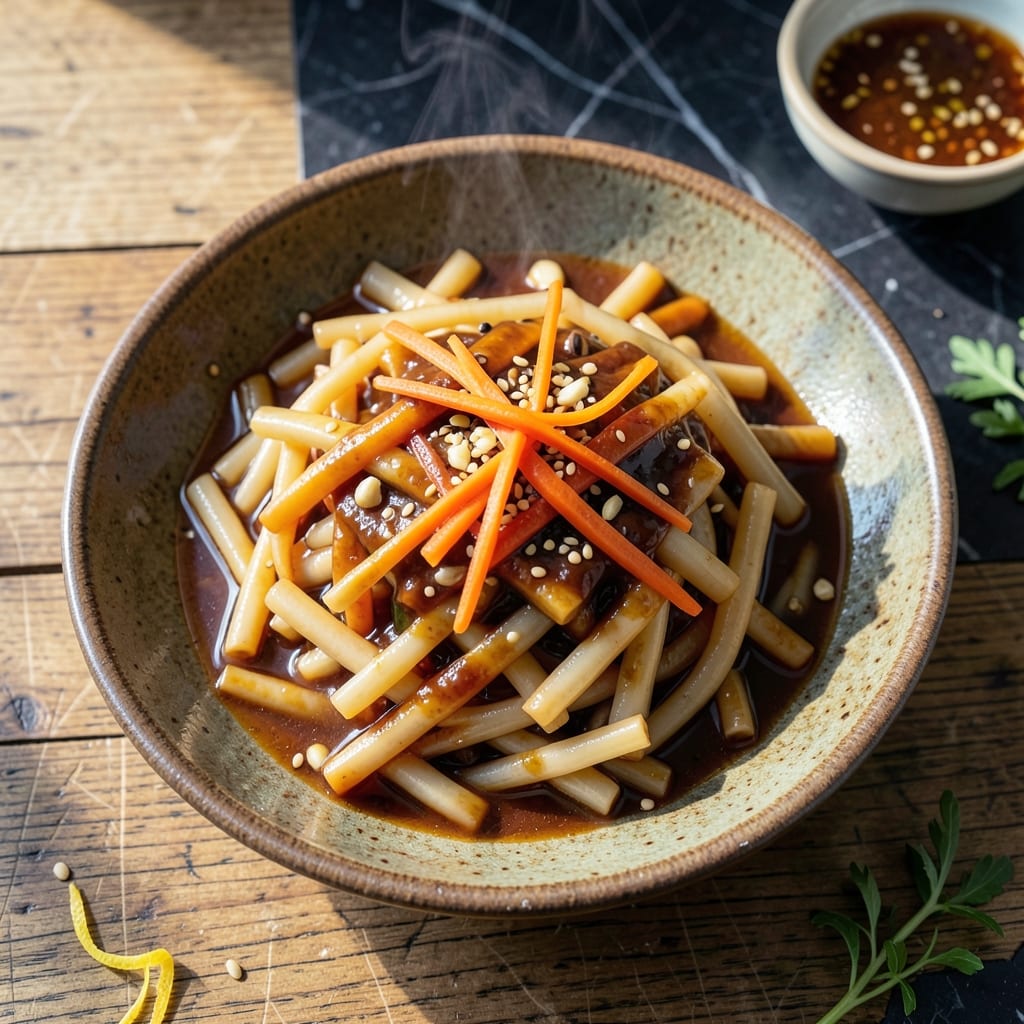
This recipe transforms simple rice sticks into a dish with authentic Korean chewy texture and nutty depth. I developed this method to capture the essence of traditional japchae without complicated techniques.
The key lies in proper soaking and cooking times, ensuring the noodles maintain their signature bounce. A combination of soy sauce, sesame oil, and sugar creates a balanced, aromatic base that coats every strand.
What emerges is a vibrant dish with glossy, well-seasoned noodles that absorb flavors beautifully. The finishing touch of toasted sesame seeds adds both visual appeal and an extra layer of nuttiness.
Serve warm or at room temperature as a side or light main. This approach delivers consistent, restaurant-quality results every time.
Ingredients for Korean Rice Stick
Simple rice sticks plus vibrant vegetables create this authentic Korean-inspired dish with nutty depth.
| Ingredient | Amount | Notes |
|---|---|---|
| Dried Rice Sticks 🍜 | 8 oz | Sweet potato starch noodles preferred |
| Soy Sauce 🫙 | ⅓ cup | Low-sodium for balance |
| Toasted Sesame Oil 🫒 | 2 tbsp | Pure, not blended |
| Granulated Sugar 🍚 | 2 tbsp | Organic or raw preferred |
| Garlic Cloves 🧄 | 4 cloves | Minced for even distribution |
| Carrot 🥕 | 1 whole | Julienned into matchsticks |
| Spinach 🥬 | 4 oz | Fresh, washed and trimmed |
| Mushrooms 🍄 | 6 oz | Shiitake or white button |
| Yellow Onion 🧅 | ½ whole | Thinly sliced for texture |
| Toasted Sesame Seeds 🌰 | 2 tbsp | For garnish and crunch |
| Vegetable Oil 🫒 | 2 tbsp | Neutral flavor for cooking |
| Green Onions 🧅 | 3 whole | Thinly sliced on bias |
| Ground Black Pepper 🌶️ | ½ tsp | Freshly ground preferred |
The rice sticks must be sweet potato starch noodles—look for brands like Sempio or Dongwon at H Mart or Asian markets. Avoid wheat noodles; they lack the signature chew. Freshness matters: check the package date. For the soy sauce, Korean brands like Jin have the right balance of salt and sweetness without overpowering the dish.
No sweet potato noodles? Regular rice noodles work in a pinch but texture will differ. Swap spinach for bok choy or kale—blanch first to soften. Mushrooms can be cremini or oyster if shiitake aren’t available. For a gluten-free option, use tamari instead of soy sauce. The sesame oil is non-negotiable though—it’s what gives that authentic nutty aroma.
Store uncooked noodles in a cool, dry place for up to 6 months. Once cooked, the dish keeps 3-4 days refrigerated in an airtight container. Toast extra sesame seeds and store in the freezer—they’ll keep 6 months and add fresh crunch to any dish.
Why You’ll Love This Recipe
- One Pan Wonder: I just soak the rice sticks, toss them with the sauce, and let the garlic and sesame oil do the magic—minimal cleanup, maximum flavor.
- Sweet & Savory Balance: The sugar caramelizes with the soy sauce, creating this sticky, umami-rich glaze that coats every strand.
- Meal Prep Hero: It tastes even better the next day after the flavors meld. I pack it for lunches all week.
- Budget Stretch: A pound of dried rice sticks costs pennies and feeds my family of four with leftovers. Honestly, it’s my cheap thrill dinner.
Step-by-Step Instructions for Korean Rice Sticks
Master the technique for perfectly chewy noodles with rich, balanced flavor every time.
Step 1: Rehydrate and Prepare the Dried Rice Sticks
Place the 8 oz dried rice sticks in a large bowl and cover with hot tap water. Let them soak for 8-10 minutes until pliable but still slightly firm to the bite. Drain immediately and rinse under cold water to stop the cooking process.
This partial rehydration ensures the noodles maintain their chewy texture when stir-fried. If they become too soft during soaking, they’ll turn mushy in the final dish. Shake off excess water and toss with 1 tbsp vegetable oil to prevent sticking while you prepare the remaining ingredients.
Step 2: Stir-Fry the Aromatics and Vegetables
Heat the remaining 1 tbsp vegetable oil in a wok or large skillet over medium-high heat. Add the minced 4 cloves garlic cloves and stir-fry for 15-20 seconds until fragrant but not browned. Immediately add the thinly sliced 0.5 whole yellow onion and cook for 2 minutes until translucent.
Incorporate the julienned 1 whole carrot and 6 oz mushrooms, stir-frying for 3-4 minutes until the vegetables soften slightly but retain their vibrant color. The mushrooms should release their moisture and begin to brown at the edges. Push the mixture to one side of the pan.
Step 3: Combine Noodles with Sauce and Vegetables
Add the drained rice sticks to the pan along with the 4 oz spinach. Pour in the 0.33 cup soy sauce, 2 tbsp granulated sugar, and 0.5 tsp ground black pepper. Toss everything together for 2-3 minutes until the noodles are evenly coated and heated through.
The spinach will wilt quickly, adding freshness to the dish. The sugar balances the saltiness of the soy sauce while helping create a light glaze that clings to every strand. Use tongs to lift and turn the noodles, ensuring they cook evenly without breaking.
Step 4: Finish with Sesame Oil and Garnishes
Remove the pan from heat and drizzle the 2 tbsp toasted sesame oil over the noodles. Toss once more to distribute the nutty, aromatic oil throughout the dish. The sesame oil adds depth and a glossy sheen to the finished noodles.
Transfer to a serving platter and immediately sprinkle with the 2 tbsp toasted sesame seeds and thinly sliced 3 whole green onions. The sesame seeds provide textural contrast and visual appeal, while the green onions add a bright, fresh finish. Serve hot for the best texture and flavor.
Pro Tips For Making Korean Rice Stick
- Soak Rice Sticks First: Cover the dried rice sticks in warm water for 8-10 minutes—I learned this the hard way after ending up with chewy, undercooked noodles more than once.
- Toast the Garlic: Cook the minced garlic in sesame oil on medium-low until just golden, about 1-2 minutes—any hotter and it turns bitter fast.
- Balance the Sauce: Taste as you go and adjust the soy sauce to sugar ratio; I usually start with 2 parts soy to 1 part sugar, then tweak to avoid oversalting.
- Skip the Rinse: Don’t rinse the rice sticks after soaking—you’ll wash away the starch that helps the sauce cling to the noodles.
Perfect Pairings for This Recipe
Vegetable Sides
Try quick-pickled cucumbers with rice vinegar and red pepper flakes for a refreshing contrast. I also love serving kimchi alongside—its spicy tang cuts through the rich noodles perfectly. 🥗
Protein Additions
For a heartier meal, add thinly sliced beef bulgogi or crispy tofu cubes marinated in soy and garlic. The bulgogi’s sweet-savory flavors pair beautifully with the sesame notes in this dish.
Beverage Pairings
Korean barley tea (boricha) is my top choice—its nutty, toasted flavor complements the noodles. For something cold, sikhye (sweet rice drink) adds a light, refreshing contrast. 🍺
Condiments
Set out small bowls of extra toasted sesame seeds and chopped scallions for customization. A drizzle of spicy gochujang sauce adds heat if desired—just mix 1 tbsp gochujang with 1 tsp honey.
Serving Style
Serve on a large platter family-style or in individual bowls for an elegant presentation. I like to line the platter with butter lettuce leaves for a pop of color and crunch.
Nutrition Facts
Frequently Asked Questions
Can I use other noodles if I don’t have rice sticks?
Sweet potato starch noodles are ideal, but regular rice noodles work in a pinch. Avoid wheat noodles as they won’t have the same chewy texture.
How do I prevent the noodles from sticking together?
After soaking, rinse under cold water and toss with 1 tbsp oil. This keeps strands separate while you prep other ingredients.
Can I make this dish ahead of time?
Yes! It keeps well for 3-4 days refrigerated. Reheat gently in a pan with a splash of water to restore texture.
Why is my sauce too salty?
Use low-sodium soy sauce and balance with extra sugar or a squeeze of lime. The sesame oil also helps mellow saltiness.

- Mujadara Rice and Lentils Recipe: Earthy Spiced Lentils With Caramelized Onions - November 1, 2026
- Naija Fried Rice Recipe: Street-Style Spice With Veggie Crunch - November 1, 2026
- Mushy Rice Recipe: Fluffy Grains Transformed in Minutes - November 1, 2026