
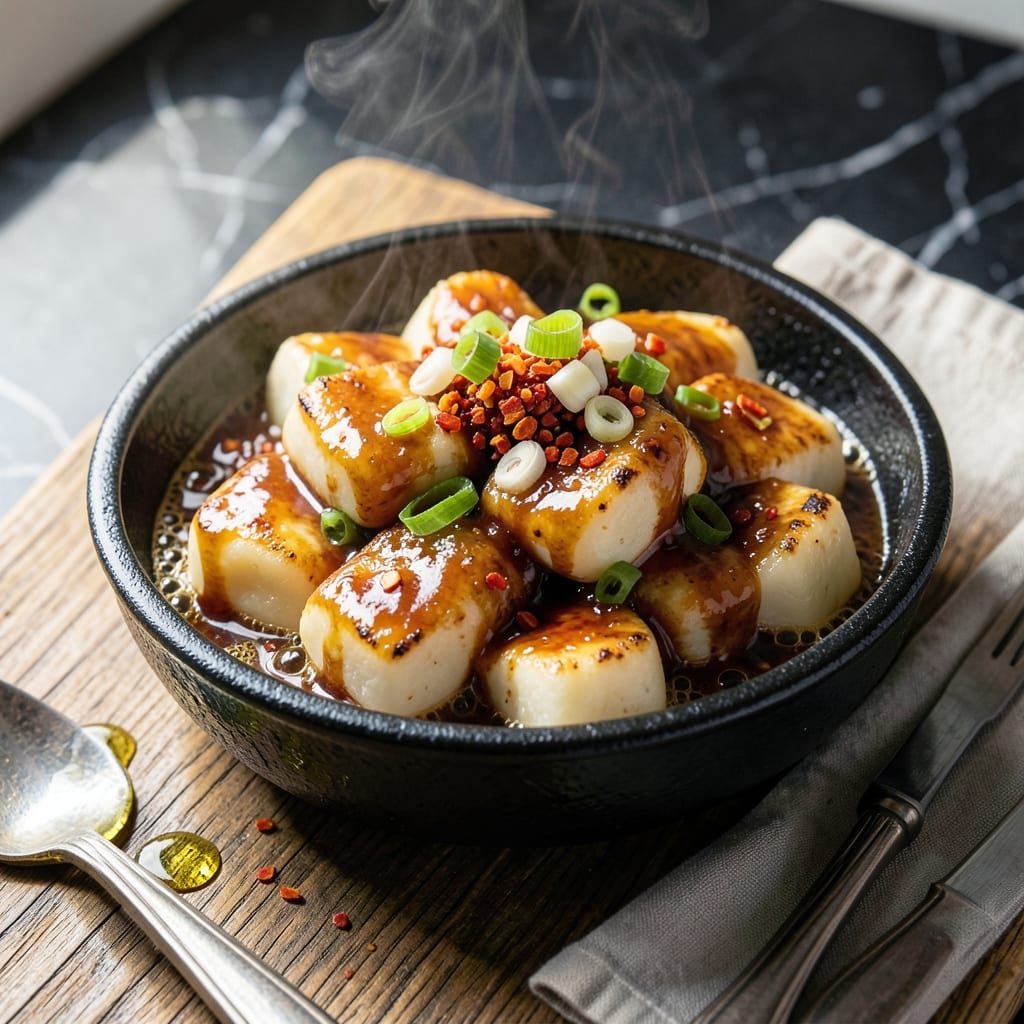
This traditional Korean dish transforms simple rice cakes into a vibrant, spicy masterpiece that’s both comforting and bold. The chewy rice cakes soak up the rich gochujang sauce, creating a perfect balance of heat and depth in every bite.
I’ve refined this method to ensure the sauce clings perfectly to the tteok, while keeping the texture just right—not too soft, not too firm. A touch of sugar balances the spice, making it approachable without losing authenticity.
The beauty of this dish lies in its simplicity: a few key ingredients, a one-pot process, and a result that tastes like it came from a Seoul street vendor. It’s ready in under 30 minutes with minimal effort.
Serve it as a side or a main—either way, it’s a crowd-pleaser that delivers on flavor and tradition.
Ingredients for Korean Rice Tteokbokki
Chewy rice cakes, bold gochujang, and simple garnishes create this vibrant dish with authentic Korean flavors.
| Ingredient | Amount | Notes |
|---|---|---|
| Korean Rice Cakes 🍙 | 1 lb | Cylindrical tteok, fresh or frozen |
| Gochujang 🌶️ | 3 tbsp | Korean red pepper paste, essential |
| Gochugaru 🌶️ | 1 tbsp | Korean red pepper flakes, mild |
| Soy Sauce 🥫 | 2 tbsp | Low-sodium preferred |
| Sugar 🍚 | 1 tbsp | Granulated or brown |
| Garlic Cloves 🧄 | 4 cloves | Minced for depth |
| Onion 🧅 | ½ whole | Yellow or white, finely diced |
| Green Onions 🌱 | 3 whole | Thinly sliced, for garnish |
| Sesame Oil 🫒 | 1 tsp | Toasted, for finishing |
| Sesame Seeds 🌰 | 1 tsp | Toasted, for garnish |
| Fish Cakes 🐟 | 2 pieces | Optional, sliced thinly |
| Hard-Boiled Eggs 🥚 | 2 whole | Optional, halved for garnish |
| Water 💧 | 2 cups | For cooking rice cakes |
| Vegetable Stock 🥫 | ½ cup | Enhances depth of flavor |
The rice cakes are non-negotiable here. Fresh tteok from a Korean market (often in the refrigerated section) gives the best texture, but most Asian grocery stores carry frozen versions that work fine—just thaw before cooking. Look for cylindrical or tube-shaped tteok; avoid the flat, sliced ones. Gochujang and gochugaru are the soul of the dish—find them in the international aisle or any Korean market worth its salt.
No gochugaru? Crushed red pepper flakes at half the amount get you close, though the flavor profile won’t be identical. Out of gochujang? Mix 2 tbsp sriracha with 1 tbsp miso paste for a passable substitute. The fish cakes and eggs are traditional but optional—tofu or mushrooms work for a vegetarian twist. If using frozen rice cakes, rinse them in cold water before cooking to remove excess starch.
Leftover sauce freezes beautifully for up to 3 months—just thaw and reheat with fresh rice cakes. The dish itself keeps 3-4 days in the fridge, though the rice cakes firm up slightly. Reheat with a splash of water to restore the sauce’s consistency.
Why You’ll Love This Recipe
- One Pot Wonder: I toss everything in a single pan—rice cakes, gochujang, a splash of soy—and it’s ready before I can set the table.
- Spicy-Sweet Kick: That first bite with the chewy rice cakes coated in gochujang and a hint of sugar? I’ll admit, I sneak seconds before serving.
- Weeknight Hero: Between us, this is my Tuesday night lifesaver—filling, fast, and my kids actually eat the veggies I sneak in.
- Stretches Further: Leftovers taste even better the next day, and honestly, it’s cheaper than takeout for feeding my whole crew.
Step-by-Step Instructions for Korean Rice Tteokbokki
This method transforms simple ingredients into a dish with perfect chew and balanced spice every time.
Step 1: Prepare the Rice Cakes and Aromatics
If using frozen Korean rice cakes, soak them in cold water for 15-20 minutes to thaw and soften. Drain thoroughly before using—excess moisture will dilute the sauce. For fresh rice cakes, simply rinse them under cold water to remove any surface starch.
While the rice cakes soak, finely dice the 0.5 whole onion and mince the 4 cloves garlic cloves. Thinly slice the 3 whole green onions, keeping the white and green parts separate for garnish. If using, slice the 2 pieces fish cakes into thin strips. This prep ensures even cooking and optimal flavor distribution.
Step 2: Create the Flavorful Sauce Base
In a large pan or shallow pot, combine the 2 cups water and 0.5 cup vegetable stock. Add the diced onion and cook over medium heat for 3-4 minutes until the onion softens and becomes translucent. This builds a fragrant foundation for the sauce.
Stir in the minced garlic, 3 tbsp gochujang, 1 tbsp gochugaru, 2 tbsp soy sauce, and 1 tbsp sugar. Cook for 2-3 minutes, stirring constantly, until the mixture thickens slightly and the raw edge of the garlic cooks off. The sauce should turn a deep, vibrant red with a glossy sheen.
Step 3: Cook the Rice Cakes to Perfect Chewiness
Add the drained rice cakes to the sauce, stirring gently to coat them completely. Bring the mixture to a gentle simmer over medium-high heat, then reduce to medium-low. Cook for 8-10 minutes, stirring occasionally, until the rice cakes are tender and the sauce has thickened enough to cling to them.
If using, add the sliced fish cakes during the last 3-4 minutes of cooking. They should heat through and absorb some of the sauce’s spicy, umami-rich flavor. Watch for the rice cakes to turn from opaque white to a slightly translucent, chewy texture—this is your visual cue they’re done.
Step 4: Finish and Garnish for Serving
Once the rice cakes are tender and the sauce has reached your desired consistency, remove the pan from heat. Drizzle with 1 tsp sesame oil and stir to incorporate. This adds a nutty aroma and glossy finish to the dish.
Transfer to serving bowls and garnish with the sliced green onions, 1 tsp sesame seeds, and if desired, halved 2 whole hard-boiled eggs. The eggs add a creamy contrast to the spicy, chewy rice cakes. Serve immediately while hot, as the sauce will continue to thicken as it cools.
Pro Tips For Making Korean Rice Tteokbokki
- Soak the Rice Cakes: I learned this the hard way—if using frozen or dry rice cakes, soak them in warm water for 10-15 minutes first, or they’ll stay stubbornly chewy even after cooking.
- Bloom the Gochujang: Cook the gochujang and gochugaru in a little oil for 1-2 minutes before adding liquids; it deepens the flavor and removes any raw paste taste.
- Skip the Early Salt: Resist the urge to season early—soy sauce and gochujang are already salty, so taste before adding extra salt or you’ll end up with an overly briny sauce.
- Simmer, Don’t Boil: After adding the rice cakes, keep the heat at a gentle simmer; a rolling boil makes the sauce thin and the rice cakes mushy.
Common Mistakes When Making korean rice tteokbokki
Overcooking the Rice Cakes
Rice cakes turn mushy fast if left too long in the sauce. I pull mine off the heat the moment they reach a chewy, slightly translucent texture—usually after 8-10 minutes. Stir frequently to prevent sticking to the pan. 🔥
Skipping the Thaw
Frozen rice cakes must be thawed completely in cold water for 15-20 minutes. Cooking them straight from frozen creates a gummy center and uneven texture. Drain well afterward to avoid watery sauce.
Sauce Too Thick
If your sauce reduces too much, add ¼ cup water or vegetable stock and stir. The consistency should coat the back of a spoon but still cling to the rice cakes. I keep extra stock on hand for adjustments.
Underseasoned Sauce
Taste before adding rice cakes! The sauce should be bold and balanced. If it’s flat, add ½ tsp sugar or 1 tsp soy sauce. Gochujang varies in spice and saltiness between brands.
Uneven Coating
Stir the rice cakes gently but thoroughly when adding them to the sauce. I use a wooden spoon to fold everything together, ensuring each piece gets evenly coated. This prevents dry bites.
Ignoring the Garnish
Those final touches matter. The sesame oil and sesame seeds add depth, while green onions provide freshness. Don’t skip them—they elevate the dish from good to authentic. ✨
Nutrition Facts
Frequently Asked Questions
Can I use fresh rice cakes instead of frozen?
Fresh rice cakes work perfectly—just rinse them under cold water to remove surface starch. They’ll cook slightly faster than thawed frozen ones, so check for doneness after 6-8 minutes.
How do I adjust the spice level?
Start with 1 tbsp gochujang for mild heat, or add ½ tsp gochugaru for extra kick. Balance with ½ tsp sugar if it’s too sharp. Taste as you go!
What if my sauce is too thin?
Simmer uncovered for 2-3 minutes longer to reduce. If it’s still loose, mix 1 tsp cornstarch with water and stir in. The sauce should coat the rice cakes lightly.
Can I make this ahead of time?
Yes, but cook rice cakes fresh for best texture. Prep the sauce up to 2 days ahead and store it in the fridge. Reheat with rice cakes just before serving.

- Mujadara Rice and Lentils Recipe: Earthy Spiced Lentils With Caramelized Onions - November 1, 2026
- Naija Fried Rice Recipe: Street-Style Spice With Veggie Crunch - November 1, 2026
- Mushy Rice Recipe: Fluffy Grains Transformed in Minutes - November 1, 2026