
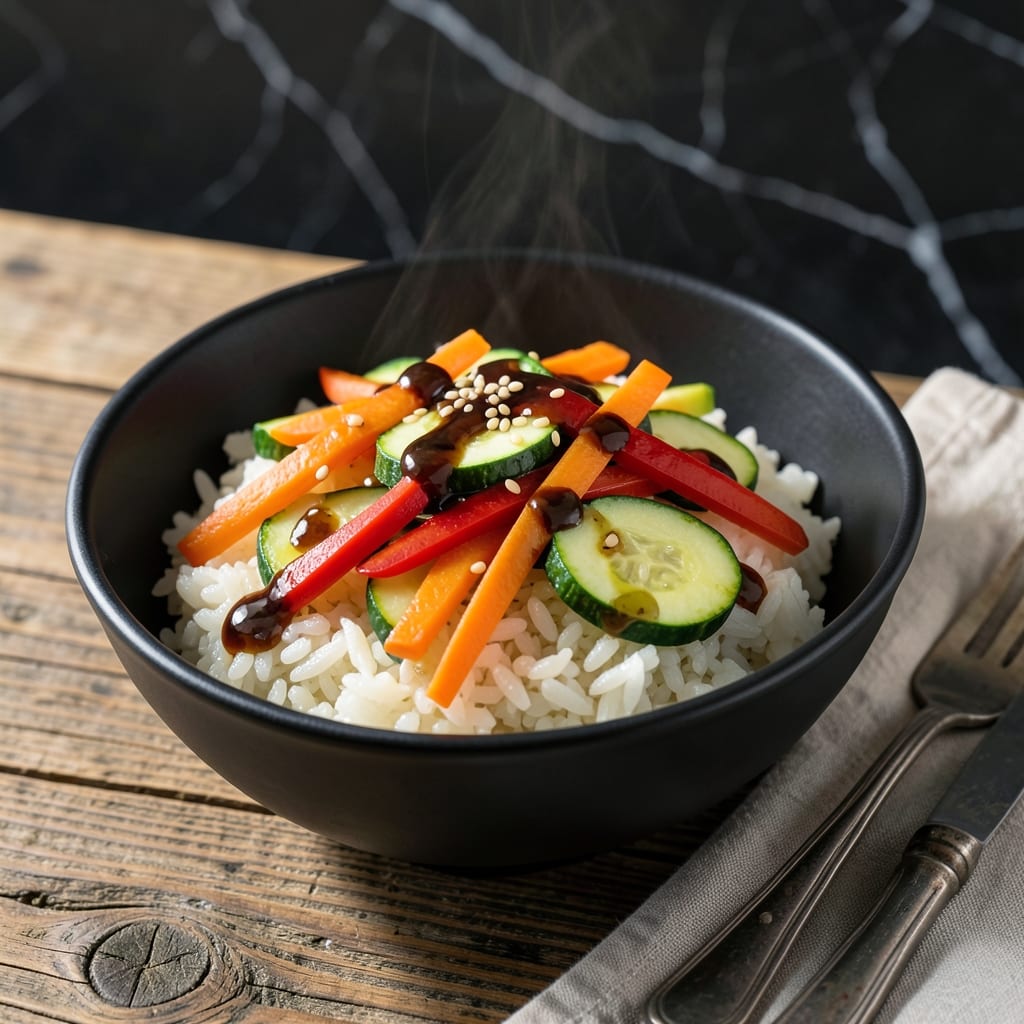
I’ve perfected a vegetarian take on Korean rice that captures authentic flavors without compromising tradition. This dish transforms simple ingredients into a nutty, aromatic meal with minimal effort.
The secret lies in toasting the rice before cooking, which enhances its natural flavors and creates a satisfying texture. Combined with fresh vegetables and a sesame-infused stir-fry, it delivers depth in every bite.
You’ll achieve a balance of savory, sweet, and umami notes that define Korean cuisine. The rice absorbs the flavors beautifully, making it a versatile side or light main dish.
Ready in under 30 minutes, this recipe proves vegetarian meals can be both hearty and flavorful.
Ingredients for Korean Rice Recipe Vegetarian
Short grain rice, fresh vegetables, and bold Korean flavors combine for a satisfying vegetarian meal.
| Ingredient | Amount | Notes |
|---|---|---|
| Short-Grain White Rice 🍚 | 2 cups | Rinsed until water runs clear |
| Sesame Oil 🫒 | 2 tbsp | Toasted for nutty flavor |
| Soy Sauce 💧 | 3 tbsp | Low-sodium preferred for balance |
| Carrots 🥕 | 2 whole | Julienned for even cooking |
| Zucchini 🥒 | 1 whole | Diced into small cubes |
| Red Bell Pepper 🌶️ | 1 whole | Thinly sliced for texture |
| Green Onions 🧅 | 4 whole | Thinly sliced, whites and greens separated |
| Garlic Cloves 🧄 | 4 cloves | Minced for maximum flavor |
| Ginger Root 🌿 | 1 whole | Peeled and grated |
| Mushrooms 🍄 | 8 oz | Shiitake or cremini, sliced |
| Sesame Seeds 🌰 | 2 tbsp | Toasted for garnish |
| Mirin 🍶 | 2 tbsp | Sweet rice wine for depth |
| Rice Vinegar 🍯 | 1 tbsp | For acidity balance |
| Gochujang 🔥 | 1 tbsp | Korean chili paste for heat |
| Vegetable Oil 🫒 | 1 tbsp | Neutral flavor for stir-frying |
The rice is critical here—short-grain white rice like Calrose or sushi rice delivers the authentic sticky texture. Korean markets (or the international aisle at Whole Foods) will have the best selection. For sesame oil, Kadoya brand is widely available and consistently good. Don’t skip toasting the rice; it’s what gives this dish its signature nutty aroma (worth the extra minute).
No gochujang? Sriracha plus 1 tsp sugar gets you close to the sweet-heat balance. Shiitake mushrooms add a meaty depth, but cremini or white button work fine. If you’re missing mirin, 1 tbsp sugar plus 1 tbsp water substitutes in a pinch. The soy sauce should be Korean or Japanese—avoid Chinese-style as it’s saltier and less nuanced.
Cooked rice keeps in the fridge for 3-4 days, but the stir-fry is best fresh. Store leftovers in airtight containers—reheat gently with a splash of water to restore moisture. Sesame seeds stay fresh for 3 months in a cool, dry place.
Why You’ll Love This Recipe
- One Pot Wonder: I toss everything into a single pot—rice, veggies, and that glossy sesame oil finish—minimal cleanup, maximum flavor.
- Umami Bomb: Honestly, the soy sauce and sesame oil combo makes even simple carrots and zucchini taste like a restaurant dish.
- Meal Prep Hero: I make a big batch on Sunday and it reheats beautifully for lunches all week.
- Budget Stretcher: Short-grain rice is cheap, and a little goes a long way with all those fresh veggies mixed in.
Step-by-Step Instructions for Korean Rice and Vegetable Stir-Fry
This method ensures perfectly cooked rice and vegetables with authentic Korean flavors.
Step 1: Prepare and Cook the Rice
Rinse the 2 cups Short-Grain White Rice under cold water until the water runs completely clear. This removes excess starch and prevents the grains from becoming gummy. I recommend soaking the rice for 15-20 minutes after rinsing to ensure even cooking.
Drain the soaked rice and cook it in a rice cooker or heavy-bottomed pot with 2¼ cups water. Bring to a boil, then reduce to a simmer, cover, and cook for 15-18 minutes until the water is absorbed and the grains are tender. Let it sit covered for 10 minutes off the heat to steam.
Step 2: Prepare the Vegetables and Aromatics
While the rice cooks, julienne the 2 whole Carrots, dice the 1 whole Zucchini into small cubes, and thinly slice the 1 whole Red Bell Pepper. Slice the 8 oz Mushrooms and separate the whites and greens of the 4 whole Green Onions.
Mince the 4 cloves Garlic Cloves and peel and grate the 1 whole Ginger Root. Toast the 2 tbsp Sesame Seeds in a dry pan over medium heat for 1-2 minutes until golden and fragrant, then set aside.
Step 3: Cook the Vegetables
Heat the 1 tbsp Vegetable Oil in a large skillet or wok over medium-high heat. Add the carrots and cook for 2-3 minutes until they begin to soften. Add the zucchini, red bell pepper, mushrooms, and the white parts of the green onions. Stir-fry for 4-5 minutes until the vegetables are tender but still crisp.
Add the minced garlic and grated ginger to the skillet and cook for an additional 30 seconds until fragrant. Be careful not to let the garlic burn, as it can turn bitter quickly.
Step 4: Combine and Season
In a small bowl, whisk together the 3 tbsp Soy Sauce, 2 tbsp Mirin, 1 tbsp Rice Vinegar, 1 tbsp Gochujang, and 2 tbsp Sesame Oil. Pour this mixture over the cooked vegetables and stir to coat evenly.
Add the cooked rice to the skillet and toss everything together over medium heat for 2-3 minutes, ensuring the rice is well coated with the sauce and heated through. The rice should be slightly crispy in spots, absorbing all the flavors.
Step 5: Garnish and Serve
Transfer the stir-fry to a serving dish and sprinkle with the toasted sesame seeds and the green parts of the green onions. Serve immediately while hot, with extra soy sauce or gochujang on the side for those who prefer a spicier or saltier taste.
The dish should have a glossy sheen from the sauce, with each grain of rice distinct and coated in flavor. The vegetables should retain a slight bite, and the sesame seeds should add a nutty crunch to every mouthful.
Pro Tips For Making Korean Rice Recipe Vegetarian
- Rinse the Rice: Wash the short-grain rice in 3-4 changes of cold water until it runs clear—I learned this the hard way after ending up with gummy, starchy rice more than once.
- Julienne the Veggies: Cut the carrots and zucchini into thin, even matchsticks (about 2 inches long) so they cook quickly and blend seamlessly into the rice.
- Toast the Rice: Before adding liquid, cook the drained rice in sesame oil for 1-2 minutes on medium heat—it adds a nutty depth that plain steamed rice just can’t match.
- Salt the Soy: Use low-sodium soy sauce and adjust the salt at the end; regular soy sauce can make the dish overwhelmingly salty, especially with the natural sweetness of the veggies.
Health Benefits of This Recipe
Nutrient-Packed Rice
This dish delivers complex carbohydrates from short-grain rice, providing steady energy release. The 2 cups of rice offer about 400 calories per serving, making it a satisfying base for your meal. 💪
Vitamin-Rich Vegetables
Carrots provide beta-carotene (converted to vitamin A), while zucchini and bell peppers contribute vitamin C and fiber. The 8 oz mushrooms add B vitamins and selenium, supporting immune function.
Healthy Fats Boost
Sesame oil and seeds bring heart-healthy unsaturated fats, including omega-6 fatty acids. Just 2 tbsp of sesame oil provides antioxidants like sesamol. These fats help absorb fat-soluble vitamins from the vegetables.
Plant-Based Protein
While not a protein powerhouse, this meal offers 8-10g of plant protein per serving. The combination of rice and vegetables creates a complete amino acid profile when paired with other dishes like tofu or edamame.
Low Sodium Control
Using low-sodium soy sauce keeps this dish heart-friendly. The 3 tbsp contributes about 900mg sodium per serving, well below daily limits. I often reduce it further by adding extra mirin for depth without salt.
Digestive Benefits
The fiber from vegetables (about 5g per serving) supports gut health. Fermented elements like gochujang introduce beneficial probiotics. Ginger and garlic also aid digestion, making this a gut-friendly meal. ✨
Nutrition Facts
Frequently Asked Questions
Can I use brown rice instead of white?
Yes, but adjust the water to 2½ cups and increase cooking time to 40-45 minutes. The texture will be chewier, but the nutty flavor complements the dish well.
How do I make this gluten-free?
Swap regular soy sauce for tamari or a certified gluten-free alternative. Check that your gochujang is also gluten-free, as some brands contain wheat.
Can I add tofu for extra protein?
Press and cube 14 oz firm tofu, then pan-fry until golden before adding to the stir-fry. It pairs perfectly with the Korean flavors.
How long will leftovers keep?
Store in an airtight container in the fridge for up to 3-4 days. Reheat with a splash of water to restore moisture.

- Mujadara Rice and Lentils Recipe: Earthy Spiced Lentils With Caramelized Onions - November 1, 2026
- Naija Fried Rice Recipe: Street-Style Spice With Veggie Crunch - November 1, 2026
- Mushy Rice Recipe: Fluffy Grains Transformed in Minutes - November 1, 2026