
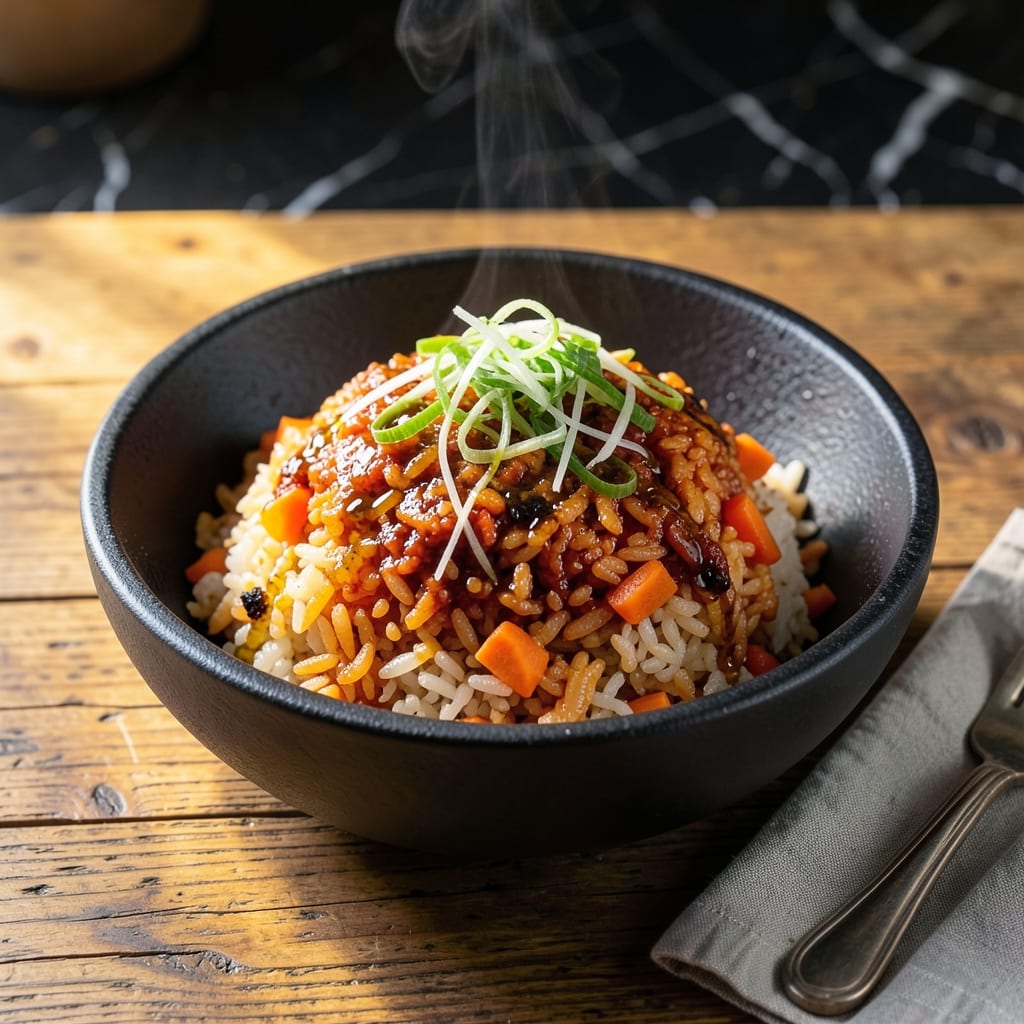
This Korean fried rice transforms leftover grains into a bold, flavorful dish that wakes up any meal. The secret lies in gochujang, which adds a deep, spicy-sweet complexity that defines this creation.
With just 20 minutes and a hot wok, you can achieve that signature crispy texture and rich color. I use day-old rice to prevent mushiness, and a quick stir-fry keeps every bite packed with flavor.
What emerges is a dish with smoky depth from the gochujang, pops of color from fresh vegetables, and a satisfying heat that lingers. It’s the kind of fried rice that makes you forget it came from leftovers.
Serve it as a main or alongside your favorite protein. Here’s how to make it perfectly every time.
Ingredients for Korean Spicy Fried Rice
Bold flavors start with day-old rice and a well-stocked pantry. Nothing complicated here.
| Ingredient | Amount | Notes |
|---|---|---|
| Day-Old Cooked White Rice 🍚 | 4 cups | Cold, preferably from fridge |
| Gochujang 🌶️ | 2 tbsp | Korean red chili paste |
| Soy Sauce 🫒 | 2 tbsp | Low-sodium preferred |
| Sesame Oil 🫒 | 1 tbsp | Toasted for best flavor |
| Vegetable Oil 🫒 | 2 tbsp | Neutral flavor, high smoke point |
| Carrots 🥕 | 1 whole | Medium, finely diced |
| Zucchini 🥒 | 1 whole | Small, finely diced |
| Green Onions 🧅 | 3 whole | Thinly sliced, whites and greens separated |
| Garlic Cloves 🧄 | 3 cloves | Minced for maximum flavor |
| Large Eggs 🥚 | 2 whole | Optional, for extra protein |
| Toasted Sesame Seeds 🌿 | 1 tbsp | For garnish |
| Granulated Sugar 🍚 | 1 tsp | Balances the heat |
| Salt 🧂 | ½ tsp | Adjust to taste |
| Ground Black Pepper 🌶️ | ¼ tsp | Freshly ground preferred |
Gochujang is non-negotiable for that authentic Korean kick—look for it in the Asian aisle at Whole Foods or H Mart. Day-old rice is key (fresh gets mushy), and I always use jasmine or short-grain for the right texture. The veggies? Carrots and zucchini add color and crunch, but swap in whatever’s in your crisper (bell peppers work great).
No gochujang? Sriracha mixed with a little miso paste gets you in the ballpark (not perfect, but close). Vegetable oil can be canola or peanut oil—just avoid olive oil (smoke point’s too low). Skip the eggs to make it vegan, or add extra tofu for protein. The sesame oil? Toasted only—untoasted tastes flat.
Leftovers keep for 3-4 days in the fridge, but honestly it’s best fresh. Reheat in a skillet with a splash of water to bring back the crisp. Freezes okay, but the rice can get soft—2 months max.
Why You’ll Love This Recipe
- One Pan Wonder: I toss everything in with the day-old rice and gochujang, and dinner’s ready before the kids finish arguing over who gets the last snack.
- Flavor Bomb: That first bite of spicy, umami-packed rice with the sesame oil finish? I make extra just so I can sneak another bowl.
- Weeknight Hero: It’s my Tuesday lifesaver—equally good for solo leftovers or when friends pop over unannounced.
- Budget Stretcher: Honestly, it’s the best way to use up that extra rice and whatever veggies are lingering in the fridge.
Step-by-Step Instructions for Korean Spicy Fried Rice
Here’s the method that transforms cold rice into a vibrant, spicy masterpiece in minutes.
Step 1: Prep Vegetables and Make the Sauce Base
Finely dice the carrots and zucchini into uniform pieces—this ensures even cooking. Thinly slice the green onions, keeping whites and greens separate. Mince the 3 cloves garlic cloves until almost paste-like for maximum flavor infusion.
In a small bowl, whisk together the 2 tbsp gochujang, 2 tbsp soy sauce, 1 tbsp sesame oil, 1 tsp granulated sugar, 0.5 tsp salt, and 0.25 tsp ground black pepper. This sauce is the heart of the dish, balancing heat, umami, and sweetness perfectly.
Step 2: Scramble Eggs and Start the Wok
Heat 1 tbsp vegetable oil in a wok or large skillet over medium-high heat until shimmering. Add the 2 whole large eggs and scramble quickly until just set but still soft. Remove and set aside—you’ll add them back at the end for texture contrast.
Add the remaining 1 tbsp vegetable oil to the same pan. When hot, add the diced carrots and zucchini with the white parts of the green onions. Stir-fry for 3-4 minutes until the vegetables soften slightly but retain a bit of bite.
Step 3: Combine Rice and Sauce for Maximum Flavor
Add the minced garlic cloves to the vegetables and cook for 30 seconds until fragrant—this builds the aroma base. Immediately add the cold 4 cups day-old cooked white rice, breaking up any clumps with your spatula.
Pour the sauce mixture evenly over the rice. Stir-fry for 5-6 minutes until everything is well coated and heated through. The rice should turn a vibrant reddish color and develop a slight crispness in spots. Taste and adjust seasoning if needed.
Step 4: Finish with Eggs and Garnishes
Return the scrambled eggs to the pan and toss to distribute evenly. Cook for another 1-2 minutes until everything is hot. The eggs should remain distinct but coated in the spicy sauce.
Remove from heat and stir in the green parts of the green onions. Transfer to serving plates and sprinkle with 1 tbsp toasted sesame seeds for crunch and visual appeal. Serve immediately while the rice is still sizzling hot.
Pro Tips For Making Korean Spicy Fried Rice
- Use Cold Rice: Day-old rice from the fridge works best—fresh rice turns mushy. I learned this the hard way after my first batch ended up like porridge.
- High Heat First: Crank the wok or skillet to smoking hot before adding oil, then keep the flame high to get that slightly charred, nutty flavor.
- Bloom the Gochujang: Cook the gochujang in oil for 30 seconds before adding anything else—it deepens the flavor and removes any raw paste taste.
- Finish with Sesame Oil: Drizzle the sesame oil at the very end, off the heat, so it keeps its aromatic punch instead of burning off.
Wine and Beer Pairings for This Recipe
Crisp White Wines
A chilled Riesling from Germany or Washington state balances the heat perfectly. The slight sweetness and bright acidity cut through the spice. I love Chateau Ste. Michelle for its approachable $12 price point. 🍷
Light Beers
Korean lagers like Hite or OB Beer are traditional choices—their clean, crisp profiles refresh your palate. For domestic options, a pilsner such as Samuel Adams Noble Pils works beautifully with its subtle hop bitterness. 🍺
Fruity Reds
If you prefer red wine, go for a lightly chilled Beaujolais or Pinot Noir. Their bright fruit flavors and low tannins won’t clash with the spice. I’ve had great luck with Louis Jadot Beaujolais-Villages at $15.
Asian-Inspired Cocktails
A lychee martini or sake highball can be a fun, festive pairing. The floral notes of lychee complement the gochujang beautifully, while sake’s clean taste enhances the dish’s umami depth without overpowering it.
Non-Alcoholic Options
For a non-alcoholic pairing, try sparkling yuzu juice or Korean barley tea. The citrusy tang of yuzu or the nutty, toasty notes of barley tea provide a refreshing contrast to the spicy rice.
Nutrition Facts
Frequently Asked Questions
Can I use fresh rice instead of day-old?
Fresh rice contains too much moisture and will turn mushy. Day-old rice is drier, allowing it to fry up perfectly crispy in 5-6 minutes.
What can I substitute for gochujang?
Mix 2 tbsp sriracha with 1 tsp miso paste for a similar spicy-sweet kick. It won’t be identical, but works in a pinch.
How do I make it less spicy?
Reduce gochujang to 1 tbsp and add an extra 1 tsp sugar to balance. The heat will mellow while keeping the depth of flavor.
Can I add other proteins?
Try 1/2 lb shrimp or chicken breast. Cook separately first, then mix in at the end for even doneness.

- Mujadara Rice and Lentils Recipe: Earthy Spiced Lentils With Caramelized Onions - November 1, 2026
- Naija Fried Rice Recipe: Street-Style Spice With Veggie Crunch - November 1, 2026
- Mushy Rice Recipe: Fluffy Grains Transformed in Minutes - November 1, 2026