
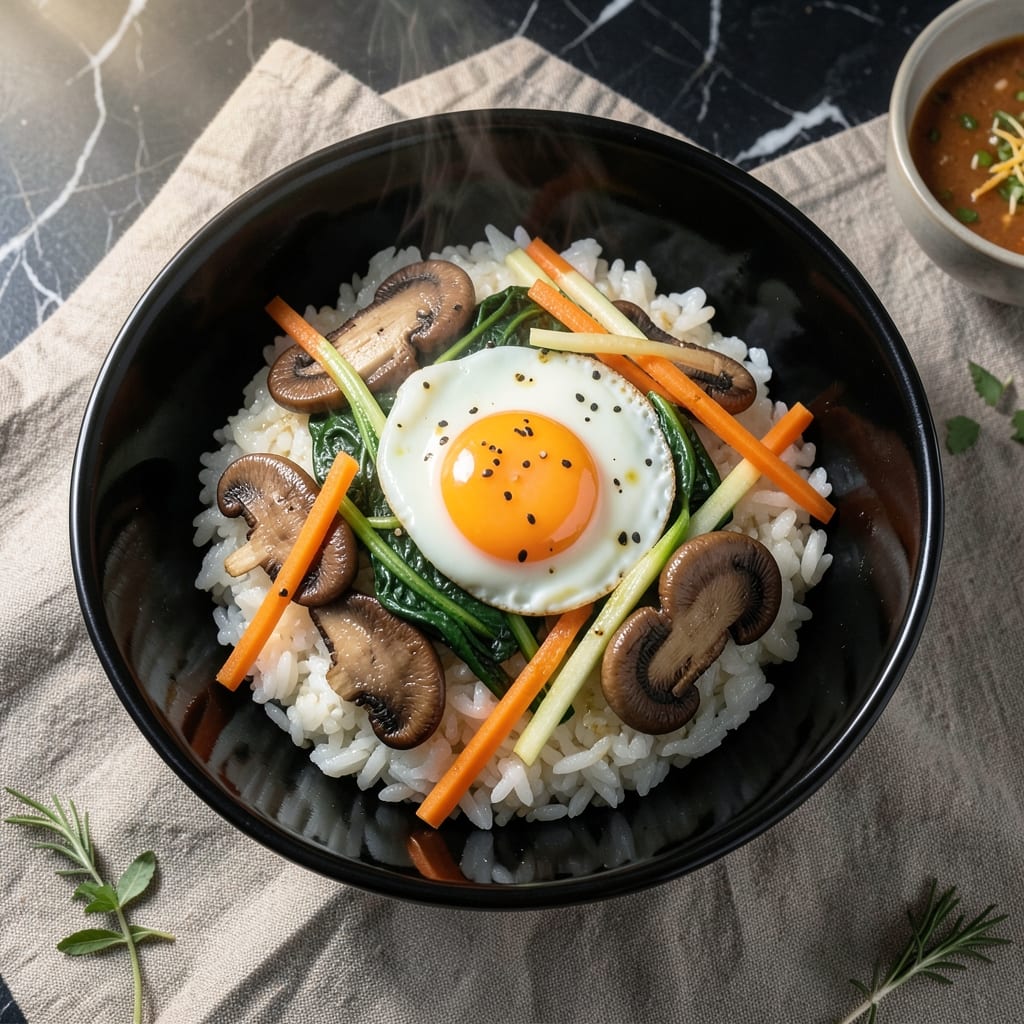
This Korean rice bowl delivers restaurant-quality flavors with minimal effort. The combination of warm rice, savory toppings, and a runny yolk creates a comforting meal that’s both satisfying and authentic.
I developed this version to capture the essence of traditional bibimbap while simplifying the process for home cooks. The egg is the star, cooked just enough so the yolk runs over the rice when broken.
You’ll appreciate how the simple ingredients work together harmoniously. The rice serves as a canvas for bold flavors, while the egg adds richness that ties everything together beautifully.
Perfect for a quick lunch or dinner, this dish proves that authentic Korean flavors can be achieved in any kitchen.
Ingredients for Korean Rice Bowl with Egg
Short list. Big, bold flavors. Everything you need for authentic Korean comfort.
| Ingredient | Amount | Notes |
|---|---|---|
| Short-Grain White Rice 🍚 | 2 cups | Rinsed until water runs clear |
| Large Eggs 🥚 | 4 whole | Room temperature for even cooking |
| Spinach 🌿 | 4 cups | Fresh, roughly chopped |
| Carrots 🥕 | 2 whole | Julienned for quick cooking |
| Zucchini 🥒 | 1 whole | Julienned or spiralized |
| Shiitake Mushrooms 🍄 | 4 whole | Fresh, sliced thinly |
| Soy Sauce 💧 | 3 tbsp | Low-sodium preferred |
| Sesame Oil 🫒 | 1 tbsp | Toasted for depth |
| Gochujang 🌶️ | 2 tbsp | Korean chili paste |
| Garlic Cloves 🧄 | 3 cloves | Minced for maximum flavor |
| Green Onions 🧅 | 4 whole | Thinly sliced for garnish |
| Toasted Sesame Seeds 🌰 | 1 tbsp | For finishing touch |
| Vegetable Oil 🫒 | 1 tbsp | Neutral flavor for cooking |
| Salt 🧂 | ½ tsp | Kosher or sea salt |
| Black Pepper 🌶️ | ¼ tsp | Freshly ground preferred |
The rice is non-negotiable for that authentic texture—short-grain white rice is what you want. Korean markets will have it, but any Asian grocery or even Trader Joe’s carries it too. Look for brands like CJ or Sinto. The gochujang is the flavor bomb here, so don’t skip it. H Mart has the best selection, but most well-stocked supermarkets carry it in the international aisle now.
No gochujang? Sriracha mixed with a little miso paste gets you in the ballpark (not perfect, but workable). Swap spinach for any leafy green—kale or Swiss chard hold up well. The veggies are flexible: bell peppers, bean sprouts, or even broccoli can join the party. Mushroom haters can leave them out, but they add that umami depth that makes it taste restaurant-worthy.
Everything cooks up fresh here, so no storage tricks needed. Leftovers keep 3-4 days in the fridge—reheat gently so the egg yolk stays runny. The rice can be made a day ahead (just cool and refrigerate). The veggies? Prep them while the rice cooks to save time.
Why You’ll Love This Recipe
- One Pan Wonder: I toss the spinach, carrots, and zucchini in while the rice cooks—no extra pots, no extra hassle.
- That Runny Yolk: Cracking a warm egg over the rice so the yolk mixes with everything? Ridiculously good.
- Meal Prep Hero: I make a big batch on Sunday and the leftovers taste just as fresh for lunch the next day.
- Budget Stretcher: A handful of veggies, a couple eggs, and rice feed my family without breaking the bank. Honestly, it’s my go-to when money’s tight.
Step-by-Step Instructions for Korean Rice Bowl With Egg
Here’s the method. Straightforward, tested, works every time.
Step 1: Cook the Short-Grain White Rice to Perfection
Rinse the 2 cups Short-Grain White Rice under cold water until the water runs completely clear—this removes excess starch that would make the grains gummy. I usually do this in a fine-mesh strainer for 30-60 seconds.
Transfer the rinsed rice to a rice cooker or pot with 2¼ cups water (or follow your rice cooker’s instructions). Cook until tender and the water is fully absorbed, about 20-25 minutes. The grains should be sticky yet distinct, with a slight sheen.
Step 2: Sauté the Vegetables with Garlic and Gochujang
Heat the 1 tbsp Vegetable Oil in a large skillet or wok over medium-high heat. Add the 2 whole Carrots, 1 whole Zucchini, and 4 whole Shiitake Mushrooms (all julienned or thinly sliced). Sauté for 4-5 minutes until the vegetables start to soften but still retain a slight bite.
Add the 3 cloves Garlic Cloves (minced) and cook for 30 seconds until fragrant. Stir in the 2 tbsp Gochujang and 1 tbsp Sesame Oil, coating the vegetables evenly. Cook for another 1-2 minutes until everything is glossy and aromatic.
Add the 4 cups Spinach and cook just until wilted, about 1-2 minutes. Season with 0.5 tsp Salt and 0.25 tsp Black Pepper.
Step 3: Fry the Eggs to Runny Yolk Perfection
Heat a nonstick skillet over medium heat and add just enough oil to coat the bottom lightly. Crack the 4 whole Large Eggs into the pan, spacing them evenly. Cook undisturbed for 2-3 minutes until the whites are set but the yolks are still runny.
For an extra touch, I like to cover the pan for the last 30 seconds to gently set the tops of the whites without overcooking the yolks. The yolks should jiggle slightly when you give the pan a gentle shake—this is your signal they’re ready.
Step 4: Assemble the Bowls with Precision
Divide the cooked Short-Grain White Rice evenly among four bowls. Top each portion with the sautéed vegetable mixture, spreading it out so every bite has flavor. Drizzle 3 tbsp Soy Sauce evenly over the vegetables and rice.
Carefully place a fried egg on top of each bowl. Garnish with the 4 whole Green Onions (thinly sliced) and 1 tbsp Toasted Sesame Seeds. Serve immediately while the yolks are still runny—break one open and let that golden richness cascade over the savory grains.
Pro Tips For Making Korean Rice Bowl With Egg
- Rinse the Rice: Short-grain white rice needs a good rinse until the water runs clear—this keeps it from turning gummy. I learned this the hard way after making sticky, clumpy rice more times than I’d like to admit.
- Salt the Spinach: Blanch the spinach in salted water (about 1 tablespoon of salt per quart) for 30 seconds, then shock it in ice water. Sounds extra, but it actually changes the outcome by keeping the greens bright and tender.
- Low Heat for Eggs: Cook your eggs on medium-low heat for that perfect runny yolk and set whites. After burning three batches, I finally figured out that high heat turns the edges rubbery before the center even cooks.
- Julienne the Veggies: Cut the carrots and zucchini into thin, even matchsticks so they cook fast and stay crisp. My grandmother swore by this, and she was right—it makes the texture way more enjoyable in every bite.
Storing and Reheating This Recipe
Refrigerator Storage
Let the dish cool for no more than 2 hours before storing. I transfer mine to airtight glass containers to preserve freshness. It keeps well in the fridge at 40°F or below for 3-4 days. 💡
Freezer Storage
For longer storage, freeze without the egg. Portion the rice and veggies into quart-size freezer bags, leaving 1 inch headspace. It stays good for up to 3 months. Squeeze out excess air to prevent freezer burn.
Stovetop Reheating
Warm the rice and veggies in a skillet over medium-low heat with 1-2 tbsp water for 5-7 minutes, stirring occasionally. Add a fresh egg on top just before serving to maintain that perfect runny yolk.
Microwave Reheating
Place a portion in a microwave-safe dish, cover with a damp paper towel, and heat on 70% power for 1-2 minutes. Stir, then continue in 30-second intervals until hot. Add a newly fried egg for best results. ❄️
Egg Handling Tip
Never reheat the egg with the rest of the dish—it overcooks instantly. Instead, store eggs separately and fry fresh when reheating. This keeps the yolk gloriously runny every time.
Nutrition Facts
Frequently Asked Questions
Can I use brown rice instead of white?
Yes, but adjust the cooking time to 40-45 minutes and use slightly more water. Brown rice has a nuttier flavor and chewier texture, which still works well with the runny yolk.
How do I prevent the egg yolk from overcooking?
Cook on medium heat for 2-3 minutes until whites set but yolks jiggle. Cover the pan for the last 30 seconds to gently finish the tops without hardening the yolks.
What can I substitute for gochujang?
Mix 1 tbsp sriracha with 1 tsp miso paste for a similar spicy-savory kick. It won’t be identical, but it’ll still add depth to your vegetables.
Can I make this ahead for meal prep?
Store rice and veggies together for up to 3 days in the fridge. Fry eggs fresh when reheating to maintain that perfect runny texture.

- Mujadara Rice and Lentils Recipe: Earthy Spiced Lentils With Caramelized Onions - November 1, 2026
- Naija Fried Rice Recipe: Street-Style Spice With Veggie Crunch - November 1, 2026
- Mushy Rice Recipe: Fluffy Grains Transformed in Minutes - November 1, 2026