
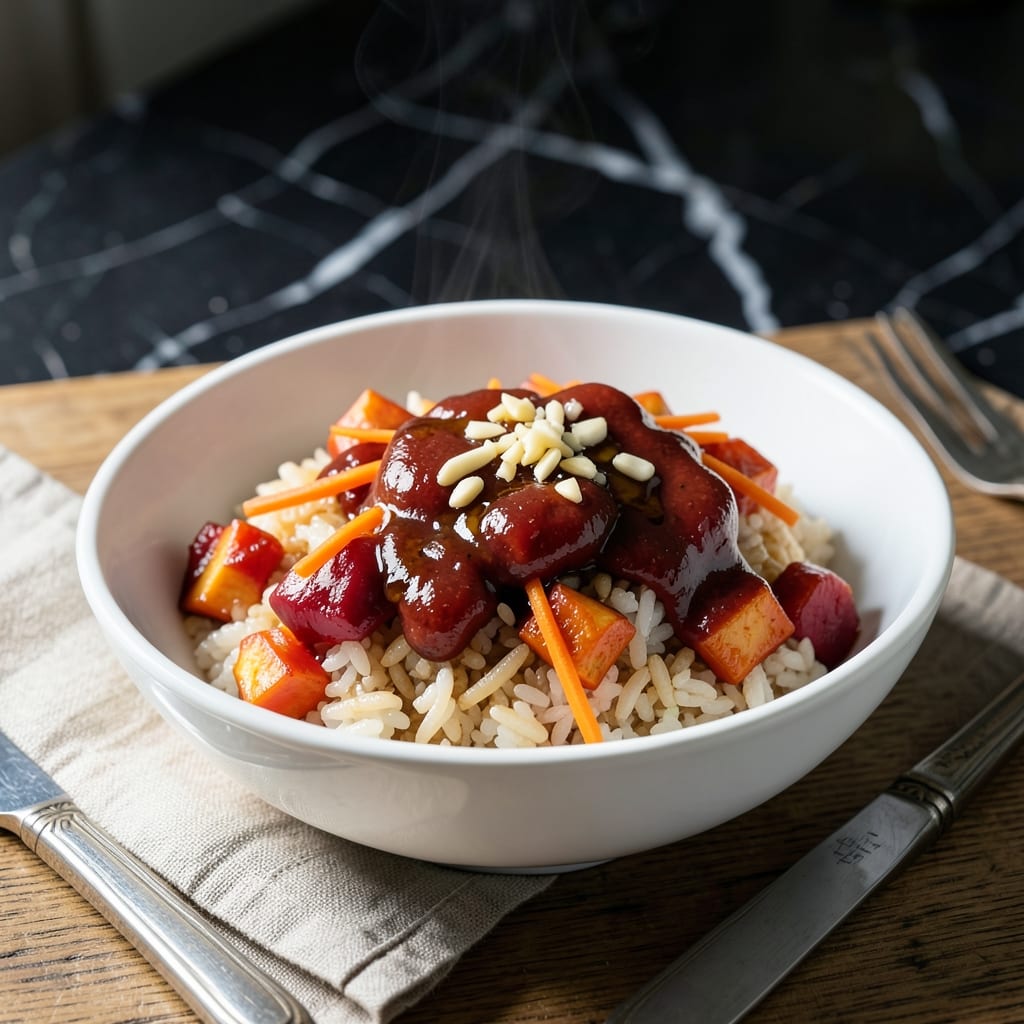
This dish brings bold Korean flavors to your table with a perfect balance of heat and umami. The combination of kimchi and gochujang creates a fiery base that transforms simple rice into something extraordinary.
I developed this recipe to capture the essence of traditional bibimbap with a streamlined approach. The key is blooming the gochujang in oil to deepen its flavor before mixing it with the rice and vegetables.
You’ll end up with spicy, aromatic rice studded with tender vegetables and crispy edges. Each bite delivers layers of texture and heat that build gradually without overwhelming.
Serve it with a fried egg on top for the complete experience. This is comfort food with serious kick.
Ingredients for Korean Spicy Rice
Bold Korean flavors start with these carefully selected ingredients for maximum impact.
| Ingredient | Amount | Notes |
|---|---|---|
| Short-Grain White Rice 🍚 | 2 cups | Rinsed until water runs clear |
| Kimchi 🥬 | 1 ½ cups | Well-fermented, chopped with juices |
| Gochujang 🌶️ | 3 tbsp | Korean red pepper paste |
| Neutral Oil 🫒 | 2 tbsp | Vegetable or canola preferred |
| Garlic Cloves 🧄 | 4 cloves | Minced finely |
| Carrots 🥕 | 2 whole | Julienned or matchstick cut |
| Zucchini 🥒 | 1 whole | Diced into small pieces |
| Mushrooms 🍄 | 1 cup | Shiitake or cremini, sliced |
| Spinach 🥬 | 2 cups | Fresh, roughly chopped |
| Sesame Oil 🫒 | 1 tbsp | Toasted, for finishing |
| Soy Sauce 🥄 | 2 tbsp | Low-sodium preferred |
| Sesame Seeds 🌰 | 1 tbsp | Toasted, for garnish |
| Large Eggs 🥚 | 4 whole | For topping, optional |
| Green Onions 🧅 | 3 whole | Thinly sliced for garnish |
| Sugar 🍚 | 1 tsp | Balances heat and acidity |
The gochujang is non-negotiable here—look for a brand like Sempio or CJ at H Mart or the Asian aisle of larger supermarkets. Fresh kimchi (the kind with vibrant red color and lots of juice) makes all the difference, so avoid anything that’s been sitting in the fridge for weeks. For the rice, short-grain is essential (it’s stickier and absorbs flavors better than jasmine or basmati).
No gochujang? Sriracha mixed with a little miso paste gets you in the ballpark, but the flavor won’t be as deep. Short on veggies? Bell peppers, bean sprouts, or snap peas all work well—just keep them cut thin so they cook quickly. If you’re skipping the egg, add crumbled tofu for protein. The sesame oil should be toasted, not plain—Kadoya is a solid brand.
Leftover rice? Store in an airtight container for up to 4 days in the fridge. The veggies are best eaten fresh but will keep for 3 days. Gochujang and kimchi last for months in the fridge—just keep them sealed tight to prevent drying out.
Why You’ll Love This Recipe
- One Pot Wonder: I just dump everything in, stir, and let the rice soak up all that kimchi and gochujang goodness.
- Flavor Bomb: The garlic and gochujang hit you with this smoky, spicy depth that’s seriously addictive.
- Lunchbox MVP: Honestly, it tastes even better the next day—cold or reheated, it’s my work lunch savior.
- Pantry Hero: Between us, I always have these ingredients on hand, so dinner’s ready before I even think about takeout.
Step-by-Step Instructions for Korean Spicy Rice
This method transforms simple rice into a vibrant, spicy masterpiece with bold Korean flavors.
Step 1: Prepare the Rice and Vegetables
Rinse the 2 cups Short-Grain White Rice under cold water until the water runs clear—this removes excess starch and prevents gummy rice. Drain well and set aside. I always use a fine-mesh strainer for this to avoid losing grains down the drain.
While the rice drains, prep your vegetables: julienne the 2 whole Carrots, dice the 1 whole Zucchini, and slice the 1 cup Mushrooms. Roughly chop the 2 cups Spinach and thinly slice the 3 whole Green Onions. Having everything ready before cooking ensures you won’t burn the garlic or overcook the rice.
Step 2: Cook the Rice and Sauté Aromatics
Cook the drained rice in a rice cooker or on the stovetop with 2 cups of water (1:1 ratio) until tender—about 15-20 minutes for stovetop. Once done, fluff with a fork and let it sit covered for 5 minutes to steam and finish absorbing moisture.
Meanwhile, heat 2 tbsp Neutral Oil in a large skillet over medium-high heat. Add the minced 4 cloves Garlic Cloves and sauté for 30 seconds until fragrant but not browned. Immediately add the carrots, zucchini, and mushrooms, stir-frying for 4-5 minutes until the vegetables soften but retain a slight bite.
Step 3: Build the Spicy Sauce and Combine
Push the vegetables to one side of the skillet and add the 1.5 cups Kimchi (with its juices) and 3 tbsp Gochujang to the other. Stir the kimchi and gochujang together for 1-2 minutes until the paste melts and coats the kimchi evenly. This step deepens the spicy, tangy base of your dish.
Add the 2 tbsp Soy Sauce and 1 tsp Sugar to the skillet, then stir everything together. Fold in the cooked rice and 2 cups Spinach, mixing gently until the rice is evenly coated and the spinach wilts—about 2 minutes. The spinach should turn bright green and soften without turning mushy.
Step 4: Finish and Garnish
Remove the skillet from heat and drizzle with 1 tbsp Sesame Oil, stirring to incorporate. Taste and adjust seasoning if needed—the gochujang should provide a bold, spicy kick balanced by the sweetness of the sugar and umami from the soy sauce.
Transfer to a serving dish and garnish with the sliced 3 whole Green Onions and toasted 1 tbsp Sesame Seeds. For an extra touch, top each serving with a fried Large Egg if using. The yolk adds a rich, creamy contrast to the spicy rice. Serve immediately while hot.
Pro Tips For Making Korean Spicy Rice
- Toast the Gochujang: Cook the gochujang in oil for 1-2 minutes before adding other ingredients—this deepens the flavor and removes the raw paste taste I used to hate.
- Use Aged Kimchi: Pick kimchi that’s been fermenting for at least a week; the sourness balances the heat and makes the dish taste more complex.
- Skip the Wet Rice: Use day-old, cold rice or spread freshly cooked rice on a tray for 10 minutes to dry it out—mushy rice ruins the texture.
- Mince Garlic Fine: Grate or finely mince the garlic so it distributes evenly and doesn’t hit you with bitter, raw chunks in every bite.
Regional Styles of korean spicy rice
Seoul Street Food
In bustling Seoul markets, this dish resembles bibimbap with its colorful veggies and spicy kick. Vendors often use leftover rice and whatever fresh produce is available, making it a thrifty favorite. I love the smoky flavor from cooking on a flat-top griddle. 🌆
Busan Spicy Twist
Busan’s coastal influence adds seafood to the mix. Try stirring in 1 cup chopped shrimp or canned tuna when combining the rice with sauce. The briny flavor pairs beautifully with the gochujang’s heat. Locals often top it with imitation crab sticks for extra texture.
Jeonju Royal Version
Jeonju’s royal cuisine elevates this dish with premium ingredients. Use beef bulgogi instead of vegetables for a richer version. The meat’s sweet-savory marinade balances the spice perfectly. I like to add 1 tbsp toasted pine nuts for crunch.
Andong Simplified
In Andong, they streamline the recipe by using just kimchi and gochujang as the base. The fermented flavors develop more intensity with fewer ingredients. This version often includes 1 diced apple for natural sweetness.
Modern Fusion
Korean-Americans often add non-traditional ingredients like avocado slices or cheddar cheese. The creaminess tempers the heat wonderfully. I’ve seen versions with bacon bits that add a smoky depth to the dish.
Vegan Adaptation
For plant-based eaters, skip the egg and add crispy tofu or tempeh. The protein soaks up the spicy sauce beautifully. I recommend pressing the tofu first to achieve maximum crispiness when pan-fried. 💪
Nutrition Facts
Frequently Asked Questions
Can I use long-grain rice instead?
Short-grain is ideal for its sticky texture, but long-grain works in a pinch. The dish may be less cohesive, so press the rice down in the skillet to create crispy edges.
How do I adjust the spice level?
Reduce gochujang to 2 tbsp for mild heat or add 1 tbsp gochugaru (Korean chili flakes) for extra fire. Balance with 1 tsp honey if it’s too intense.
What if my kimchi isn’t very sour?
Add 1 tbsp rice vinegar or 1 tsp lemon juice to mimic the tang. Older kimchi (3+ weeks fermented) works best for depth of flavor.
Can I make this ahead of time?
Yes! Store components separately in the fridge for up to 2 days. Reheat the rice and veggies in a skillet with a splash of water, then mix with sauce and garnish fresh.

- Mujadara Rice and Lentils Recipe: Earthy Spiced Lentils With Caramelized Onions - November 1, 2026
- Naija Fried Rice Recipe: Street-Style Spice With Veggie Crunch - November 1, 2026
- Mushy Rice Recipe: Fluffy Grains Transformed in Minutes - November 1, 2026