
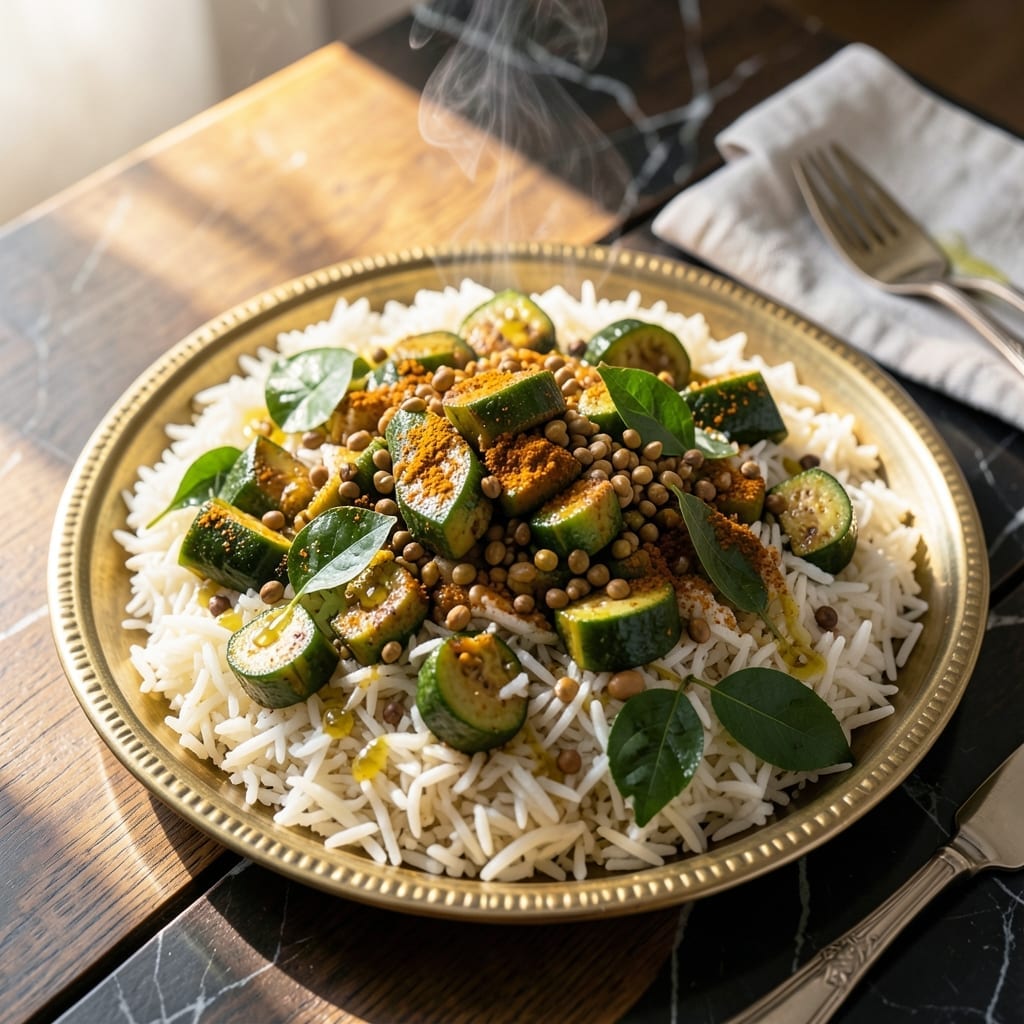
This traditional South Indian dish transforms simple ingredients into a fragrant, comforting meal that’s been cherished in Tamil households for generations. The key lies in the perfect balance of tender kovakkai (ivy gourd) and fluffy rice, infused with aromatic spices.
I’ve refined this method over years of cooking, ensuring the squash stays crisp while the rice absorbs all the rich flavors. A tempering of mustard seeds, curry leaves, and urad dal adds depth and authenticity to every bite.
The result is a one-pot wonder that’s hearty, flavorful, and deeply satisfying. The dish pairs beautifully with yogurt or a side of crispy papad, making it ideal for a wholesome lunch or dinner.
Perfect for busy weekdays or special occasions, this recipe brings the warmth of Tamil Nadu’s culinary traditions to your kitchen.
Ingredients for Kovakkai Rice Recipe in Tamil
Traditional Tamil ingredients come together for a fragrant, comforting one-pot meal with depth and authenticity.
| Ingredient | Amount | Notes |
|---|---|---|
| Basmati Rice 🍚 | 1 ½ cups | Rinsed until water runs clear |
| Kovakkai (Ivy Gourd) 🥒 | 1 lb | Trimmed and diced into 1-inch pieces |
| Mustard Seeds 🌿 | 1 tsp | Black or yellow for tempering |
| Urad Dal 🥜 | 1 tbsp | Split black gram lentils |
| Chana Dal 🌾 | 1 tbsp | Split chickpeas, rinsed |
| Curry Leaves 🍃 | 10 piece | Fresh for authentic flavor |
| Dried Red Chilies 🌶️ | 2 whole | Broken into halves |
| Turmeric Powder 🧂 | ½ tsp | For golden color and earthiness |
| Asafoetida 🌿 | ¼ tsp | Hing, optional but traditional |
| Green Chilies 🌶️ | 2 whole | Slit lengthwise for heat |
| Coconut Oil 🥥 | 2 tbsp | Cold-pressed for tempering |
| Salt 🧂 | 1 ¼ tsp | Adjust to taste |
| Fresh Cilantro 🌿 | ¼ cup | Chopped for garnish |
| Ghee 🧈 | 1 tbsp | Clarified butter for richness |
For authenticity, source kovakkai from an Indian grocery store like Patel Brothers or Subzi Mandi—look for firm, bright green gourds without blemishes. Basmati rice should be aged and aromatic; Daawat or India Gate are reliable brands. The tempering spices (mustard seeds, urad dal, chana dal) are non-negotiable for genuine flavor. Fresh curry leaves are a game-changer, and most South Asian markets stock them in the refrigerator section.
No kovakkai? Zucchini or bottle gourd can substitute, but reduce cooking time slightly. Out of curry leaves? Dried curry leaf powder works in a pinch (use one-third the amount). Asafoetida can be skipped if unavailable, though it adds traditional depth. For heat adjustments, reduce or omit green chilies—serrano peppers offer a milder alternative. Coconut oil can be replaced with neutral oil, but the flavor won’t be as rich.
This dish tastes even better the next day as flavors meld. Store in an airtight container in the fridge for up to 3 days. Kovakkai doesn’t freeze well, so best enjoyed fresh. Reheat gently with a splash of water to restore moisture. Garnish with fresh cilantro just before serving for a vibrant finish.
Why You’ll Love This Recipe
- One Pot Wonder: I love how everything—basmati rice, ivy gourd, and the temperature—cooks together in a single pot.
- Tadka Magic: The mustard seeds and urad dal crackling in hot oil? That aroma alone makes my mouth water before the first bite.
- Lunchbox Hero: Packed with protein from chana dal, it’s my kids’ favorite to take to school. (Yes, even on a Tuesday.)
- Budget Keeper: Kovakkai is so affordable, and a little goes a long way in this dish. Honestly, it stretches a small grocery haul into a hearty meal.
Step-by-Step Instructions for Kovakkai Rice
Master the technique for perfectly balanced flavors and ideal rice texture in this traditional dish.
Step 1: Prepare the Rice and Kovakkai
Rinse the 1.5 cups Basmati Rice under cold water until the water runs completely clear. This removes excess starch and prevents the grains from sticking together. Soak the rinsed rice in fresh water for 20 minutes to ensure even cooking and fluffy texture.
While the rice soaks, trim and dice the 1 lb Kovakkai (Ivy Gourd) into uniform 1-inch pieces. Consistent sizing ensures even cooking, so take your time with this step. The ivy gourd should yield firm, bite-sized pieces that will soften beautifully during cooking without turning mushy.
Step 2: Temper the Spices
Heat the 2 tbsp Coconut Oil in a heavy-bottomed pot or pressure cooker over medium heat. Add the 1 tsp Mustard Seeds and allow them to splutter for about 30 seconds until they pop and release their aroma. Immediately add the 1 tbsp Urad Dal, 1 tbsp Chana Dal, 2 whole Dried Red Chilies, and 0.25 tsp Asafoetida.
Stir constantly for 1-2 minutes until the dals turn a light golden brown. Be careful not to let them darken too much, as this can make them bitter. The asafoetida should release its pungent aroma quickly—this is your signal to add the 10 piece Curry Leaves and 2 whole Green Chilies, stirring for another 30 seconds.
Step 3: Cook the Kovakkai and Rice
Add the diced Kovakkai (Ivy Gourd) to the tempered spices and sauté for 3-4 minutes until the edges begin to soften slightly. Sprinkle in the 0.5 tsp Turmeric Powder and 1.25 tsp Salt, stirring to coat the ivy gourd evenly. The turmeric will lend a vibrant golden hue to the dish.
Drain the soaked rice and add it to the pot, stirring gently to combine with the spiced ivy gourd. Add 3 cups of water—this is the perfect ratio for fluffy rice. Bring to a boil, then reduce the heat to low, cover, and cook for 15-18 minutes until the rice is tender and the water is absorbed.
Step 4: Finish and Rest
Once the rice is cooked, turn off the heat and let the dish sit covered for 5 minutes. This resting period allows the flavors to meld and the rice to steam to perfect tenderness. Drizzle the 1 tbsp Ghee over the top and gently fold it in, ensuring the rich, nutty aroma of the clarified butter infuses every bite.
Finally, sprinkle the 0.25 cup Fresh Cilantro over the rice and fluff gently with a fork. The cilantro adds a fresh, bright note that balances the earthy flavors of the dish. Serve hot for the best experience, with the cilantro visible as a vibrant garnish.
Pro Tips For Making Kovakkai Rice Recipe In Tamil
- Soak the Basmati: Rinse and soak the rice for 20-30 minutes before cooking—this prevents it from turning mushy when mixed with the kovakkai.
- Slice Kovakkai Thin: Cut the ivy gourd into thin, even slices so they cook quickly and absorb the spices properly without leaving a raw bite.
- Temper Mustard Well: Heat the oil until it’s shimmering before adding mustard seeds, then let them pop fully before adding dals to avoid a bitter taste.
- Toast the Dals: Dry-roast the urad and chana dal for 1-2 minutes until fragrant before tempering—this deepens their flavor and prevents a raw aftertaste.
Common Mistakes When Making Great kovakkai rice recipe in tamil
Overcooking the Kovakkai
I’ve seen many cooks turn their kovakkai to mush by adding it too early or cooking it too long. Add the diced 1-inch pieces only after tempering the spices, and sauté for just 3-4 minutes before adding rice. This keeps them tender yet firm. 💡
Skipping the Soak
Rinsing rice is good, but skipping the 20-minute soak leads to uneven cooking. Basmati needs this time to absorb water evenly. Without it, you’ll end up with some grains undercooked and others overcooked.
Incorrect Water Ratio
Using more or less than 3 cups of water for 1.5 cups rice throws off the texture. Too much makes it soggy; too little leaves it dry. Measure precisely and resist the urge to peek while cooking.
Burning the Tempering
Mustard seeds pop fast over medium heat, but dals need a minute to toast. Stir constantly and watch for that light golden hue. If they darken, they’ll turn bitter and ruin the dish’s aroma.
Skipping the Rest
Lifting the lid too soon releases steam that’s still cooking the rice. Always let it rest covered for 5 minutes after turning off the heat. This ensures every grain is perfectly fluffy and flavorful.
The ghee and cilantro will meld beautifully during this time. ✨
Nutrition Facts
Frequently Asked Questions
Can I use regular rice instead of basmati?
Yes, but basmati’s long grains stay separate when cooked. Regular rice may turn sticky. If using, reduce water slightly and cook for 2-3 minutes less to prevent mushiness.
How do I store leftovers?
Cool completely, then transfer to an airtight container. Refrigerate for up to 3 days. Reheat with a splash of water to restore moisture. Avoid freezing as kovakkai loses texture.
Why does my tempering taste bitter?
Over-toasted dals cause bitterness. Toast them only until light golden over medium heat, stirring constantly. Remove from heat immediately if they darken.
What if I don’t have coconut oil?
Use any neutral oil, but you’ll miss the authentic flavor. Ghee works well too—use 1 tbsp for tempering. Add 1/2 tsp extra for richness.

- Mujadara Rice and Lentils Recipe: Earthy Spiced Lentils With Caramelized Onions - November 1, 2026
- Naija Fried Rice Recipe: Street-Style Spice With Veggie Crunch - November 1, 2026
- Mushy Rice Recipe: Fluffy Grains Transformed in Minutes - November 1, 2026