
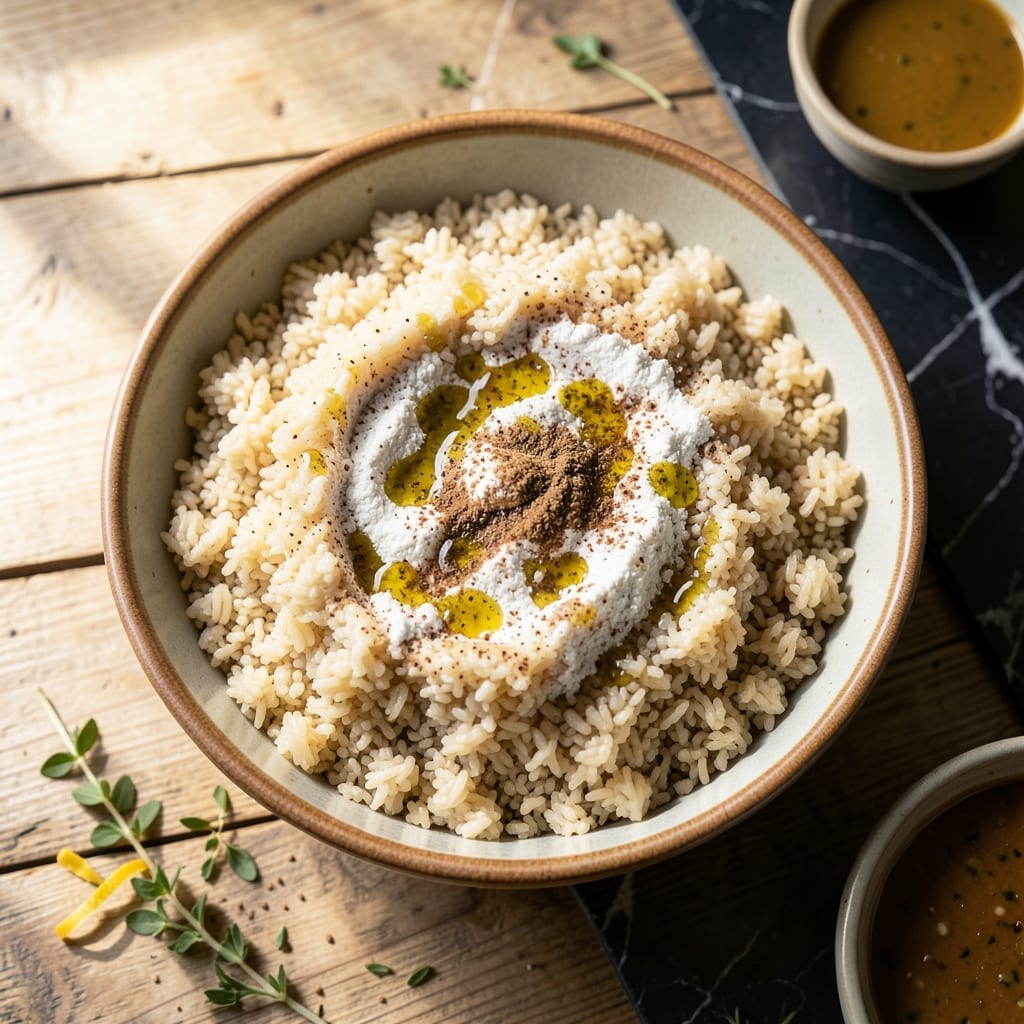
Middle Eastern cuisine has a way of turning simple ingredients into something extraordinary. This dish transforms basic semolina into light, fluffy bites that melt in your mouth.
The process is surprisingly straightforward, requiring just a few pantry staples and minimal effort. The key lies in the steam cooking method, which gives the semolina its signature airy texture without any heaviness.
What you get are delicate, individual grains that are tender yet maintain their shape. The subtle nutty flavor of the semolina shines through, making it the perfect accompaniment to any main course.
Serve warm as a side or base for stews and proteins. The versatility of this dish makes it a staple worth mastering.
Ingredients for Kuskus Rice
A handful of pantry staples transforms into light, airy Middle Eastern semolina bites with ease.
| Ingredient | Amount | Notes |
|---|---|---|
| Coarse Semolina 🌾 | 2 cups | Extra-coarse for texture |
| All-Purpose Flour 🌾 | ½ cup | For binding the mixture |
| Water 💧 | 1 ½ cups | Warm, for activation |
| Olive Oil 🫒 | 2 tbsp | Extra-virgin for richness |
| Salt 🧂 | 1 tsp | Fine sea salt preferred |
| Ground Cumin 🌿 | ½ tsp | Toasted for depth |
| Ground Coriander 🌿 | ½ tsp | Freshly ground ideal |
| Turmeric 🌶️ | ¼ tsp | For subtle color |
| Dried Chickpeas 🌰 | ½ cup | Soaked overnight, optional |
| Vegetable Broth 🥫 | ½ cup | Low-sodium preferred |
| Parsley 🌿 | ¼ cup | Fresh, finely chopped |
| Butter 🧈 | 1 tbsp | Melted, for finishing |
The semolina quality is non-negotiable. Extra-coarse grind ensures the proper texture—Bob’s Red Mill is widely available and reliable. Look for it in the baking aisle or bulk bins at Whole Foods or Sprouts. Avoid fine semolina, as it will turn gummy rather than fluffy. The flour acts as a binder, so all-purpose works perfectly here.
No coarse semolina? Couscous at double the volume (4 cups) can work in a pinch, though the texture will differ. Swap cumin and coriander for ras el hanout if you have it for a more authentic North African twist. The chickpeas are optional but add protein—canned chickpeas work too (drained and rinsed). For oil, any neutral variety is fine, but extra-virgin olive oil adds depth.
The prepared semolina can be held at room temperature for 2 hours before steaming. Leftovers keep in the fridge for 3-4 days—reheat gently with a splash of water to restore moisture. Freezing isn’t recommended, as it alters the delicate texture. Serve warm for the best experience.
Why You’ll Love This Recipe
- Five Ingredient Magic: I love that this comes together with just coarse semolina, flour, water, olive oil, and salt—no fancy shopping list.
- Creamy Yet Fluffy: The semolina gives it this rich, almost buttery texture that’s somehow light at the same time.
- Pairs With Everything: Honestly, I serve it under stews, beside grilled meats, or even cold in salads the next day.
- Pocket-Friendly Staple: A big batch costs pennies and reheats beautifully, so I always double it for leftovers.
Step-by-Step Instructions for Kuskus Rice
Master this traditional method for perfectly steamed semolina pearls with aromatic spices and herbs.
Step 1: Prepare the Semolina Mixture
In a large mixing bowl, combine the 2 cups Coarse Semolina and 0.5 cup All-Purpose Flour. I use a whisk to break up any lumps and ensure even distribution. The flour acts as a binder, giving the final product structure while maintaining the distinctive texture.
Add the 1 tsp Salt, 0.5 tsp Ground Cumin, 0.5 tsp Ground Coriander, and 0.25 tsp Turmeric. Mix thoroughly until the spices are uniformly incorporated—this creates the warm, earthy flavor profile characteristic of this dish. The turmeric adds a subtle golden hue without overpowering the other spices.
Step 2: Hydrate and Form the Dough
Gradually pour in the 1.5 cups Water and 2 tbsp Olive Oil while stirring with a wooden spoon. The mixture will start clumpy, but keep working it until it comes together into a cohesive dough. You’ll know it’s ready when it holds shape when pressed but still feels slightly gritty from the coarse semolina.
Let the dough rest for 10 minutes to allow the semolina to fully absorb the liquid. This hydration period is crucial—skipping it results in dry, crumbly kuskus. Cover the bowl with a damp towel to prevent the surface from drying out during this rest.
Step 3: Shape and Steam the Kuskus
Divide the dough into 1-inch portions and roll each between your palms to form small, irregular pearls. Don’t aim for perfect spheres—the traditional shape is rustic and uneven. This step goes quickly once you get the rhythm, and the dough’s texture makes it easy to handle.
Arrange the pearls in a single layer on the steamer tray of your couscoussier or a perforated steamer insert. If using a standard pot, place a heatproof plate or colander over boiling water, ensuring it doesn’t touch the liquid. Add the 0.5 cup Dried Chickpeas to the steaming liquid below for added flavor and texture.
Step 4: Steam to Perfection
Bring the 0.5 cup Vegetable Broth to a boil in the bottom of your steamer (or use water if preferred). Place the tray of kuskus pearls on top, cover tightly, and steam for 20-25 minutes. Resist the urge to peek—releasing steam interrupts the cooking process and can make the pearls dense.
You’ll know they’re done when the pearls have doubled in size and are tender throughout with no hard center. The exterior should have a slight bite, while the inside is fluffy and light. If they’re not quite done, continue steaming in 5-minute increments until tender.
Step 5: Finish and Serve
Transfer the cooked kuskus to a serving dish and fluff gently with a fork to separate any pearls that stuck together during steaming. Drizzle with the 1 tbsp Butter while still hot—this adds a rich, silky finish that enhances the texture.
Garnish with the 0.25 cup Parsley, finely chopped, for a fresh contrast to the warm spices. Serve immediately while the kuskus is at its fluffiest. The chickpeas, now plump and tender from steaming, can be served alongside or mixed in for added protein and texture.
Pro Tips For Making Kuskus Rice
- Toast the Semolina: Cook the coarse semolina in olive oil over medium heat for 3-4 minutes until golden—this removes the raw taste and adds depth. I learned this the hard way when my first batch tasted like flour paste.
- Use Warm Water: Always add warm water to the semolina-flour mix, not cold. It helps the grains absorb liquid evenly and prevents clumping.
- Don’t Overmix: Stir just until the dough comes together—overworking it makes the kuskus dense and gummy. Sounds weird, but it works.
- Rest Before Steaming: Let the rolled kuskus balls sit for 10 minutes before steaming. My grandmother swore by this, and she was right: it keeps them from falling apart in the pot.
Serving Suggestions for This kuskus rice
As a Standalone Side
These fluffy semolina pearls shine when served as a simple, elegant side dish. I love pairing them with grilled lamb chops seasoned with rosemary and garlic. The mild flavor of the kuskus complements bold main courses without overpowering them. 💪
With Stews and Tagines
Use this dish as a base for hearty Moroccan tagines or Middle Eastern stews. The pearls soak up saucy dishes beautifully—try it with a slow-cooked chicken tagine with apricots and almonds. The texture holds up well to rich, flavorful liquids.
Vegetarian Meal Base
For a meat-free meal, top the warm kuskus with roasted vegetables like zucchini, eggplant, and bell peppers. Add a dollop of Greek yogurt and a sprinkle of pomegranate seeds for color and freshness. This creates a complete, satisfying vegetarian plate.
Breakfast Twist
Serve leftover kuskus for breakfast by topping with a fried egg and harissa-spiced tomatoes. The semolina absorbs the runny yolk and spicy sauce perfectly. I often add crumbled feta cheese for extra richness. ✨
In Salads
Cool the kuskus completely and toss with chopped cucumbers, tomatoes, and fresh herbs for a Middle Eastern-inspired salad. Drizzle with a lemon-olive oil dressing and add crumbled feta for a refreshing side dish or light lunch.
With Dips
Serve warm kuskus pearls alongside your favorite dips. The neutral flavor pairs well with hummus, baba ganoush, or tzatziki. I arrange them on a platter with dips in small bowls for a communal appetizer spread.
Nutrition Facts
Frequently Asked Questions
Can I use fine semolina instead of coarse?
No, fine semolina will turn gummy. Extra-coarse is essential for the light, fluffy texture. If unavailable, couscous (at double the volume) can work in a pinch, though the result will differ.
How do I prevent the pearls from sticking together?
Ensure they’re spaced apart on the steamer tray. After cooking, fluff gently with a fork to separate. Avoid overcrowding during steaming, as this traps moisture and causes clumping.
Can I make this ahead of time?
Yes! Shape the pearls up to 2 hours before steaming and hold at room temperature. Leftovers keep in the fridge for 3-4 days—reheat with a splash of water to restore moisture.
Why did my kuskus turn out dense?
Dense texture usually means insufficient steaming time or lifting the lid too soon. Steam for the full 20-25 minutes without peeking, and ensure your steamer has a tight seal.

- Mujadara Rice and Lentils Recipe: Earthy Spiced Lentils With Caramelized Onions - November 1, 2026
- Naija Fried Rice Recipe: Street-Style Spice With Veggie Crunch - November 1, 2026
- Mushy Rice Recipe: Fluffy Grains Transformed in Minutes - November 1, 2026