
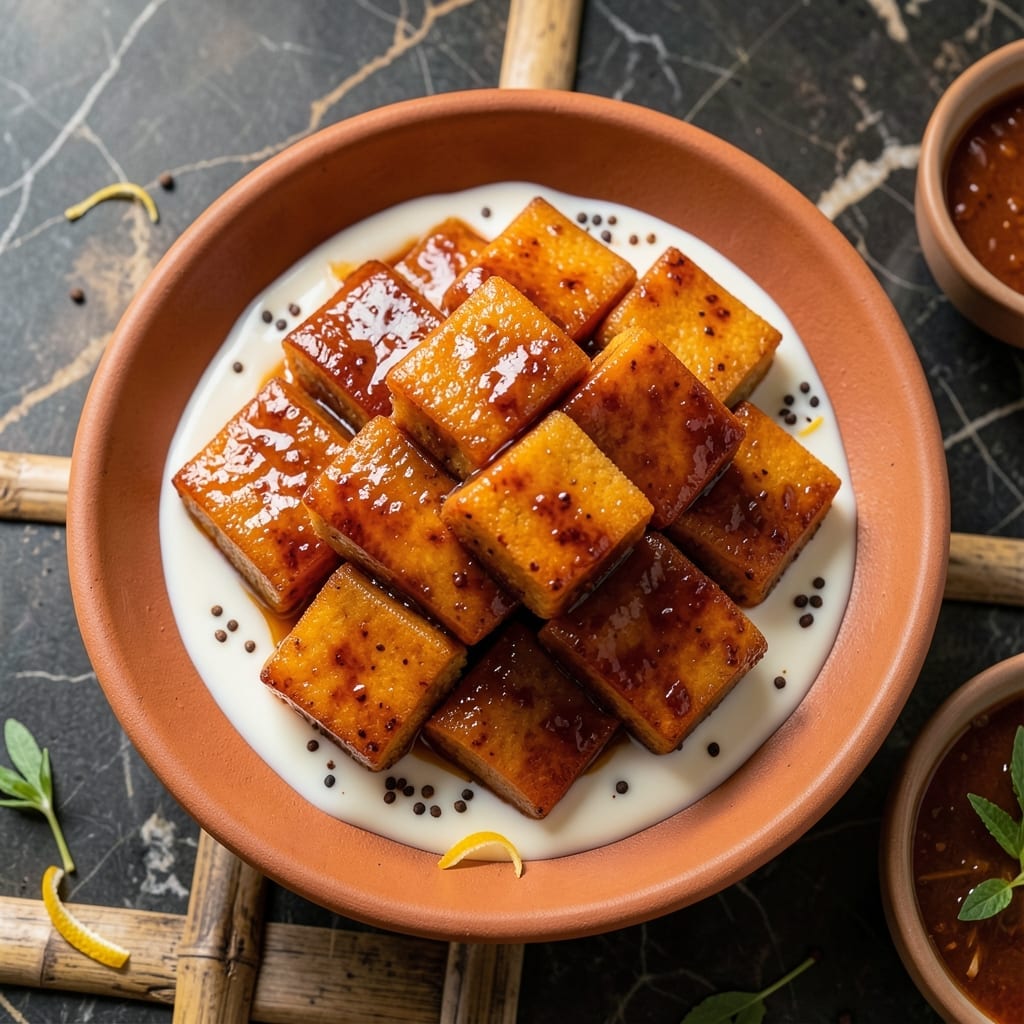
This rice flour kutsinta delivers the perfect balance of chewy texture and rich brown sugar flavor in every bite.
The secret lies in the simple combination of rice flour, brown sugar, and lye water, creating that signature sticky, jelly-like consistency. Steaming transforms the batter into a glossy, slightly dense cake with a caramelized top.
Each piece offers a moist, springy interior with just the right sweetness. The traditional Filipino treat requires precise steaming time to achieve its characteristic appearance and texture.
Serve warm for the best experience, when the sugar creates a slightly sticky surface that’s irresistibly satisfying.
Ingredients for Kutsinta Recipe Rice Flour
Simple ingredients create this traditional Filipino chewy brown sugar cake with ease.
| Ingredient | Amount | Notes |
|---|---|---|
| Rice Flour 🌾 | 2 cups | Fine, white variety preferred |
| Brown Sugar 🍚 | 1 ½ cups | Light or dark, packed |
| Lye Water 💧 | 1 tsp | Food-grade, essential for texture |
| Water 💧 | 2 ½ cups | Room temperature for mixing |
| Annatto Seeds 🌶️ | ½ tsp | Soaked for natural orange color |
| Coconut Milk 🥥 | ½ cup | Full-fat for richness |
| Vanilla Extract 🌿 | 1 tsp | Pure for best flavor |
| Salt 🧂 | ¼ tsp | Balances sweetness |
| Vegetable Oil 🫒 | 1 tbsp | For greasing molds |
| Shredded Coconut 🥥 | ½ cup | Optional topping |
Rice flour is the foundation here—Bob’s Red Mill or Anthony’s brands work well. The lye water is non-negotiable for that signature sticky, jelly-like consistency (look for food-grade at Asian markets). Brown sugar provides the caramelized top, so use fresh, soft for best results. Annatto seeds give the classic orange hue; find them in the international aisle or Latin markets.
No lye water? Substitute with ½ tsp baking soda but texture won’t be identical. For a vegan version (this already is), ensure coconut milk is unsweetened. Brown sugar can be swapped for panela or muscovado for deeper flavor. If using pre-shredded coconut, toast lightly first to revive the aroma.
Store rice flour in an airtight container for up to 6 months. Lye water keeps indefinitely if sealed. The kutsinta itself is best eaten fresh but can be refrigerated for 3 days—re-steam to restore the sticky texture.
Why You’ll Love This Recipe
- No-Fuss Mixing: I just dump rice flour, brown sugar, and lye water in a bowl—no fancy steps, no whisking for hours.
- Chewy Sweet Bite: The brown sugar gives it that deep caramel flavor, and the lye water makes it just the right kind of chewy.
- Party Favorite: I bring these to potlucks, and they’re always the first to disappear—kids and adults alike.
- Pantry Staples: Rice flour and brown sugar are already in my cupboard, so I can make these anytime without a special grocery trip.
Step-by-Step Instructions for Chewy Brown Sugar Kutsinta
This traditional Filipino treat requires precision with lye water and proper steaming for the perfect texture.
Step 1: Prepare the Annatto-Infused Water
Begin by soaking the 0.5 tsp Annatto Seeds in 2.5 cups Water for 10-15 minutes. This creates the signature orange hue. Strain the mixture through a fine-mesh sieve to remove the seeds, leaving you with vibrant orange water.
The water should be deep orange in color—if it’s pale, soak the seeds for another 5 minutes. This infusion step is critical for achieving the authentic color that defines this dish.
Step 2: Combine Wet and Dry Ingredients
In a large mixing bowl, whisk together the 2 cups Rice Flour, 1.5 cups Brown Sugar, 0.25 tsp Salt, 1 tsp Lye Water, 0.5 cup Coconut Milk, and the annatto-infused 2.5 cups Water. The lye water is essential—it reacts with the rice flour to create that distinctive chewy texture.
Whisk vigorously for 2-3 minutes until the batter is completely smooth with no lumps. The mixture should be thin enough to pour but thick enough to coat the back of a spoon. Let it rest for 5 minutes to allow the rice flour to fully hydrate.
Step 3: Add Final Flavorings and Prepare Molds
Stir in the 1 tsp Vanilla Extract to the batter. This adds depth to the sweetness. Meanwhile, grease your steaming molds or ramekins with 1 tbsp Vegetable Oil, making sure to coat the bottoms and sides thoroughly to prevent sticking.
I prefer using small ramekins or silicone molds for individual portions. Arrange them in your steamer, ensuring there’s at least ½ inch of space between each mold for even heat circulation.
Step 4: Steam to Perfection
Pour the batter into the prepared molds, filling each about ¾ full. Place the molds in a steamer with 2-3 inches of boiling water. Cover with a tight-fitting lid and steam over medium-high heat for 45-50 minutes.
Check for doneness by inserting a toothpick into the center—it should come out clean with a slightly sticky texture. The tops should be set with a glossy sheen and a deep orange color. Avoid lifting the lid during the first 30 minutes to prevent condensation from dripping onto the surface.
Step 5: Cool and Garnish
Remove the molds from the steamer and let them cool for 10 minutes in the molds. This allows the cutsinta to set fully and makes them easier to remove. Run a thin knife around the edges if they stick slightly.
Once cooled, sprinkle the tops with 0.5 cup Shredded Coconut for added texture and visual appeal. The coconut provides a nice contrast to the chewy interior. Serve warm or at room temperature for the best texture experience.
Pro Tips For Making Kutsinta Recipe Rice Flour
- Steam Evenly: Use a tight-fitting lid and medium-low heat for 30-40 minutes—this prevents the lye water from evaporating too fast and keeps the texture soft.
- Measure Lye Carefully: I learned this the hard way—too much lye water makes kutsinta bitter, so stick to exactly 1 teaspoon per cup of rice flour.
- Skip the Overmixing: After adding lye water, stir just until combined—overmixing develops gluten in the rice flour and turns your cutsinta chewy instead of jelly-like.
- Strain the Annatto: Soak the annatto seeds in warm water for 10 minutes, then strain through a fine sieve—this gives a smooth, vibrant color without gritty bits in your batter.
Perfect Pairings for These Flavors
Beverage Pairings
Filipino tsokolate eh (thick hot chocolate) complements the sweetness beautifully. I use Tablea chocolate tablets from Goya or Tsokolatero brands. The rich, slightly bitter cocoa balances the brown sugar perfectly. 🍫
Dessert Companions
Serve with ripe mango slices for a fresh contrast to the sticky texture. The tropical sweetness enhances the coconut topping. For a creamy pairing, leche flan adds a silky custard element that elevates the experience.
Breakfast Pairing
This dish works wonderfully with Filipino champorado (chocolate rice porridge). The warm, creamy porridge contrasts the chewy cake. I make mine with 1 cup glutinous rice and 2 cups coconut milk for extra richness.
Savory Balance
For those who enjoy sweet-savory combinations, pair with longganisa sausage or tocino. The salty, garlicky flavors cut through the sugar. I recommend Vigan longganisa for its tangy profile.
Afternoon Snack
A cup of black coffee or Barako coffee (Philippine liberica) makes an ideal afternoon pairing. The bold, slightly bitter notes cleanse your palate. I brew mine strong with 2 tbsp grounds per cup. ☕
Festive Serving
During celebrations, serve with halo-halo components like ube ice cream and kaong (sugar palm fruit). The varied textures and temperatures create an exciting contrast to the warm, chewy cake.
Nutrition Facts
Frequently Asked Questions
What can I use if I don’t have lye water?
You can substitute with ½ tsp baking soda, but the texture won’t be identical. Lye water creates the signature sticky, jelly-like consistency that defines this treat.
How do I store leftover kutsinta?
Keep in an airtight container at room temperature for 1 day or refrigerate for up to 3 days. Re-steam for 5-10 minutes to restore the chewy texture.
Can I use regular flour instead of rice flour?
No, rice flour is essential for the correct texture. Regular flour will produce a dense, cake-like result instead of the desired sticky, chewy consistency.
Why did my kutsinta turn out dry?
Over-steaming is the most common cause. Stick to 45-50 minutes and ensure your steamer has enough water. Also, avoid lifting the lid during cooking.

- Mujadara Rice and Lentils Recipe: Earthy Spiced Lentils With Caramelized Onions - November 1, 2026
- Naija Fried Rice Recipe: Street-Style Spice With Veggie Crunch - November 1, 2026
- Mushy Rice Recipe: Fluffy Grains Transformed in Minutes - November 1, 2026