
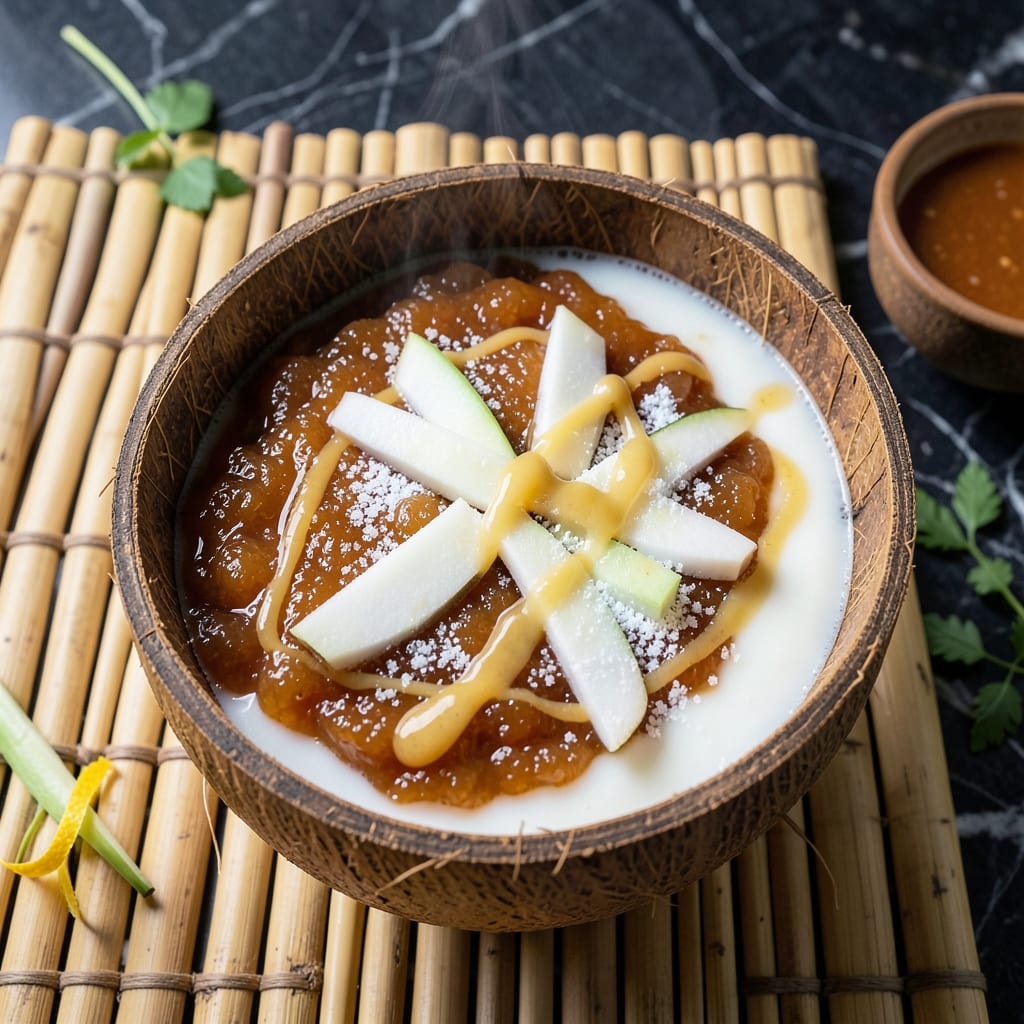
This traditional Filipino dessert captures the perfect balance of chewy texture and rich tropical flavor. Using glutinous rice flour and coconut milk creates a naturally sweet treat that’s both comforting and authentic.
The process is straightforward, with simple ingredients coming together to form a dish that’s been cherished for generations. The result is a warm, fragrant dessert that’s ideal for gatherings or a special homemade indulgence.
Ingredients for Glutinous Rice Flour with Coconut Milk Recipe Filipino
Traditional Filipino ingredients deliver chewy texture and rich tropical flavor in every bite.
| Ingredient | Amount | Notes |
|---|---|---|
| Glutinous Rice Flour 🌾 | 2 cups | Also called sweet rice flour |
| Coconut Milk 🥥 | 2 cups | Full-fat, canned for richness |
| Granulated Sugar 🍚 | ¾ cup | Adjust to taste preference |
| Brown Sugar 🍚 | ½ cup | Packed, for depth of flavor |
| Water 💧 | 1 cup | For adjusting consistency |
| Vanilla Extract 🌿 | 1 tsp | Pure for best flavor |
| Salt 🧂 | ¼ tsp | Fine grain for even distribution |
| Shredded Coconut 🥥 | ½ cup | Unsweetened, for texture |
| Pandan Leaves 🌿 | 2 pieces | Optional, for authentic aroma |
| Cornstarch 🌾 | 2 tbsp | For thickening if needed |
| Coconut Oil 🫒 | 1 tbsp | For greasing the pan |
The glutinous rice flour is non-negotiable—Bob’s Red Mill or Asian markets carry it. Full-fat coconut milk is key for that authentic creaminess; Chaokoh or Thai Kitchen brands are reliable. Pandan leaves add traditional fragrance, but if you can’t find them fresh, frozen from an Asian grocery works just as well. Look for unsweetened shredded coconut to control the sweetness level yourself.
No glutinous rice flour? Regular rice flour plus tapioca starch at half the amount can work in a pinch, but the texture won’t be quite the same. Out of coconut milk? Coconut cream thinned with water is a decent substitute. Brown sugar can be swapped for white, but you’ll lose some caramel depth. Vanilla is optional but adds a nice roundness to the flavor profile.
Store glutinous rice flour in an airtight container in a cool, dark place for up to 6 months. Coconut milk keeps for 1 week in the fridge once opened. The finished dessert stays fresh at room temperature for 2 days—if it lasts that long. Reheat gently with a splash of water to restore moisture.
Why You’ll Love This Recipe
- Five Minute Mix: I dump the glutinous rice flour, coconut milk, and sugars in a bowl, whisk, and it’s ready for the steamer—no fancy steps.
- Sticky Sweet Heaven: That combo of brown sugar and coconut milk gives it a rich, caramel-like sweetness that sticks to your ribs in the best way.
- Fiesta Ready: It’s my go-to for potlucks because it’s naturally gluten-free, feeds a crowd, and tastes like a hug from a Filipino tita.
- Keeps Like a Dream: Leftovers? No problem. It firms up overnight and tastes even better reheated with a splash of coconut milk.
Step-by-Step Instructions for Glutinous Rice Flour With Coconut Milk
This traditional method ensures the perfect balance of chewy texture and rich coconut flavor every time.
Step 1: Combine Dry Ingredients and Aromatics
In a large mixing bowl, whisk together the 2 cups Glutinous Rice Flour, 0.75 cup Granulated Sugar, 0.5 cup Brown Sugar, and 0.25 tsp Salt until evenly distributed. The combination of both sugars creates a complex sweetness with depth.
Add the 2 pieces Pandan Leaves to the mixture. These leaves infuse the dish with their distinctive aromatic essence, a hallmark of authentic Filipino desserts. Gently press the leaves into the dry ingredients to release their fragrance.
Step 2: Incorporate Wet Ingredients Gradually
Create a well in the center of the dry mixture. Slowly pour in the 2 cups Coconut Milk while whisking continuously to prevent lumps from forming. The full-fat coconut milk provides the rich, creamy base that defines this dish.
Add the 1 tsp Vanilla Extract and 1 cup Water, continuing to whisk until the batter becomes smooth. The vanilla enhances the tropical flavors while the water adjusts the consistency to your preference—slightly thicker for moldable treats or thinner for a pudding-like texture.
Step 3: Thicken and Add Texture
In a small bowl, mix the 2 tbsp Cornstarch with 2 tablespoons of the batter to create a slurry. Pour this back into the main mixture while stirring constantly. The cornstarch ensures a consistently smooth, velvety texture throughout.
Fold in the 0.5 cup Shredded Coconut evenly. This adds a satisfying chew and visual appeal to the final dish. The unsweetened variety balances the sweetness without overpowering it.
Step 4: Cook to Perfection
Heat a non-stick pan over medium-low heat and add the 1 tbsp Coconut Oil to lightly grease the surface. Pour in the batter, spreading it evenly to about ½-inch thickness.
Cook for 8-10 minutes, stirring constantly with a wooden spoon or silicone spatula, until the mixture thickens to a pudding-like consistency. You’ll notice it pulling away from the sides of the pan and becoming glossy. Remove from heat when it reaches your desired thickness—it will continue to set slightly as it cools.
Step 5: Rest and Serve
Transfer the mixture to a greased dish or individual serving bowls. Let it cool to room temperature, then refrigerate for at least 1 hour to allow it to fully set. This resting period is crucial for achieving the characteristic chewy texture.
Serve chilled, either as is or shaped into individual portions. The dish should have a firm yet yielding consistency with a beautiful sheen from the coconut milk. Each bite should deliver a perfect harmony of sweet, coconutty, and aromatic flavors.
Pro Tips For Making Glutinous Rice Flour With Coconut Milk Recipe Filipino
- Bloom the Flour: Whisk the glutinous rice flour into cold water first before adding hot coconut milk to prevent lumping—I learned this the hard way after fishing out rubbery bits from three failed batches.
- Use Full-Fat Coconut: Skip the light coconut milk; the full-fat version gives that rich, creamy texture this Filipino dessert is known for. Sounds indulgent, but it’s non-negotiable for the right consistency.
- Simmer Low and Slow: Cook the mixture on low heat and stir constantly—after burning one pot because I got distracted, I now set a timer for 15 minutes and stay glued to the stove.
- Sweeten in Stages: Add the granulated sugar early, but save the brown sugar for the last 5 minutes to deepen the flavor without over-caramelizing. I was skeptical until I tried it, and now I won’t do it any other way.
Dietary Considerations for These Flavors
Gluten-Free Friendly
Despite its name, glutinous rice flour is naturally gluten-free, making this dessert safe for those with celiac disease or gluten sensitivity. I always double-check labels to ensure no cross-contamination during processing. 💪
Vegan and Dairy-Free
This traditional recipe is inherently vegan and dairy-free, as it relies on plant-based coconut milk for richness. No animal products are needed—just simple, wholesome ingredients that deliver incredible flavor.
For strict vegans, confirm your sugar sources, as some brands use bone char in processing. I prefer organic cane sugar for peace of mind.
Nut Allergy Note
While coconut is technically a fruit, those with tree nut allergies should proceed with caution. Coconut can trigger reactions in some individuals. Always check with your allergist if unsure.
Low Glycemic Adjustments
To reduce the glycemic impact, you can decrease the sugar by half or substitute with coconut sugar. The texture may vary slightly, but the tropical flavor remains. I’ve had success with monk fruit sweetener blends too.
Diabetic Considerations
This dessert is high in natural sugars, so portion control is key for diabetics. A small 2-ounce serving can satisfy a sweet craving while keeping carbs in check. Pairing it with protein, like toasted nuts, can help balance blood sugar. 💡
Nutrition Facts
Frequently Asked Questions
Can I use regular rice flour instead?
No, the texture won’t be the same. Glutinous rice flour is essential for that signature chewy consistency. Regular rice flour lacks the sticky quality needed for authentic results.
Why does my mixture turn out grainy?
This usually happens if the coconut milk isn’t full-fat or if the mixture wasn’t whisked thoroughly. Use canned, full-fat coconut milk and whisk vigorously to prevent lumps.
How long can I store leftovers?
Store in an airtight container at room temperature for up to 2 days. For longer storage, refrigerate for up to 5 days. Reheat gently with a splash of water.
What if I don’t have pandan leaves?
You can skip them or use 1 tsp pandan extract instead. The flavor won’t be as complex, but the dessert will still taste delicious.

- Glutinous Rice Flour Bread Recipe: Soft Pillows with Nutty Depth - October 12, 2026
- Green Rice Casserole Recipe: Cheesy Baked Comfort with Vibrant Herbs - October 12, 2026
- Glutinous Rice Coconut Milk Recipe: Chewy Sweetness With Tropical Depth - October 12, 2026