
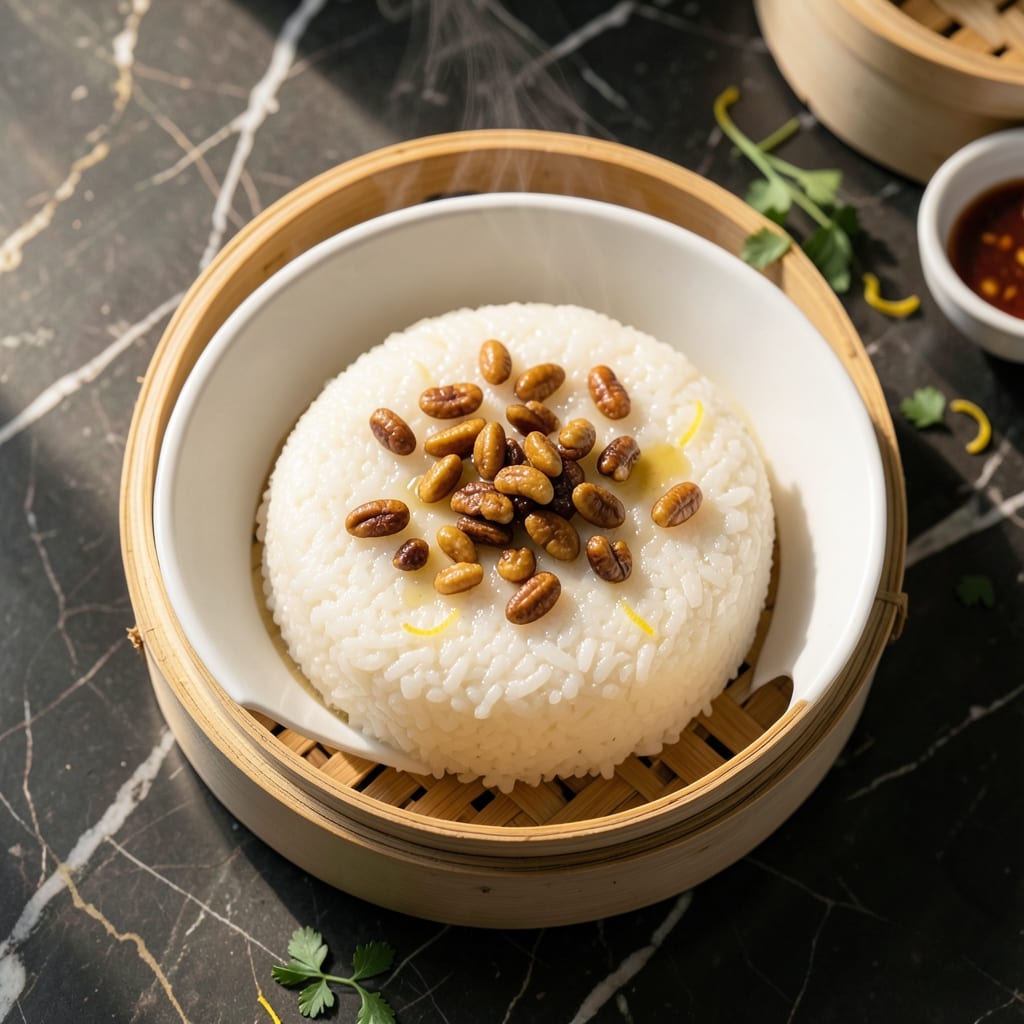
I’ve tested this method in my tiny Boston kitchen more times than I’d like to admit—each attempt bringing me closer to the perfect chew.
Glutinous rice flour is the secret to achieving that signature pillowy texture, while toasted nuts add depth to every bite. The process is straightforward but precise.
You’ll end up with soft, slightly sticky cakes that pull apart beautifully, with just the right amount of resistance. The aroma alone makes the effort worthwhile.
This version stays true to tradition while working within the constraints of a home kitchen. Here’s how to get it right.
Ingredients for Rice Cake Recipe with Glutinous Rice Flour
Pantry staples plus a few extras for that perfect chewy texture and nutty depth.
| Ingredient | Amount | Notes |
|---|---|---|
| Glutinous Rice Flour 🌾 | 2 cups | Also called sweet rice flour |
| Water 💧 | 1 ¼ cups | Warm for best results |
| Sugar 🍬 | ¼ cup | Adjust to taste preference |
| Salt 🧂 | ½ tsp | Fine sea salt preferred |
| Neutral Oil 🫒 | 2 tbsp | For greasing and cooking |
| Toasted Nuts 🌰 | ½ cup | Chopped, almonds or peanuts work well |
| Sesame Seeds 🌱 | 2 tbsp | For topping, optional |
| Green Onions 🧅 | 2 whole | Thinly sliced for garnish |
| Cornstarch 🌾 | 2 tbsp | For dusting work surface |
| Baking Powder 🧂 | 1 tsp | Ensures light texture |
The glutinous rice flour is non-negotiable here—look for it in Asian markets or the international aisle at Whole Foods. Bob’s Red Mill makes a reliable version if you’re ordering online. Don’t confuse it with regular rice flour; the sticky texture comes from the glutinous variety. I’ve seen it labeled as sweet rice flour too, so check both names on the package.
No toasted nuts on hand? Raw nuts toasted in a dry pan for 5 minutes work just fine. Almonds, peanuts, or even walnuts add great crunch. Skip the nuts entirely if you prefer—though they really elevate the flavor. The sugar can be swapped for coconut sugar or maple syrup (reduce liquid slightly if using syrup). Cornstarch is key for preventing sticking, but arrowroot powder works in a pinch.
These keep beautifully at room temperature for 2-3 days in an airtight container. For longer storage, freeze for up to 1 month—just thaw and reheat in a steamer. They’re best fresh, though. Simple enough.
Why You’ll Love This Recipe
- Minimal Effort: I just mix the glutinous rice flour with water, sugar, and a pinch of salt—no fancy techniques required.
- Sweet Simplicity: That subtle sweetness with a hint of salt and the chewy texture? Pure comfort in every bite.
- Party Ready: I bring these to potlucks and they disappear first—great for celebrations or just a treat.
- Budget Stretch: A bag of glutinous rice flour makes a ton, and leftovers keep well for days. Honestly, my wallet loves it.
Step-by-Step Instructions for Rice Cakes With Glutinous Rice Flour
Here’s the method I use to get those perfect chewy rice cakes every time.
Step 1: Prepare the Steamed Batter
In a large mixing bowl, whisk together all 2 cups glutinous rice flour, 0.25 cup sugar, 0.5 tsp salt, and 1 tsp baking powder until evenly combined. I like to break up any lumps in the flour with my fingers first for a smoother texture.
Gradually pour in all 1.25 cups water while stirring continuously with a wooden spoon. You want a thick, smooth batter that resembles pancake batter but slightly denser. Let it rest for 5 minutes—this gives the flour time to fully hydrate.
Step 2: Steam the Cakes to Perfection
Lightly grease a heatproof dish or steamer tray with 1 tbsp neutral oil. Pour the batter in, spreading it evenly to about 1-inch thickness. The surface should be smooth and level for even cooking.
Place the dish in a steamer with boiling water. Cover and steam for 20-25 minutes until the center is set and a toothpick inserted comes out clean. Don’t lift the lid during steaming or you’ll lose precious heat.
Step 3: Cool and Cut into Rounds
Remove from steamer and let cool for 10 minutes. Dust your work surface with all 2 tbsp cornstarch to prevent sticking. Turn the steamed cake onto the surface—it should release easily if properly greased.
Using a round cookie cutter or glass, cut into 2-inch circles. If the edges stick, dip the cutter in cornstarch between cuts. You should get about 12-16 pieces depending on thickness.
Step 4: Pan-Fry for Crispy Edges
Heat the remaining 1 tbsp neutral oil in a non-stick skillet over medium heat. Add the rice cake rounds in a single layer, leaving space between each. Cook for 2-3 minutes per side until golden brown and slightly crispy.
Watch carefully—they’ll go from perfect to overdone quickly. The outside should develop a light crust while the inside remains soft and chewy. Transfer to a paper towel-lined plate to drain excess oil.
Step 5: Garnish and Serve Warm
Arrange the rice cakes on a serving platter. Sprinkle all 0.5 cup toasted nuts evenly over the top, pressing lightly so they adhere. Then add all 2 tbsp sesame seeds and the thinly sliced 2 whole green onions for color and freshness.
Serve warm while the edges are still crispy. The contrast between the chewy interior and toasted nut topping is what makes these special. They’re best enjoyed fresh but can be reheated in a dry pan.
Pro Tips For Making Rice Cake Recipe With Glutinous Rice Flour
- Steam Evenly: Use a bamboo steamer lined with parchment paper—poke holes in the bottom to prevent soggy spots. I learned this the hard way after my first batch stuck like cement.
- Hydrate the Flour: Let the glutinous rice flour soak in warm water for 10 minutes before mixing. Sounds tedious, but it prevents those dreaded dry, crumbly patches in the finished cakes.
- Skip the Overmixing: Stir just until the batter is smooth—any longer and the cakes turn out dense and gummy. After ruining two batches, I now use a fork and stop at the first sign of uniformity.
- Oil the Pan Well: Brush the steamer or mold with neutral oil—about 1 teaspoon per cake—so they release cleanly without tearing. My grandmother swore by this, and she was right: no oil, no happy un-molding.
Regional Styles of These Flavors
Korean Tteok
In Korea, these rice cakes (tteok) are often made into tteokbokki—spicy stir-fried rice cakes. The glutinous rice flour base creates that signature chewy bite, while the nutty topping adds texture. I love serving them with a spicy-sweet gochujang sauce for an authentic Korean street food experience. 🌟
Chinese Nian Gao
For Chinese New Year, nian gao uses glutinous rice flour to make a sticky, sweet cake. The version here is more savory, but you can add brown sugar and red bean paste to make it traditional. Steam in banana leaves for extra aroma.
I first tried this at a friend’s Lunar New Year celebration—it was a revelation. The texture is denser than our recipe but equally satisfying.
Japanese Mochi
Japanese mochi uses the same flour, often pounded into a smooth, elastic dough. Our version skips the pounding step, making it more kitchen-friendly. For a traditional touch, dust with kinako (roasted soybean flour) instead of nuts.
Thai Khanom Krok
In Thailand, khanom krok are coconut-filled rice cakes cooked in a special pan. Our recipe is simpler but captures the same chewy essence. Add ½ cup coconut milk to the batter for a Thai-inspired twist.
Nutrition Facts
Frequently Asked Questions
Why does the recipe need glutinous rice flour specifically?
Glutinous rice flour gives these cakes their signature chewy texture. Regular rice flour lacks the sticky, elastic quality needed. The glutinous variety binds the ingredients differently, creating that perfect pillowy bite.
Can I bake these instead of steaming?
Steaming is essential for achieving the right moisture level and texture. Baking would dry them out and result in a dense, crumbly cake rather than the desired soft, chewy consistency. Stick to steaming for best results.
How do I fix rice cakes that turned out too dense?
If your cakes are dense, you may have overmixed the batter or used too much flour. Ensure your measurements are exact, and whisk just until combined. Also, don’t skip the 5-minute rest for the batter before steaming.

- Rice Pudding Recipe With Eggs and Milk: Old-Fashioned Custard-Style Comfort - September 30, 2026
- Rice Noodle Sauce Recipe: Bold Umami Depth for Authentic Stir-Fry - September 30, 2026
- Rice Pilaf Recipe: Fragrant Basmati With Toasted Vermicelli - September 30, 2026