
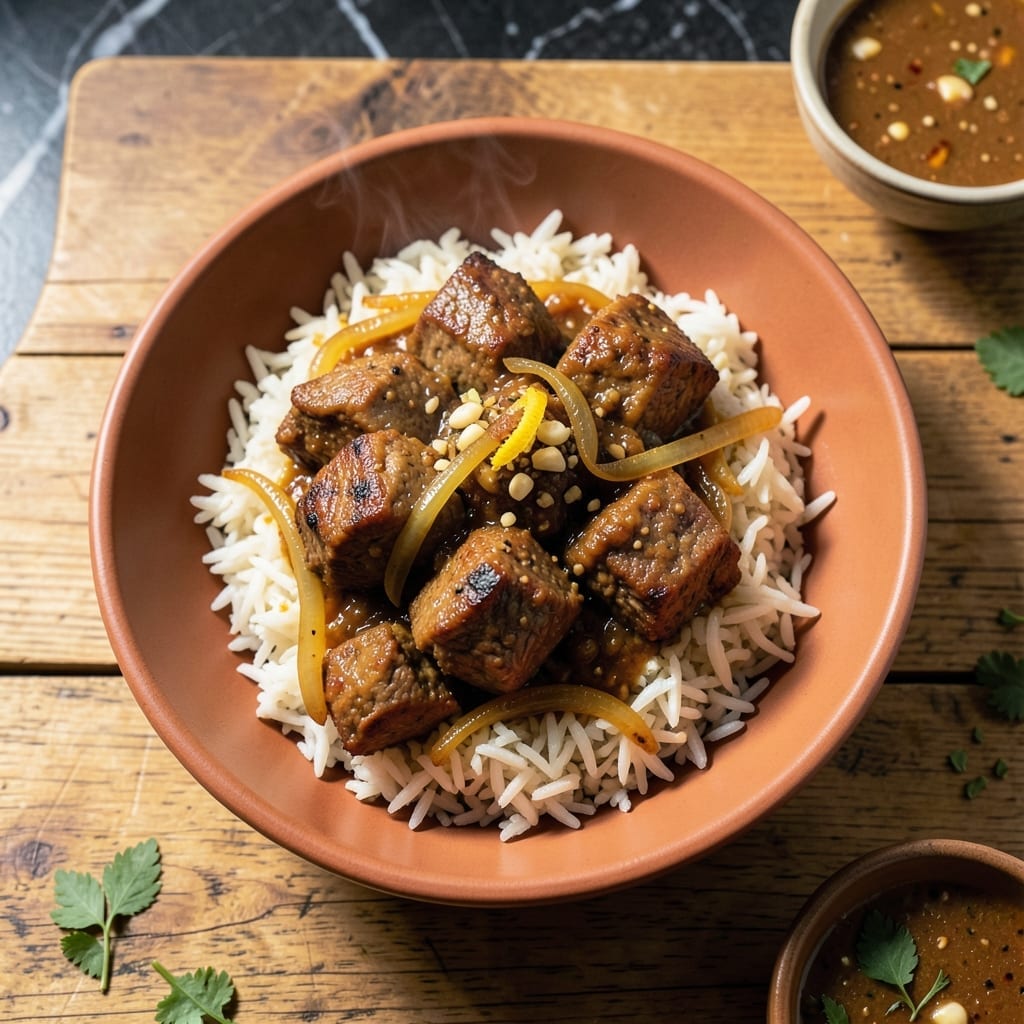
This slow-braised lamb curry transforms tough cuts into fall-apart tender perfection through patient cooking. The method develops deep, complex flavors that define authentic curry.
Spiced basmati rice provides the ideal accompaniment, each grain absorbing the rich, aromatic sauce. The combination creates a restaurant-quality meal that warms from the inside out.
What sets this dish apart is the balance of spices and the low-and-slow cooking process. Every bite delivers layers of warmth and comfort.
Serve this with confidence for a dinner that feels special yet remains approachable. The results speak for themselves.
Ingredients for Lamb Curry and Rice
Slow-braised lamb and fragrant basmati rice create a meal worthy of any dinner table.
| Ingredient | Amount | Notes |
|---|---|---|
| Lamb Shoulder 🐑 | 2 lb | Boneless, cut into 1-inch cubes |
| Basmati Rice 🍚 | 1 ½ cups | Rinsed until water runs clear |
| Yellow Onion 🧅 | 1 whole | Finely diced for curry base |
| Garlic Cloves 🧄 | 6 cloves | Minced for depth of flavor |
| Fresh Ginger 🌿 | 1 tbsp | Grated, peeled first |
| Ground Cumin 🌿 | 1 ½ tsp | Toasted for enhanced aroma |
| Ground Coriander 🌿 | 1 ½ tsp | Freshly ground preferred |
| Turmeric Powder 🌶️ | 1 tsp | For vibrant color and earthiness |
| Garam Masala 🌶️ | 1 tbsp | Authentic blend for complexity |
| Cayenne Pepper 🔥 | ¼ tsp | Adjust to spice preference |
| Diced Tomatoes 🍅 | 1 can | 14.5 oz can, undrained |
| Coconut Milk 🥥 | 1 can | 13.5 oz can, full-fat |
| Vegetable Stock 🥕 | 2 cups | Low-sodium preferred |
| Olive Oil 🫒 | 3 tbsp | Divided for cooking stages |
| Fresh Cilantro 🌿 | ½ cup | Chopped for garnish |
The lamb is non-negotiable for this dish. Lamb shoulder offers the perfect fat-to-meat ratio for slow cooking, and bone-in cuts add even more depth (remove the bone yourself or ask the butcher). For the best quality, seek out grass-fed lamb at Whole Foods or a specialty butcher. The basmati rice should be aged—look for Tilda or Lundberg brands for superior texture.
No lamb? Beef chuck works well as a substitute, though the flavor will be different. For a vegetarian option, cauliflower or mushrooms can stand in (reduce cooking time significantly). Out of garam masala? Combine cinnamon, cardamom, cloves, and nutmeg in equal parts. The coconut milk must be full-fat—lite versions will separate and lack richness.
This dish actually improves overnight. Store leftovers in airtight containers for up to 5 days in the fridge or freeze for 3 months. Reheat gently to maintain the lamb’s tender texture. The rice is best served fresh but can be revived with a splash of water and a quick microwave.
Why You’ll Love This Recipe
- One Pot Meal: I love that everything cooks together—lamb, rice, and aromatics—so I’m not juggling multiple pans.
- Rich and Aromatic: The garlic, ginger, and slow-cooked lamb shoulder create a depth of flavor that’s honestly hard to beat.
- Feeds the Crew: This dish stretches easily for family dinners or meal prep, and the leftovers taste even better the next day.
- Budget-Friendly Luxury: Lamb shoulder is affordable for what it delivers, and a little goes a long way in this hearty curry.
Step-by-Step Instructions for Lamb Curry and Rice
Master the technique for tender lamb and fragrant rice with professional precision.
Step 1: Sear and Toast the Aromatics
Heat 2 tablespoons olive oil in a heavy Dutch oven over medium-high heat until shimmering. Add the 2 lb lamb shoulder cubes in a single layer, searing undisturbed for 3-4 minutes per side until deeply browned. Remove the lamb and set aside.
In the same pot, add the remaining 1 tablespoon olive oil and the finely diced yellow onion. Sauté for 5-6 minutes until translucent and golden. Add the 6 cloves minced garlic cloves and 1 tbsp grated fresh ginger, stirring for 30 seconds until fragrant.
Push the aromatics to one side and add the 1.5 tsp ground cumin, 1.5 tsp ground coriander, 1 tsp turmeric powder, and 0.25 tsp cayenne pepper. Toast for 30 seconds to bloom the spices—this deepens their flavor significantly.
Step 2: Build the Curry Base and Simmer
Return the lamb to the pot along with any accumulated juices. Add the 1 can diced tomatoes (with juices), 1 can coconut milk, and 2 cups vegetable stock. Stir in the 1 tbsp garam masala and bring to a gentle simmer.
Reduce heat to low, cover, and let braise for 1.5-2 hours. The lamb is done when it shreds easily with a fork. Check occasionally and add a splash of water if the sauce reduces too much before the lamb is tender.
Step 3: Prepare the Spiced Basmati Rice
While the curry simmers, rinse the 1.5 cups basmati rice under cold water until the water runs clear. This removes excess starch and ensures fluffy, separate grains. Drain thoroughly in a fine-mesh sieve.
In a medium pot, combine the rice with 2.5 cups water and a pinch of salt. Bring to a boil, then reduce heat to low, cover, and simmer for 12-15 minutes until the water is absorbed and the rice is tender. Remove from heat and let sit covered for 5 minutes.
Step 4: Finish and Serve
Once the lamb is tender, uncover the pot and simmer for an additional 5-10 minutes to thicken the sauce slightly. Taste and adjust seasoning with salt if needed—the low-sodium stock allows you to control the final salt level.
Fluff the rice with a fork and divide among serving bowls. Spoon the lamb curry over the rice and garnish generously with the 0.5 cup chopped fresh cilantro. Serve immediately while hot, with extra cilantro on the side for those who want more freshness.
Pro Tips For Making Lamb Curry And Rice
- Brown the Lamb: Sear the lamb shoulder in batches over medium-high heat until deeply browned—about 4-5 minutes per side. I learned this the hard way: crowded pan steams instead of sears, and you lose that rich crust that builds flavor in the curry.
- Soak the Rice: Rinse basmati rice until the water runs clear, then soak it for 20-30 minutes before cooking. Sounds tedious, but it removes excess starch so you get fluffy, separate grains every time.
- Skip Raw Spices: Toast whole spices like cumin or coriander in dry heat for 30 seconds before adding onions. My grandmother swore by this, and she was right: it wakes up the flavors so the curry doesn’t taste flat.
- Low and Slow: Once the curry simmers, keep the heat low and give it at least 1.5 hours. Lamb shoulder turns tender and falls apart—rushing it leaves you with tough, chewy pieces.
Wine and Beer Pairings for These Flavors
Rich Red Wines
A bold Syrah from the Rhône Valley complements the lamb’s richness with its dark fruit and peppery notes. The tannins stand up to the spice without overpowering. I love a Côtes du Rhône for its approachable price point.
Fruity Whites
An off-dry Riesling from Germany or Washington State balances the heat with its natural sweetness. The acidity cuts through the coconut milk’s creaminess beautifully. Look for Dr. Loosen or Chateau Ste. Michelle brands. 🍷
Spiced Beers
A Belgian Dubbel like Chimay Red offers caramel and dark fruit notes that pair wonderfully with the garam masala. The 8-9% ABV holds its own against the bold flavors.
Crisp Lager
For something lighter, an Indian Kingfisher lager cleanses the palate between bites. The mild bitterness contrasts nicely with the rich curry sauce. Serve ice-cold for best results.
Rosé Option
A dry Provence rosé brings red berry flavors and refreshing acidity. Its subtle earthiness complements the cumin and coriander. I reach for Whispering Angel when I want something universally liked. 💛
Non-Alcoholic Pairing
For a zero-proof option, try ginger beer with a squeeze of lime. The spice and effervescence mirror the dish’s warmth. Fever-Tree makes an excellent version.
Nutrition Facts
Frequently Asked Questions
What cut of lamb works best for curry?
Lamb shoulder is ideal due to its marbling and connective tissue, which breaks down during the 1.5-2 hour braise. Boneless is easiest to work with.
Can I make this dish ahead of time?
The flavors deepen overnight. Store in an airtight container in the fridge for up to 5 days or freeze for 3 months. Reheat gently to keep the lamb tender.
How do I prevent mushy rice?
Rinse the basmati until water runs clear to remove excess starch. Use a 1:1.5 rice-to-water ratio and let it rest 5 minutes after cooking.
What if my sauce is too thin?
Uncover and simmer for an extra 5-10 minutes after the lamb is tender. If still thin, mix 1 tablespoon cornstarch with water and stir in.

- Lump Rice Recipe Sri Lanka: Traditional Island-Style Texture - November 4, 2026
- Laos Sticky Rice Recipe: Traditional Steamed Perfection - November 4, 2026
- Magic Rice Recipe: One-Pot Aromatic Wonder - November 4, 2026