
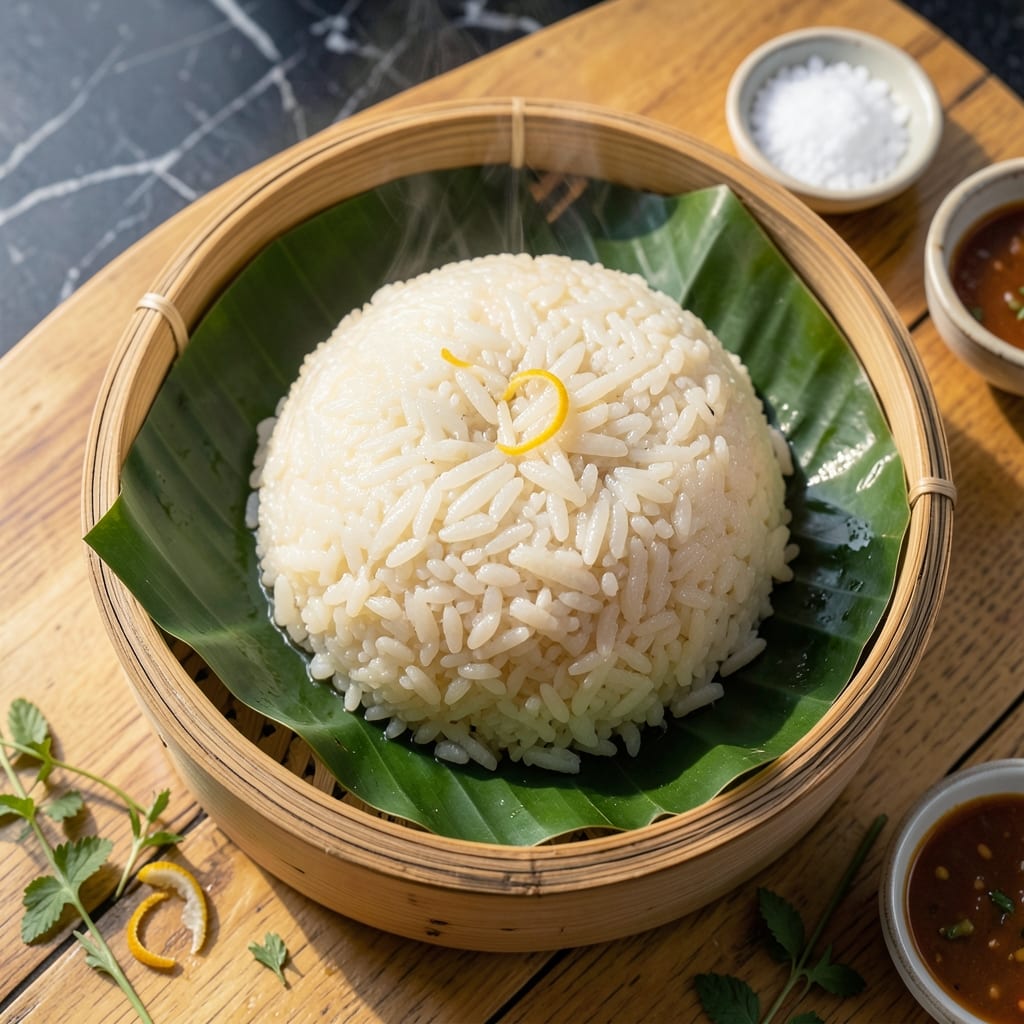
This method delivers perfectly sticky, fragrant rice every time using traditional Lao techniques. The key lies in proper soaking and careful steaming to achieve that signature chewy texture.
I’ve refined this approach to maintain authenticity while making it accessible for home kitchens. The result is rice that holds its shape yet sticks together beautifully, just as it should for dipping or scooping.
Ingredients for Laos Sticky Rice
Traditional Lao sticky rice requires just a few authentic ingredients for perfect texture and aroma.
| Ingredient | Amount | Notes |
|---|---|---|
| Glutinous Rice 🍚 | 2 cups | Sweet rice or sticky rice |
| Water 💧 | 2 ½ cups | For soaking and steaming |
| Fine Sea Salt 🧂 | ½ tsp | Optional, to taste |
| Banana Leaf 🍃 | 1 piece | For lining steamer basket |
| Steamed Water ☁️ | 4 cups | For steaming rice |
Glutinous rice is essential—look for Thai sticky rice or sweet rice at Asian markets or in the international aisle. Avoid jasmine or long-grain varieties as they won’t achieve the proper chew. The rice should be opaque white, not translucent. For best results, use freshly harvested rice within a year of production, as older rice loses its stickiness.
No banana leaf? Parchment paper works as a substitute, though it won’t impart the same subtle aroma. If you can’t find glutinous rice, short-grain sushi rice is the closest alternative, though the texture will differ slightly. The salt is optional but enhances flavor—use fine sea salt for even distribution.
Store uncooked glutinous rice in an airtight container in a cool, dry place for up to 1 year. Cooked sticky rice is best served immediately but can be kept warm in the steamer for 2-3 hours. Reheating works best by steaming again with a damp cloth over the basket.
Why You’ll Love This Recipe
- One-Pot Wonder: I just soak the glutinous rice, steam it in the same pot, and it’s ready—no fancy gadgets, just a basket and boiling water.
- That Banana Leaf Magic: The scent of the banana leaf while steaming makes the rice smell incredible, and the subtle earthy note it adds is irreplaceable.
- Breakfast to Dinner: Honestly, I serve it with larb for dinner, then reheat the leftovers with mango and coconut for a sweet breakfast.
- Pennywise Staple: A big bag of glutinous rice costs almost nothing, and it stretches to feed a crowd or last all week.
Step-by-Step Instructions for Laos Sticky Rice
Traditional technique delivers perfectly tender, aromatic sticky rice with authentic texture and flavor.
Step 1: Soak the Glutinous Rice Properly
Begin by placing the 2 cups Glutinous Rice in a large bowl. Cover it completely with the 2.5 cups Water, ensuring all grains are submerged. The rice needs to soak for at least 4 hours, preferably overnight. This extended soaking softens the grains and guarantees even cooking.
You’ll notice the water becomes cloudy as starch releases from the rice. This is normal and contributes to the sticky texture. Don’t be tempted to shorten the soaking time—under-soaked glutinous rice results in a hard, uncooked center.
Step 2: Prepare the Steamer with Banana Leaf
Line your steamer basket with the 1 piece Banana Leaf, ensuring it covers the bottom completely and extends up the sides. This traditional method imparts a subtle aromatic quality to the rice while preventing it from sticking to the basket. If the leaf is too small, use two pieces to fully cover the surface.
Bring the 4 cups Steamed Water to a boil in the base of your steamer. The water level should be at least 1 inch below the basket when it’s inserted. Maintain a vigorous boil throughout the steaming process—this creates the necessary heat and humidity for proper cooking.
Step 3: Steam the Rice to Perfection
Drain the soaked 2 cups Glutinous Rice thoroughly in a fine-mesh strainer, shaking gently to remove excess water. Spread the rice evenly over the prepared banana leaf in the steamer basket, creating a single, even layer. The rice should be about ½ inch thick for uniform cooking.
Place the basket over the boiling water, cover tightly with a lid, and steam for 20-25 minutes. Resist the urge to peek during cooking—releasing steam lowers the temperature and extends the cooking time. The rice is done when it appears translucent and a skewer inserted into the center comes out clean.
Step 4: Rest and Season the Finished Rice
Remove the steamer basket from heat and let the rice rest for 5 minutes with the lid on. This allows the grains to finish setting and absorb any remaining steam. The rice should look glossy and feel slightly tacky when touched with clean fingers.
While the rice is still hot, sprinkle the 0.5 tsp Fine Sea Salt evenly over the surface if using. Gently fold the rice with a paddle or spatula to distribute the salt and fluff the grains. The salt enhances the natural sweetness of the glutinous rice without overpowering its delicate flavor.
Serve immediately while warm, using your hands to form traditional small balls or mounds. The rice should hold its shape when pressed but remain soft and slightly chewy.
Pro Tips For Making Laos Sticky Rice
- Soak Overnight: I learned this the hard way—glutinous rice needs at least 4 hours in water, but overnight guarantees even texture and that perfect sticky bite. Anything less and you’ll get dry, undercooked patches.
- Salt the Water: Add fine sea salt to the soaking water (about 1 teaspoon per liter). It seasons the rice deeply, unlike sprinkling salt after cooking, which just sits on the surface.
- Skip the Overcrowding: Steaming in a single layer on the banana leaf matters. Piling it up traps steam unevenly, leaving some grains gummy and others underdone—spread it thin, about 1 inch thick.
- Use Fresh Banana Leaf: Sounds weird, but it works: briefly pass the leaf over a low flame to soften it before lining the steamer. It prevents tearing and adds a subtle earthy aroma that dried leaves just can’t.
Health Benefits of This laos sticky rice
Energy Boost
This dish offers a sustained energy release thanks to the complex carbohydrates in glutinous rice. With a low glycemic index, it provides steady fuel without blood sugar spikes. A 1-cup serving contains about 170 calories, making it perfect for active lifestyles. 💪
Digestive Health
The natural fiber in glutinous rice supports healthy digestion, though it’s lower in fiber than brown rice. I find it gentler on the stomach than other grains. The steaming process preserves more nutrients than boiling, including B vitamins that aid metabolism.
Gluten-Free Goodness
Despite its name, glutinous rice contains no gluten, making this dish safe for those with celiac disease or gluten sensitivity. It’s a staple in gluten-free diets across Southeast Asia. The sticky texture comes from its high amylopectin content, not gluten proteins.
Rich in Nutrients
This creation provides essential minerals like magnesium and phosphorus for bone health. It’s also a good source of selenium, an antioxidant that supports thyroid function. The banana leaf lining adds subtle nutrients during steaming.
Heart Healthy
With virtually no fat or cholesterol, this rice supports cardiovascular health. The resistant starch in cooled sticky rice may even help lower cholesterol levels. I love that it’s naturally cholesterol-free while being so satisfying. ✨
Cultural Wellness
In Lao culture, sticky rice is considered the “bread of life” and is central to daily meals. Its slow-digesting carbs provide long-lasting energy for manual labor. The communal way of eating it—with shared dishes—also supports social well-being.
Nutrition Facts
Frequently Asked Questions
Why is soaking the rice overnight important?
Soaking for at least 4 hours softens the grains completely, allowing even cooking and maximum stickiness. Skipping this step results in hard centers and uneven texture.
Can I use a rice cooker instead of steaming?
A rice cooker works but won’t achieve the same authentic texture. For best results, use the traditional steaming method with a bamboo basket.
How do I store leftover sticky rice?
Keep it warm in the steamer for up to 2-3 hours or refrigerate in an airtight container for 2 days. Reheat by steaming with a damp cloth.
What if my rice isn’t sticky enough?
Under-soaking or insufficient steaming causes this. Ensure it soaks for 4+ hours and steams for the full 20-25 minutes.

- Laos Sticky Rice Recipe: Traditional Steamed Perfection - November 4, 2026
- Magic Rice Recipe: One-Pot Aromatic Wonder - November 4, 2026
- Mushroom Fried Rice Indian Recipe: Spiced Wok-Tossed Comfort with Basmati - November 4, 2026