
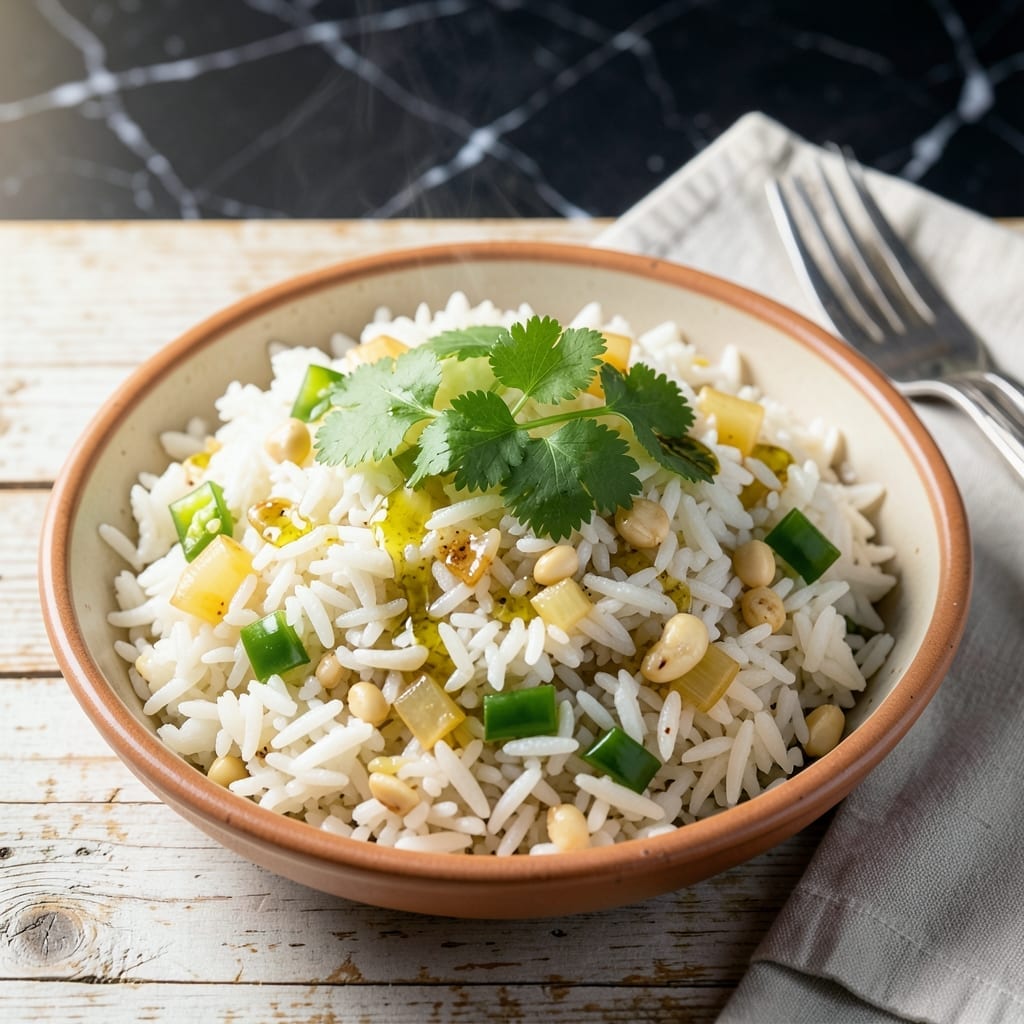
This traditional white rice delivers the authentic Latin flavors I grew up eating at family gatherings. The technique is simple but precise, yielding perfectly fluffy grains every time.
The secret lies in toasting the rice first, which deepens its nutty flavor before cooking. I use a classic sofrito base for layers of taste that set this apart from plain steamed rice.
What results is light, separate grains with subtle seasoning that pairs beautifully with any Latin main dish. The method works consistently, whether serving four or forty.
This version stays true to the traditional preparation while ensuring foolproof results in any home kitchen.
Ingredients for Latin White Rice
Traditional Latin rice starts with simple pantry staples and a classic sofrito base for authentic flavor.
| Ingredient | Amount | Notes |
|---|---|---|
| Long-Grain White Rice 🌾 | 2 cups | Rinsed until water runs clear |
| Vegetable Oil 🫒 | 3 tbsp | Neutral flavor preferred |
| Yellow Onion 🧅 | ½ whole | Finely diced for sofrito |
| Green Bell Pepper 🌶️ | ½ whole | Finely diced for sofrito |
| Garlic Cloves 🧄 | 4 cloves | Minced for depth of flavor |
| Cilantro 🌿 | ¼ cup | Fresh, chopped fine |
| Tomato Sauce 🍅 | 2 tbsp | For color and richness |
| Vegetable Broth 🥣 | 3 cups | Low-sodium preferred |
| Salt 🧂 | 1 ½ tsp | Adjust to taste after cooking |
| Ground Cumin 🌿 | ½ tsp | Toasted briefly with rice |
| Dried Oregano 🍃 | ½ tsp | Crushed between fingers |
| Bay Leaf 🌿 | 1 whole | Removed before serving |
| Lime 🍈 | ½ whole | Juiced for finishing |
The rice is everything here. Long-grain white rice gives you those separate, fluffy grains—avoid instant or parboiled varieties. For the sofrito, any yellow onion works, but sweeter varieties like Vidalia add depth. Goya or Knorr vegetable broth are solid store-bought options, but homemade is even better if you have time. Toasting the rice in oil before adding liquid is non-negotiable for that nutty flavor.
No green bell pepper? Red or yellow bell peppers work just as well. Fresh cilantro is ideal, but flat-leaf parsley at half the amount can sub in a pinch. Short on tomato sauce? One tablespoon of tomato paste whisked with a tablespoon of water gets you close. The cumin and oregano are classic, but a pinch of achiote powder adds authentic color if you can find it at a Latin market.
Cooked rice keeps 4-5 days in the fridge, but it dries out quickly. Store in an airtight container with a damp paper towel on top. Reheat with a splash of water or broth in the microwave. This also freezes well for up to 3 months—portion before freezing for easy meals.
Why You’ll Love This Recipe
- One Pot Magic: I love that everything cooks together—just rice, onions, peppers, and garlic simmering in one pot with minimal fuss.
- Sofrito Perfection: Honestly, the combo of sautéed onion, bell pepper, and garlic gives this rice a rich, aromatic depth that’s hard to resist.
- Weeknight MVP: Between us, this pairs with anything—grilled chicken, black beans, or even just a fried egg on top.
- Budget Stretcher: A pound of rice feeds my family for days, and the veggies keep it flavorful without breaking the bank.
Step-by-Step Instructions for Latin White Rice
Follow this traditional method for perfectly fluffy rice with vibrant, authentic Latin flavor.
Step 1: Sauté Aromatic Sofrito Base
Heat the 3 tbsp vegetable oil in a heavy pot over medium heat. Add the 0.5 whole yellow onion and 0.5 whole green bell pepper, both finely diced, and cook for 5-6 minutes until softened and just beginning to turn translucent.
Stir in the 4 cloves garlic cloves, minced, and cook for 30 seconds until fragrant but not browned. This sofrito foundation is essential for authentic flavor development. Watch carefully to prevent burning, as garlic can scorch quickly.
Step 2: Toast Rice and Spices
Add the 2 cups long-grain white rice to the pot and stir to coat with the oil and aromatics. Cook for 2-3 minutes, stirring frequently, until the rice grains appear slightly translucent at the edges and smell nutty.
Sprinkle in the 0.5 tsp ground cumin, 0.5 tsp dried oregano, and 1.5 tsp salt. Toast for 1 minute, stirring constantly, until the spices become aromatic. This step enhances the depth of flavor and prevents a raw spice taste in the finished dish.
Step 3: Add Liquids and Simmer
Stir in the 2 tbsp tomato sauce and cook for 1 minute to caramelize slightly. Pour in the 3 cups vegetable broth and add the 1 whole bay leaf. Bring to a boil, then immediately reduce heat to low.
Cover the pot with a tight-fitting lid and simmer for 18-20 minutes until the liquid is absorbed and the rice is tender. Resist the urge to lift the lid during cooking—steam is crucial for even cooking and fluffy texture.
Step 4: Rest and Finish
Remove the pot from heat and let it sit, covered, for 10 minutes. This resting period allows steam to redistribute, ensuring each grain of rice is perfectly cooked and separate. Discard the bay leaf before serving.
Gently fluff the rice with a fork and stir in the 0.25 cup cilantro, chopped fine. Squeeze the juice from the 0.5 whole lime over the rice and mix gently to combine. The lime adds a bright, authentic finish that complements the rich, savory base.
Pro Tips For Making Latin White Rice
- Toast the Rice: Cook the rice in the oil for 2-3 minutes until it turns slightly opaque—this prevents mushiness and adds a nutty depth. I learned this the hard way after ending up with gummy rice too many times.
- Fine Dice the Veggies: Cut the onion, bell pepper, and garlic into tiny, even pieces so they melt into the rice. Sounds tedious, but it makes every bite flavorful instead of chunky.
- Skip the Rinsing: Don’t rinse the long-grain rice—you want the starch for that classic sticky Latin texture. My abuela never did, and neither should you.
- Use a Heavy Pot: A thick-bottomed pot (like enameled cast iron) distributes heat evenly and keeps the rice from burning at the bottom. After ruining two batches in a thin pan, I finally upgraded.
Common Mistakes When Making This Dish
Overcrowding the Pot
Using too large a pot can spread the rice too thin, causing uneven cooking and dry spots. I always use a 3-quart heavy pot for 2 cups rice—this ensures the grains cook in an even layer. A crowded pot also steams the rice unevenly. 💡
Skipping the Toast Step
Not toasting the rice first misses the nutty depth that defines this dish. The grains should turn slightly translucent at the edges after 2-3 minutes in hot oil. This step is what gives the finished rice its rich, authentic flavor.
Peeking While Cooking
Every time you lift the lid, you release precious steam that the rice needs to cook evenly. Keep that lid on tight for the full 18-20 minutes. I know it’s tempting to check, but trust the process—your patience will be rewarded with perfectly fluffy grains.
Wrong Liquid Ratio
The standard ratio is 1.5 cups liquid per 1 cup rice, but with the sofrito and tomato sauce, we use 3 cups broth for 2 cups rice. Using too much liquid leads to mushy rice, while too little leaves it undercooked. Measure carefully for consistent results.
Neglecting the Rest
That 10-minute rest off the heat is crucial—it lets the steam redistribute throughout the pot. Without it, you’ll have a layer of wet rice at the bottom and dry rice on top. I always set a timer so I don’t forget this important final step.
Over-Stirring After Cooking
Vigorously stirring the rice after cooking breaks the grains and releases excess starch, leading to a gummy texture. Instead, use a fork to gently fluff from the bottom up. This preserves the individual grains while incorporating the lime juice and cilantro evenly.
Nutrition Facts
Frequently Asked Questions
Why do you toast the rice first?
Toasting deepens the nutty flavor and prevents a raw starchy taste. It takes just 2-3 minutes in hot oil until the grains turn slightly translucent at the edges. This step is key for authentic Latin flavor.
Can I use chicken broth instead of vegetable?
Chicken broth adds richer flavor and works perfectly. Use the same 3 cups measurement. For vegetarian versions, stick with vegetable broth or water.
How do I know when it’s done?
The rice is ready when all liquid is absorbed and grains are tender after 18-20 minutes. Let it rest 10 minutes off heat before fluffing. Avoid lifting the lid during cooking.
Can I make this in a rice cooker?
Yes, but sauté the sofrito and toast the rice first in a pan. Then transfer to the rice cooker with broth and spices. Cook using the standard white rice setting.

- Lump Rice Recipe Sri Lanka: Traditional Island-Style Texture - November 4, 2026
- Laos Sticky Rice Recipe: Traditional Steamed Perfection - November 4, 2026
- Magic Rice Recipe: One-Pot Aromatic Wonder - November 4, 2026