
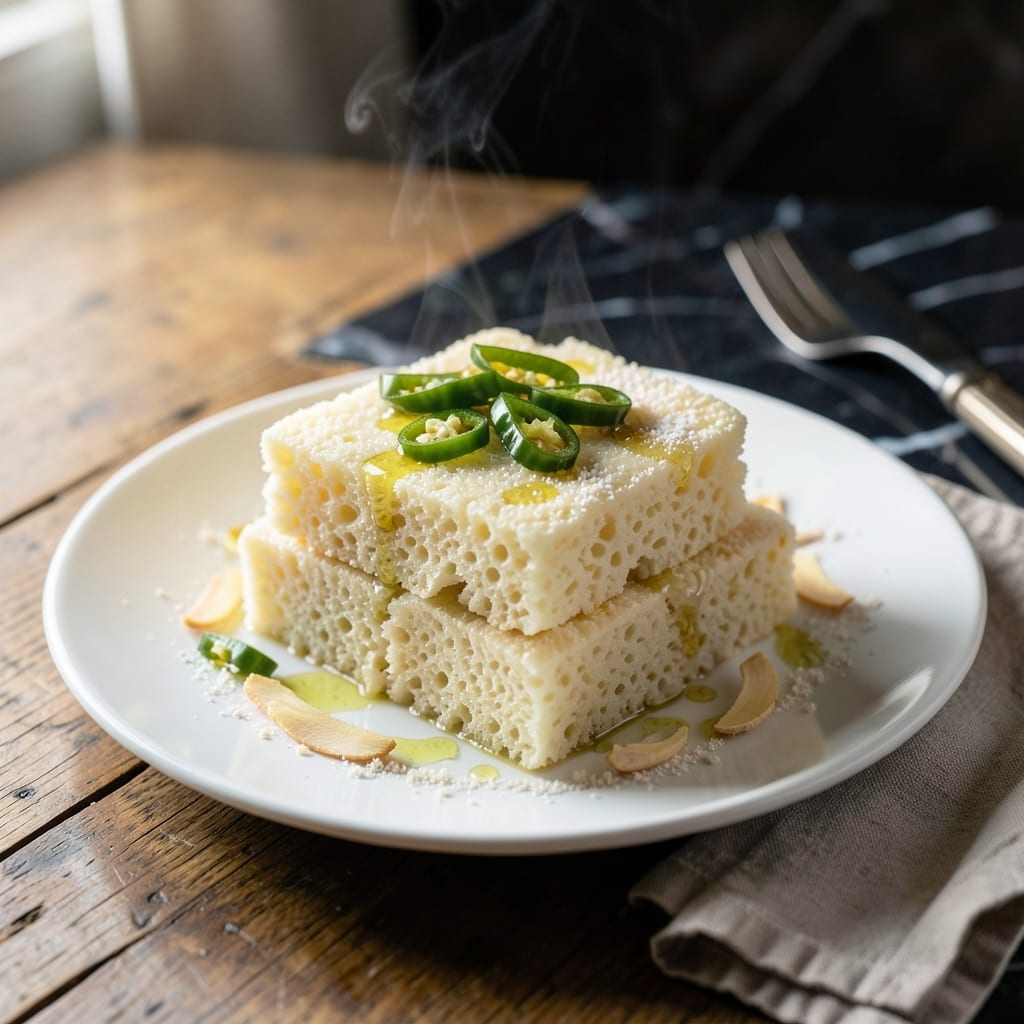
Transform leftover rice into a light, airy snack with this clever approach to making dhokla at home. This method turns yesterday’s grains into today’s delicious treat with minimal effort.
The batter comes together quickly by blending cooked rice with simple pantry staples like yogurt and baking soda. A 15-minute fermentation creates the perfect texture before steaming.
Steaming the batter produces a fluffy, cloud-like dhokla that’s soft yet sturdy enough to hold its shape. The final tempering with mustard seeds and curry leaves adds an aromatic finish.
Serve warm with chutney for a satisfying snack that’s both thriftier and healthier than starting from scratch. This technique proves that leftovers can be just as impressive as fresh ingredients.
Ingredients for Leftover Rice Dhokla
Transform yesterday’s rice into this light, fluffy steamed snack with just a few additions.
| Ingredient | Amount | Notes |
|---|---|---|
| Cooked White Rice 🍚 | 2 cups | Day-old, cold preferred |
| Plain Yogurt 🥛 | ½ cup | Unsweetened, room temperature |
| Semolina 🌾 | 2 tbsp | Fine or medium grind |
| Baking Soda 🧂 | ½ tsp | Fresh for best rise |
| Ginger 🌿 | 1 whole | Fresh, 1-inch piece grated |
| Green Chili Peppers 🌶️ | 2 whole | Fresh, finely chopped |
| Salt 🧂 | ¾ tsp | Adjust to taste |
| Sugar 🍚 | 1 tsp | Optional, balances flavors |
| Water 💧 | ¼ cup | As needed for batter consistency |
| Mustard Seeds 🌿 | 1 tsp | For tempering |
| Curry Leaves 🍃 | 8 whole | Fresh, for tempering |
| Oil 🫒 | 2 tbsp | Neutral oil for tempering |
| Fresh Cilantro 🌿 | 2 tbsp | Chopped, for garnish |
| Lemon Juice 🍋 | 1 tbsp | Freshly squeezed |
The rice is key here. Day-old, cold cooked rice blends smoother and ferments better than fresh. Use short-grain or medium-grain for the right texture—long-grain can get gummy. Most Indian grocery stores carry semolina (also called sooji or rava) in bulk bins. For yogurt, plain, unsweetened is essential; Greek yogurt works but thin it with a splash of water first.
No semolina? Fine cornmeal or all-purpose flour can substitute in a pinch. Short on yogurt? Buttermilk at the same quantity adds the needed acidity. Want extra fluffiness? Add 1/4 tsp baking powder alongside the baking soda. The tempering is flexible—cumin seeds or sesame seeds work if you’re missing mustard seeds or curry leaves.
The batter ferments quickly at room temperature, so use it within 2 hours. Steamed dhokla keeps in the fridge for 2 days—reheat by steaming again. Tempering oil can be stored at room temperature for 1 week and reused for other Indian dishes.
Why You’ll Love This Recipe
- No Fuss Mixing: I just blend the leftover rice, yogurt, and semolina—no fancy prep, and the baking soda does the lifting.
- Ginger Zing: That fresh ginger in the batter gives it a warm, zippy kick that’s way more interesting than plain steamed snacks.
- Breakfast or Snack: I serve these fluffy bites with chutney for breakfast or pack them for a light tea-time treat.
- Zero Waste: Honestly, it’s my favorite way to use up that extra rice sitting in the fridge.
Step-by-Step Instructions for Leftover Rice Dhokla
Transform day-old rice into a light, fluffy steamed snack with these proven techniques.
Step 1: Prepare the Fermented Batter
Combine the 2 cups Cooked White Rice and 0.5 cup Plain Yogurt in a blender. Pulse until the mixture achieves a smooth, lump-free consistency. This base provides the necessary acidity for proper fermentation and structure.
Transfer to a mixing bowl and add the 2 tbsp Semolina, 0.5 tsp Baking Soda, grated ginger, finely chopped Green Chili Peppers, 0.75 tsp Salt, and 1 tsp Sugar. Whisk vigorously for 2-3 minutes until the batter becomes light and slightly aerated. The semolina absorbs excess moisture while the baking soda begins the leavening process.
Gradually incorporate up to 0.25 cup Water as needed to achieve a thick, pourable consistency—similar to pancake batter. The batter should coat the back of a spoon but still flow easily. Let it rest for 10-15 minutes to allow the flavors to meld and the raising agents to activate fully.
Step 2: Steam the Dhokla to Perfection
Pour the prepared batter into a greased steamer tray or thali, spreading it evenly to a thickness of about 1 inch. This even distribution ensures uniform cooking and consistent texture throughout the dhokla.
Bring water to a rolling boil in your steamer. Place the tray inside, cover with a tight-fitting lid, and steam over medium-high heat for 15-18 minutes. Avoid opening the lid during this process, as the sudden temperature change can cause the dhokla to collapse. You’ll know it’s done when a toothpick inserted in the center comes out clean and the top appears slightly spongy with tiny air pockets.
Step 3: Create the Tempering for Flavor Depth
Heat the 2 tbsp Oil in a small pan over medium heat. Add the 1 tsp Mustard Seeds and allow them to sizzle and pop for about 30 seconds until they release their aromatic fragrance. This blooming process extracts the full flavor potential of the spices.
Immediately add the 8 whole Curry Leaves and let them crisp in the hot oil for another 20-30 seconds. The curry leaves should turn slightly darker and become fragrant. This tempering, or tadka, is crucial for infusing the dhokla with its characteristic South Indian aroma and flavor.
Step 4: Finish and Serve
Once steamed, carefully remove the dhokla from the steamer and let it cool for 2-3 minutes in the tray. This brief resting period allows it to set slightly, making it easier to cut into neat squares or diamonds without crumbling.
Pour the hot tempering evenly over the warm dhokla. The sizzling oil will be absorbed, creating a beautiful sheen and enhancing the overall taste profile. Garnish with the 2 tbsp Fresh Cilantro and a drizzle of 1 tbsp Lemon Juice for a bright, fresh finish that cuts through the richness.
Serve immediately while still warm, accompanied by your preferred chutney or as is. The ideal texture should be light, airy, and slightly springy with a soft, moist crumb.
Pro Tips For Making Leftover Rice Dhokla
- Steam Evenly: Use a wide, shallow container for steaming so the batter cooks uniformly—after burning a few dense centers, I switched to a thali instead of a deep bowl.
- Dry the Rice: Spread leftover rice on a plate for 10 minutes before blending to remove excess moisture; soggy rice makes the batter too thin and the dhokla gummy.
- Activate Baking Soda Last: Mix the baking soda into the batter right before steaming, not earlier—I learned this the hard way when my dhokla collapsed like a sad pancake.
- Add Semolina Smartly: Toast the semolina in a dry pan for 2 minutes until fragrant before mixing it in; it adds a nutty depth and absorbs less liquid, keeping the texture light.
Serving Suggestions for leftover rice dhokla
Chutney Pairings
Green mint-coriander chutney is my go-to pairing—its fresh, herby notes complement the dhokla’s mild sweetness perfectly. I blend 1 cup fresh cilantro, ½ cup mint leaves, and 2 green chilies with a squeeze of lemon. 🌿
Sweet and Spicy
For contrast, try tamarind-date chutney with its sticky, tangy-sweet flavor. Simmer ½ cup tamarind pulp with ¼ cup pitted dates and 1 tsp cumin powder until thick. The sweetness balances the tempering’s heat beautifully.
Yogurt Dip
A cooling cucumber raita works wonderfully. Mix 1 cup yogurt with ½ cup grated cucumber and 1 tsp roasted cumin powder. The creamy texture soothes any spice while adding a refreshing element.
Tea Time Treat
Serve with hot chai or ginger tea for an authentic Indian snack experience. I love how the warm, spiced tea enhances the dhokla’s subtle flavors without overpowering them. The combination feels nostalgic and comforting.
Fresh Garnishes
Top with extra cilantro and a squeeze of lemon juice right before serving. I also add thinly sliced cucumber or onion on the side for crunch. These simple additions elevate the dish’s freshness.
Plating Ideas
Cut into diamond shapes for an elegant presentation. Arrange on a platter with chutneys in small bowls around the edges. This traditional serving style makes the dish look as impressive as it tastes. ✨
Nutrition Facts
Frequently Asked Questions
Can I use fresh rice instead of leftover?
Day-old, cold rice works best because it blends smoother and ferments properly. Fresh rice can make the batter too sticky. If you must use fresh, spread it out and refrigerate for 2-3 hours first.
Why did my dhokla turn out dense?
This usually happens if the batter wasn’t aerated enough or the steamer wasn’t hot before adding the tray. Whisk vigorously for 2-3 minutes and ensure water is boiling before steaming.
How do I store leftover dhokla?
Keep in an airtight container in the fridge for up to 2 days. Reheat by steaming for 3-4 minutes to restore fluffiness. Avoid microwaving as it can make the texture rubbery.

- Mujadara Rice and Lentils Recipe: Earthy Spiced Lentils With Caramelized Onions - November 1, 2026
- Naija Fried Rice Recipe: Street-Style Spice With Veggie Crunch - November 1, 2026
- Mushy Rice Recipe: Fluffy Grains Transformed in Minutes - November 1, 2026